Fraction comparison Adding up to 1000 Misc Worksheets for Ages 6-8
6 filtered results
-
From - To
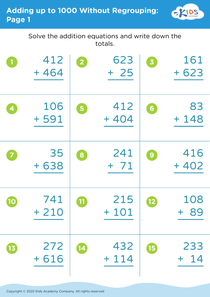
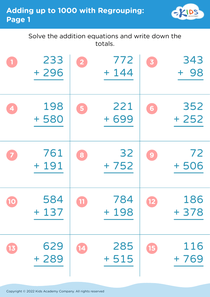
Explore our engaging collection of Fraction Comparison and Adding Up to 1000 Misc Worksheets, designed for ages 6-8! These educational resources help young learners master crucial math skills, including comparing fractions and performing arithmetic operations. With vibrant visuals and interactive exercises, children will enjoy learning complex concepts in a fun, accessible way. Perfect for classroom or at-home practice, our worksheets support personalized learning and help build a strong foundation in math proficiency. Visit Kids Academy to give your child the tools they need to succeed! Improve their confidence and abilities with our expertly crafted learning materials.
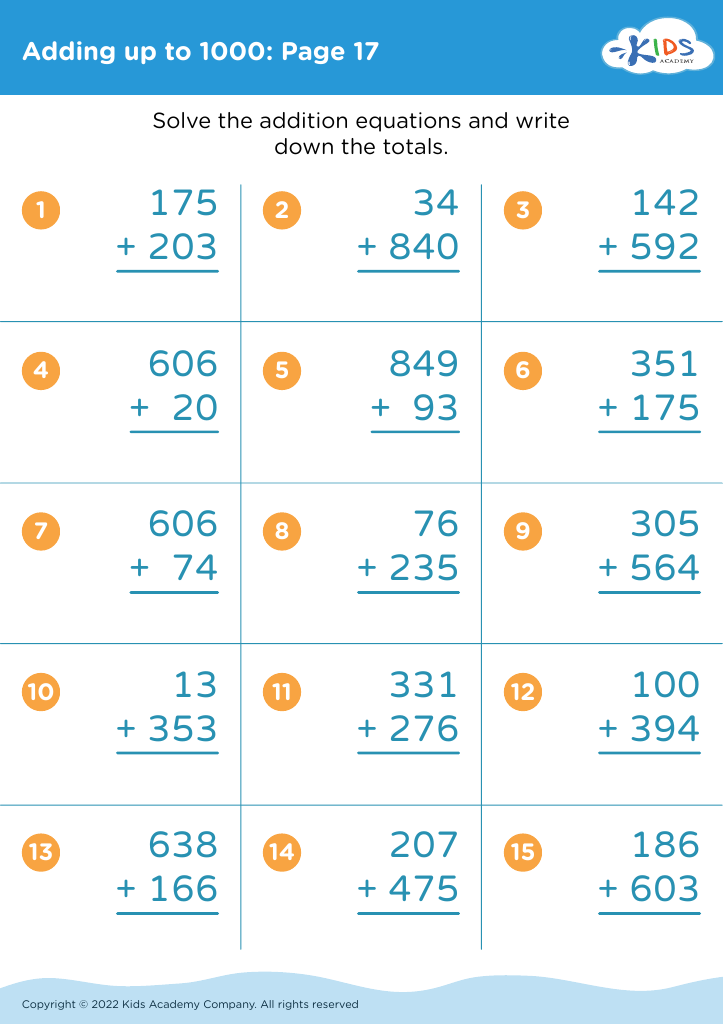
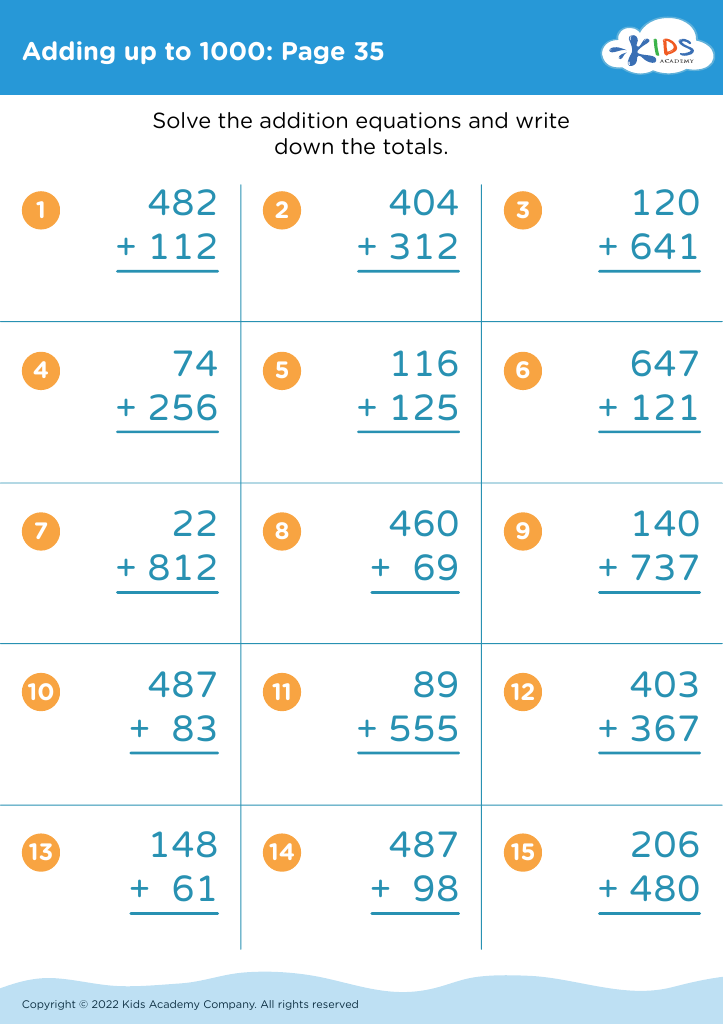
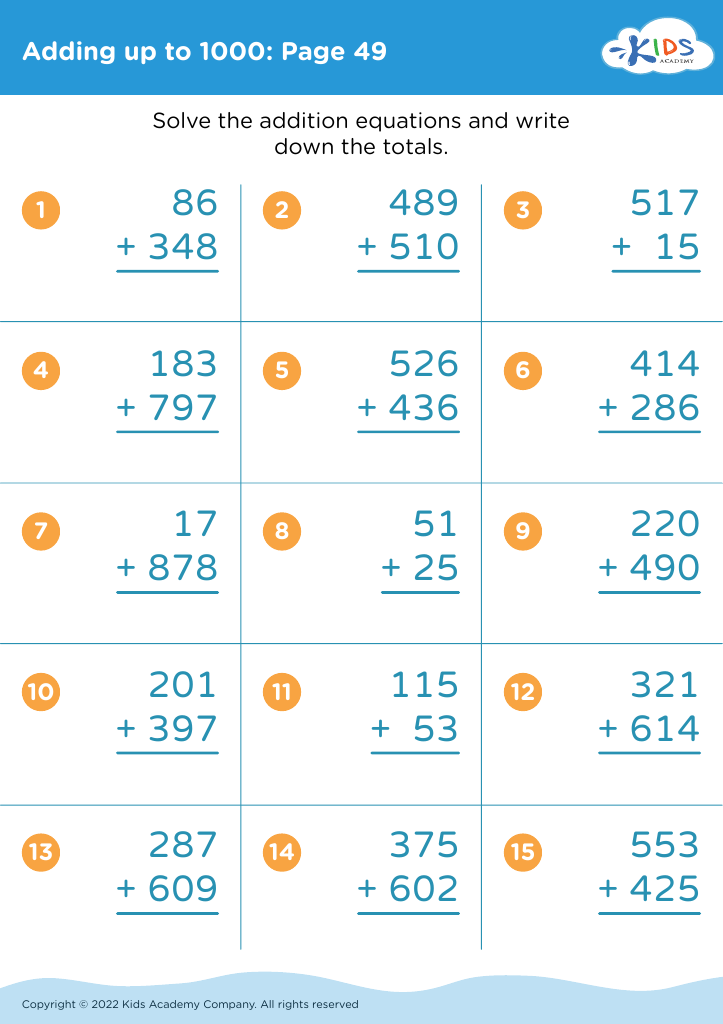
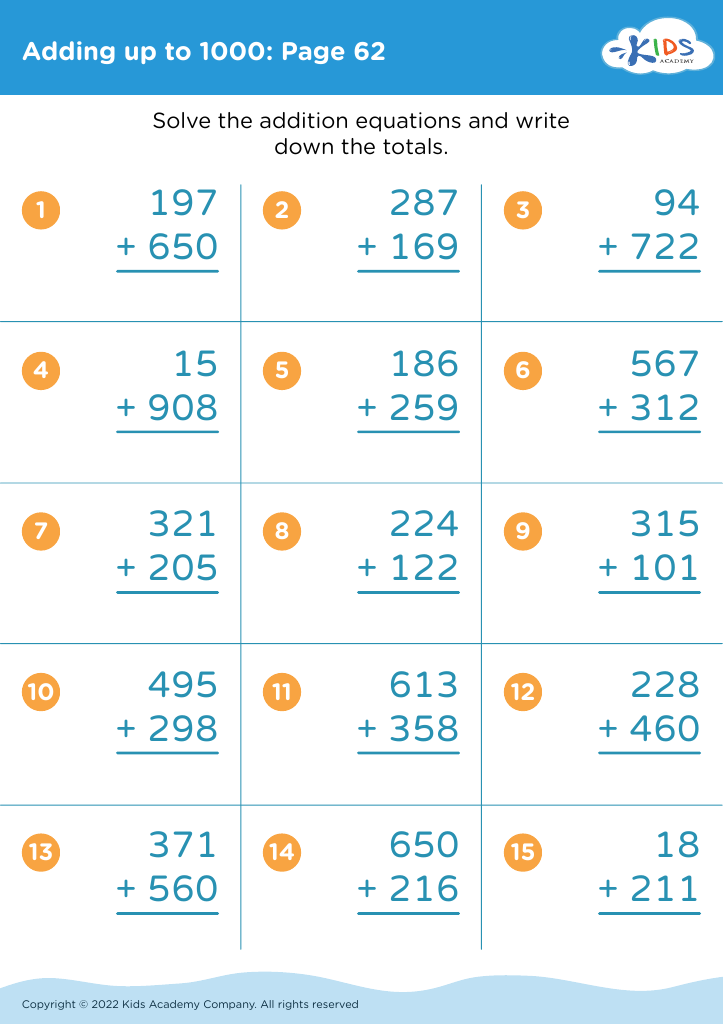
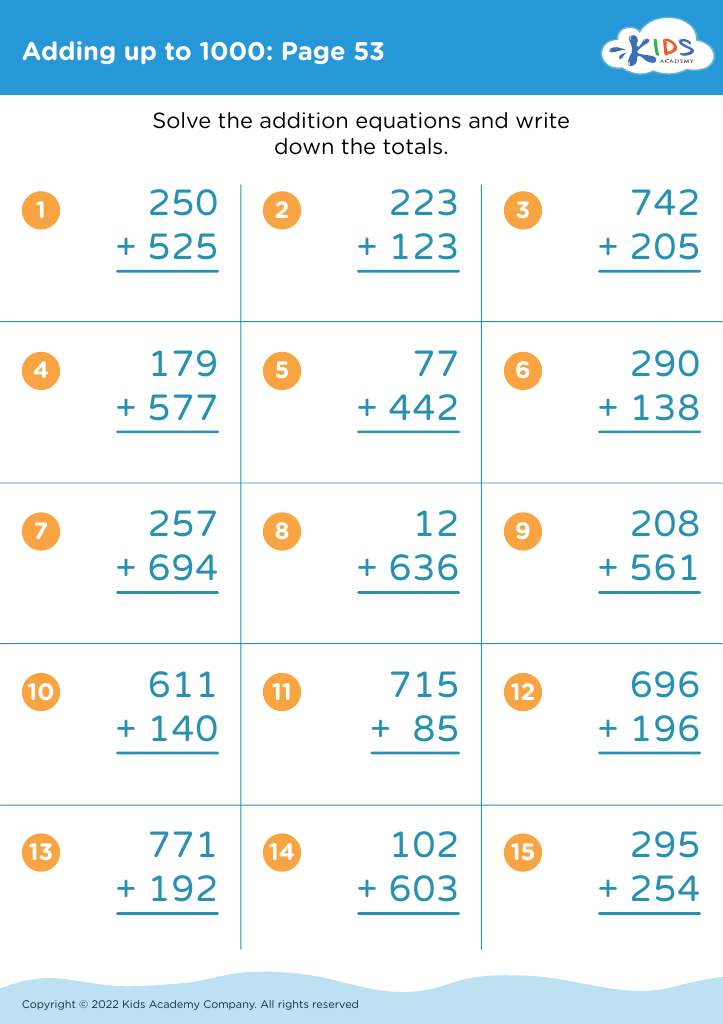
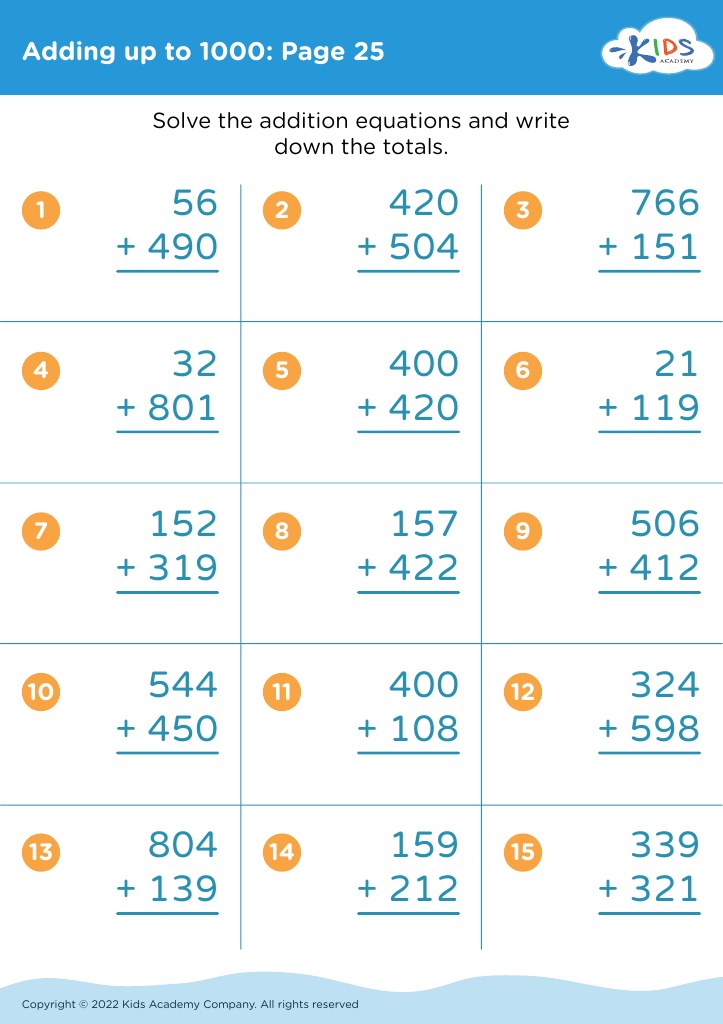


Parents and teachers should recognize the importance of fraction comparison and addition up to 1000 for children aged 6-8 as these foundational math skills support broader cognitive development and problem-solving abilities. At this young age, understanding fractions helps children grasp the concepts of part-whole relationships, which is vital for future math learning, particularly in more complex topics such as ratios, proportions, and algebra. Comparing fractions encourages logical thinking and improves their ability to reason quantitatively, laying the groundwork for higher-order math skills.
Practicing addition up to 1000 enhances their number sense, meaning they can better understand the relationships between numbers and their magnitudes. This kind of practice also improves their computational fluency, ensuring they can perform basic arithmetic tasks quickly and accurately. These skills are not only crucial for advanced math but also essential for everyday life tasks like budgeting, cooking, and time management.
Moreover, early mastery of these concepts contributes positively to students’ confidence in their math abilities. When children feel competent in their math skills, they are more likely to approach challenges with a positive attitude and a problem-solving mindset, translating into growth across all areas of learning. Therefore, by prioritizing fraction comparison and addition up to 1000, parents and teachers are setting children on a path to academic success and life-long learning.