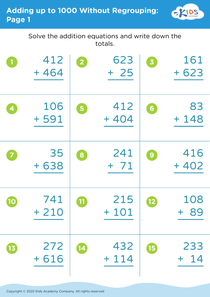
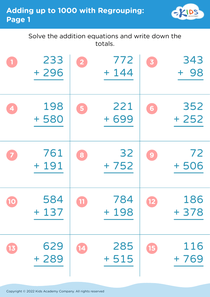
Understand fractions Adding up to 1000 Misc Worksheets for Ages 6-8
3 filtered results
-
From - To
Explore our "Understand Fractions" worksheets, specifically designed for children aged 6-8. These engaging and printable resources introduce young learners to the concept of fractions, providing them with essential skills to master this fundamental math topic. Through interactive exercises and colorful illustrations, kids will practice identifying and working with fractions, enhancing their understanding while adding up to 1000. Our worksheets are perfect for classroom use or at-home learning, encouraging independent thinking and problem-solving. Foster a love for math and build a solid foundation in fractions with these exciting and educational materials that align with early grade curriculum standards. Start their learning journey today!
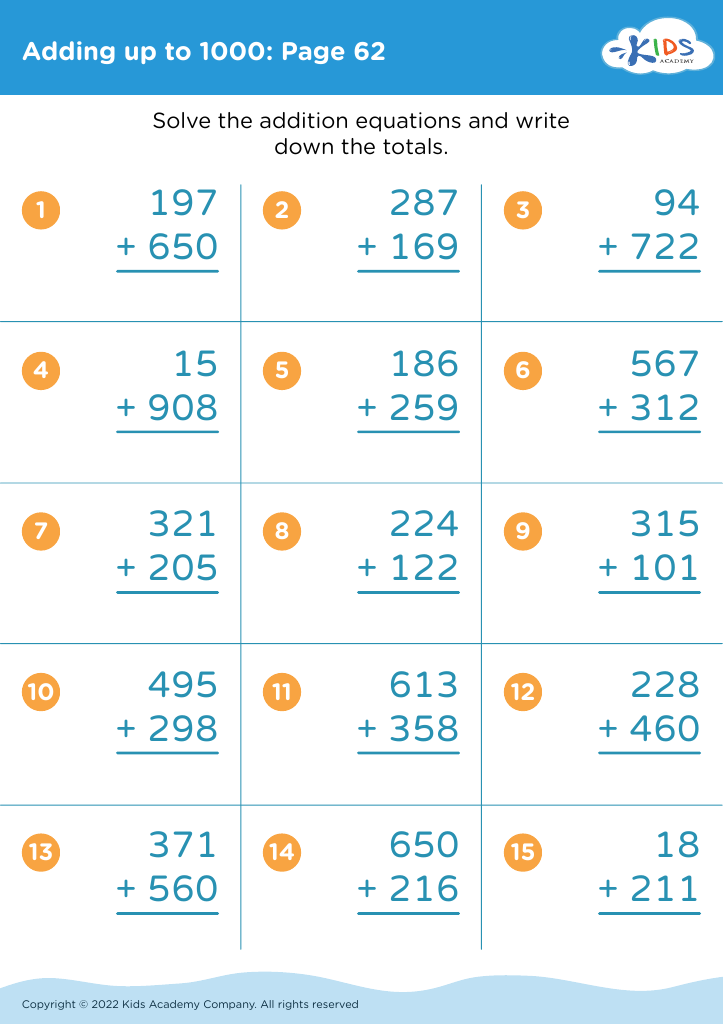
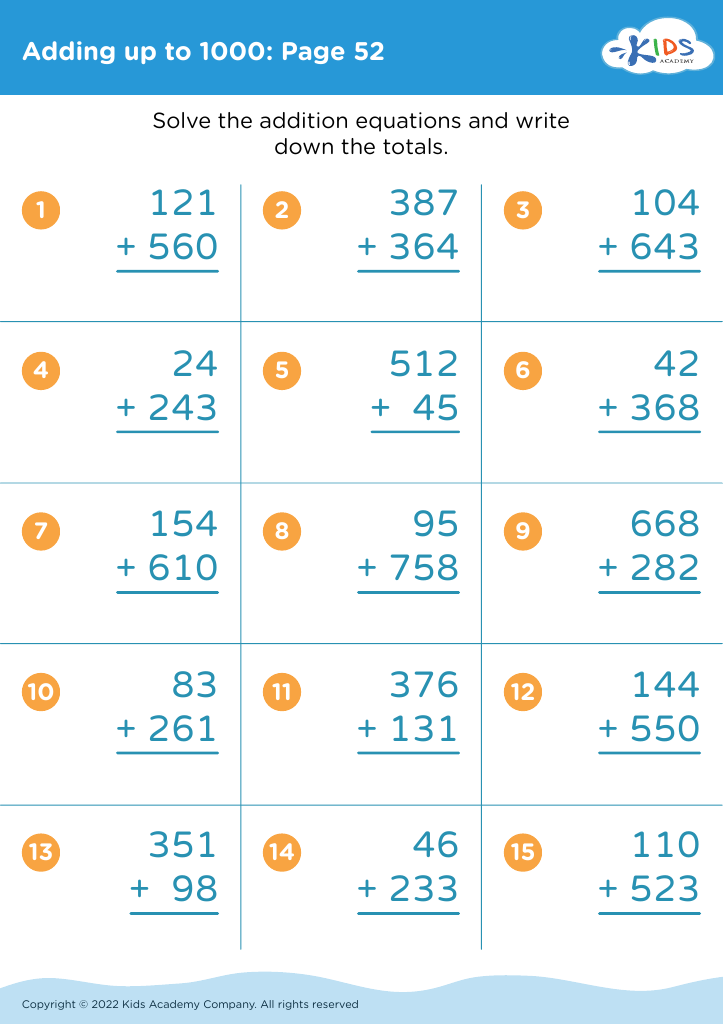
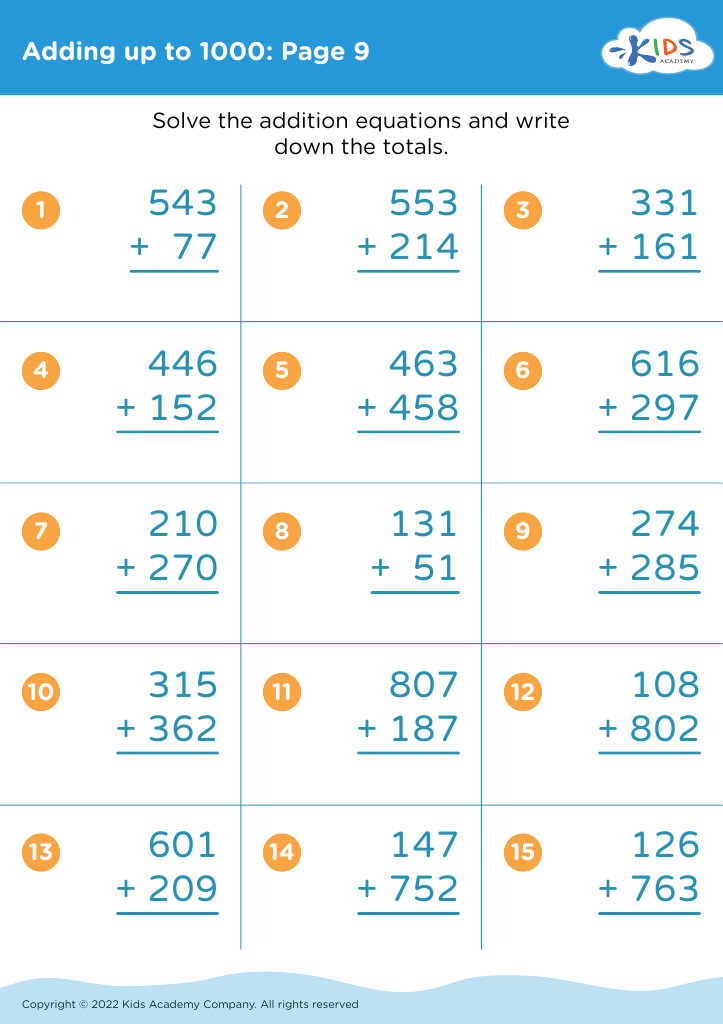


Understanding fractions and their relation to whole numbers is crucial for children aged 6-8 as they build foundational math skills. For parents and teachers, this knowledge is essential because it lays the groundwork for more advanced mathematical concepts that will be encountered in later grades.
Firstly, engaging with fractions enhances critical thinking and problem-solving skills. When children learn to recognize how different fractions can combine to form a whole, they develop the ability to manipulate numbers and understand equivalencies—skills that are invaluable not only in math but in everyday life.
Moreover, understanding fractions supports a child's comprehension of measurement and data. It helps them interpret information presented in various formats, such as recipes, charts, or charts, which is a key skill as they progress through school.
Lastly, concepts like fractions encourage teamwork and discussion if taught collaboratively, allowing children to learn from one another. When adults emphasize the importance of understanding fractions, they not only improve academic performance but also foster independence and confidence in their children. This is why parents and teachers should prioritize understanding fractions and their applications involving numbers up to 1000, as it enriches children’s educational journeys and prepares them for the future.