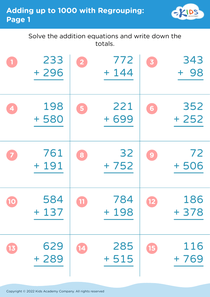
Simplifying Fractions Adding up to 1000 Without Regrouping Worksheets for Ages 6-8
3 filtered results
-
From - To
Discover our engaging "Simplifying Fractions Adding up to 1000 Without Regrouping Worksheets" designed specifically for kids ages 6-8! These fun-filled worksheets enhance your child's understanding of fractions while honing their addition skills without regrouping. With a focus on simplifying fractions, learners will gain confidence in math through interactive exercises and vibrant visuals. Ideal for classroom or home use, our worksheets cater to early learners, making math concepts accessible and enjoyable. Watch as your child masters fractions and becomes a math whiz! Start enhancing their math journey today with these effective learning tools tailored for young minds.
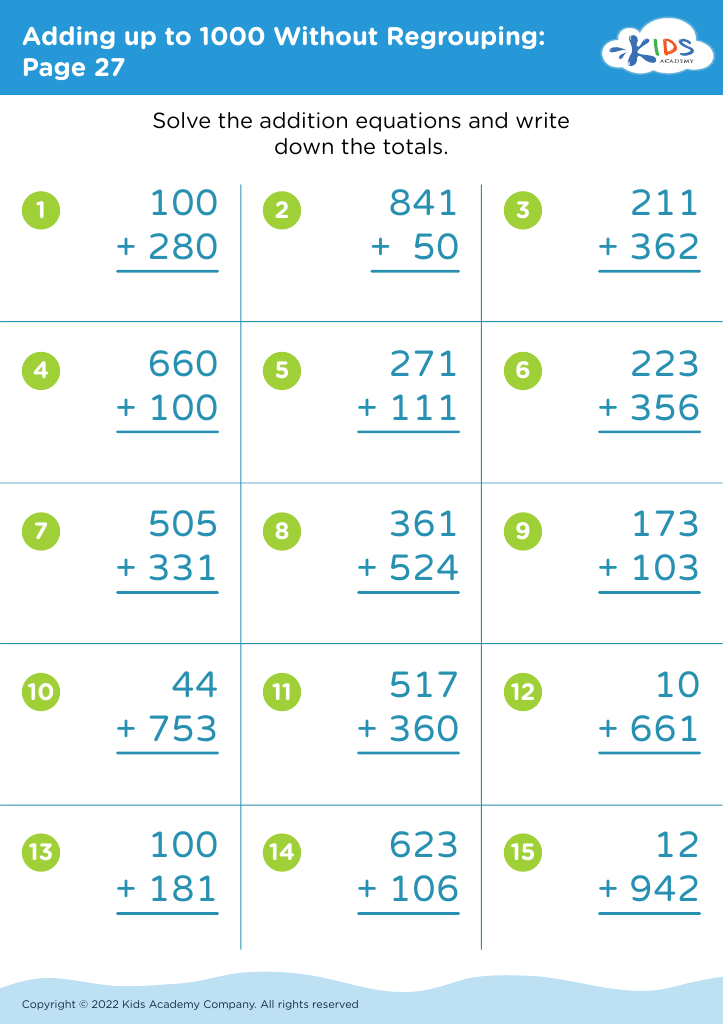
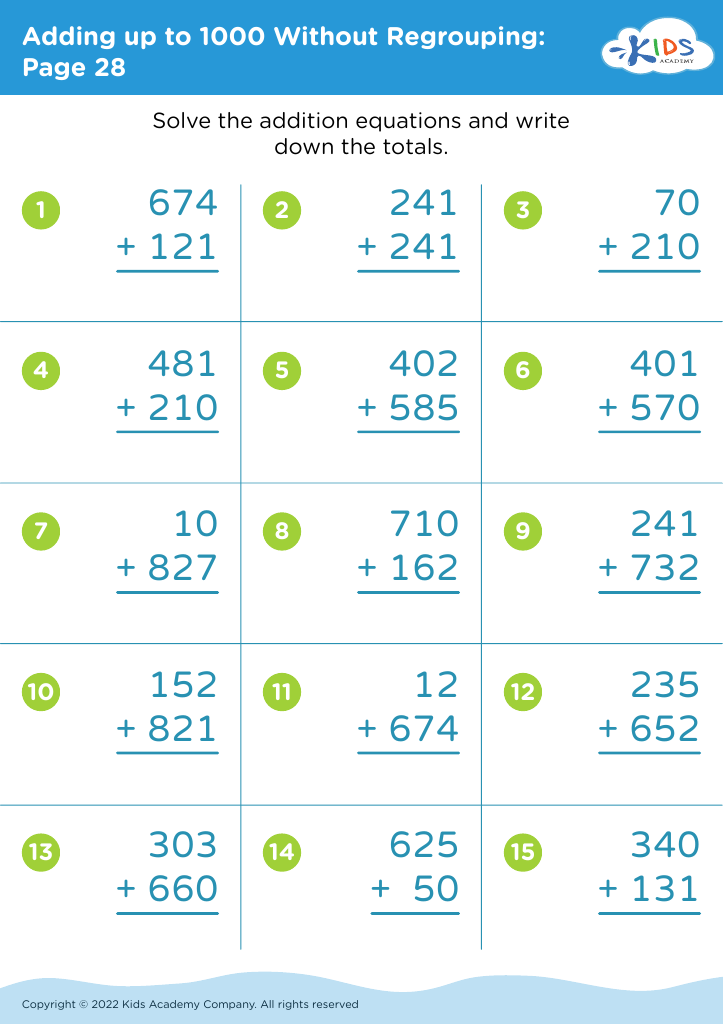
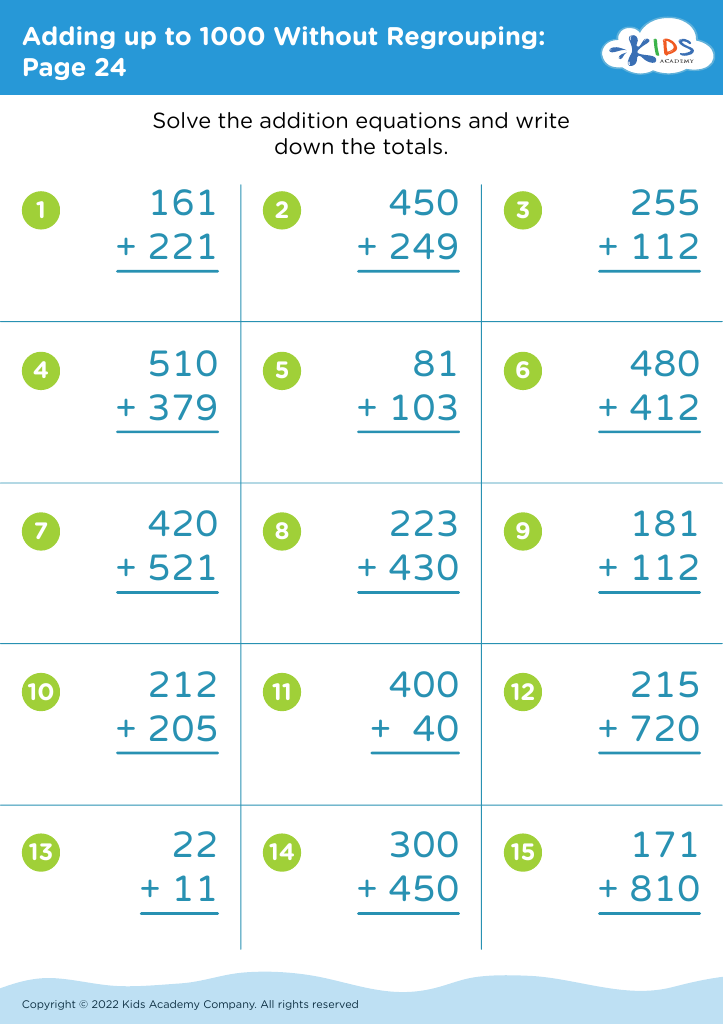


Understanding how to simplify fractions and perform addition ledgers is crucial for children aged 6-8. At this stage of development, students build foundational math skills that will support their academic journey. Simplifying fractions enhances their problem-solving abilities and teaches them the importance of reducing numbers to their simplest form, thus improving their number sense. Educators and parents should recognize that this skill sets the groundwork for more complex mathematical concepts they will encounter later.
Moreover, adding numbers up to 1000 without regrouping reinforces arithmetic fluency, promoting confidence as children tackle larger numerical operations. This skill enhances cognitive skills like critical thinking and logical reasoning, which are essential across subjects. Furthermore, understanding these concepts fosters a positive attitude toward math, reducing math anxiety that many children face.
Lastly, mastering these fundamentals encourages persistent, thoughtful exploration of mathematical ideas. Engaging parents in this learning process also helps strengthen the home-school connection, as they can support their child's practice with exercises and real-life applications. Ultimately, simplifying fractions and efficient addition also instills a sense of achievement in young learners, carving the path to future learning success. Adopting an attentive approach to math education at this age will yield tremendous benefits for lifelong learning.