Color recognition Adding up to 1000 Worksheets for Ages 6-8
3 filtered results
-
From - To
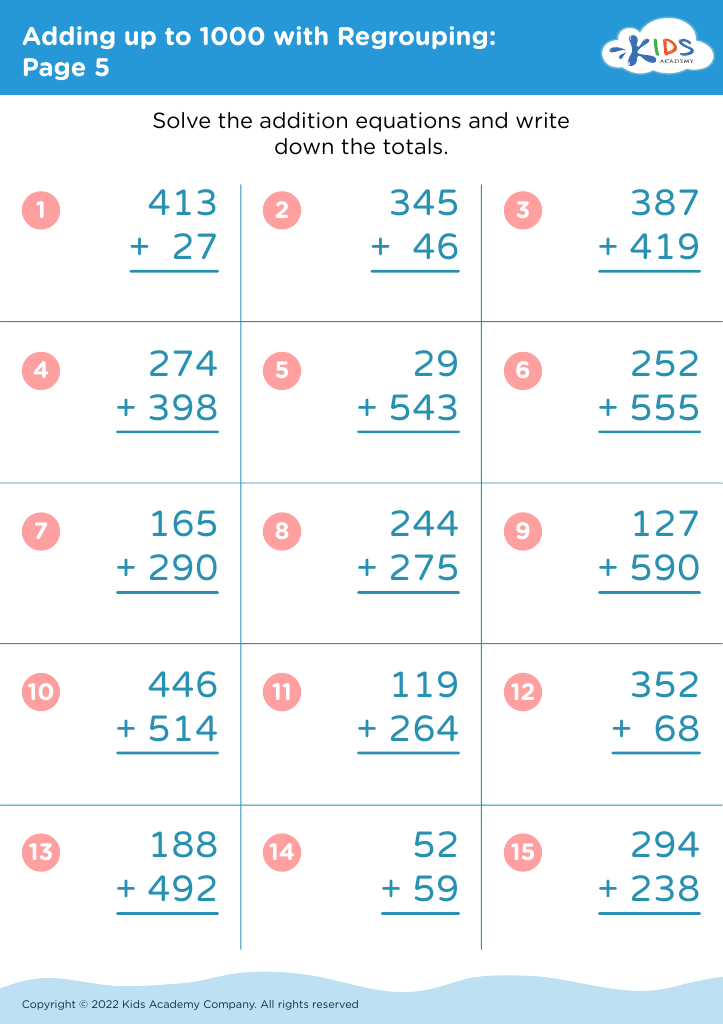
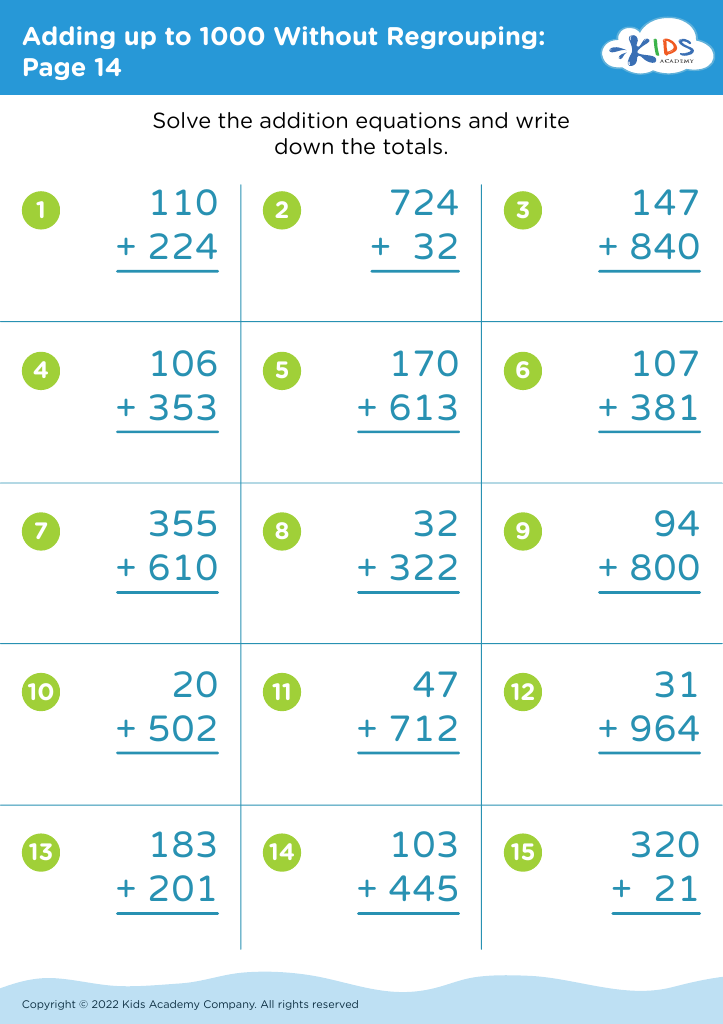
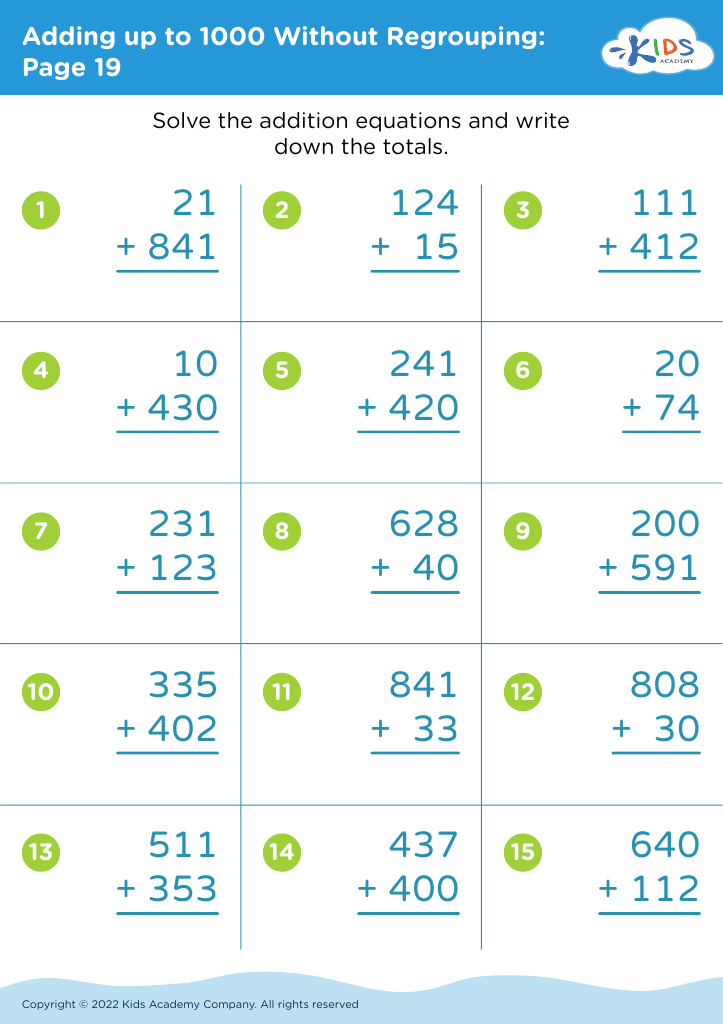
Explore our engaging collection of "Color Recognition Adding Up to 1000 Worksheets" designed specifically for children ages 6-8. These interactive worksheets blend fun and learning by integrating color recognition with foundational math skills. Each worksheet encourages children to identify colors while practicing addition, enhancing their cognitive skills and making math enjoyable. As they solve problems that total up to 1000, young learners will improve their number sense, boost their confidence, and develop critical thinking abilities. Perfect for use in classrooms or at home, these worksheets are a valuable resource for early grade teachers and parents aiming to make learning colorful and exciting!



Color recognition is a foundational skill for children ages 6-8 that holds significant value for their overall development and learning. Understanding colors enhances a child's ability to identify, categorize, and express themselves, which is vital at this stage. It plays a crucial role in visual perception, helping children distinguish between different objects and their features, thereby fostering cognitive development.
In the context of education, color recognition aids in various subjects, including art, science, and math. For instance, when teaching about patterns or counts, colors can add an engaging element to math lessons, making abstract concepts more tangible. Moreover, recognizing colors allows children to articulate their feelings and preferences, enriching their emotional and social skills.
Furthermore, early color recognition can build a child’s confidence, encouraging them to participate in creative activities and express their individuality. Storytelling and reading also become more interesting with colorful illustrations, enhancing their comprehension and imagination.
For parents and teachers, prioritizing color recognition in early education supports holistic growth, piques curiosity, strengthens learning engagement, and sets a strong foundation for future academic endeavors. In doing so, they empower children to explore and interact with their world more effectively.








