Fraction comparison Adding up to 1000 Worksheets for Ages 6-8
13 filtered results
-
From - To
Discover our engaging "Fraction Comparison Adding up to 1000 Worksheets" designed for children aged 6-8. These interactive worksheets help young learners master the art of comparing fractions while strengthening their math skills. With fun visuals and clear explanations, our resources make learning enjoyable and accessible. Kids will develop critical thinking as they explore how fractions relate to numbers, enhancing their confidence in math. Each worksheet provides a variety of exercises that align with educational standards, making them perfect for both classroom use and at-home practice. Start your child's journey to mathematical mastery with our fraction comparison worksheets today!
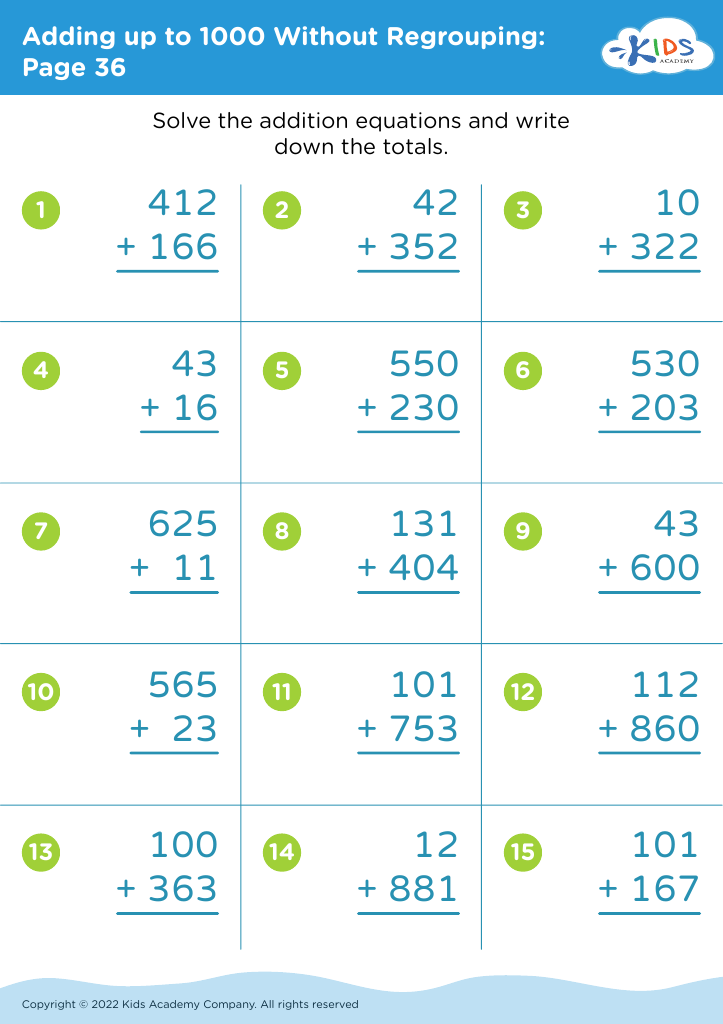
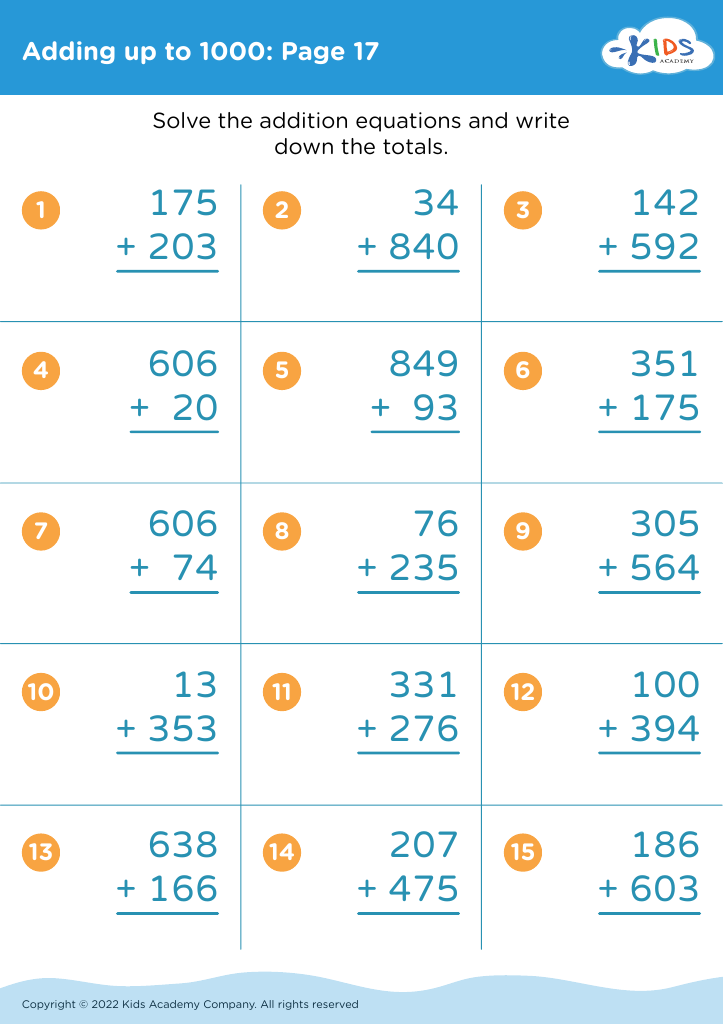
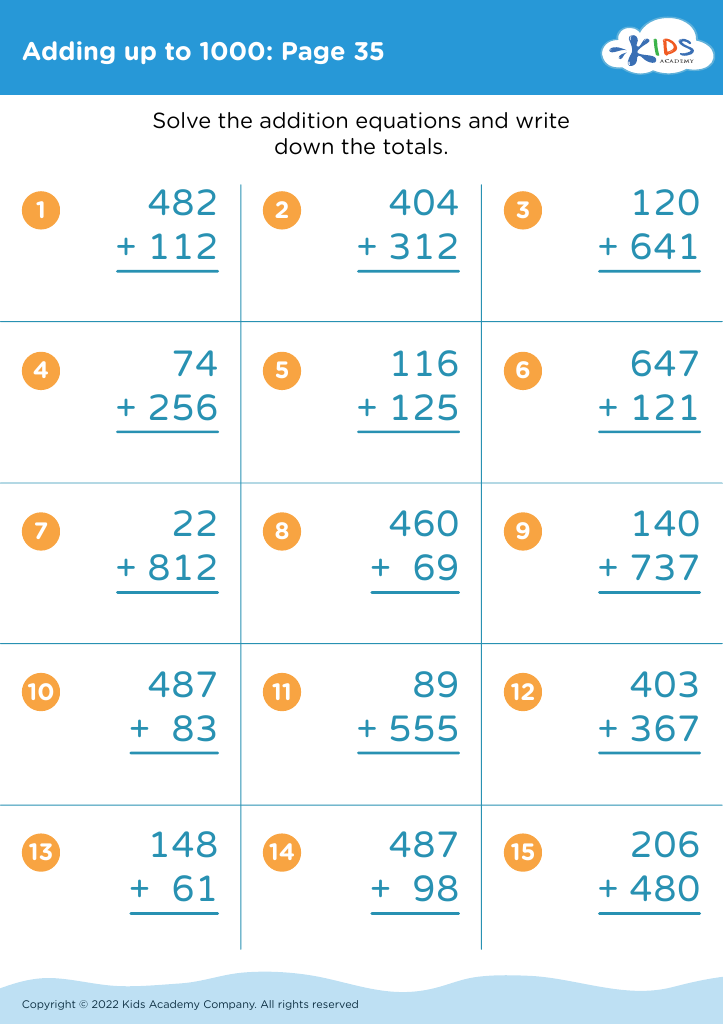
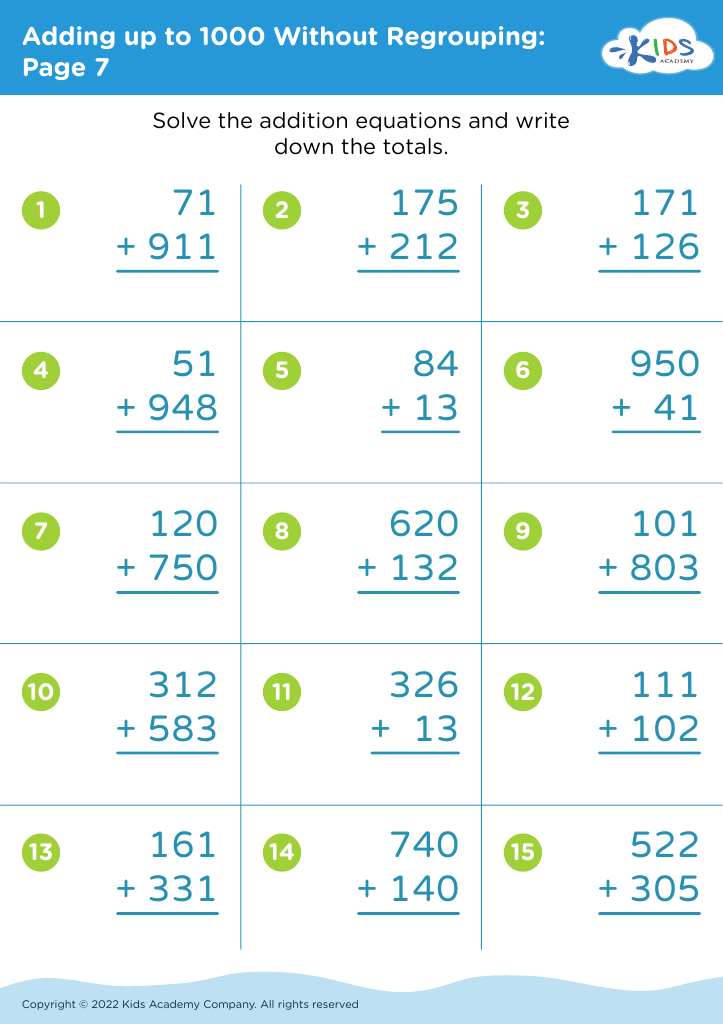
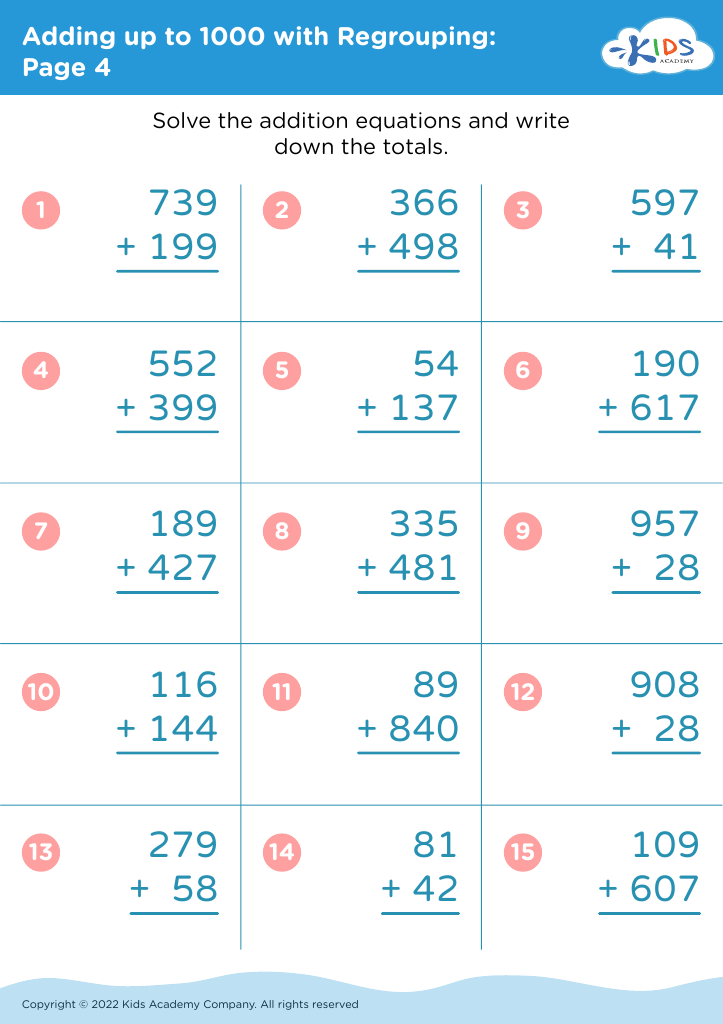
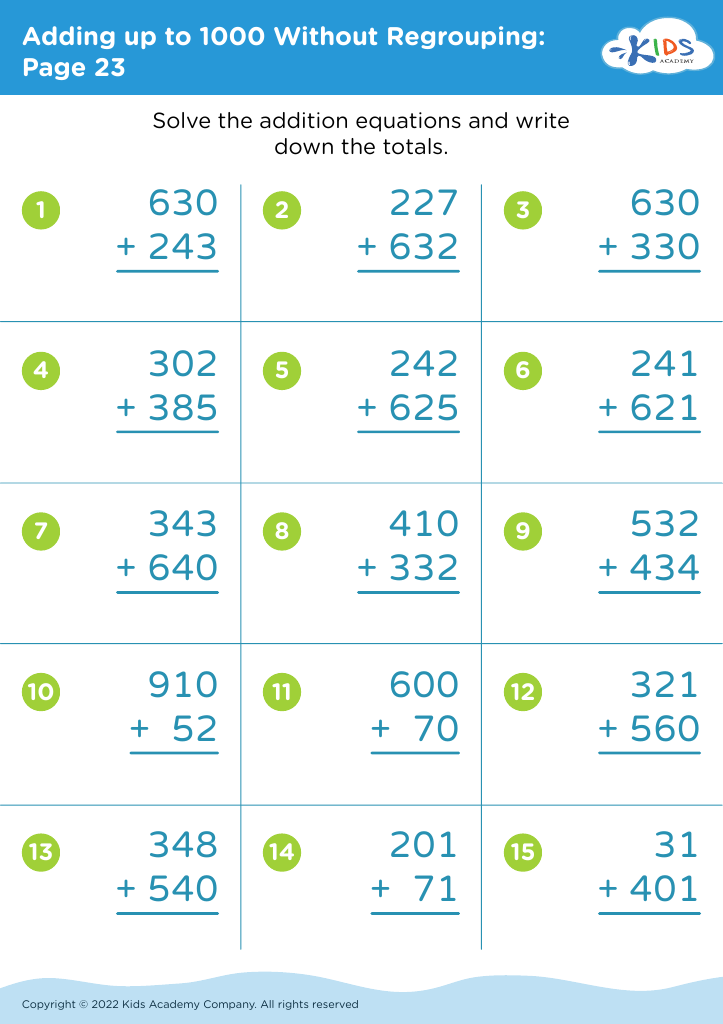
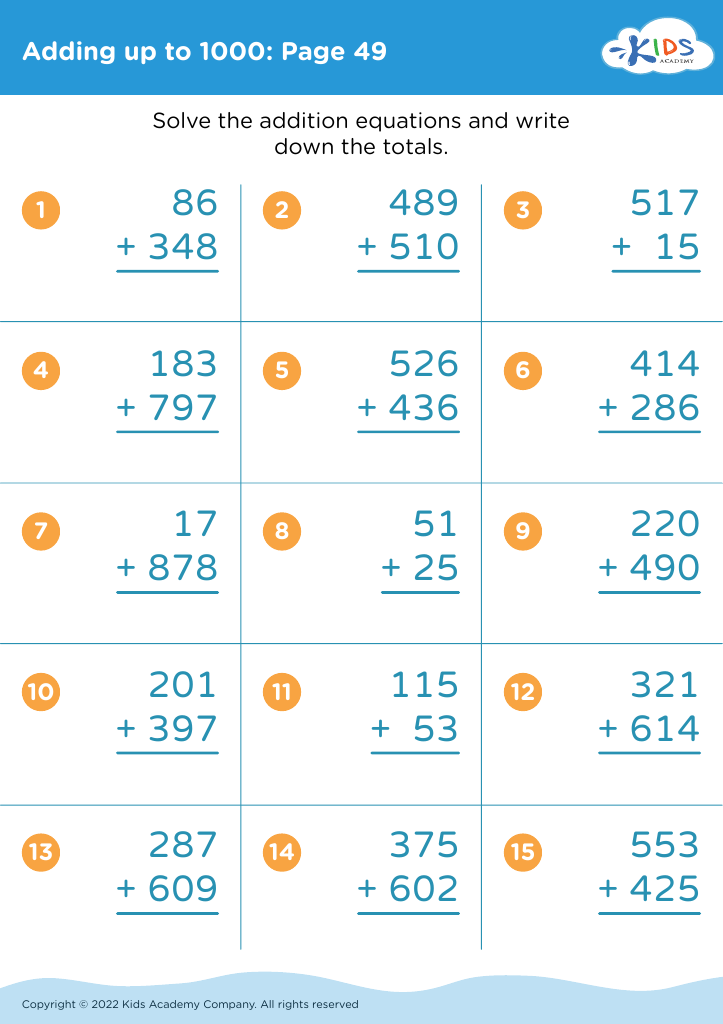
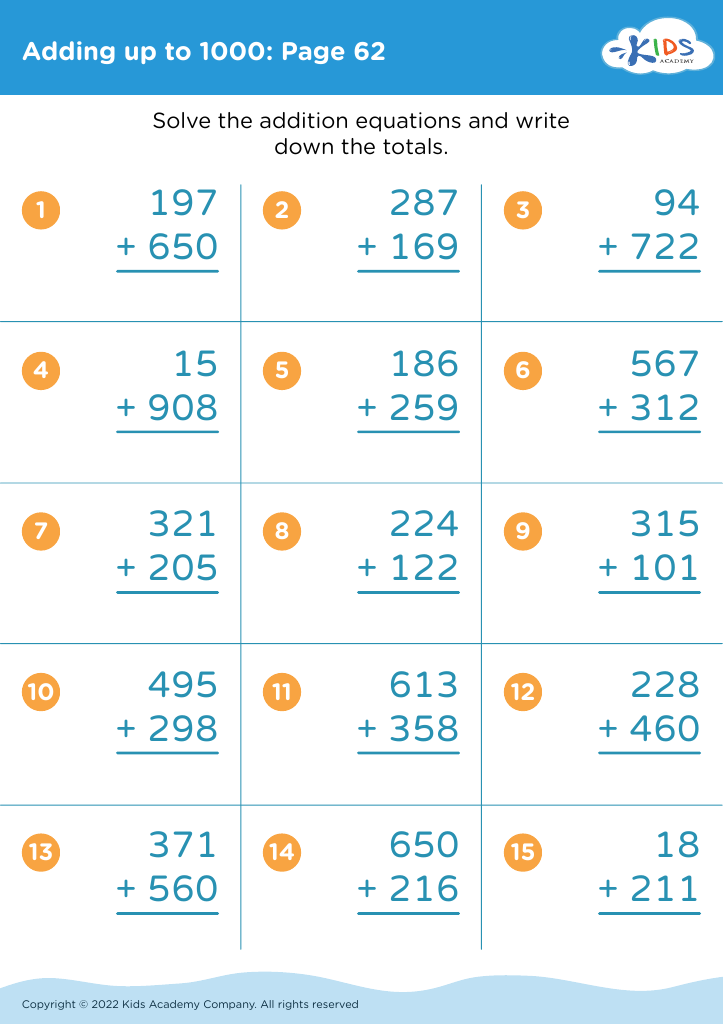
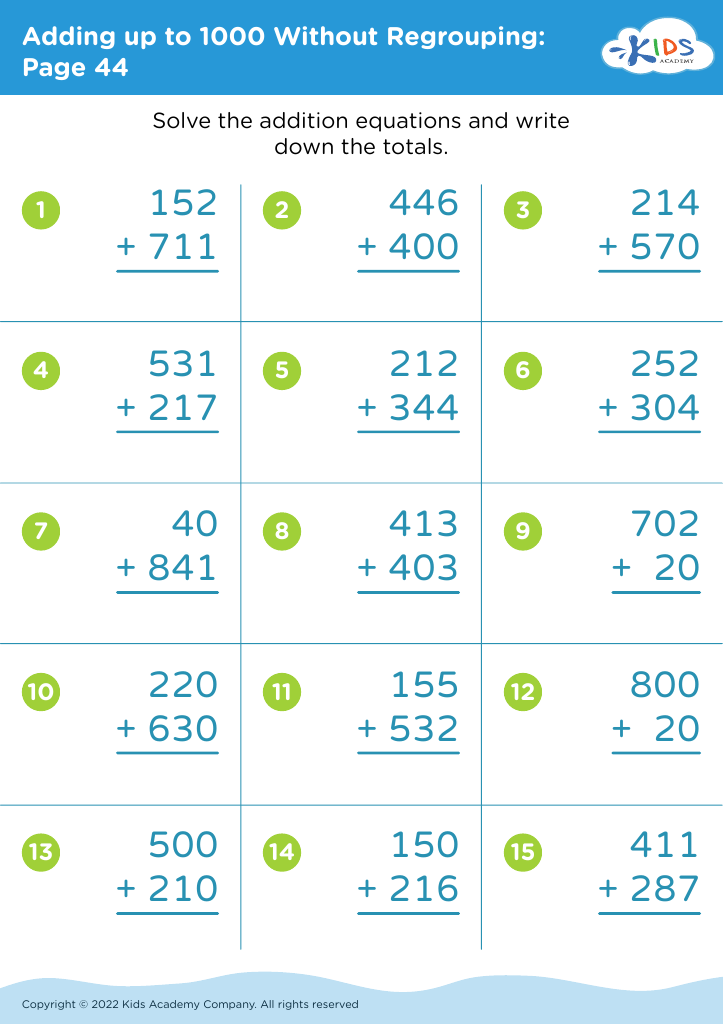
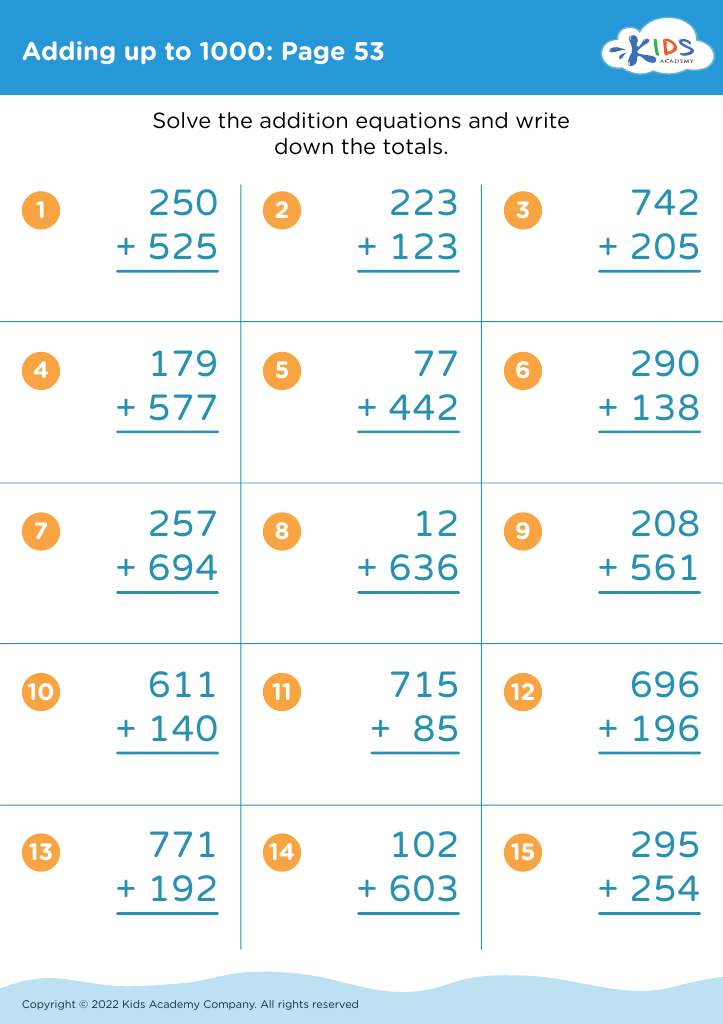
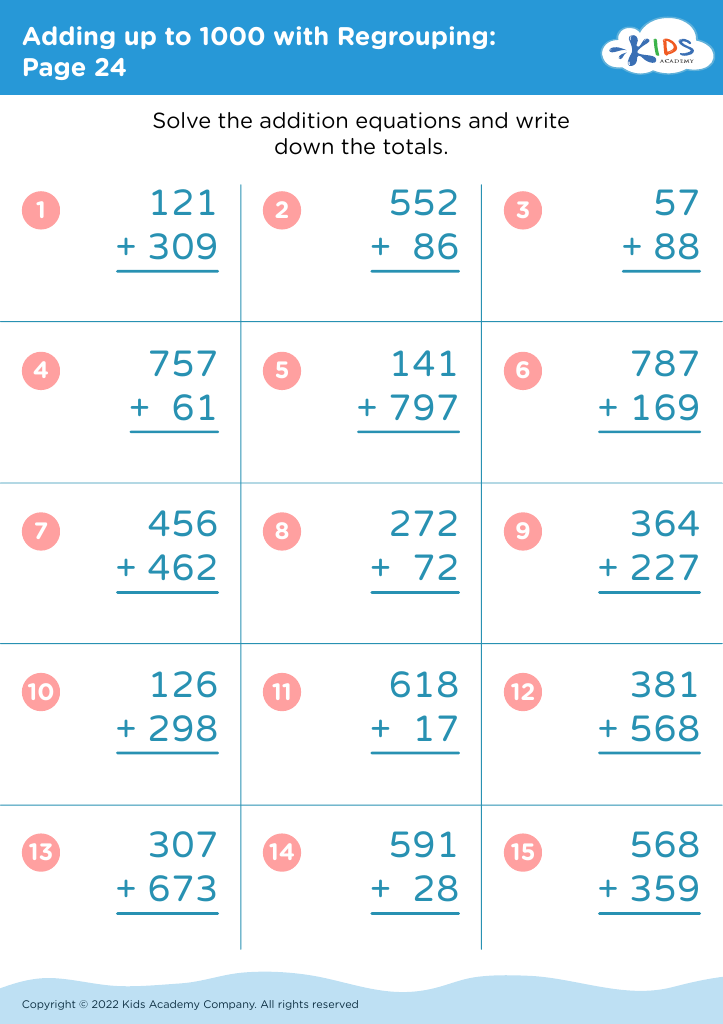
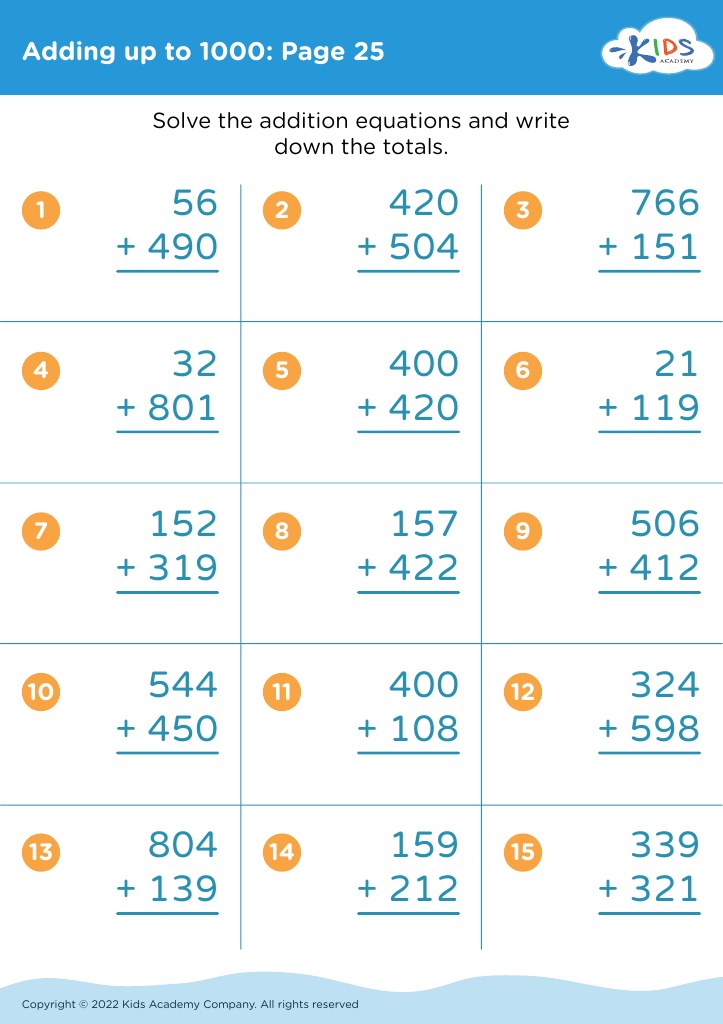
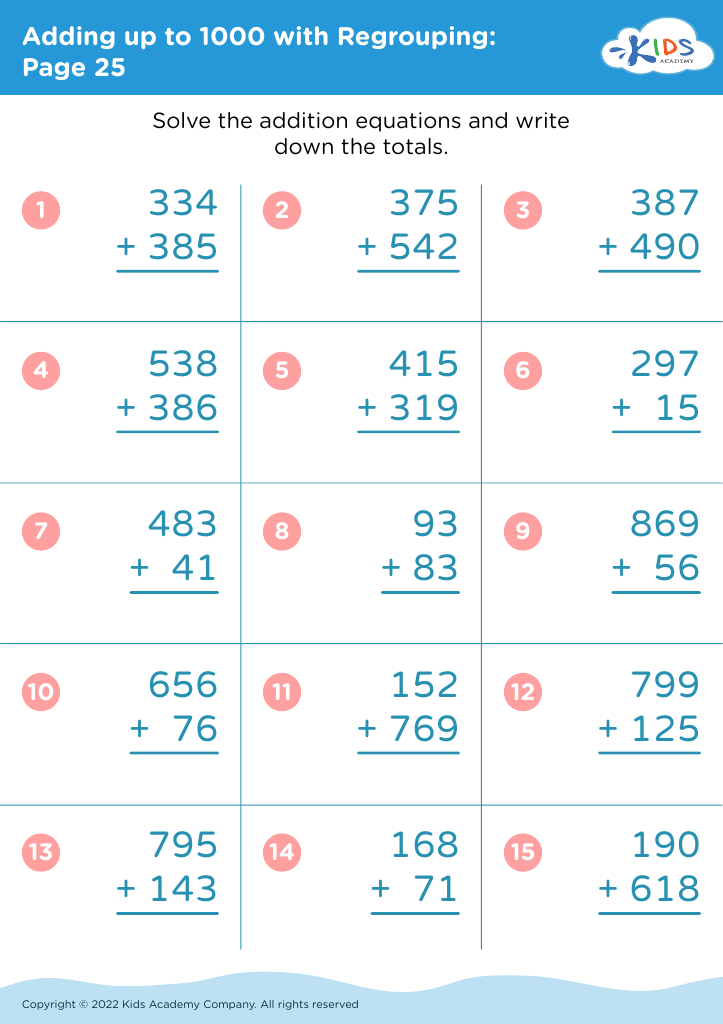



Understanding fraction comparison and addition is crucial for children aged 6-8 as it lays the foundation for more advanced mathematical concepts. At this age, children begin to develop their numeracy skills, and grasping fractions helps them to comprehend parts of a whole—an essential concept they will encounter repeatedly in everyday life.
Teaching young learners how to compare fractions fosters critical thinking and problem-solving skills. When kids learn to evaluate different fractions, they not only grasp their numerical value but develop an understanding of concepts like equivalence, greater than, and less than, which are key to their future math education.
Furthermore, adding fractions teaches children how to combine different parts to create a whole. This skill not only reinforces their understanding of fractions but also enhances their ability to operate with more complex mathematical problems later on.
For parents and teachers, fostering these skills at an early age encourages a positive attitude towards math. It builds confidence in their abilities, paving the way for success in future mathematical endeavors. An early foundation in comparing and adding fractions thus equips children with essential life skills, reinforcing the relevance of math beyond the classroom.








