Simplifying Fractions Adding up to 1000 Worksheets for Ages 6-8
6 filtered results
-
From - To
Welcome to our "Simplifying Fractions Adding up to 1000 Worksheets," specially designed for children ages 6-8! These engaging worksheets help young learners grasp the concept of fractions in a fun and interactive way. With a focus on simplifying fractions while adding up to 1000, kids will strengthen their math skills, enhance their problem-solving abilities, and boost their confidence. Each worksheet is crafted to encourage critical thinking and creativity, providing a solid foundation for future math success. Perfect for classroom or at-home practice, our resources are here to make learning fractions an enjoyable adventure for your little ones!
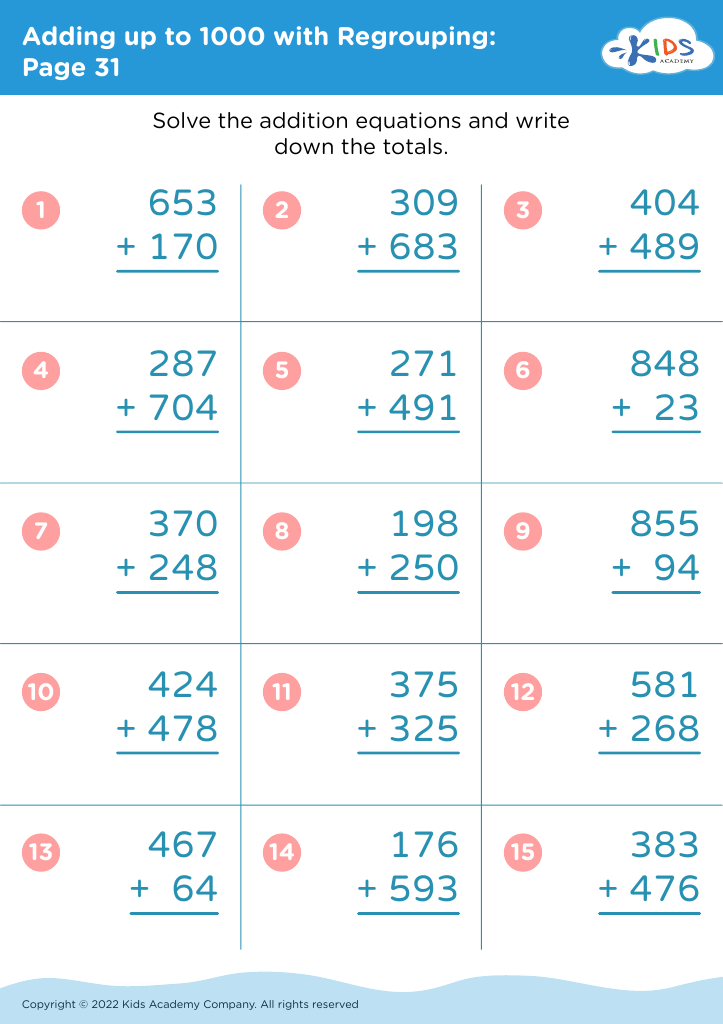
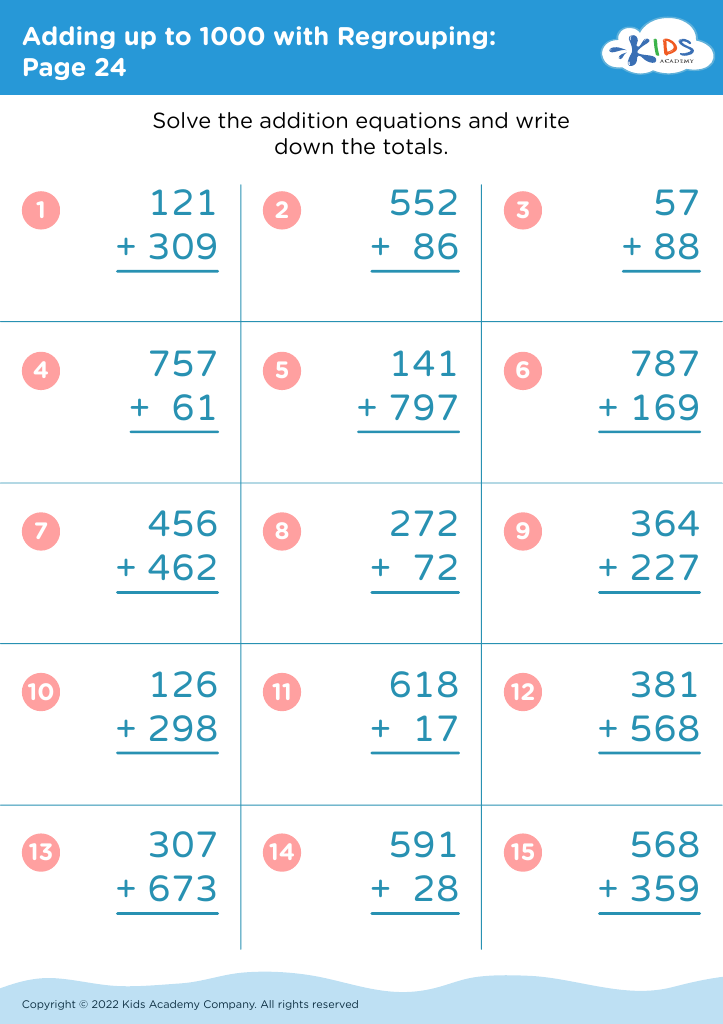
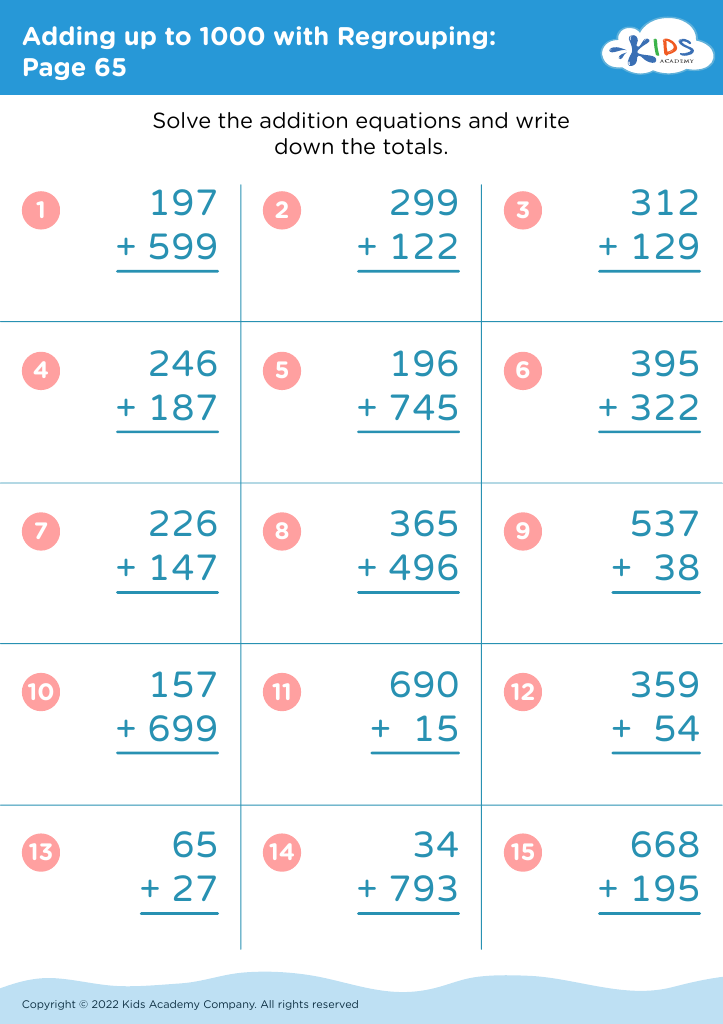
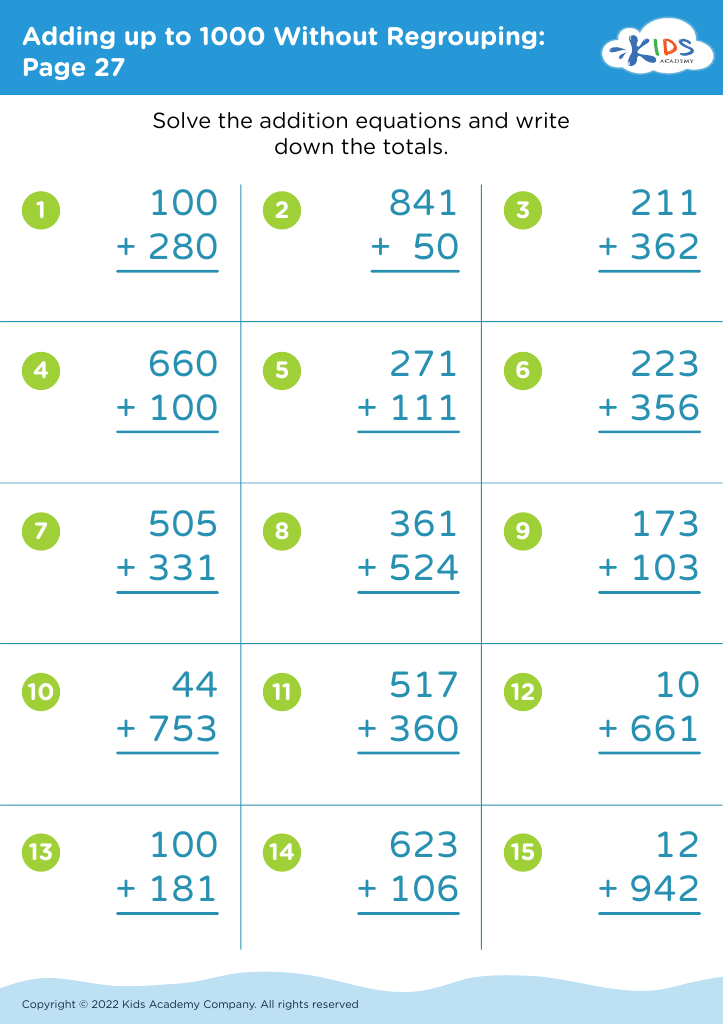
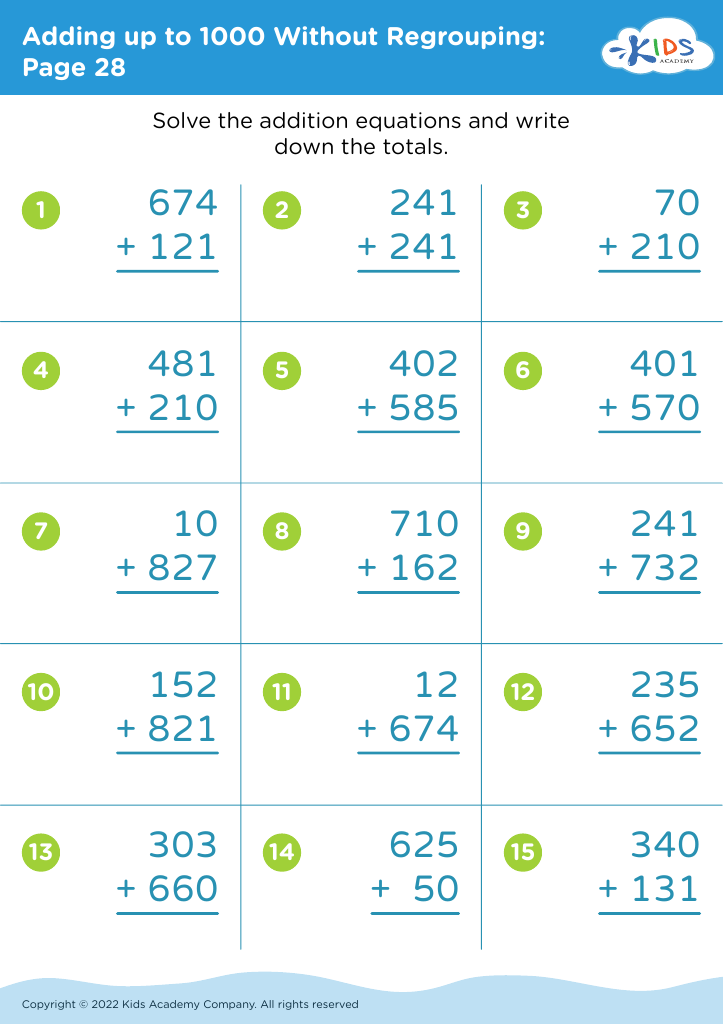
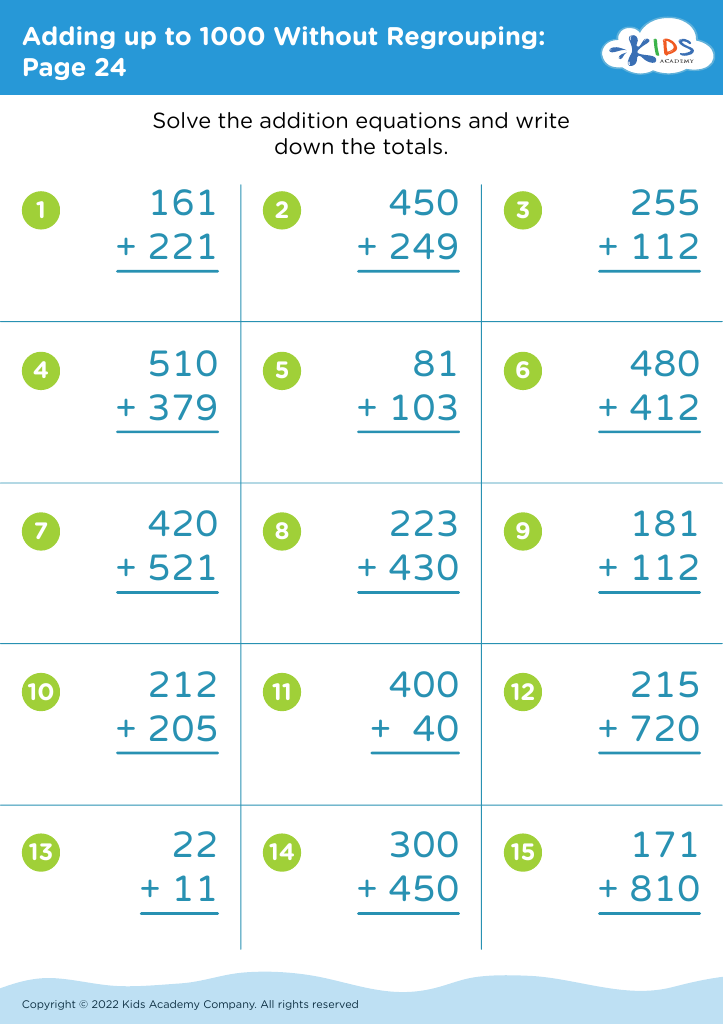



Parents and teachers should prioritize teaching young children about simplifying fractions that add up to 1000 for several important reasons. Firstly, understanding fractions is foundational for children's overall mathematical development. At ages 6-8, children are developing critical thinking skills, and simplifying fractions helps them grasp the concept of equivalent values and numerical relationships.
By introducing fractions in a fun and engaging manner, educators can make learning more relatable and enjoyable. Simplifying fractions leads to stronger problem-solving abilities, which are essential for future math concepts, including addition, subtraction, and division. Moreover, as children work on simplifying fractions, they learn through practical examples, improving their ability to make connections between different mathematical concepts.
Fostering these skills also boosts children's confidence in their abilities. When students succeed in simplifying fractions, they gain a sense of accomplishment, motivating them to tackle more advanced topics. Involving parents in this learning process reinforces these lessons at home, creating a collaborative environment that supports children's educational journey.
Ultimately, emphasizing the simplification of fractions adds up to 1000 enriches literacy and numeracy, preparing children not only for exams but also for real-life mathematical applications, encouraging a lifelong love of learning.








