Understand fractions Adding up to 1000 Worksheets for Ages 6-8
4 filtered results
-
From - To
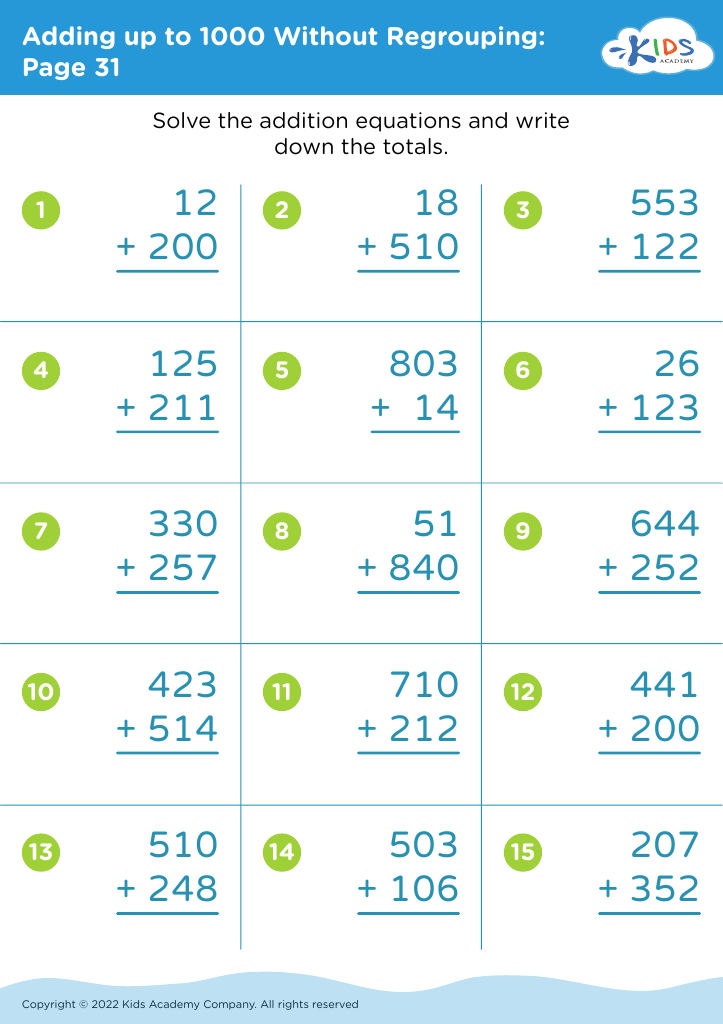
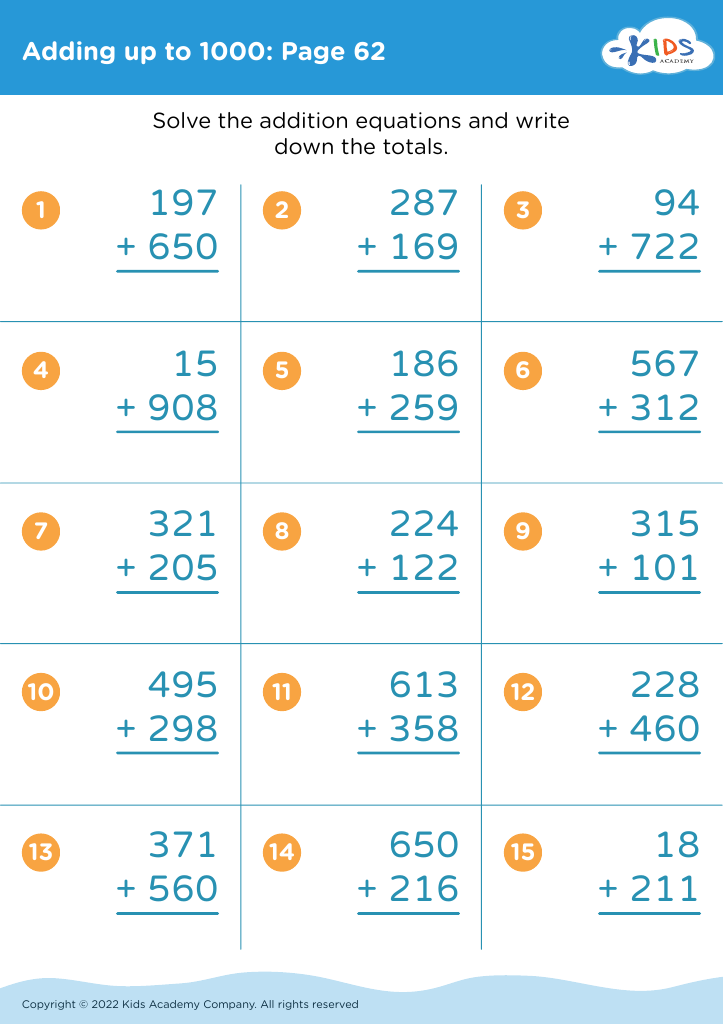
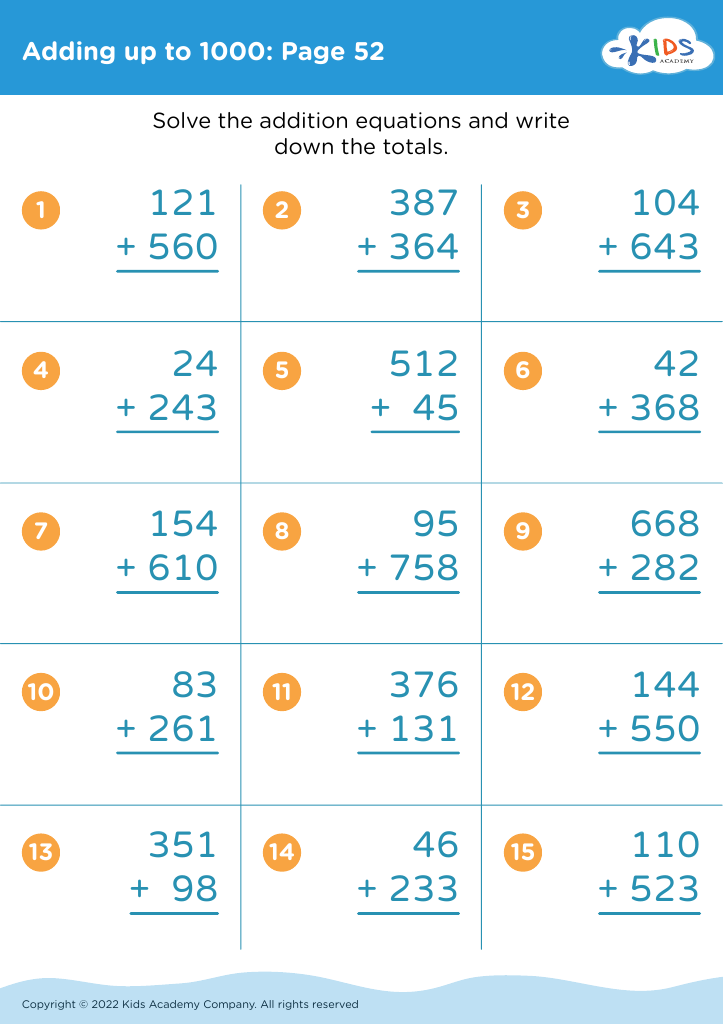
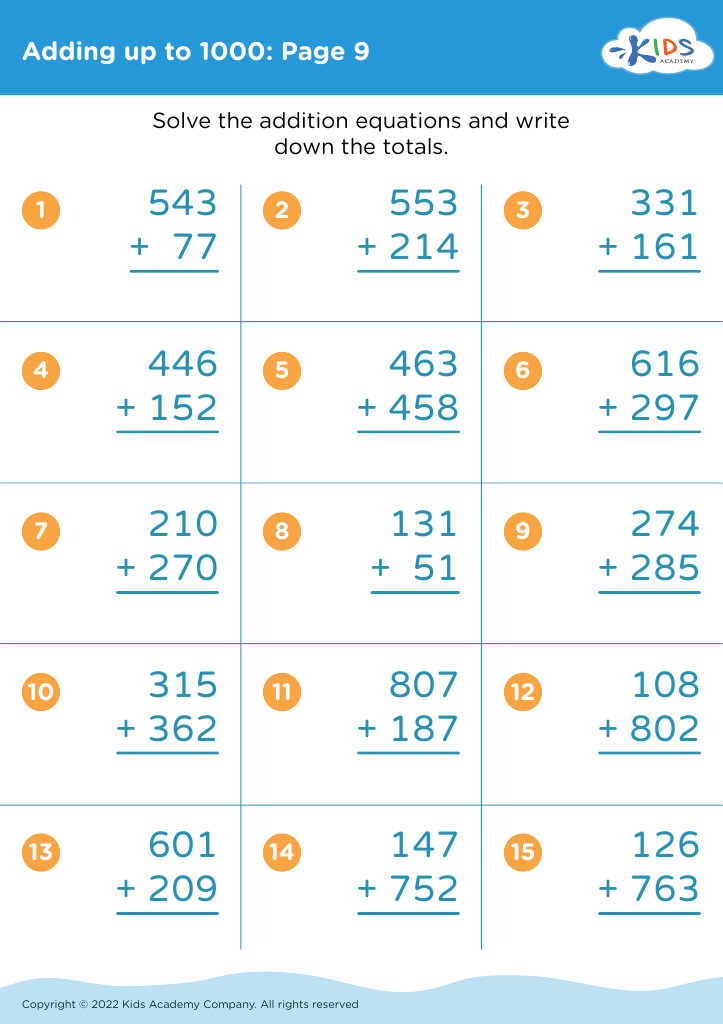
Unlock the world of fractions for 6 to 8-year-olds with our engaging "Understand Fractions: Adding Up to 1000" worksheets. Designed to reinforce foundational math skills, these interactive resources will help young learners grasp fraction concepts through fun exercises and practical problems. Children will explore adding fractions, simplifying them, and unlocking the mysteries of equivalent fractions—all while building confidence in their mathematical abilities. Each worksheet features vibrant visuals and age-appropriate challenges, ensuring a captivating learning experience. Equip your child with the tools they need to master fractions and succeed in their educational journey. Start fostering a love for math today!



Understanding fractions and their addition is vital for children aged 6-8 as it lays a strong mathematical foundation for their future learning. Fractions are foundational concepts that help children comprehend parts of a whole, measurements, and division. Gaining a solid grasp of fractions during these formative years enhances critical thinking and problem-solving skills.
When students learn to add fractions, they develop the ability to visualize and manage numerical relationships, which is essential for more advanced mathematical operations in later grades. Building these skills early fosters confidence in their mathematical abilities, making them more enthusiastic learners.
Moreover, proficient understanding of fractions is relevant beyond the classroom. It equips children with practical skills they will use in everyday life, from cooking to budgeting and time management. By making connections between math and real-world applications, teachers and parents can reinforce the importance of these skills.
Investing time and resources in helping young learners understand fractions will pay dividends as they progress through their education and into life. Engaging with fractions also promotes teamwork and communication when working on collaborative math activities, further supporting their social development. Thus, emphasizing this aspect of math is essential for nurturing capable and confident learners.








