Filters

44 filtered results

Clear all filters
Favorites
With answer key
Interactive

44 filtered results

Difficulty Level

Grade


Check out this FREE Trial Lesson on Adding up to 1000 for age 6-8!

Short and Long Vowel Sort

Favorites
With answer key
Interactive
  • 6-8
  • Understanding fractions
  • Adding up to 1000
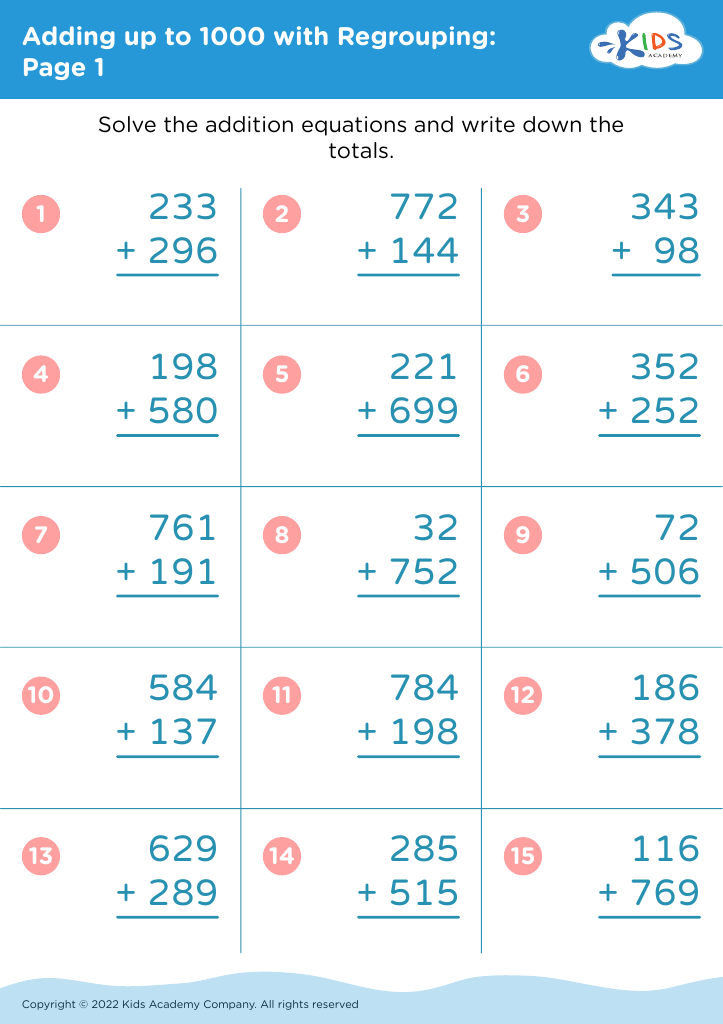
Adding up to 1000 with Regrouping: Page 1
Worksheet
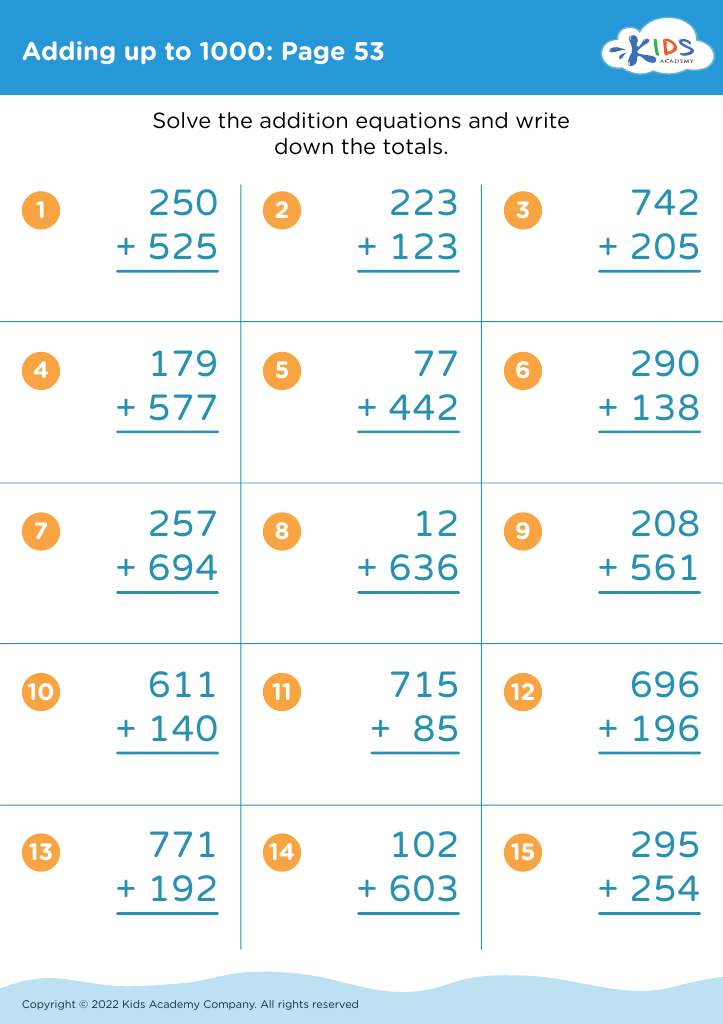
Adding up to 1000: Page 53

Adding up to 1000: Page 53

Adding up to 1000: Page 53
Worksheet
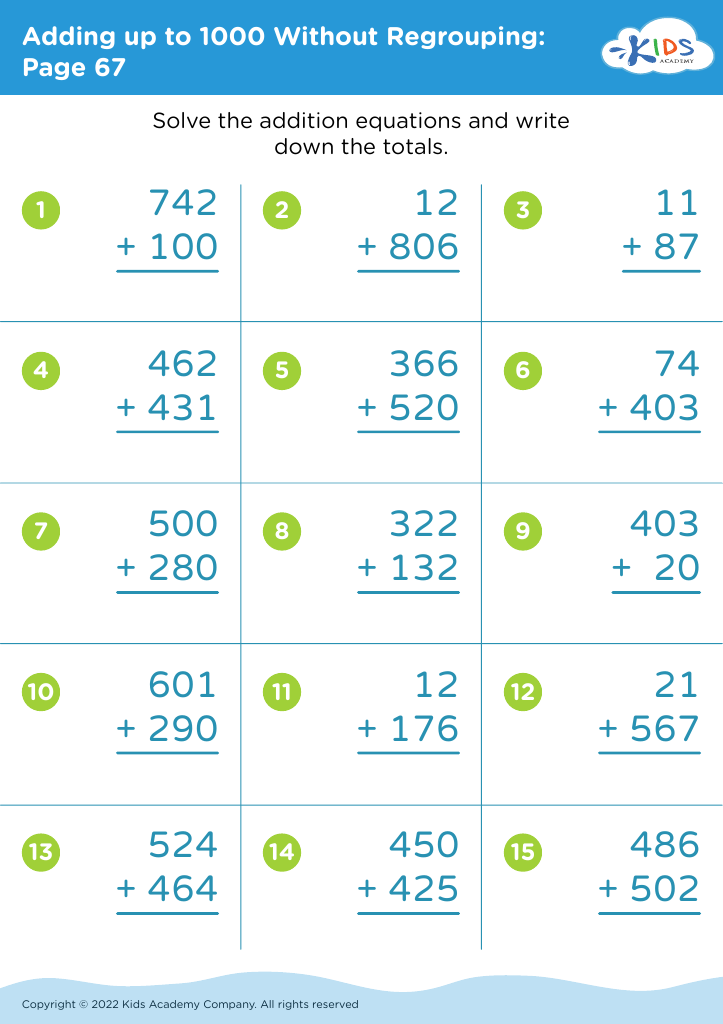
Adding up to 1000 Without Regrouping: Page 67
Worksheet
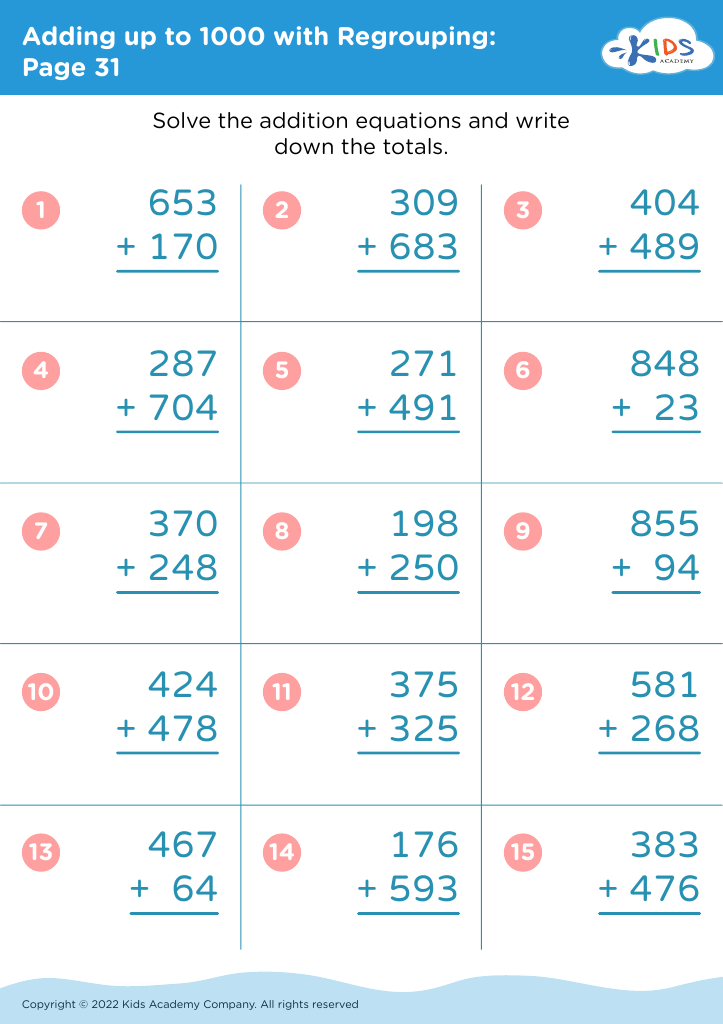
Adding up to 1000 with Regrouping: Page 31
Worksheet
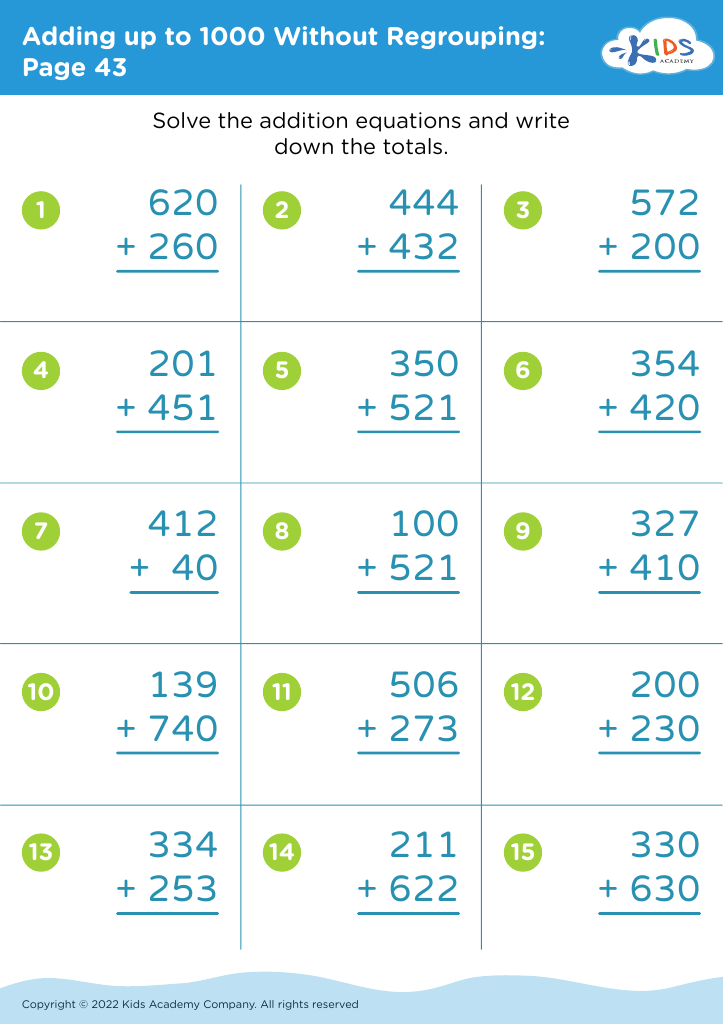
Adding up to 1000 Without Regrouping: Page 43
Worksheet
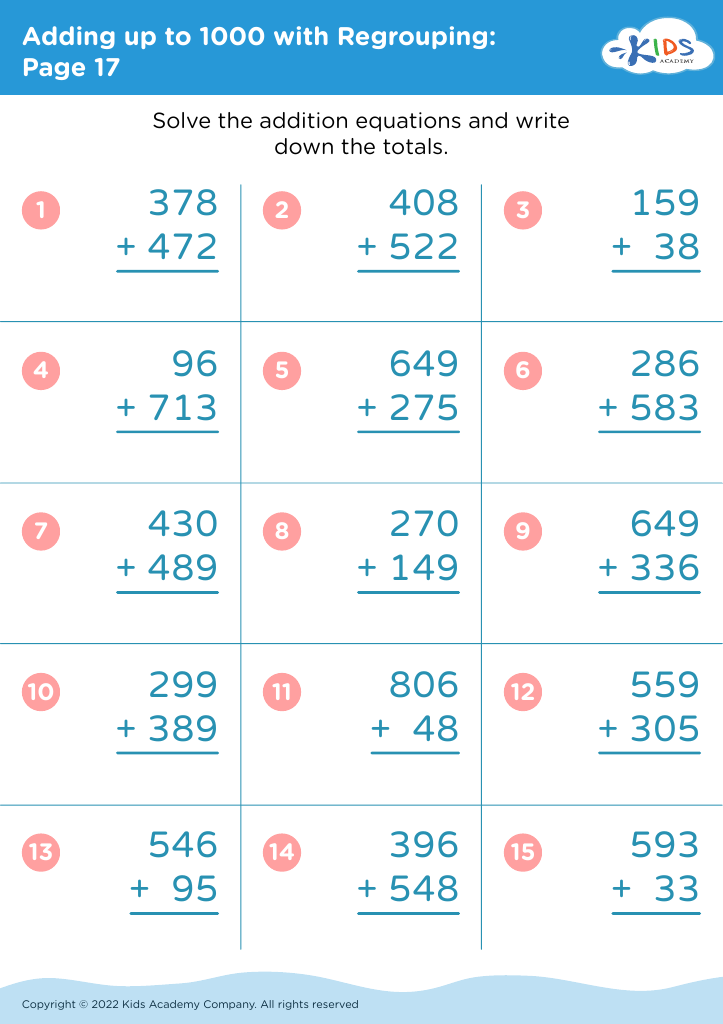
Adding up to 1000 with Regrouping: Page 17
Worksheet
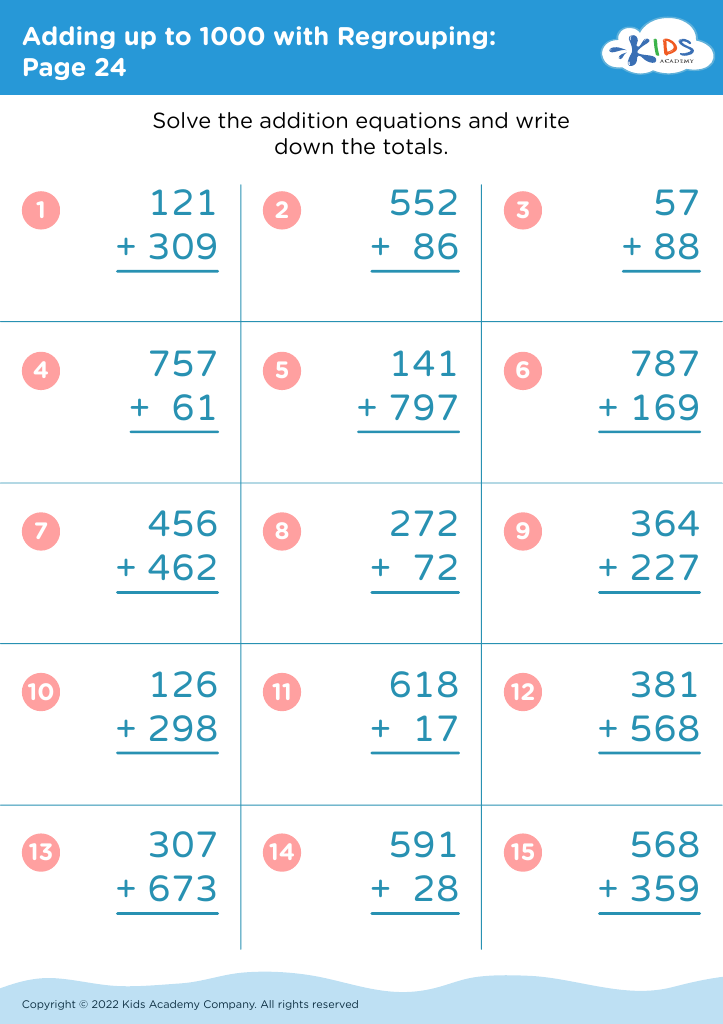
Adding up to 1000 with Regrouping: Page 24
Worksheet
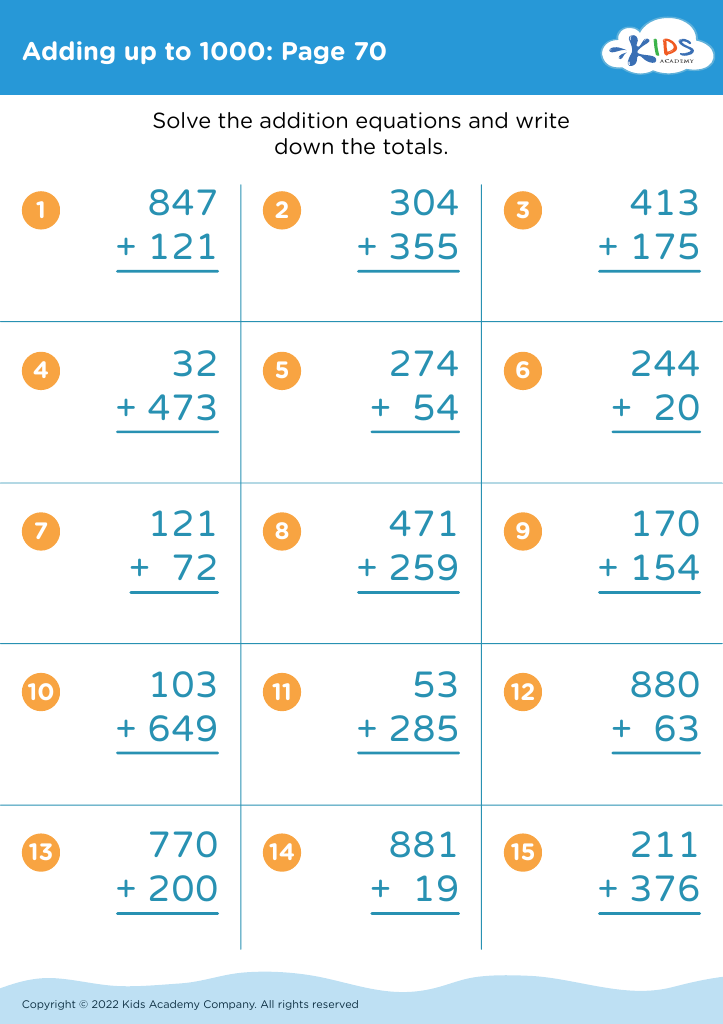
Adding up to 1000: Page 70

Adding up to 1000: Page 70

Adding up to 1000: Page 70
Worksheet
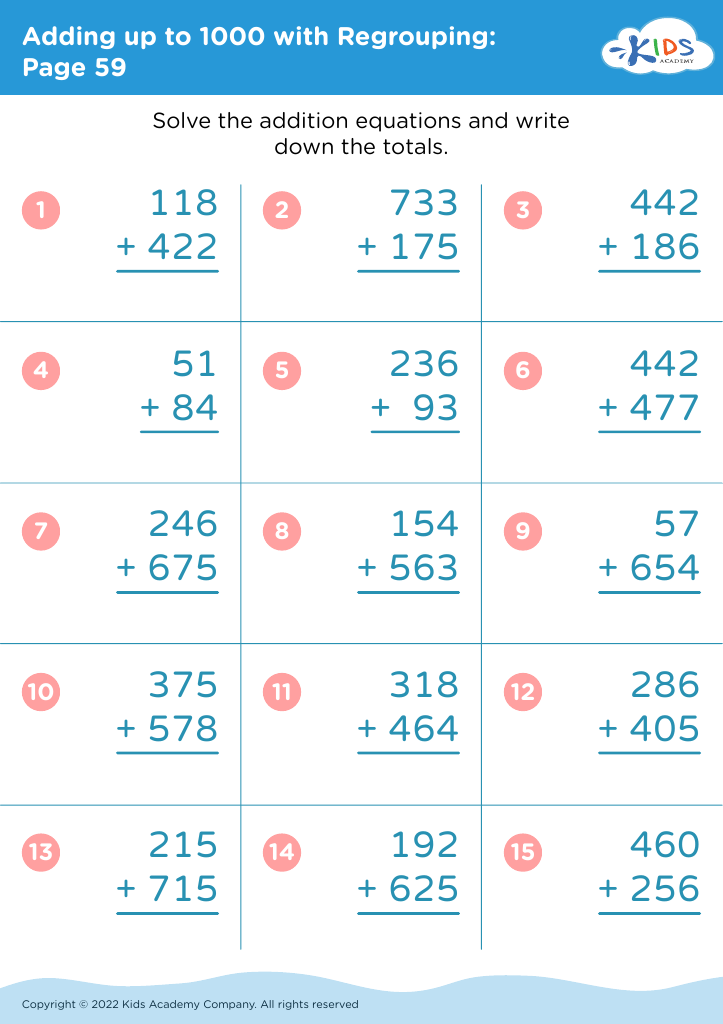
Adding up to 1000 with Regrouping: Page 59
Worksheet
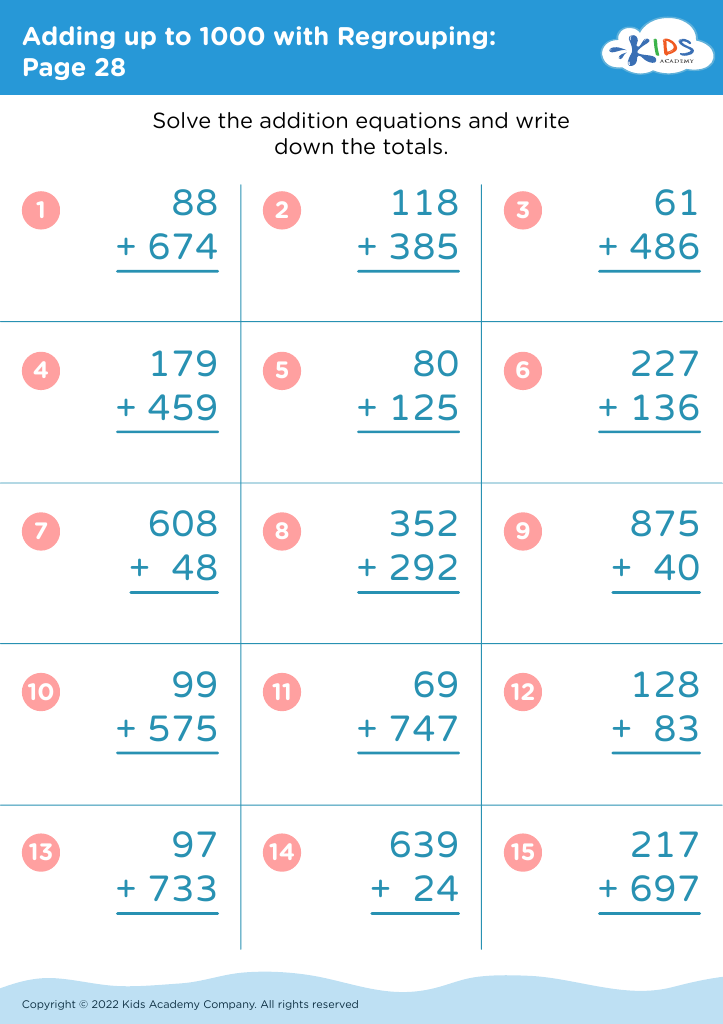
Adding up to 1000 with Regrouping: Page 28
Worksheet
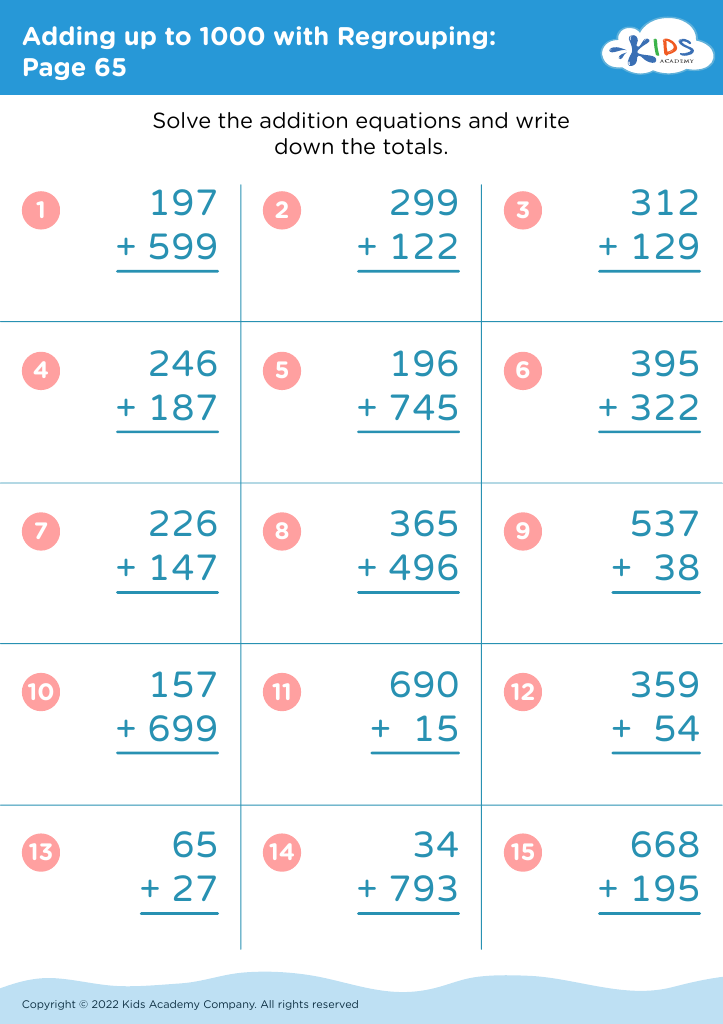
Adding up to 1000 with Regrouping: Page 65
Worksheet
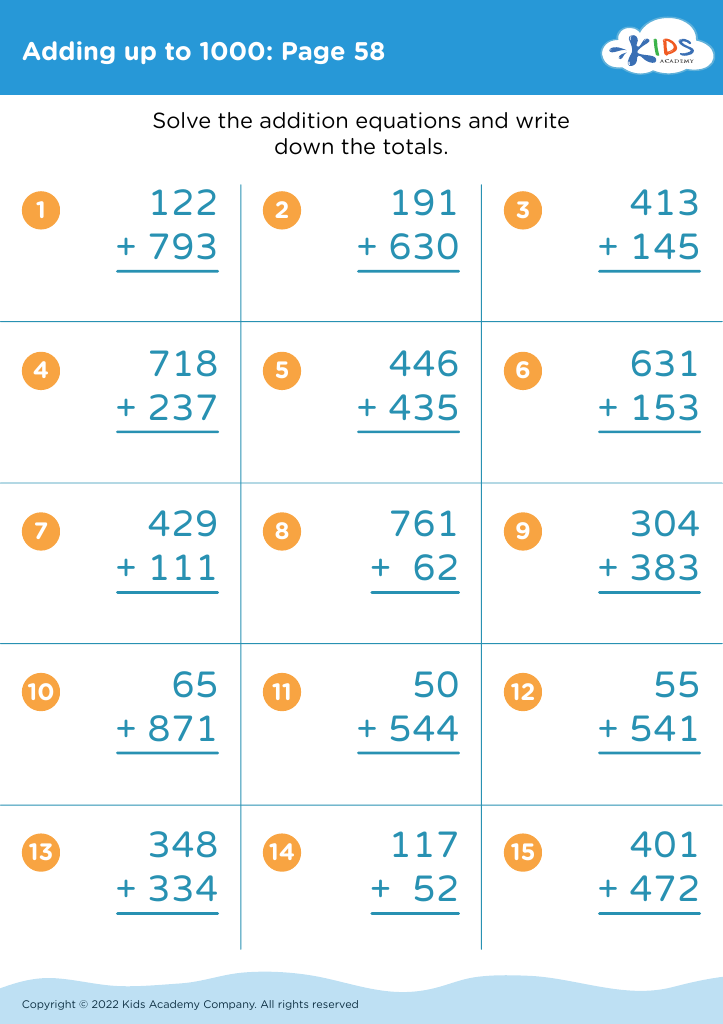
Adding up to 1000: Page 58

Adding up to 1000: Page 58

Adding up to 1000: Page 58
Worksheet
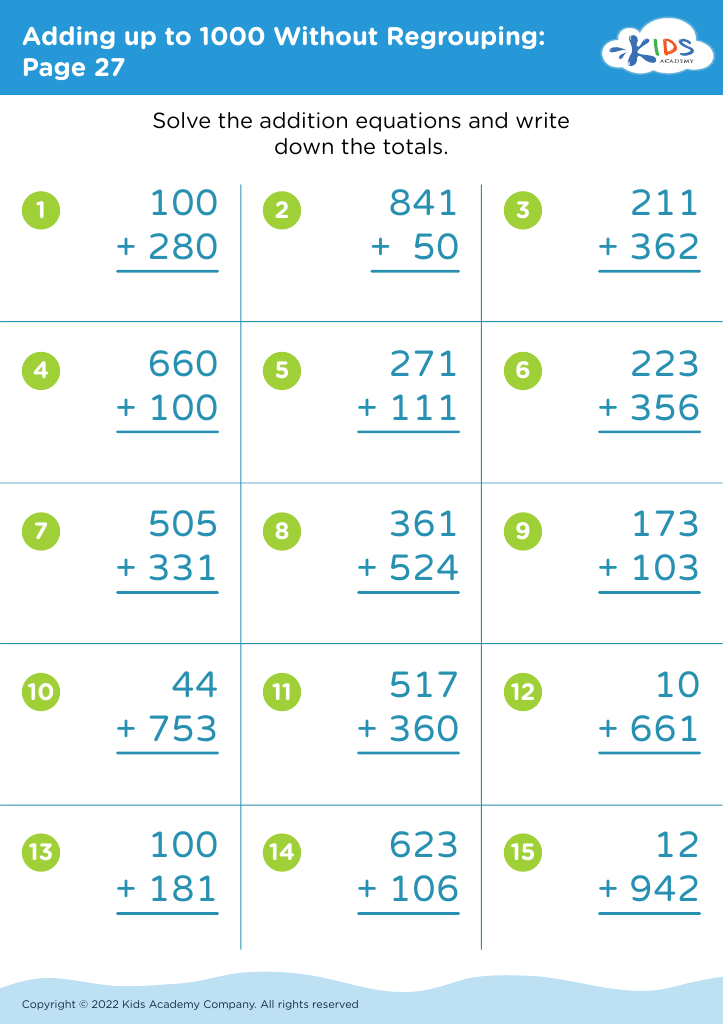
Adding up to 1000 Without Regrouping: Page 27
Worksheet
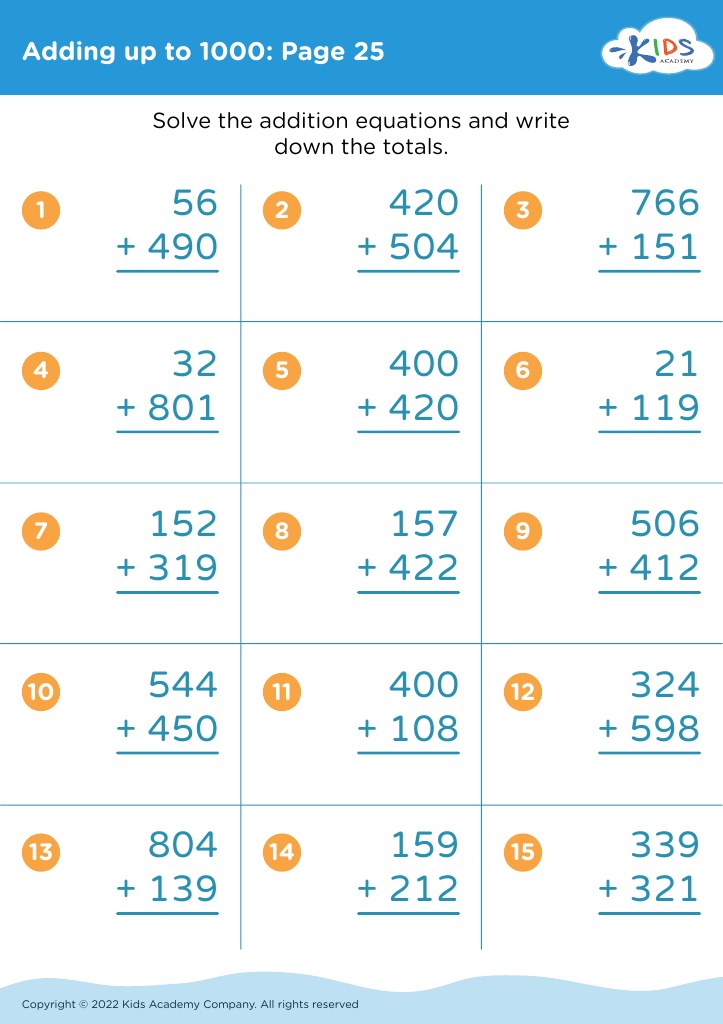
Adding up to 1000: Page 25

Adding up to 1000: Page 25

Adding up to 1000: Page 25
Worksheet
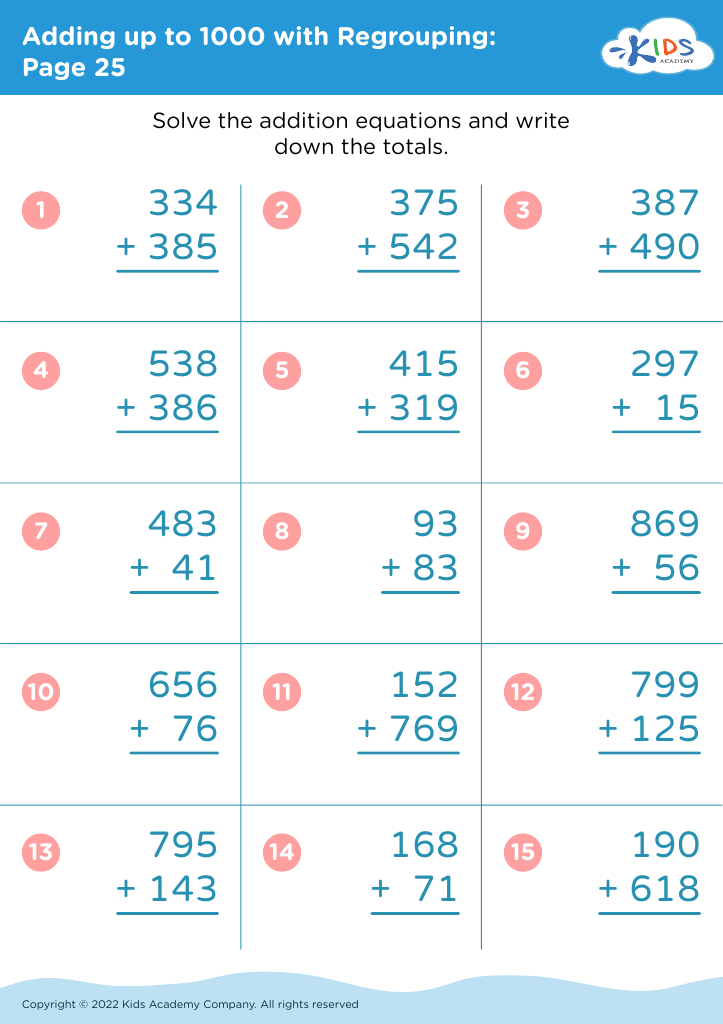
Adding up to 1000 with Regrouping: Page 25
Worksheet
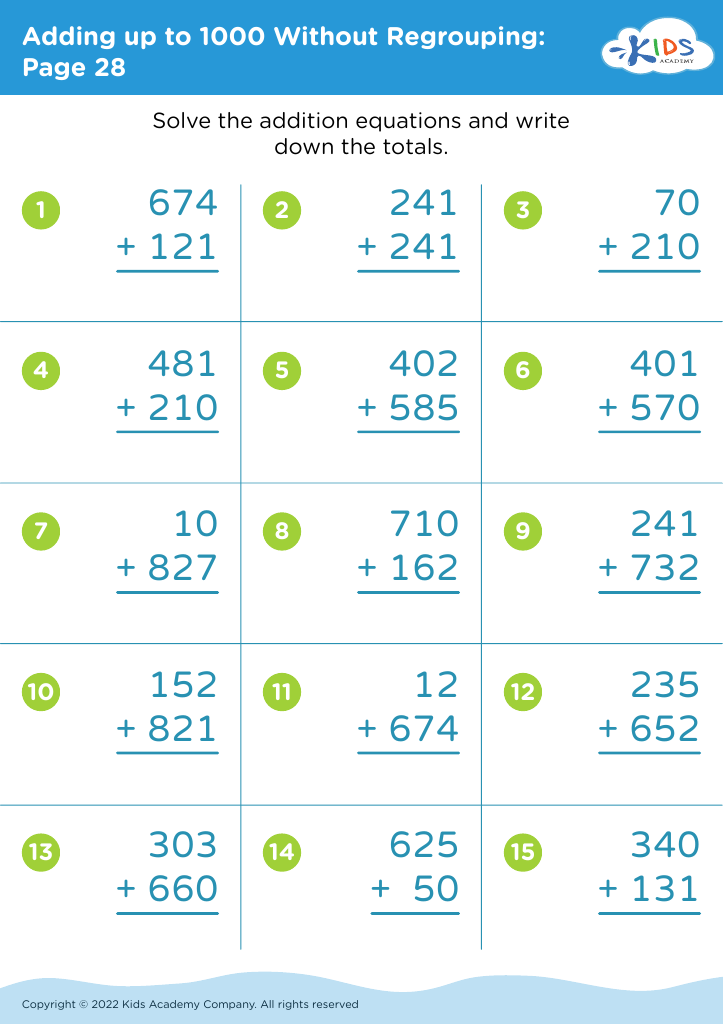
Adding up to 1000 Without Regrouping: Page 28
Worksheet
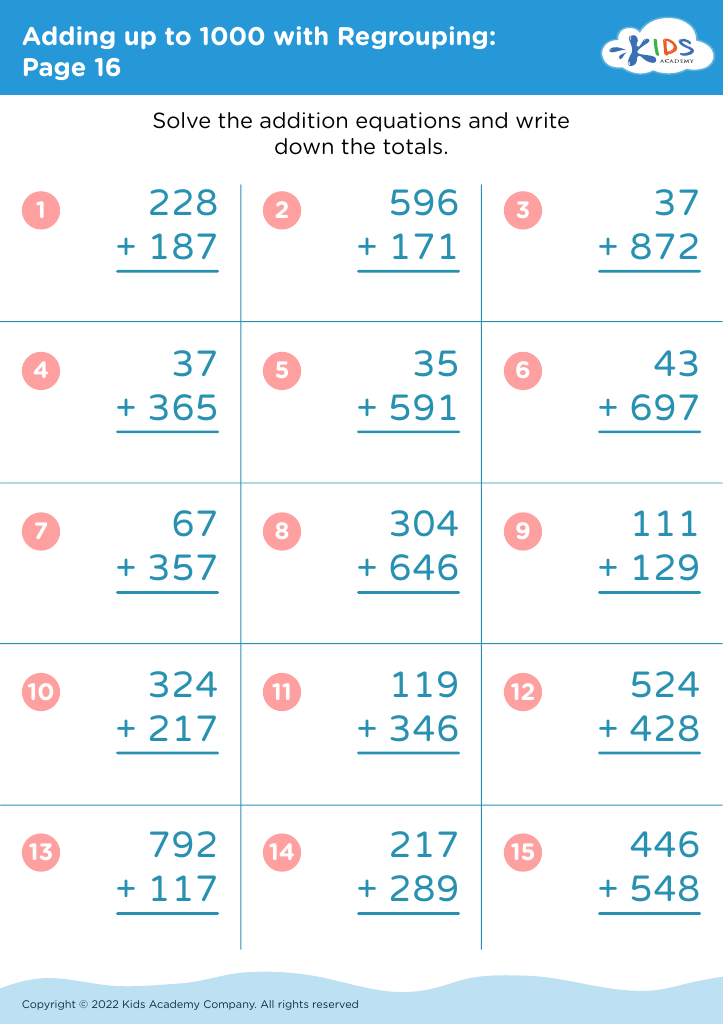
Adding up to 1000 with Regrouping: Page 16
Worksheet
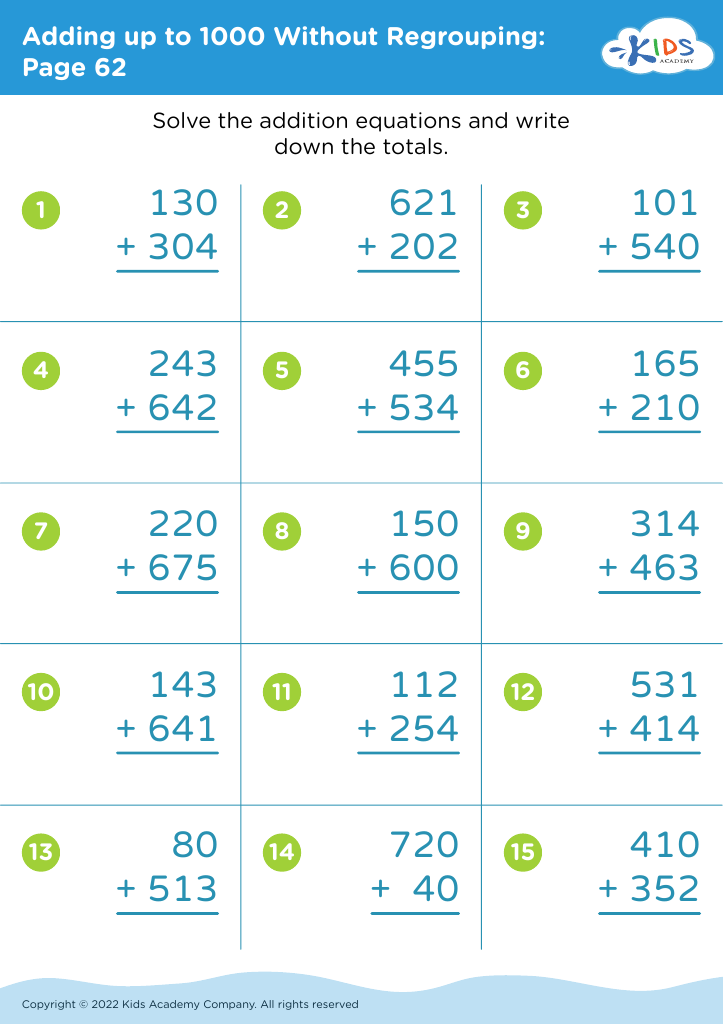
Adding up to 1000 Without Regrouping: Page 62
Worksheet
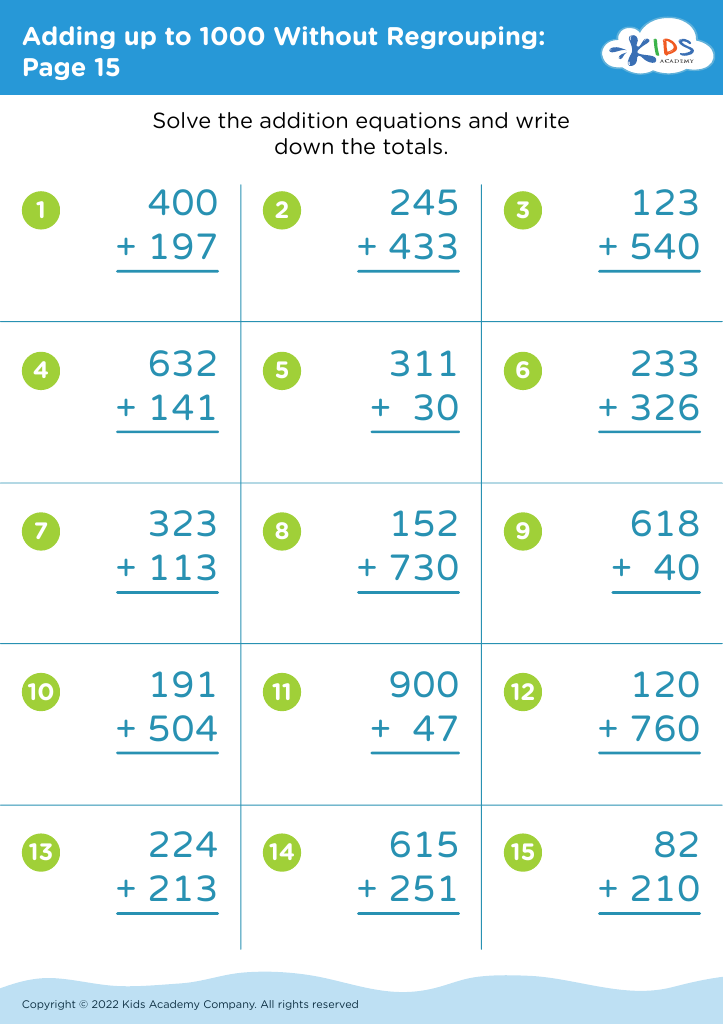
Adding up to 1000 Without Regrouping: Page 15
Worksheet
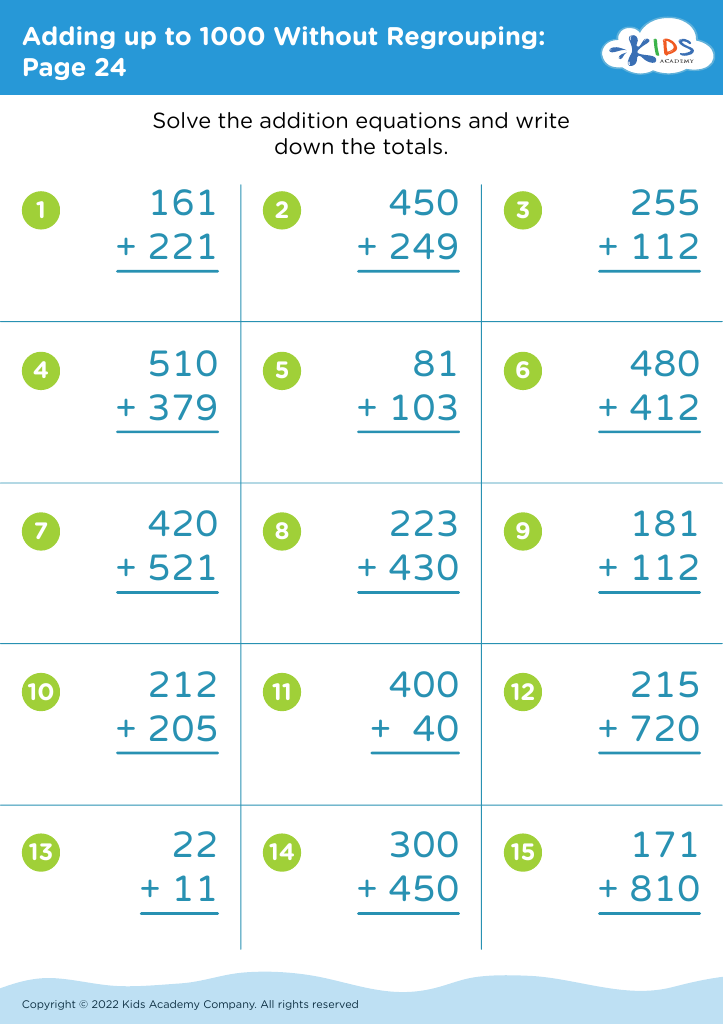
Adding up to 1000 Without Regrouping: Page 24
Worksheet


Understanding fractions is a crucial skill for children ages 6-8 as it forms the foundation for their mathematical understanding. At this age, students are building critical thinking and problem-solving skills, and grasping fractions helps them visualize and comprehend parts of a whole.

By introducing the concept of fractions adding up to 1000, we offer children a practical application of their knowledge, enabling them to understand ratios, proportions, and percentages in everyday contexts. This understanding promotes numeracy skills essential not only in academics but also in real-life situations, such as cooking, shopping, and measuring.

Moreover, mastering fractions encourages number sense, allowing children to manipulate numbers confidently. It fosters an appreciation for math, transforming anxiety about the subject into curiosity and enthusiasm.

For parents and teachers, focusing on fractions teaches important skills like collaboration and communication when discussing parts and shares, paving the way for cooperative learning. Ultimately, laying a strong foundation in fractions prepares young learners for more complex mathematical concepts in subsequent years, equipping them for success in their future educational journey. Investing time in understanding fractions at this early age ensures that children become confident mathematicians, capable of tackling challenges ahead.