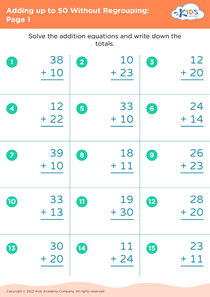
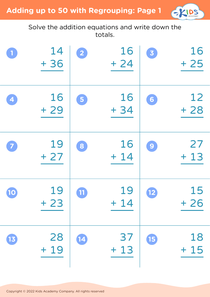
Understanding multiplication Adding up to 50 Misc Worksheets for Ages 6-8
3 filtered results
-
From - To
Enhance your child's math skills with our "Understanding Multiplication: Adding up to 50 Misc Worksheets" designed for ages 6-8. These engaging worksheets provide a fun and interactive way for young learners to grasp multiplication concepts alongside addition. Each activity encourages children to explore multiplying numbers while reinforcing their understanding of adding up to 50. With bright illustrations and age-appropriate challenges, these worksheets promote critical thinking and problem-solving skills. Perfect for classroom use or at-home practice, our resources help children build a strong foundation in math while cultivating a love for learning. Get started today and watch your child's confidence soar!
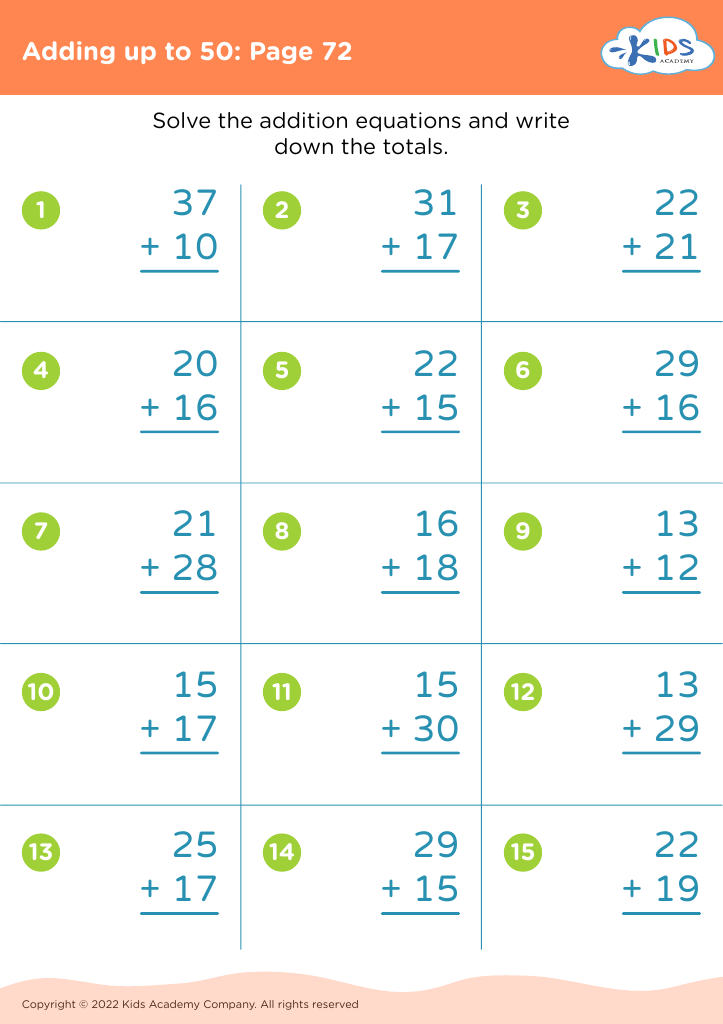
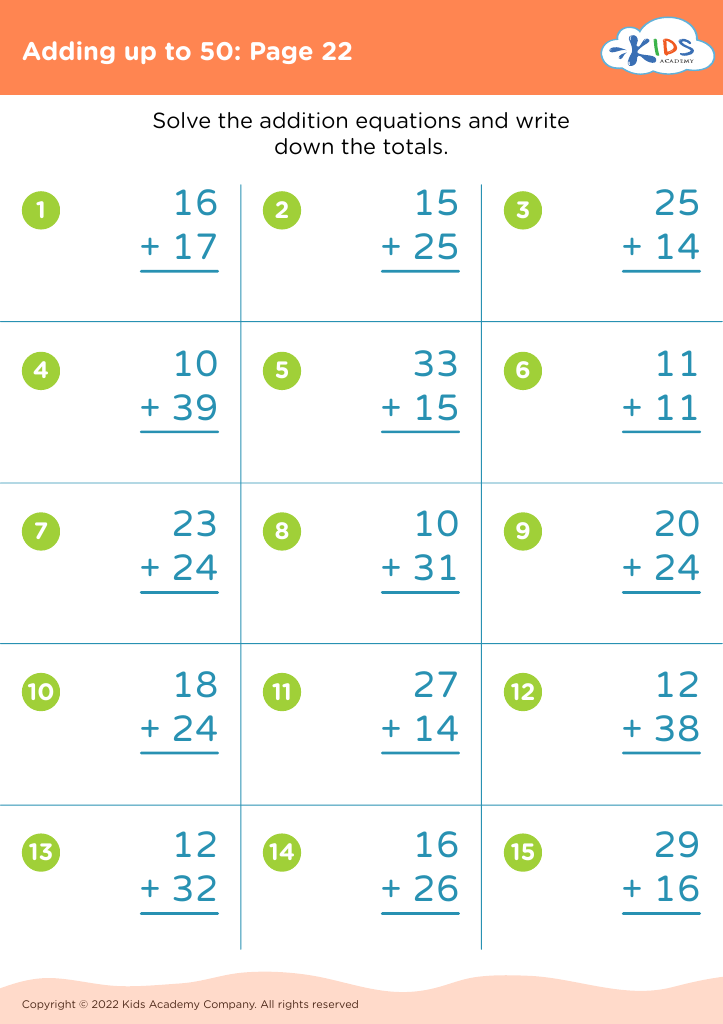
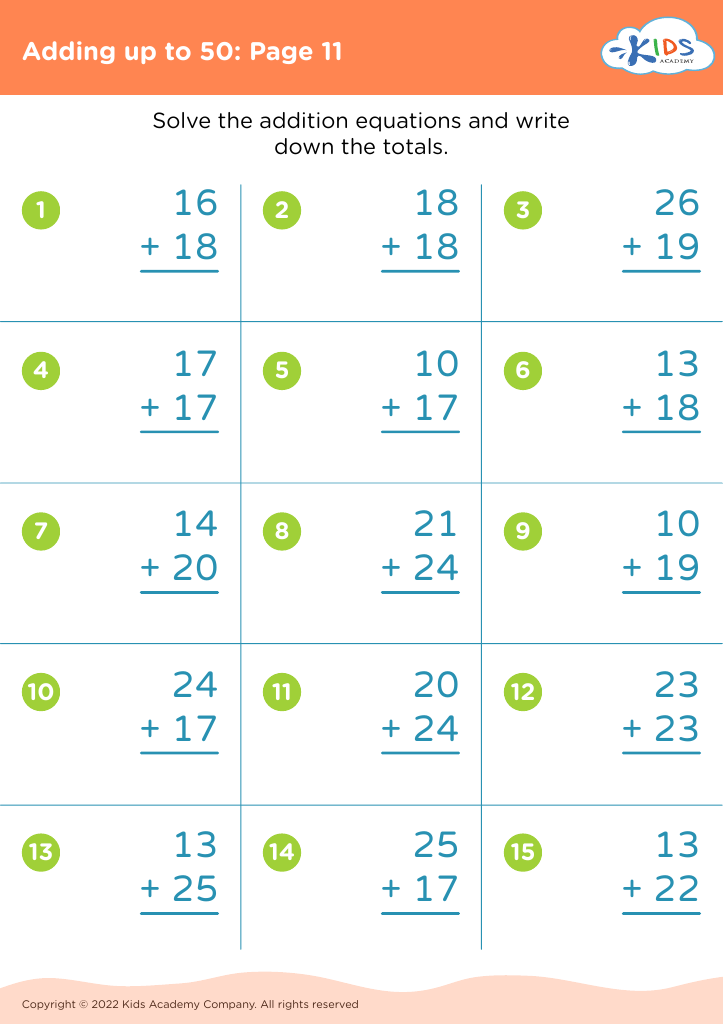


Understanding multiplication is crucial for young learners aged 6-8, as it lays the foundation for their mathematical literacy and problem-solving skills. For parents and teachers, emphasizing multiplication provides children with the ability to grasp more complex mathematical concepts later on, such as division, fractions, and algebra.
When children learn to multiply, they develop a strong numerical sense, helping them become comfortable with numbers and mathematical operations. Notably, your reference to “Adding up to 50” incorporates not only multiplication but also the vital skill of summation. This intertwined understanding reinforces children’s ability to work with numbers both in isolation and in combination, fostering comprehensive mathematical thinking.
By introducing multiplication early and within the context of familiar scenarios—like adding up objects, combining groups, or even through play—children are more likely to retain and apply these concepts throughout their education and daily life. Furthermore, strengthening these skills at a young age builds their confidence, making them more willing to engage with challenging thinking tasks and problem-solving activities as they progress in their education.
In summary, fostering a strong foundation in multiplication and addition equips children with essential skills for future success in mathematics and provides the confidence necessary for lifelong learning.