Understanding symmetry Adding up to 50 Misc Worksheets for Ages 6-8
3 filtered results
-
From - To
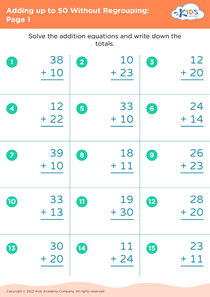
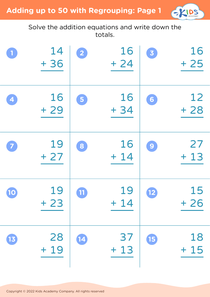
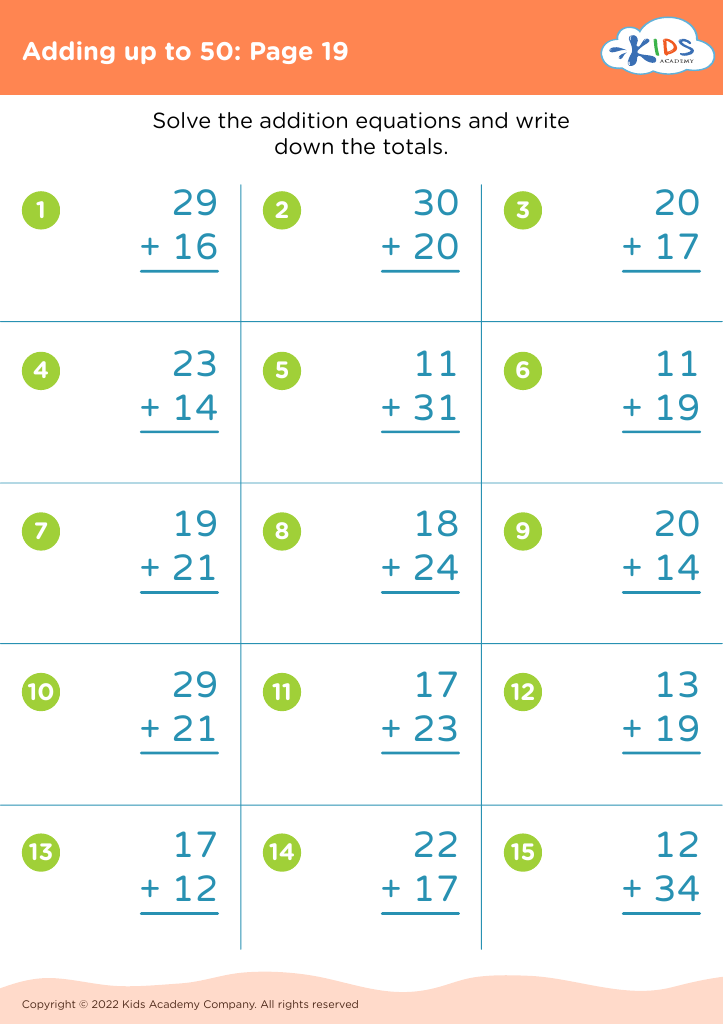
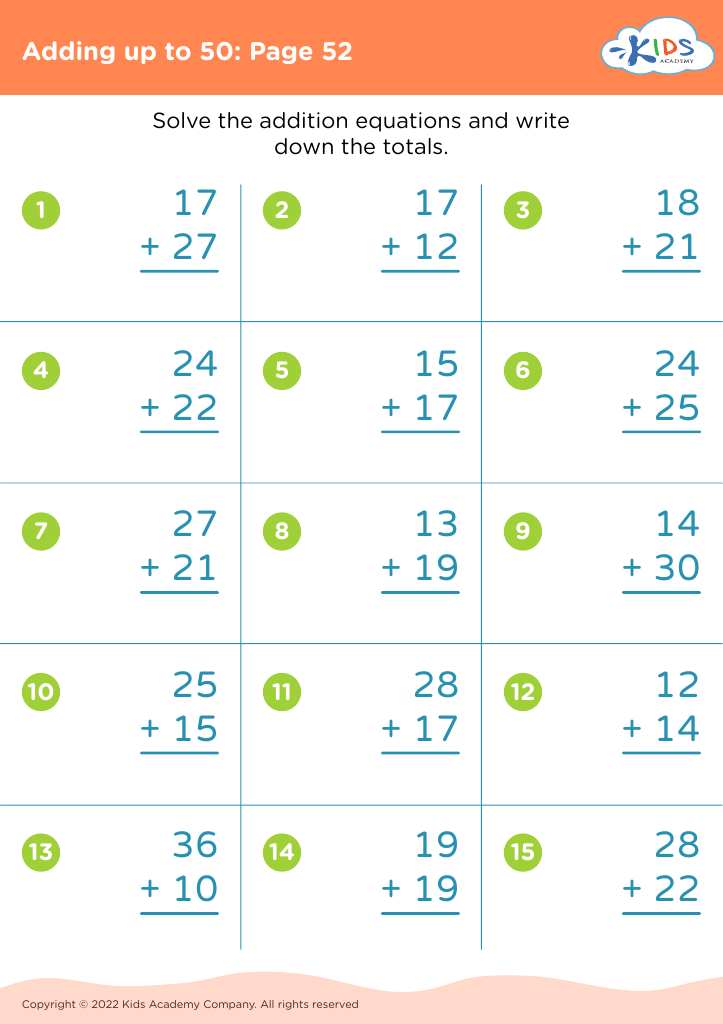
Discover the fun of learning with our "Understanding Symmetry Adding Up to 50 Misc Worksheets" designed specifically for ages 6-8. These engaging worksheets help young learners grasp the concept of symmetry while practicing addition skills up to 50. Each activity fosters critical thinking, enhances math vocabulary, and encourages creativity through interactive exercises. Kids will explore patterns, shapes, and symmetry in a playful manner, making math a delightful adventure. Ideal for classroom or at-home learning, our worksheets cater to different learning styles and ensure children build strong foundational skills. Dive into the world of symmetry and addition today!
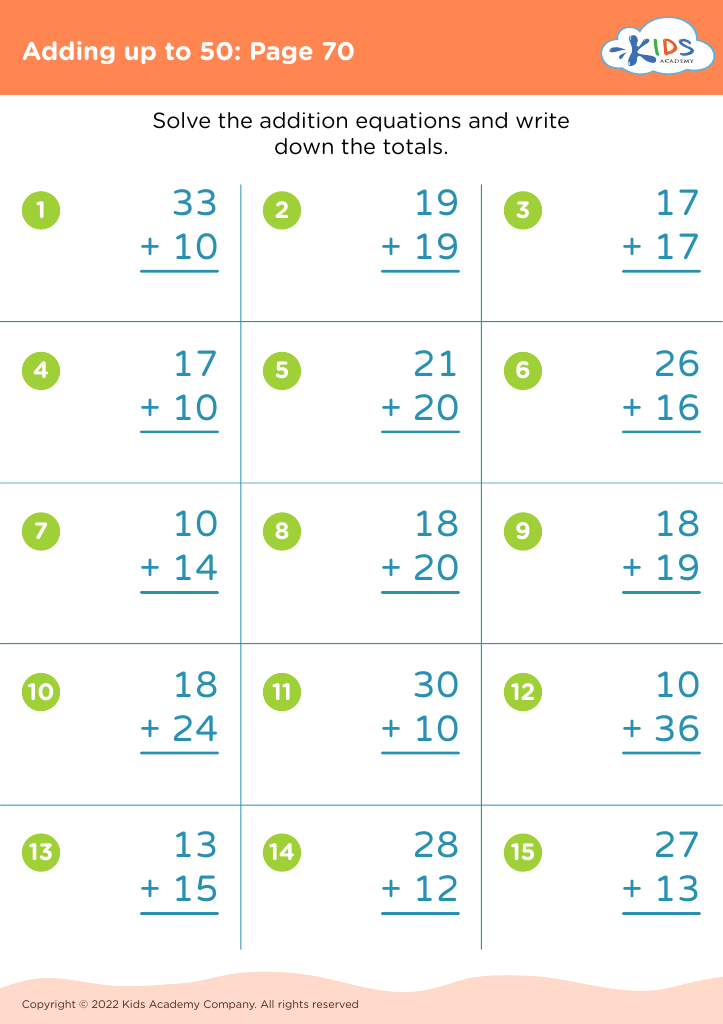


Understanding symmetry and the concept of adding up to 50 are essential skills for children aged 6-8, not only in mathematics but also in their broader cognitive development. Symmetry helps children recognize patterns and shapes, enhancing their spatial awareness and critical thinking skills. This awareness builds a strong foundation for future subjects like geometry and art, allowing them to see beauty and balance in the world around them.
On the other hand, mastering addition skills, particularly in the context of adding up to 50, is crucial for developing numerical fluency. This foundational arithmetic knowledge enables children to solve problems more efficiently and supports their understanding of larger concepts in mathematics, such as subtraction, multiplication, and even problem-solving with money.
By engaging with these concepts, teachers and parents can instill a sense of confidence and curiosity in their children. Such confidence is vital for fostering a love of learning and exploration. Additionally, these skills promote collaboration through group activities and hands-on projects, further reinforcing social interactions. Ultimately, focusing on symmetry and addition empowers children to become critical thinkers, efficient problem solvers, and creative individuals, preparing them for future academic challenges and real-world applications.