Filters

17 filtered results

Clear all filters
Favorites
With answer key
Interactive

17 filtered results

Difficulty Level

Grade


Welcome to our "Understanding Fractions: Adding Up to 50 with Regrouping Worksheets" designed for ages 6-8! These engaging and interactive worksheets help young learners master the concept of fractions while building their addition skills. Through fun exercises that incorporate regrouping, students will gain confidence in working with fractions, enhancing their mathematical abilities. Each worksheet is crafted to promote critical thinking and problem-solving, making learning enjoyable and effective. With clear instructions and colorful visuals, these resources are perfect for teachers and parents looking to enrich their children's education in a supportive and hands-on way. Start exploring fractions today!
Check out this FREE Trial Lesson on Adding up to 50 with Regrouping for age 6-8!

Sorting Objects into 3 Categories

Favorites
With answer key
Interactive
  • 6-8
  • Understanding fractions
  • Adding up to 50 with Regrouping
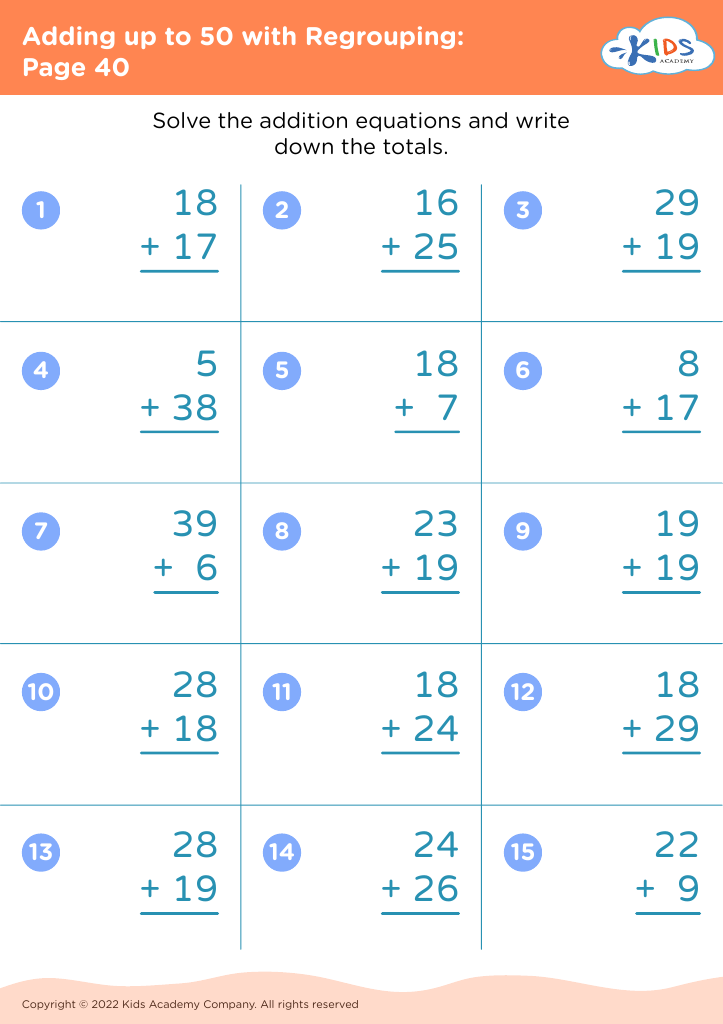
Adding up to 50 with Regrouping: Page 40
Worksheet
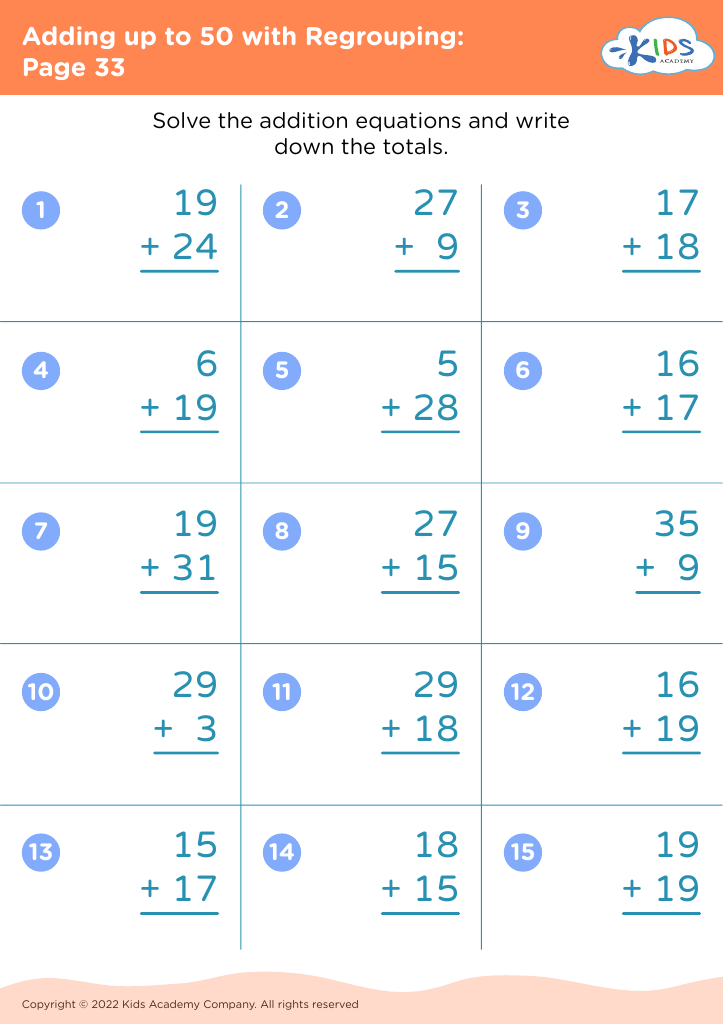
Adding up to 50 with Regrouping: Page 33
Worksheet
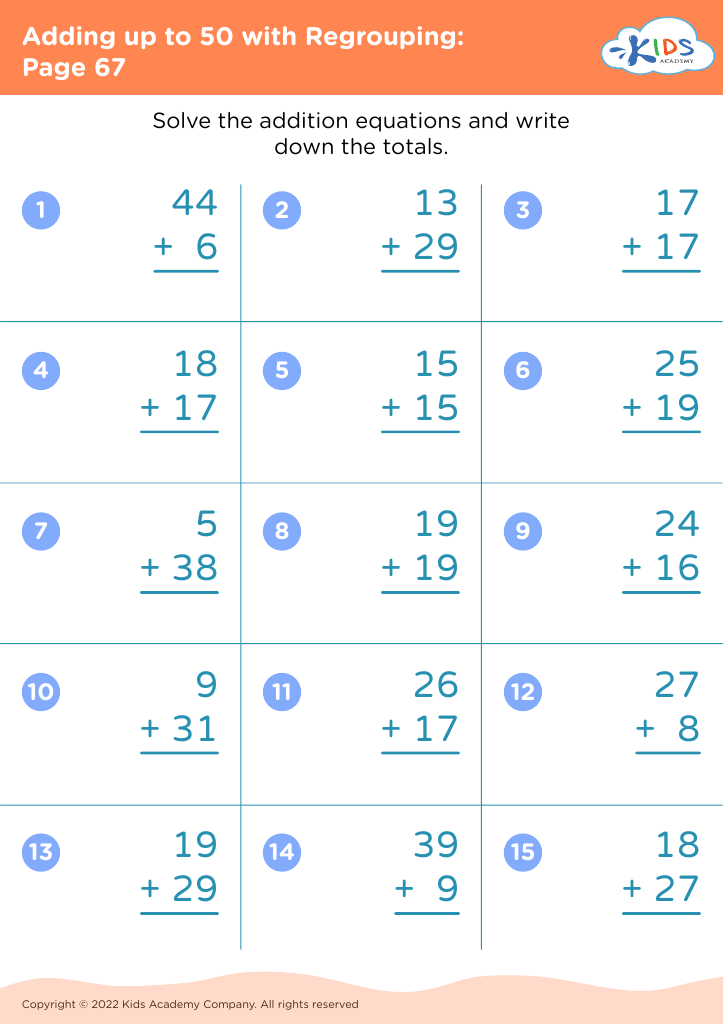
Adding up to 50 with Regrouping: Page 67
Worksheet
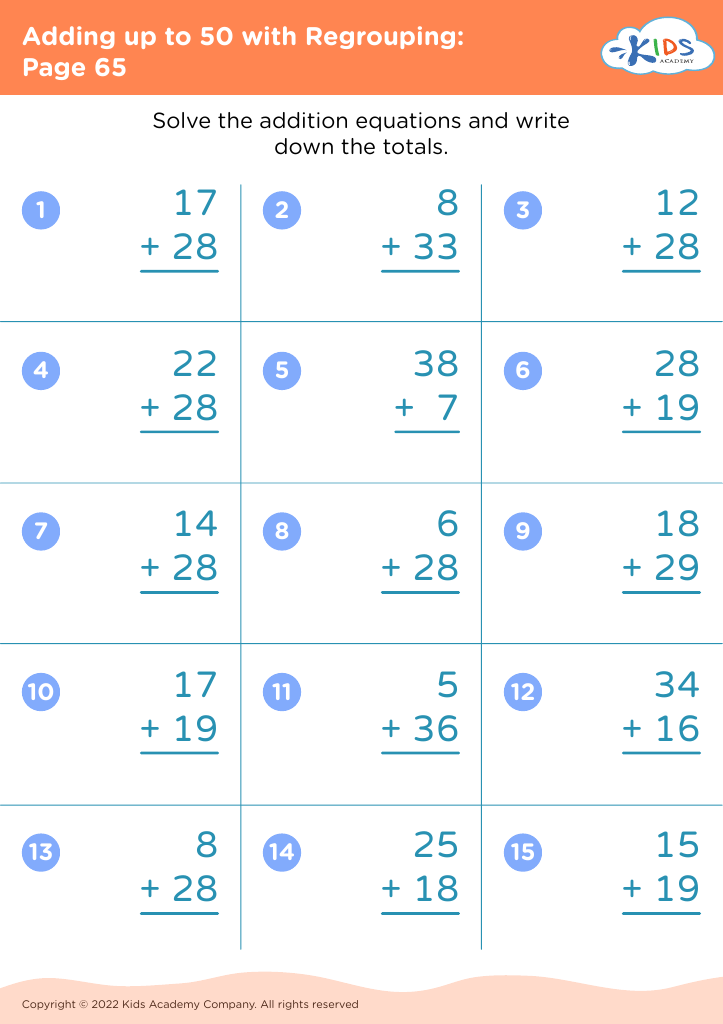
Adding up to 50 with Regrouping: Page 65
Worksheet
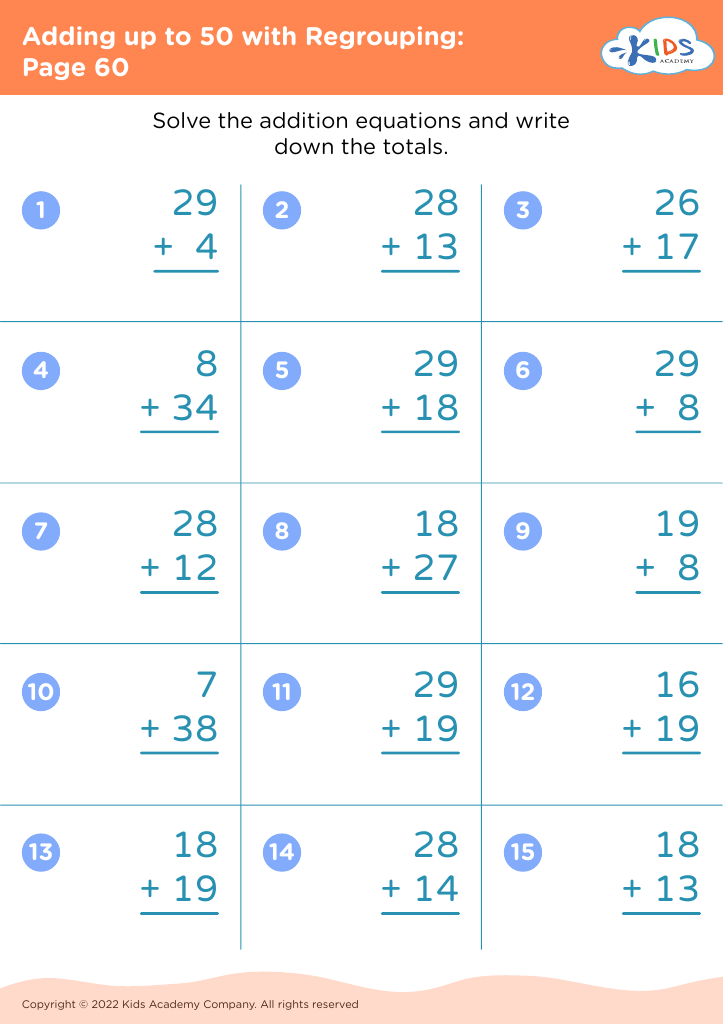
Adding up to 50 with Regrouping: Page 60
Worksheet
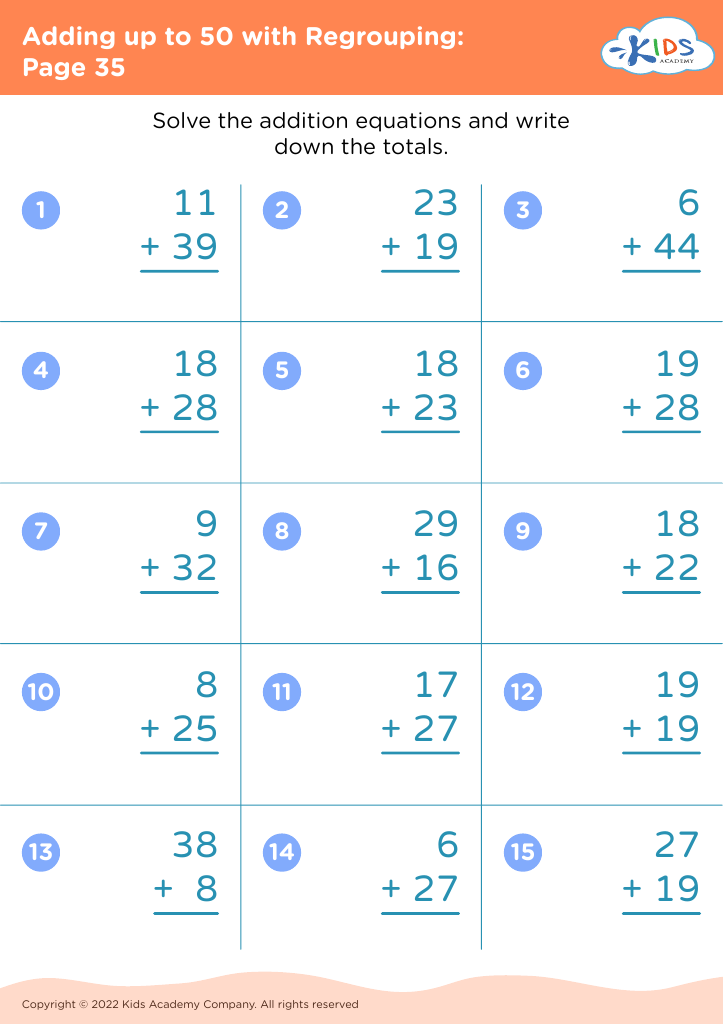
Adding up to 50 with Regrouping: Page 35
Worksheet
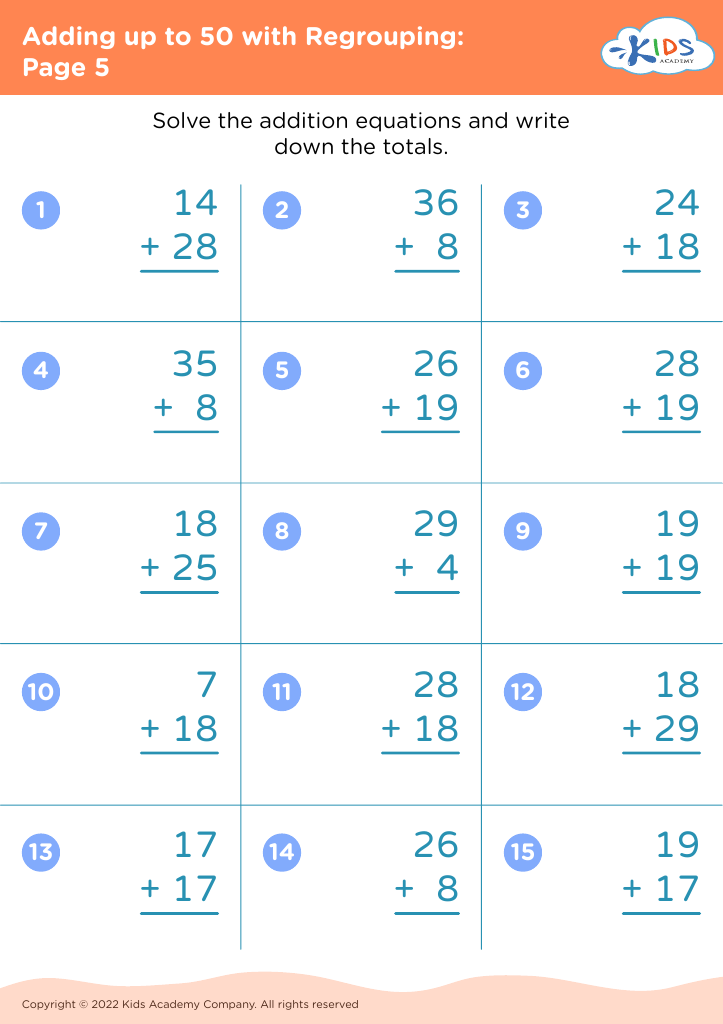
Adding up to 50 with Regrouping: Page 5
Worksheet
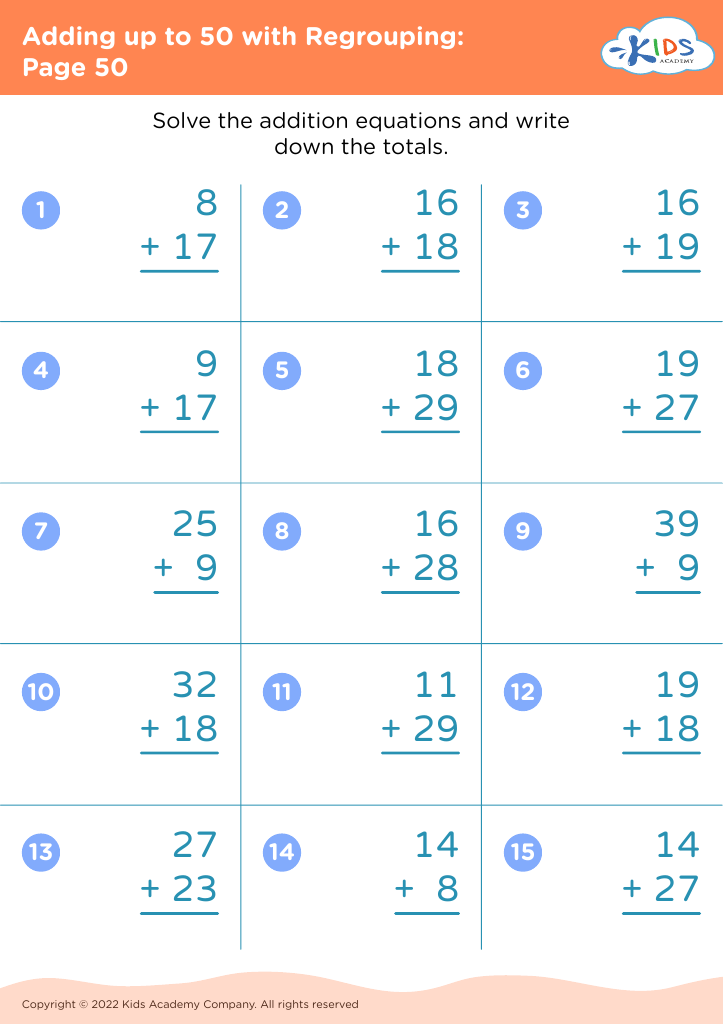
Adding up to 50 with Regrouping: Page 50
Worksheet
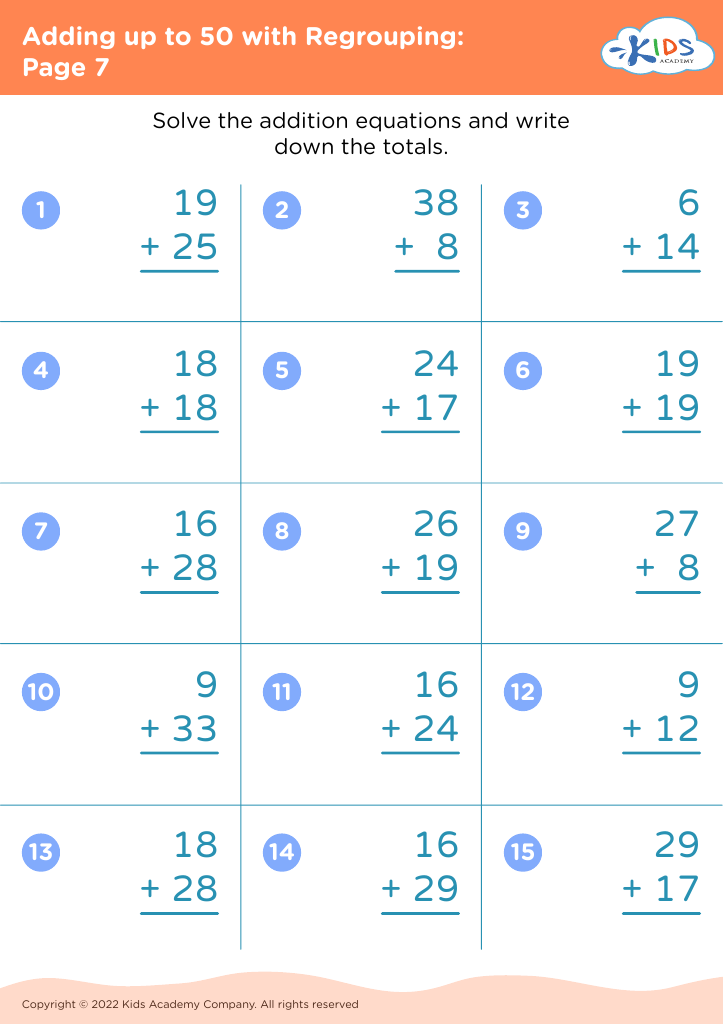
Adding up to 50 with Regrouping: Page 7
Worksheet
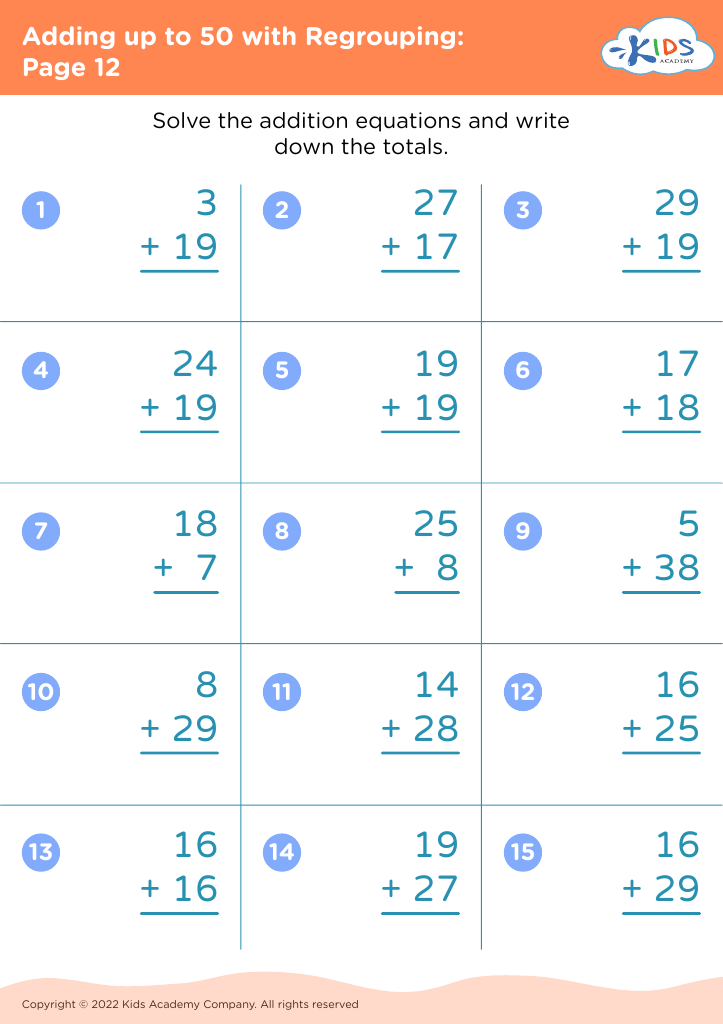
Adding up to 50 with Regrouping: Page 12
Worksheet
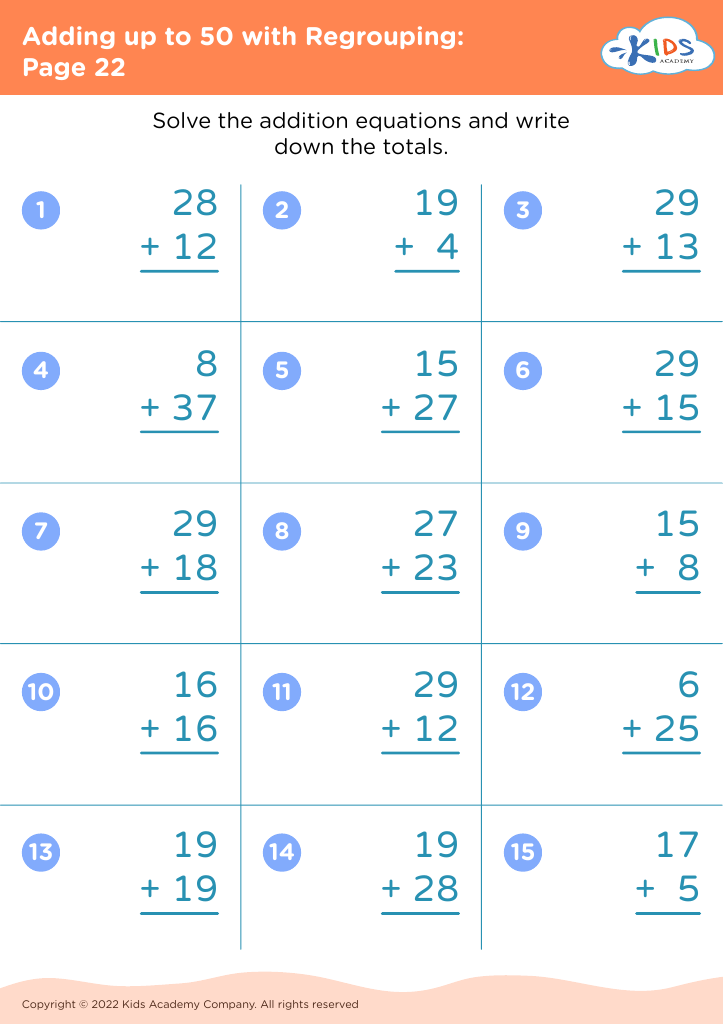
Adding up to 50 with Regrouping: Page 22
Worksheet
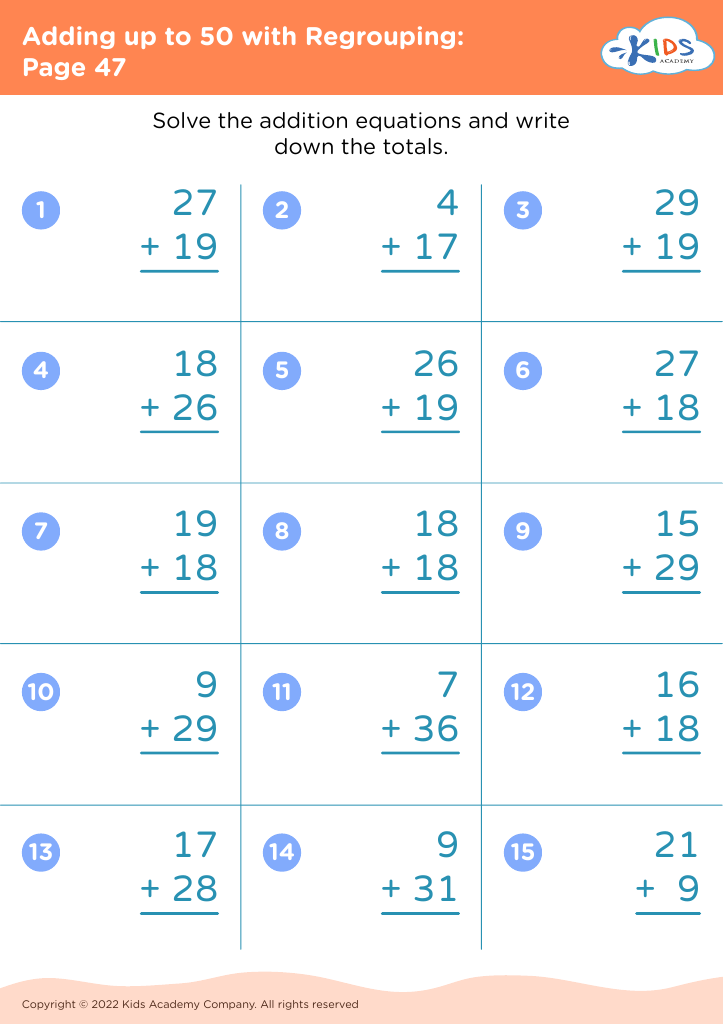
Adding up to 50 with Regrouping: Page 47
Worksheet
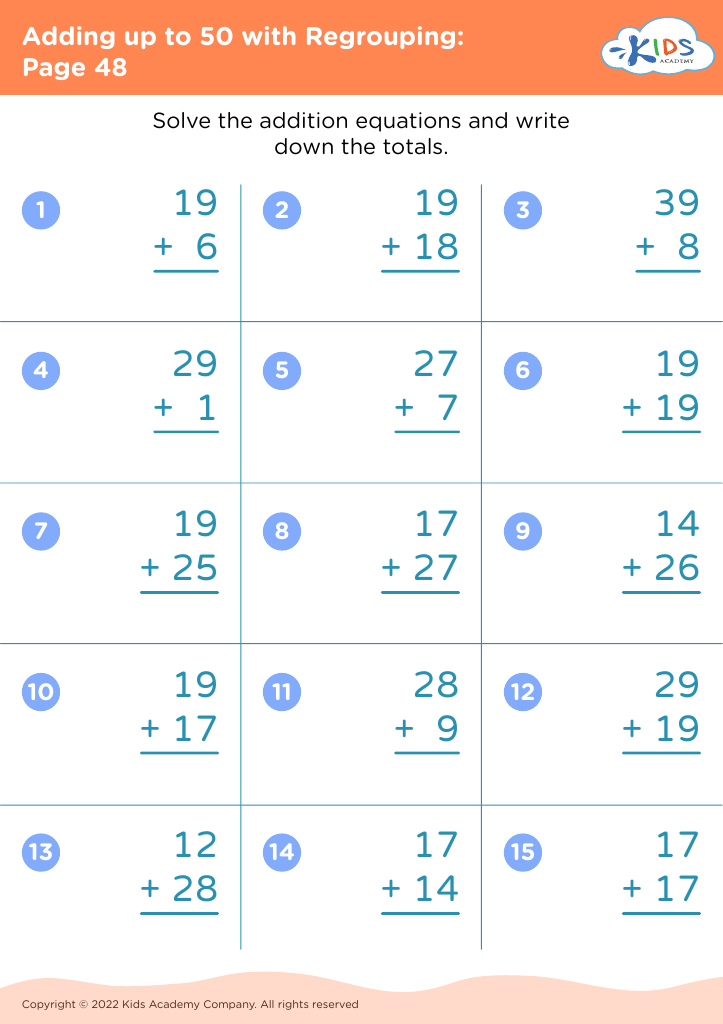
Adding up to 50 with Regrouping: Page 48
Worksheet
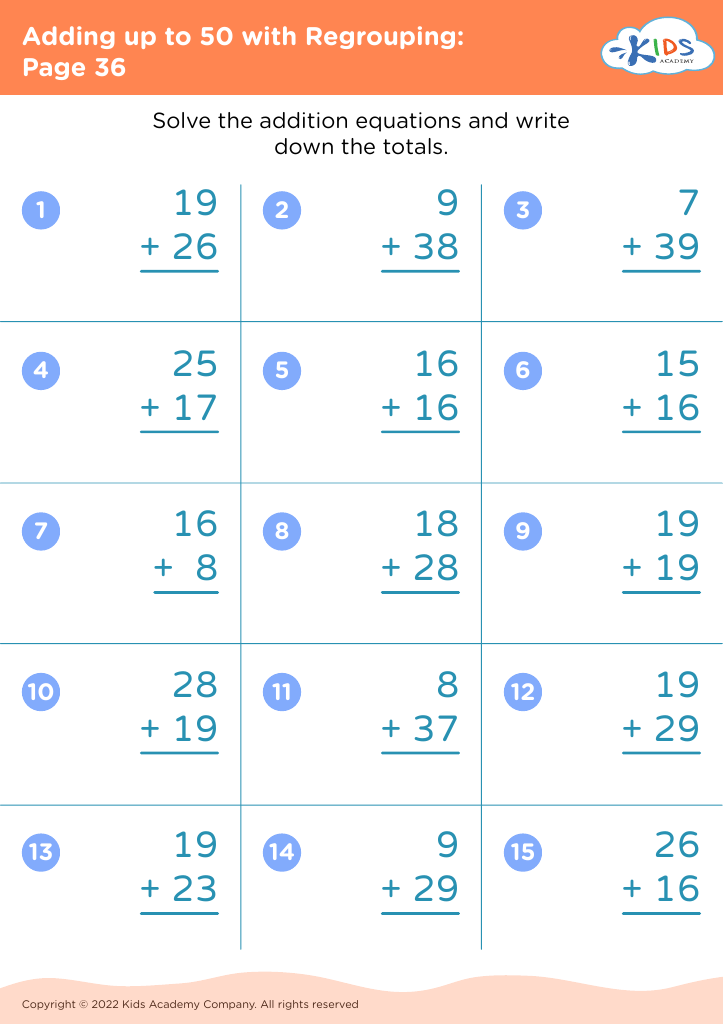
Adding up to 50 with Regrouping: Page 36
Worksheet
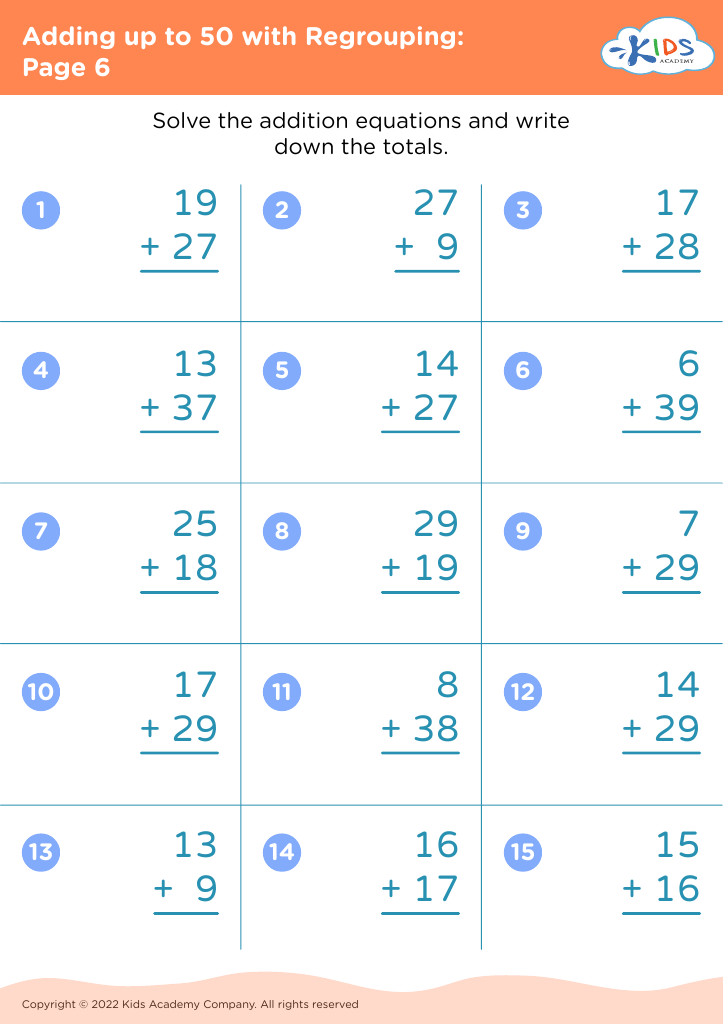
Adding up to 50 with Regrouping: Page 6
Worksheet
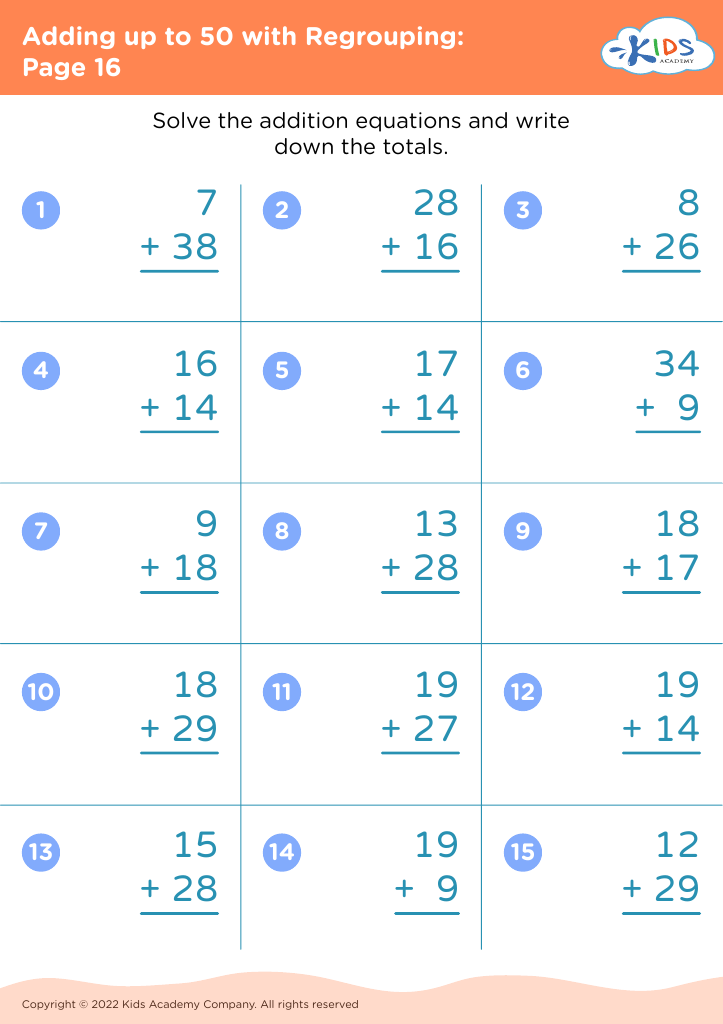
Adding up to 50 with Regrouping: Page 16
Worksheet
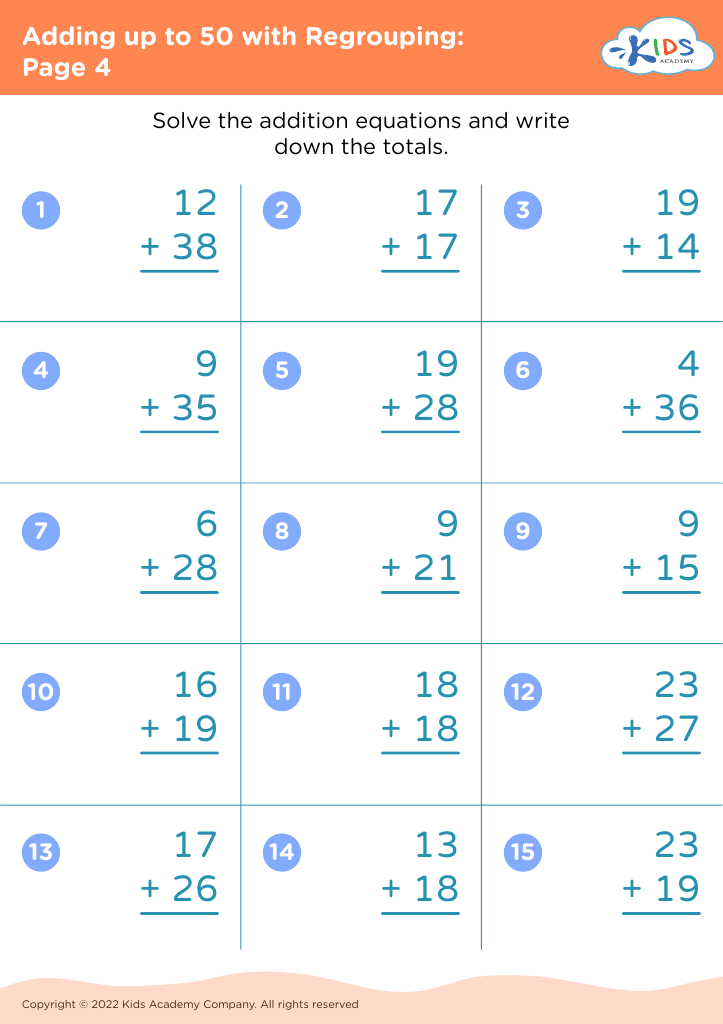
Adding up to 50 with Regrouping: Page 4
Worksheet


Understanding fractions and mastering addition with regrouping are essential skills for children ages 6-8. These foundational concepts not only build mathematical competence but also foster critical thinking and problem-solving abilities. Fractions help children grasp the idea of parts and wholes, which is vital for understanding more advanced math topics later on, such as ratios, proportions, and percentages.

When children learn to add numbers up to 50 with regrouping, they enhance their number sense—recognizing how numbers interact and relate to one another. Regrouping encourages mental flexibility and helps them learn how to break numbers down in various ways, which can improve their calculation skills. This process also lays the groundwork for more complex operations, including subtraction and multiplication.

Additionally, developing these skills early on supports a child’s confidence in math, positively impacting their attitudes towards learning. Parents and teachers play a crucial role in this journey by providing engaging activities and real-life scenarios to practice these concepts. By nurturing a strong mathematical foundation, they equip children with the tools necessary for academic success and practical problem-solving in everyday life. Ultimately, fostering a positive engagement with math at this age sets students on a path toward lifelong learning and resilience in tackling challenges.