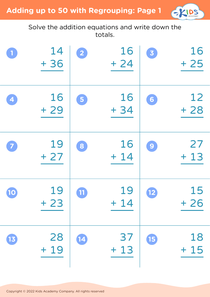
Counting practice Adding up to 50 Without Regrouping Worksheets for Ages 6-8
5 filtered results
-
From - To
Welcome to our Counting Practice worksheets, designed specifically for children aged 6-8! These engaging and interactive worksheets focus on adding up to 50 without regrouping, helping young learners build a strong foundation in basic addition skills. Each worksheet is crafted to foster understanding while providing numerous practice opportunities, ensuring your child can confidently perform simple addition. Perfect for home or classroom use, our fun and colorful worksheets encourage hours of learning through play. Help your child develop essential math skills with ease and enjoyment by using these carefully designed resources that make counting and addition a delightful experience!
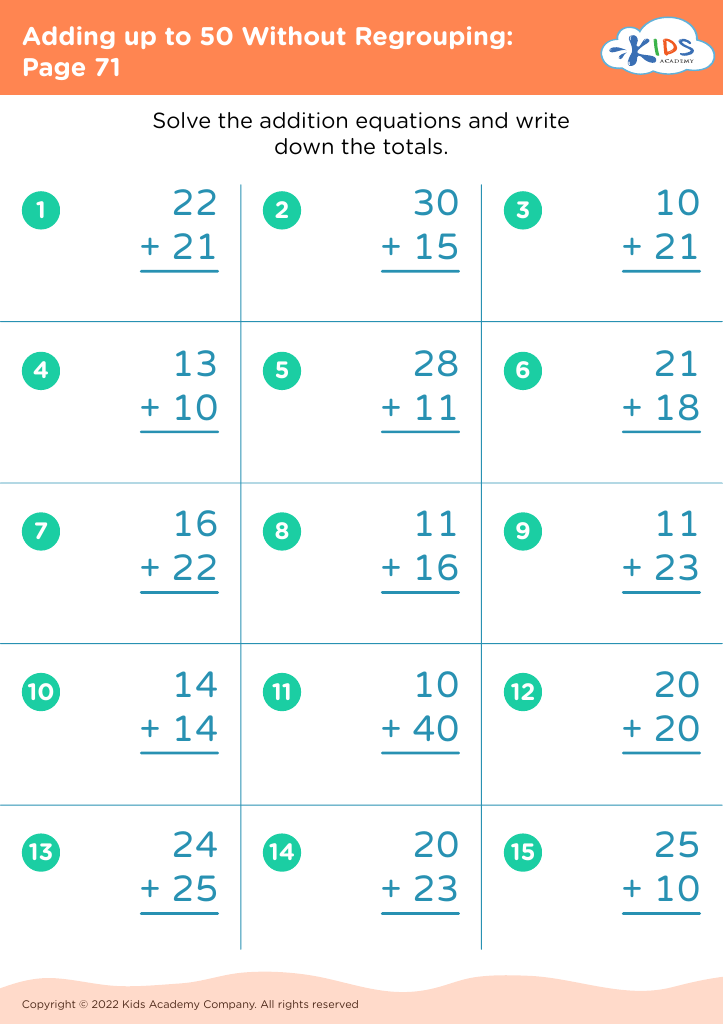
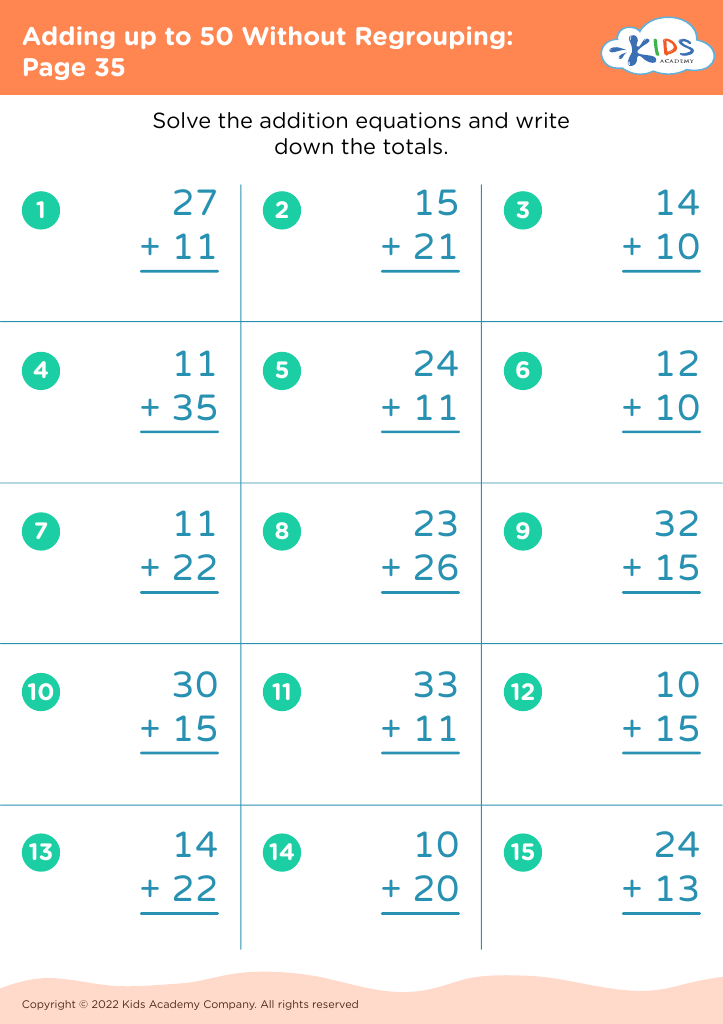
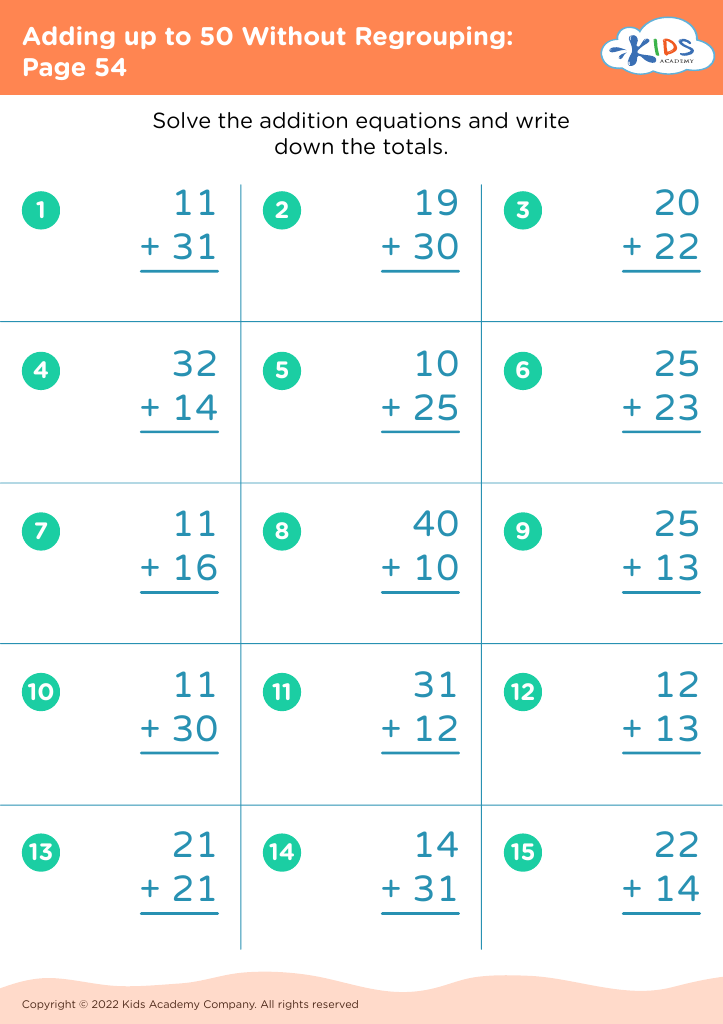
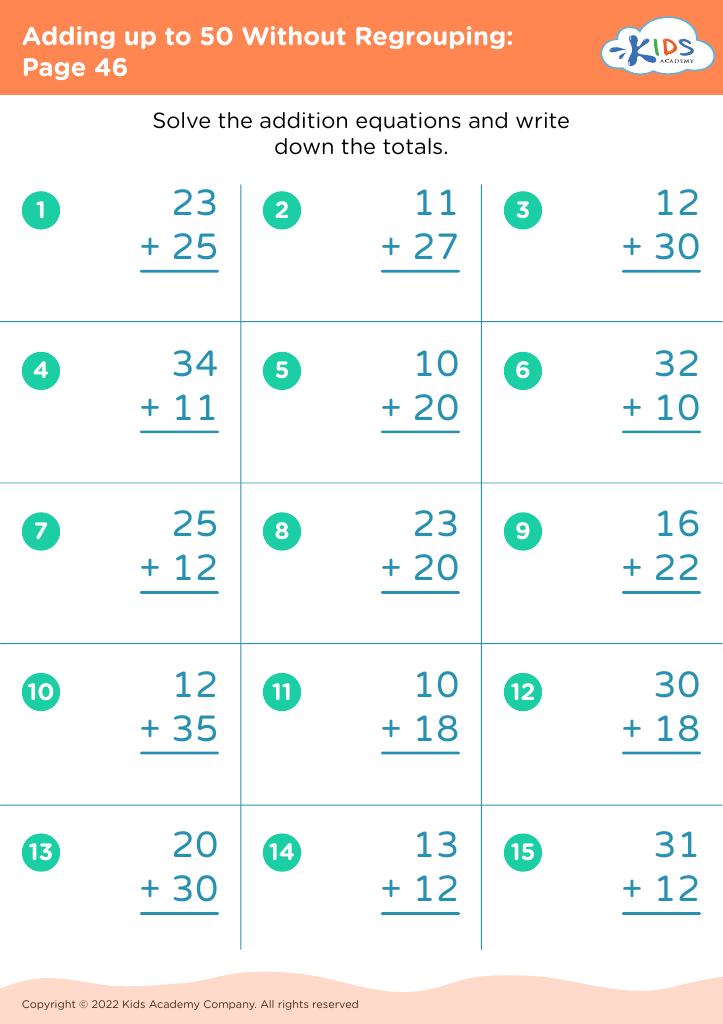
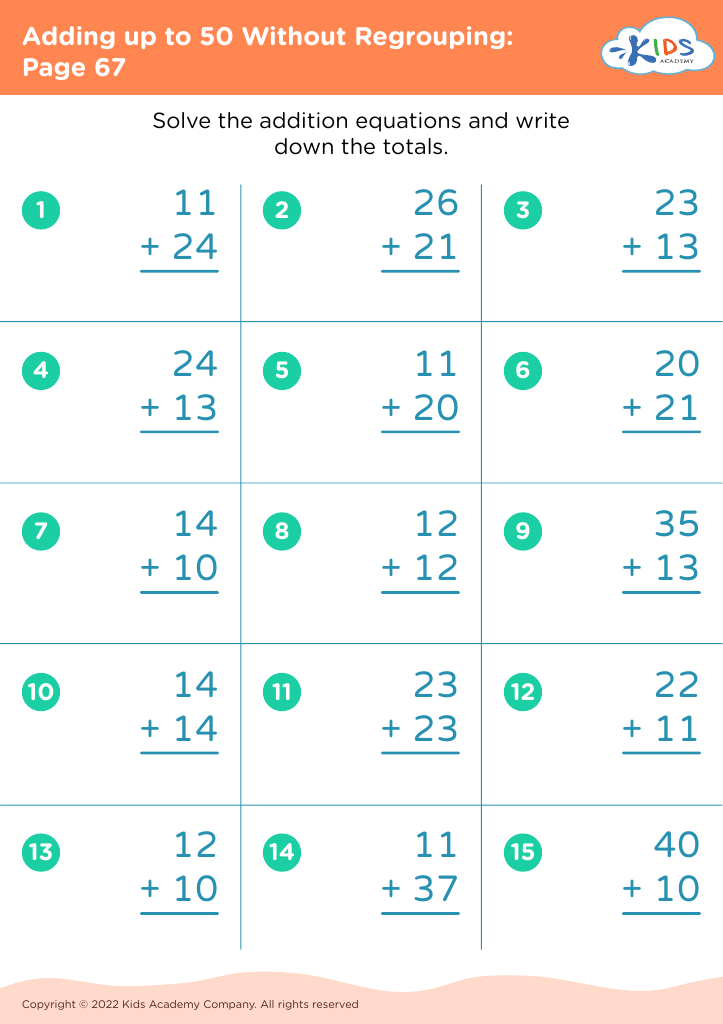


Counting practice, especially adding up to 50 without regrouping, is crucial for children aged 6-8 for several reasons. First, it establishes a solid foundation for arithmetic skills, which are essential for future mathematics learning. Mastering simple addition allows young students to gain confidence and become more comfortable with numbers, setting positive attitudes towards math that can last a lifetime.
Moreover, this practice enhances cognitive skills. As children engage in counting and adding, they improve their memory and concentration, critical skills not just in math but across all subjects. It also encourages logical thinking, as students learn to analyze numbers and find appropriate pairs to reach sums.
Additionally, such practice fosters independence, as students often begin to rely on their strategies rather than seeking immediate assistance. This newfound self-reliance aids other learning areas as well.
Furthermore, when parents and teachers emphasize counting skills, they also nurture better problem-solving abilities and critical reasoning. These are invaluable skills in today's world, allowing children to tackle various challenges confidently. Ultimately, counting practice encourages a holistic cognitive development multiplied by school success, affirming the importance of involvement in these early mathematical stages.