Understand fractions Adding up to 50 Without Regrouping Worksheets for Ages 6-8
4 filtered results
-
From - To
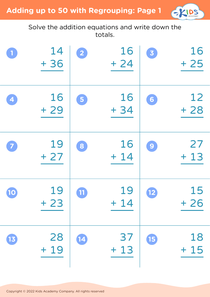
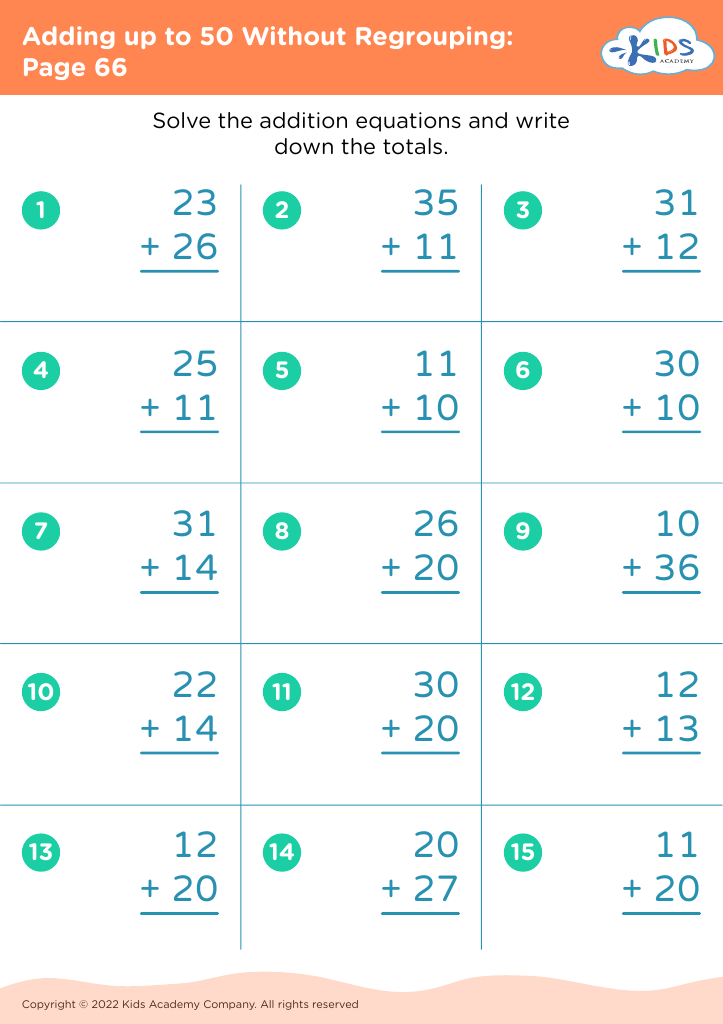
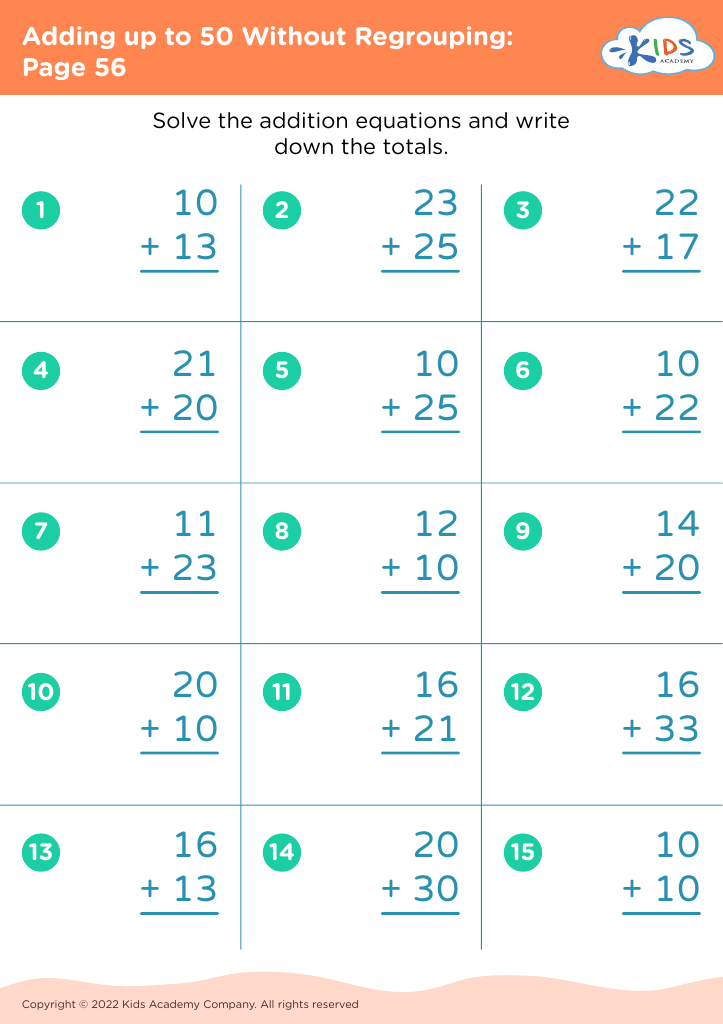
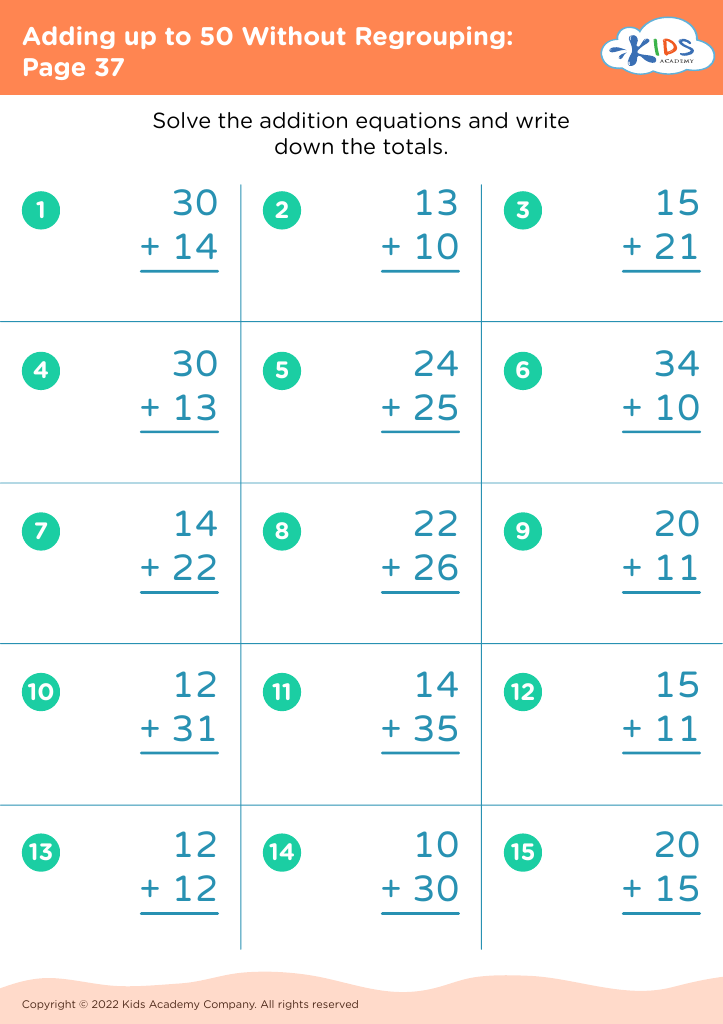
Welcome to our "Understand Fractions Adding Up to 50 Without Regrouping" worksheets, designed specifically for children ages 6-8. These engaging and interactive worksheets help young learners grasp fundamental fraction concepts while practicing addition skills. With our no-regrouping approach, students will confidently enjoy adding fractions that total up to 50, encouraging numerical understanding without overwhelming complexity. Each worksheet is tailored to reinforce fraction knowledge and improve overall math proficiency, making learning fun and effective. Discover the joy of mastering fractions in an accessible way, perfect for reinforcing classroom lessons or enhancing at-home learning. Start your child’s mathematical journey today!
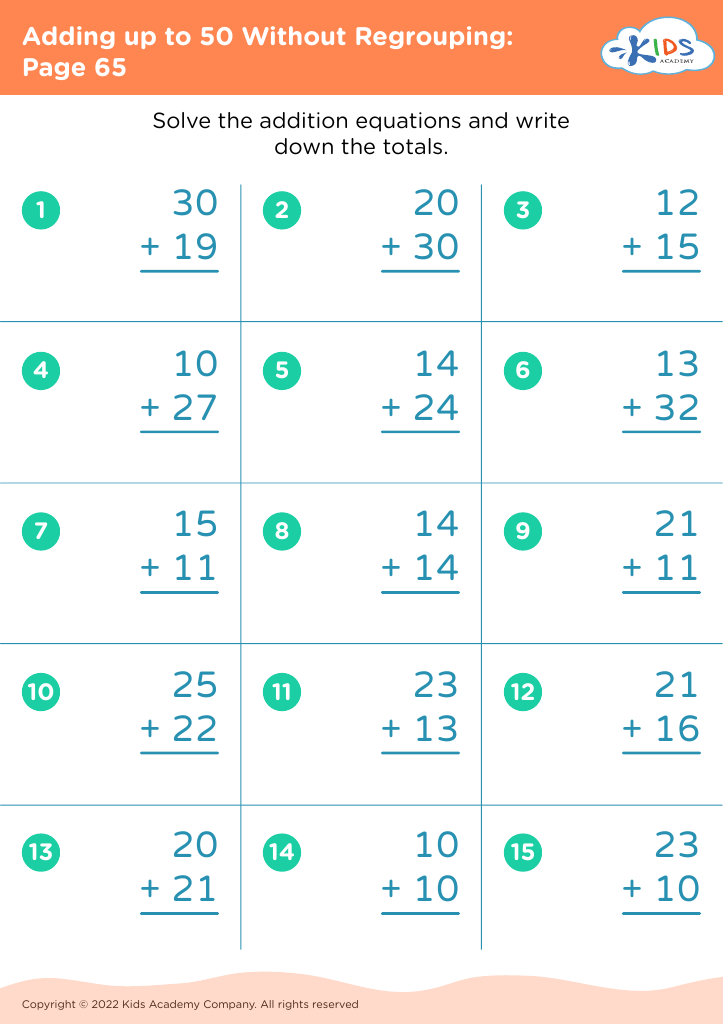


Understanding fractions and the ability to add them up to 50 without regrouping is a critical skill for children aged 6-8. This foundational concept not only improves a student's mathematical fluency but also lays the groundwork for more advanced topics. Fractions are an integral part of everyday life; whether measuring ingredients in cooking or understanding portions in sharing, a solid grasp of fractions equips children with essential life skills.
By mastering this concept early on, students develop problem-solving abilities and logical reasoning. It enhances critical thinking as they learn to compare, reason, and manipulate numbers. Furthermore, a strong foundation in fractions is crucial for higher-level mathematics, including decimals, percentages, and ratios, which they will encounter in later grades.
Teachers and parents should care because early math skills correlate with future academic success. Supporting children in this learning journey fosters confidence, engagement, and a positive attitude toward mathematics. By ensuring that children can add fractions without regrouping, adults contribute significantly to their overall educational experience, helping nurture resilient learners who are prepared for the challenges ahead. Moreover, when educators and families collaborate in this aspect, they create a supportive learning environment that encourages exploration and curiosity.