Basic addition practice Adding up to 50 Worksheets for Ages 6-8
5 filtered results
-
From - To
Enhance your child's math skills with our "Basic Addition Practice: Adding up to 50" worksheets, designed for ages 6-8. These engaging resources offer a variety of exercises that help young learners master fundamental addition concepts in a fun and interactive way. Each worksheet promotes confidence and fluency in adding numbers up to 50 through visual aids and step-by-step instructions. Perfect for home or classroom use, these printable worksheets foster essential skills, boost problem-solving abilities, and motivate children to enjoy learning mathematics. Watch your child excel in addition while having fun—download your set today and make math a rewarding adventure!
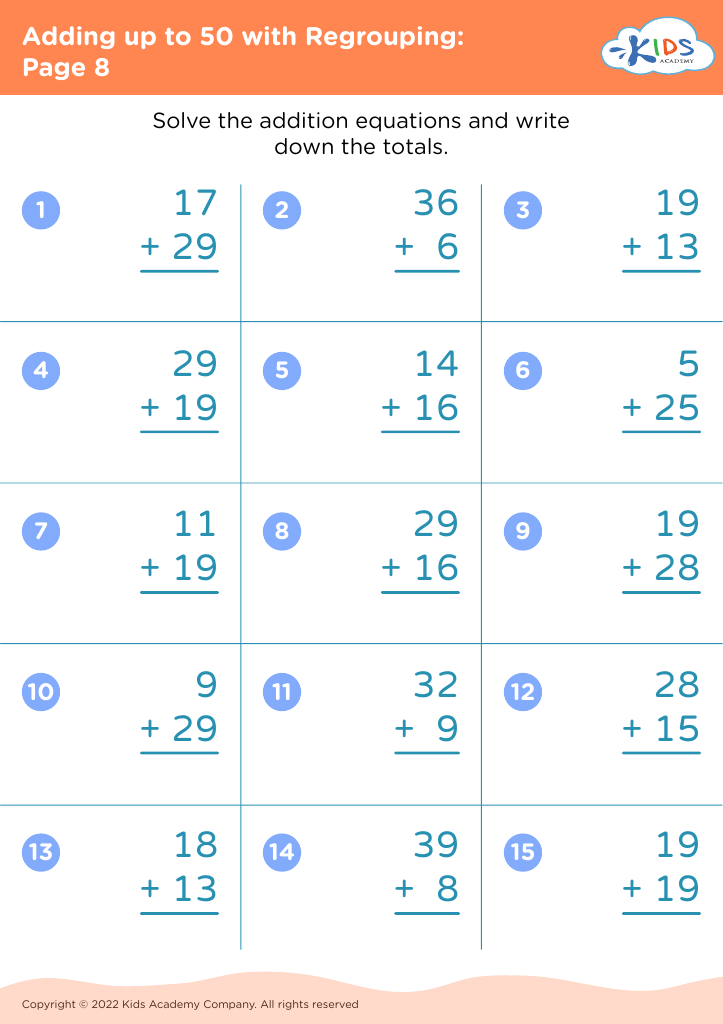
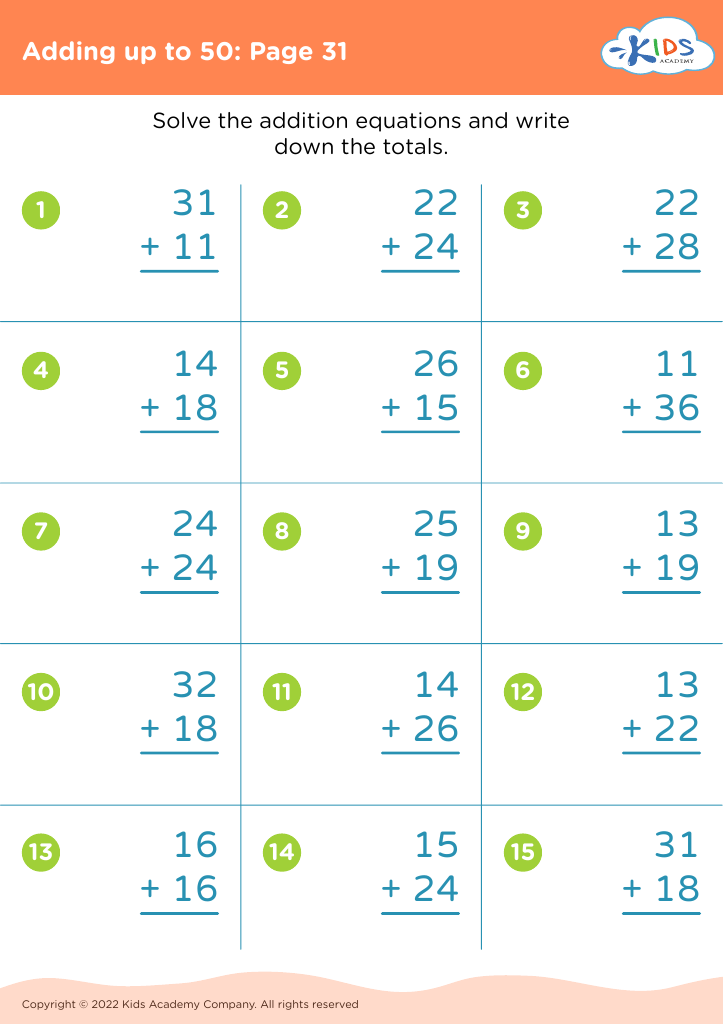
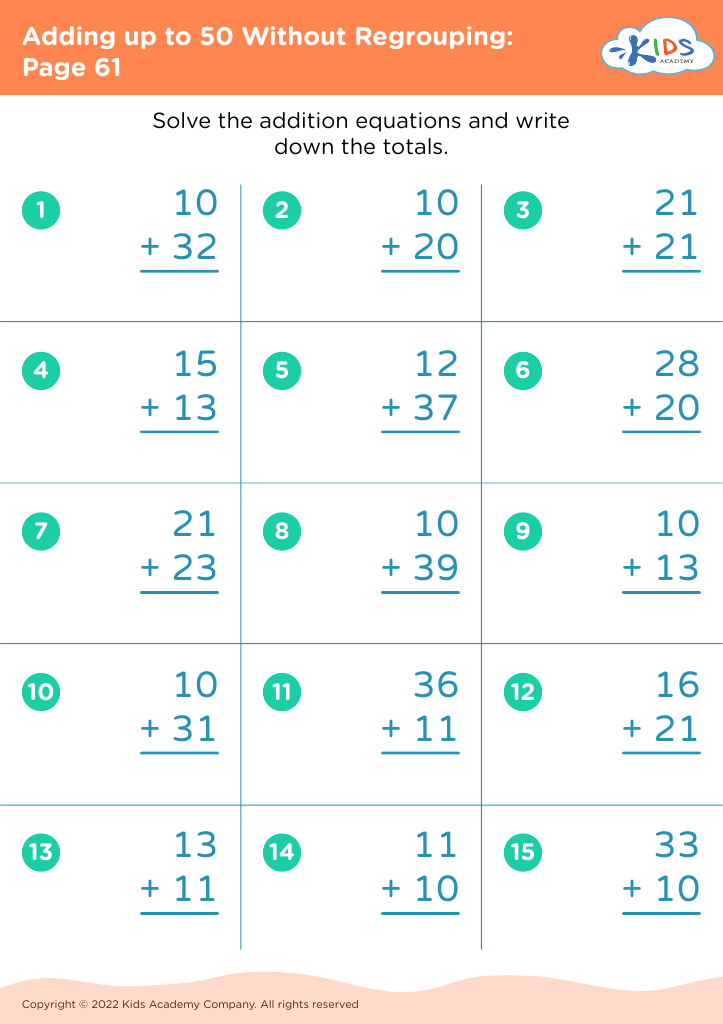
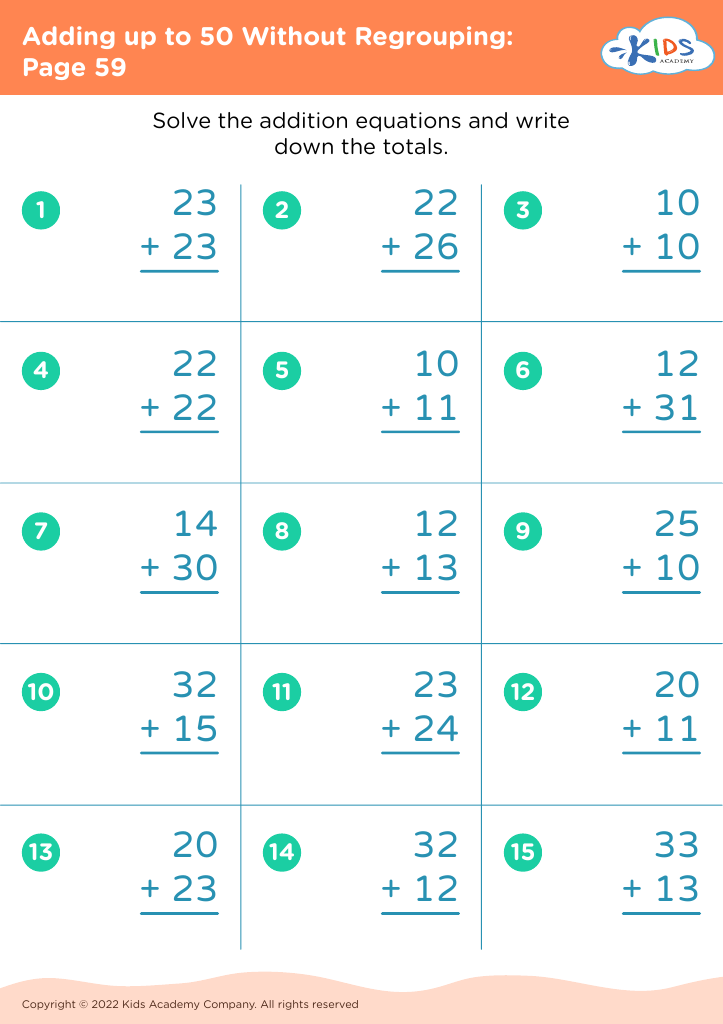
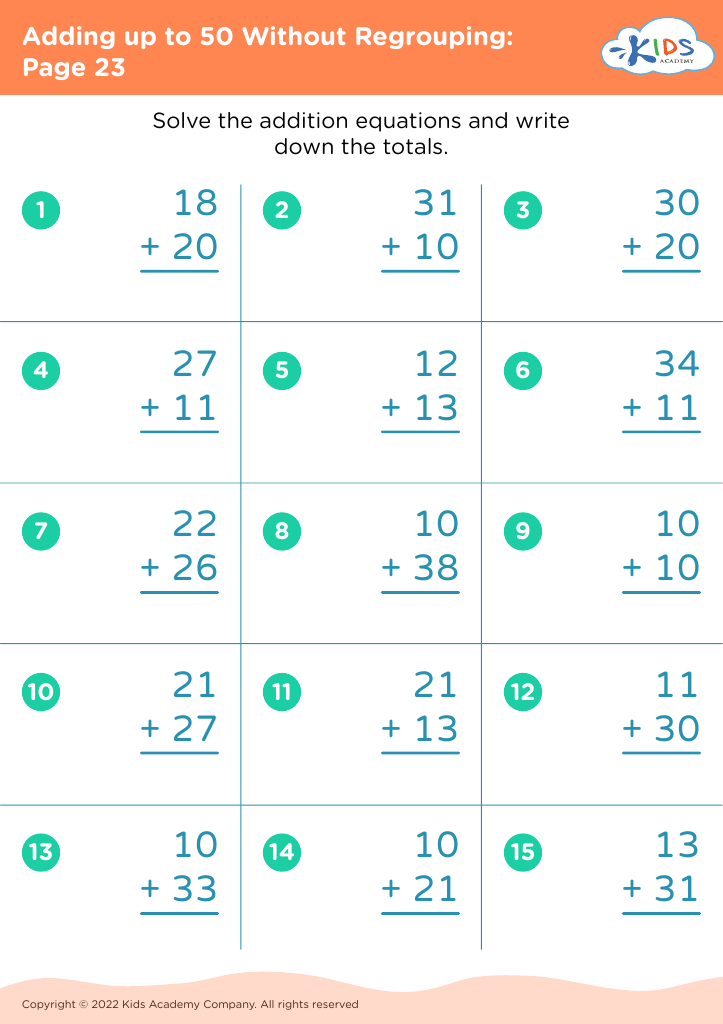




Basic addition practice, especially for numbers up to 50, is crucial for children aged 6 to 8. At this developmental stage, children are laying the foundation for their mathematical skills, and mastering addition is a key building block. Understanding basic addition enhances their problem-solving abilities and logical thinking, essential skills not only in math but in everyday life.
By practicing addition, children develop number sense, helping them recognize patterns and relationships between numbers. This skill is essential as they progress to more complex mathematical concepts in later grades. Through repeated practice, children gain confidence in their abilities, which positive reinforces their interest in learning.
Moreover, parents and teachers can utilize various fun learning activities, integrating addition practice into games, interactive apps, or everyday situations such as shopping or cooking. This practice fosters collaboration, encouraging families and educators to work together in fostering a supportive learning environment.
Lastly, basic addition skills are foundational for financial literacy, allowing children to understand money management later in life. Ultimately, investing time in addition practice for young learners not only prepares them academically but also equips them with essential life skills for the future.








