Compare fractions Adding up to 50 Worksheets for Ages 6-8
3 filtered results
-
From - To
Welcome to our "Compare Fractions Adding up to 50 Worksheets" designed for children ages 6-8! These educational resources offer a fun way for young learners to master the comparison of fractions through engaging activities involving numbers up to 50. By working through these worksheets, kids will develop essential math skills, enhance their understanding of fractions, and improve their problem-solving abilities. Each worksheet is tailored to meet the developmental needs of early learners, making fractions accessible and enjoyable. Join us on this educational journey as your child builds confidence in math while having a great time learning!
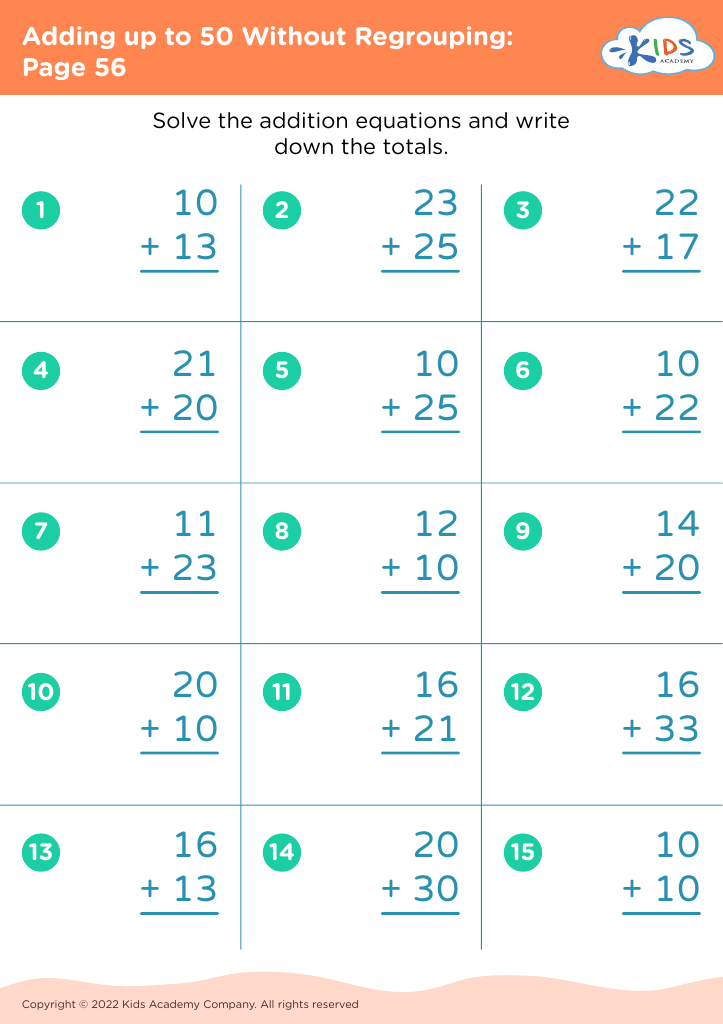
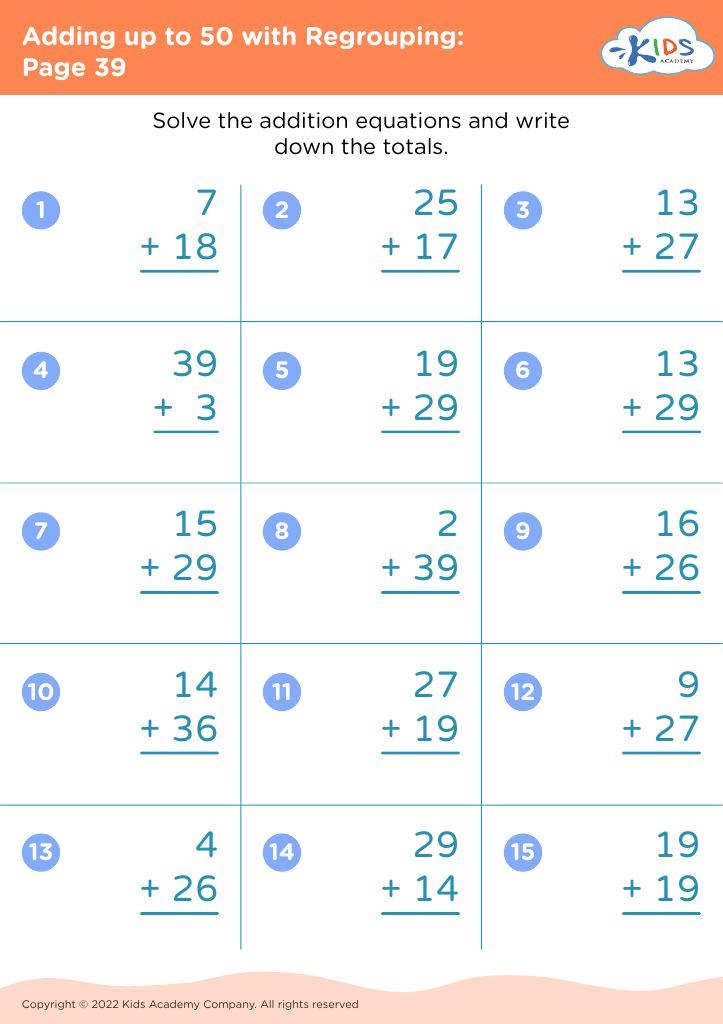
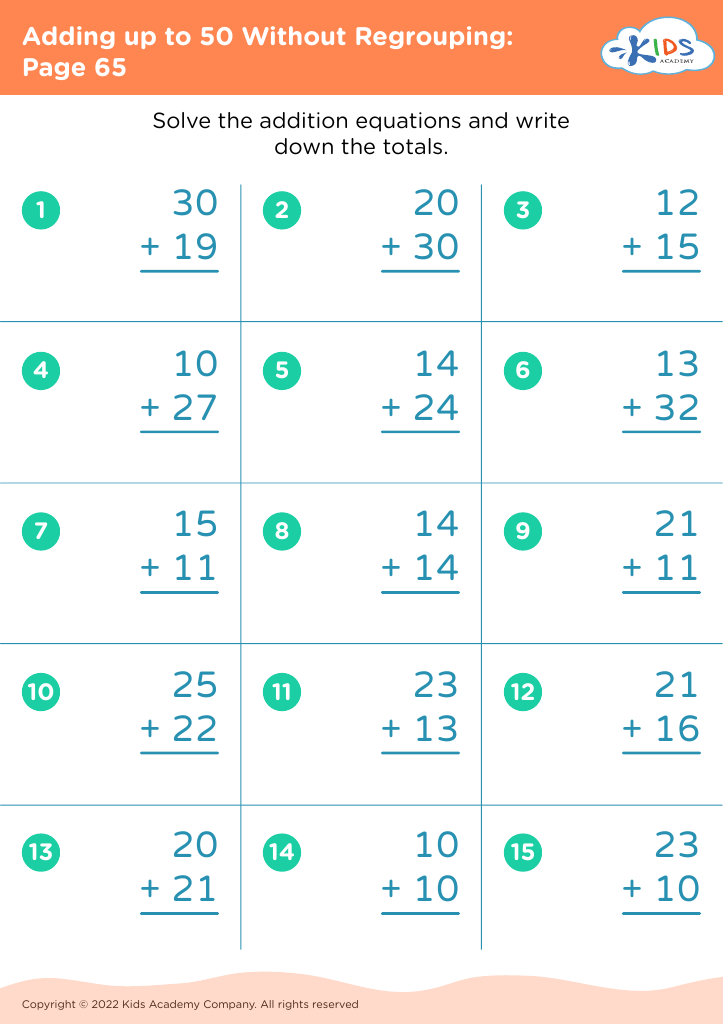




Understanding how to compare fractions is a fundamental skill in mathematics that lays the groundwork for later mathematical concepts. For children ages 6-8, particularly when exploring practical applications such as "adding up to 50," this skill becomes even more relevant and engaging.
Parents and teachers should care about this topic because comparing and working with fractions fosters essential reasoning and problem-solving skills in young learners. It not only helps children grasp mathematical concepts but also encourages logical thinking and enhances their ability to make informed decisions in daily life. For instance, learning to compare fractions allows children to understand portion sizes, ingredient measurements in cooking, or even fair sharing of treats among friends, instilling a sense of fairness and social interaction.
By framing fractions within relatable contexts, like adding up to 50, educators can reinforce a child’s motivation and interest in math. This practical application makes learning engaging and helps bridge the gap between abstract concepts and real-life scenarios. Overall, fostering an early understanding of fractions equips young learners with crucial skills that will serve them well in future math endeavors as well as everyday situations.








