Comparing Fractions Adding up to 50 Worksheets for Ages 6-8 - Page 2
30 filtered results
-
From - To
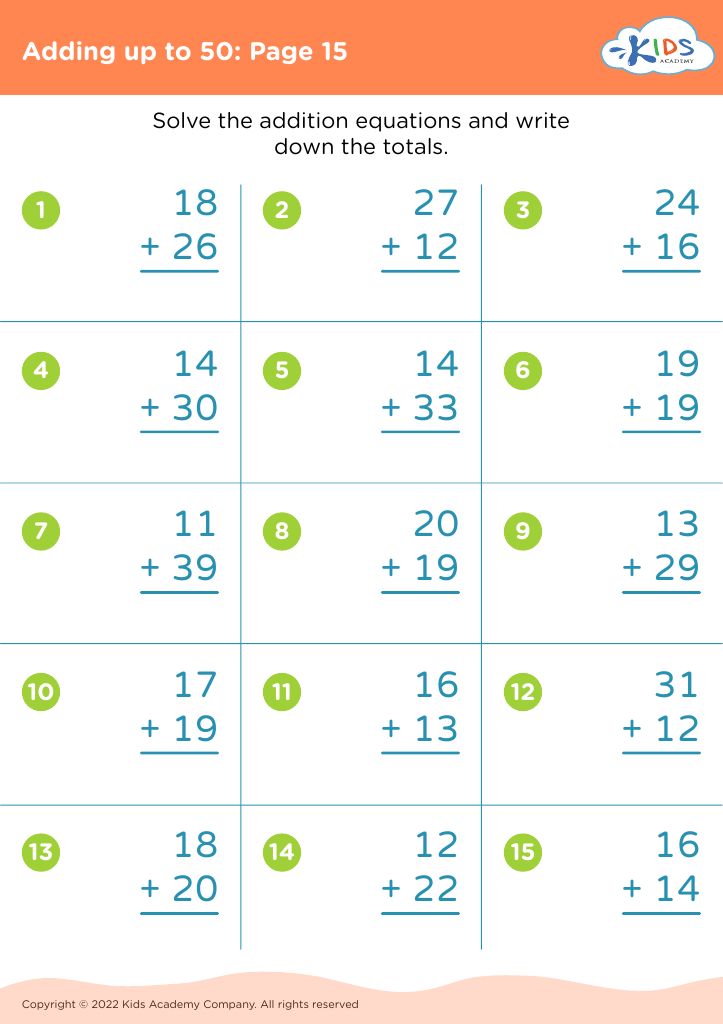
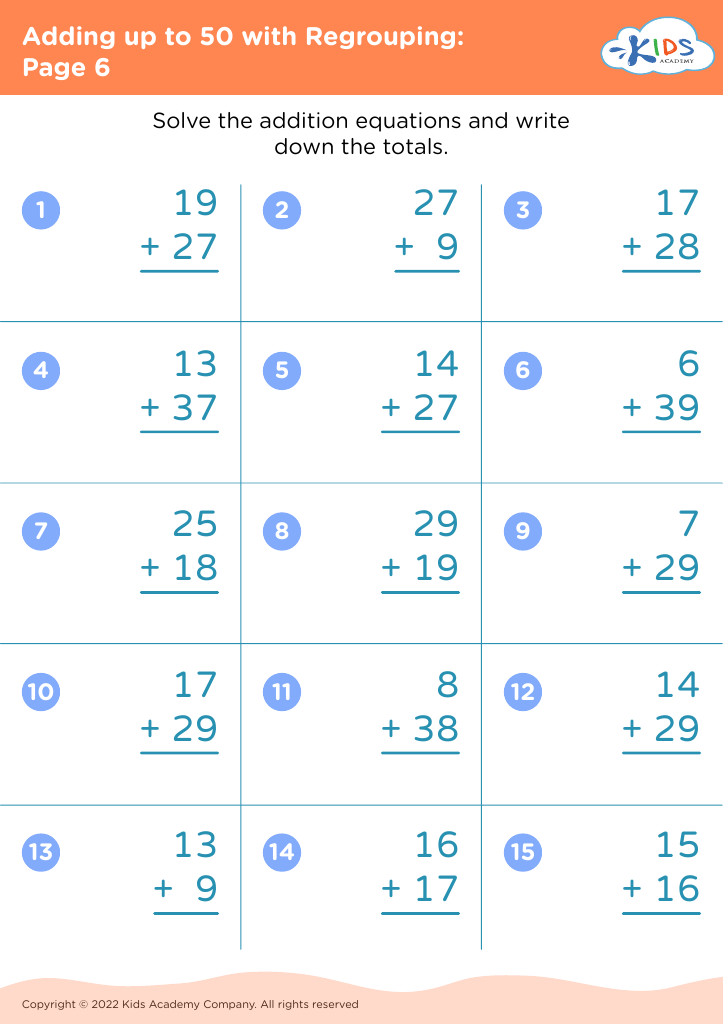
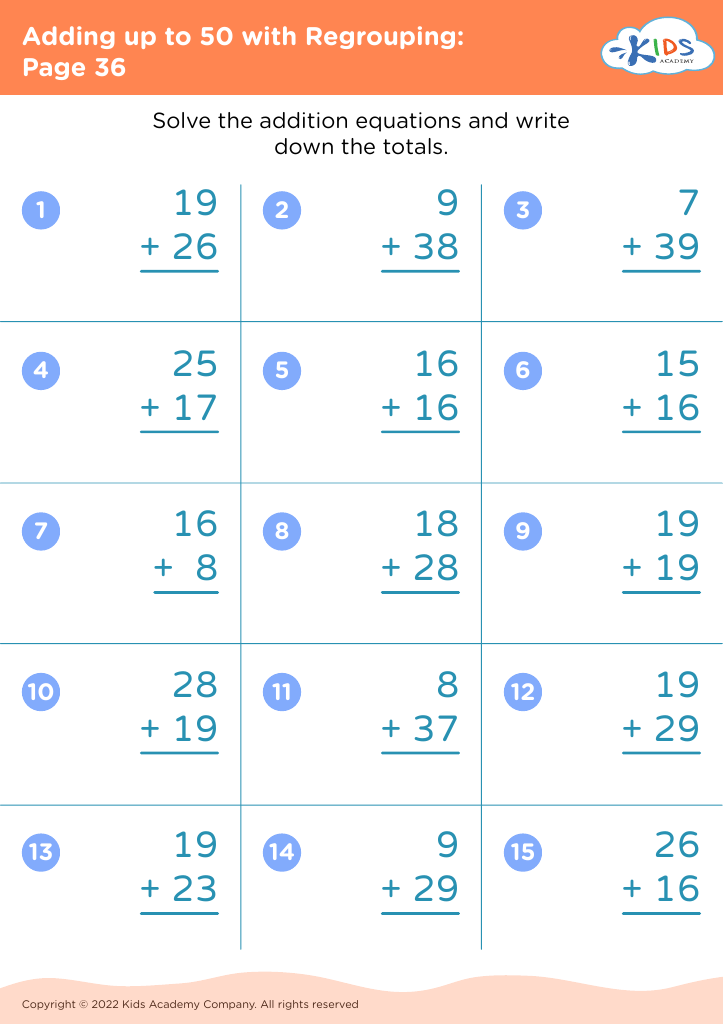
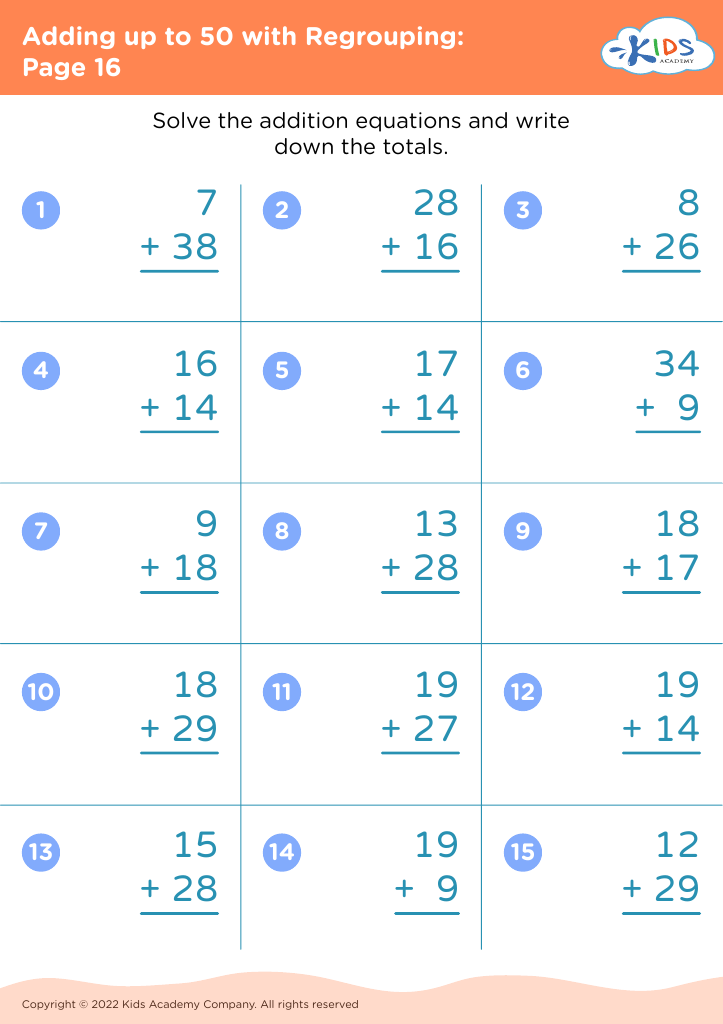
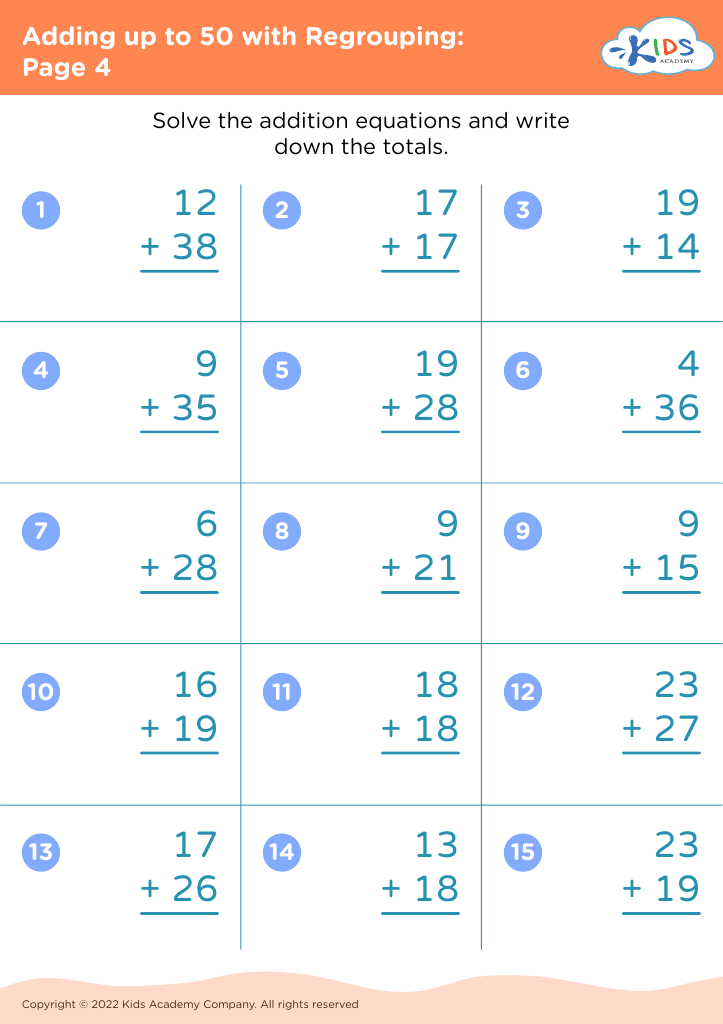
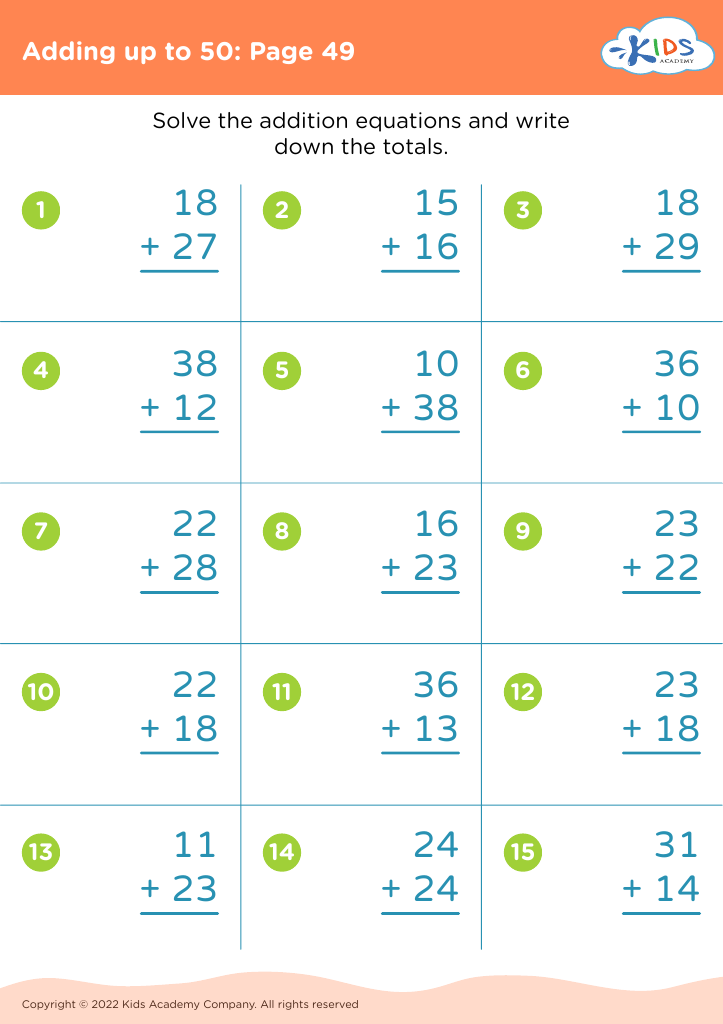




Teaching children to compare fractions that add up to 50 is vital for their mathematical development, particularly for ages 6-8. At this stage, students are starting to build foundational skills that will become essential in higher levels of math. Understanding fractions helps them grasp concepts of part-whole relationships, which are crucial for real-world applications, such as cooking, budgeting, and measuring.
Comparing fractions enhances critical thinking and problem-solving skills. By learning to determine which fraction is larger or how different fractions relate to a whole, children develop their analytical abilities. This understanding fosters confidence in their math skills and prepares them for more complex operations involving fractions, decimals, and percentages in later grades.
Moreover, early mastery of fraction comparison encourages a positive attitude towards math. Parents and teachers can engage children in activities that make learning interactive and enjoyable, reinforcing concepts through games or practical examples. This support not only helps children to succeed academically but also instills a love for learning. By prioritizing these skills, parents and teachers help cultivate mathematical literacy that students will use throughout their lives, setting a strong groundwork for lifelong learning and personal fulfillment in numeracy.








