Develop fine motor skills Adding up to 50 Worksheets for Ages 6-8
4 filtered results
-
From - To
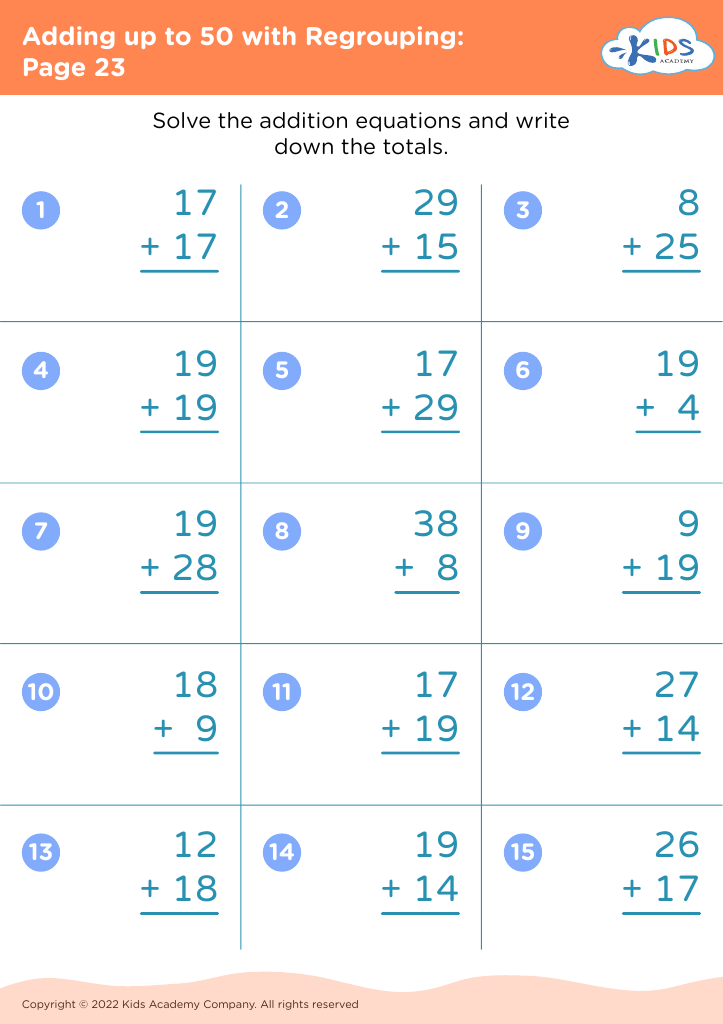
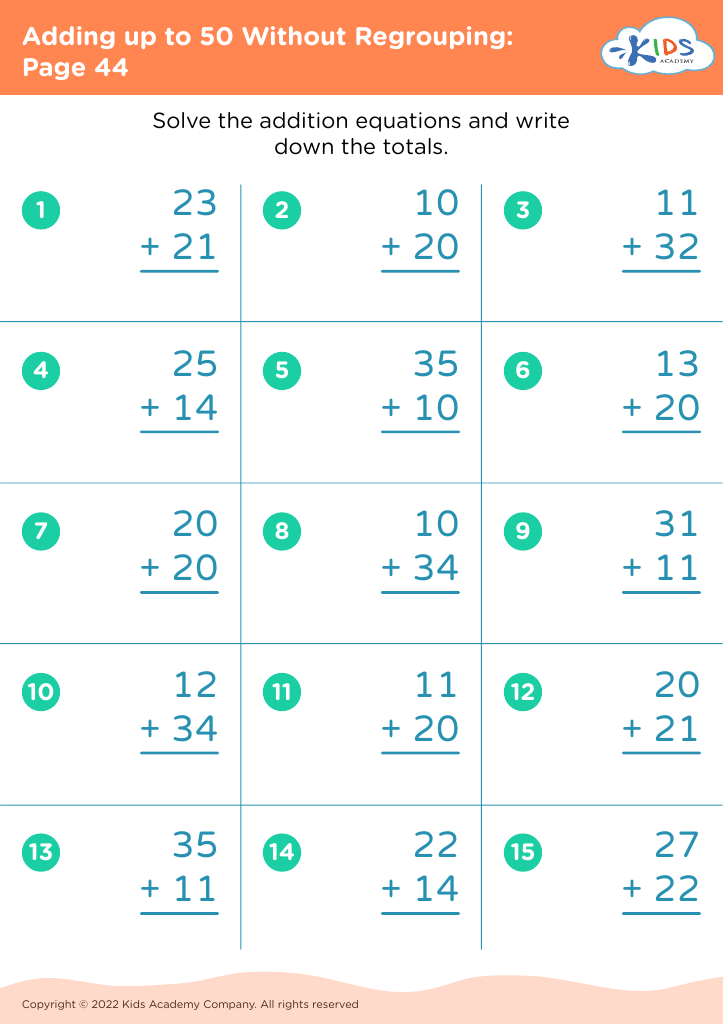
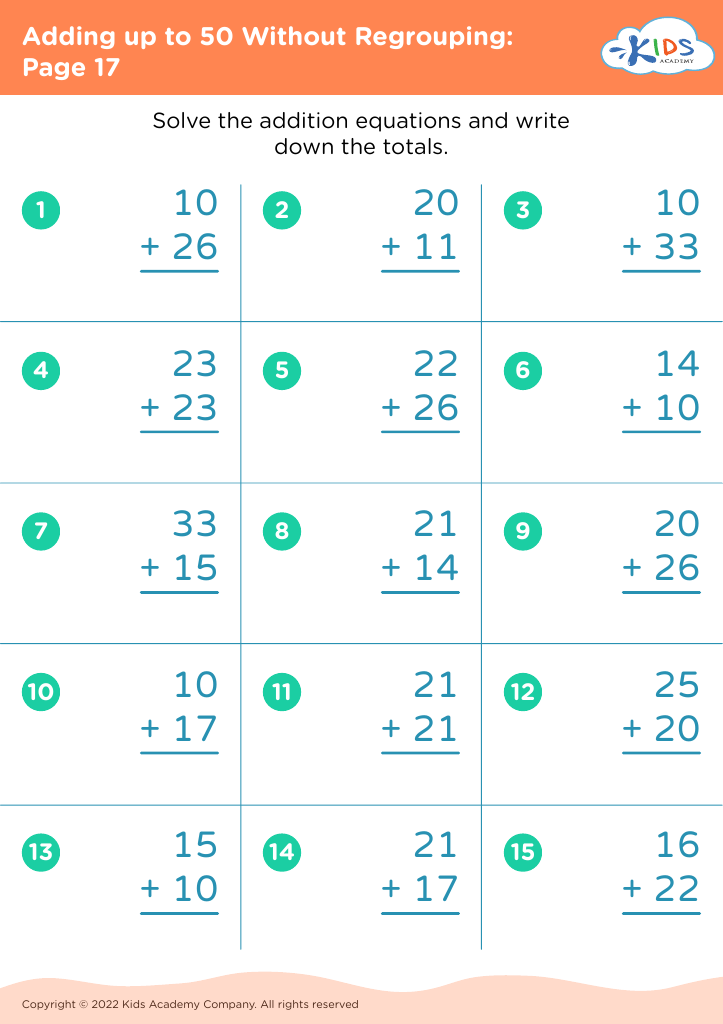
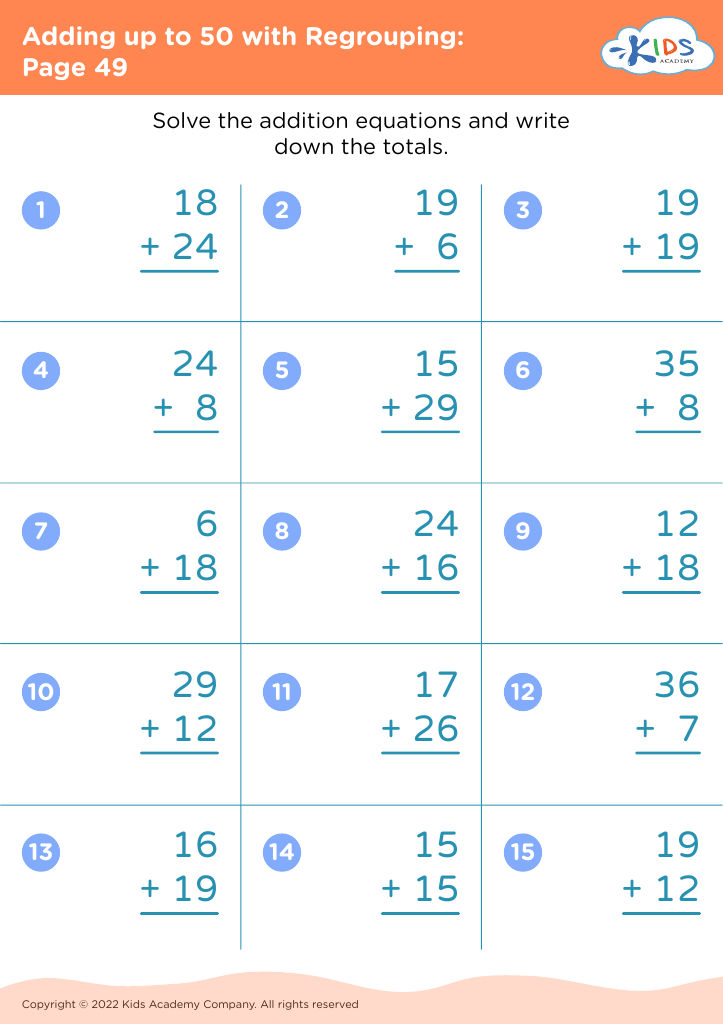
Enhance your child's fine motor skills with our engaging "Adding Up to 50 Worksheets" designed for ages 6-8! These worksheets not only reinforce essential math concepts but also promote hand-eye coordination and dexterity through interactive activities. With 100 thoughtfully crafted worksheets, children will have ample opportunities to practice addition while using their pencils and crayons to trace, draw, and connect the dots. This comprehensive set encourages independence and boosts confidence in math skills. Perfect for classrooms or at-home learning, our worksheets transform math practice into a fun and purposeful experience. Start nurturing your child's fine motor abilities today!




Developing fine motor skills in children ages 6-8 is crucial as these skills lay the foundation for many essential everyday activities. Fine motor skills involve the coordination of small muscles in the hands and fingers, which are needed for tasks like writing, drawing, buttoning shirts, and using scissors. As children in this age group start to engage more in crafts, homework, and organized sports, strong fine motor capabilities can significantly enhance their performance and enjoyment.
Caring about fine motor skill development is also important for fostering independence and confidence. When children can successfully carry out tasks on their own, they feel empowered, contributing to their self-esteem. These skills correlate with academic readiness, as writing and dexterity can influence a child’s success in schoolwork.
Moreover, fine motor development influences cognitive growth. Activities that require manipulation and coordination also promote problem-solving and critical thinking. Therefore, parents and teachers focusing on developing these skills through engaging activities are providing impactful support to children’s overall development, ensuring they are well-equipped for future challenges both in school and beyond. Investing time in fine motor skills today sets the stage for a range of successes tomorrow.








