Enhance number recognition Adding up to 50 Worksheets for Ages 6-8
5 filtered results
-
From - To
Boost your child's number recognition skills with our "Adding up to 50 Worksheets for Ages 6-8". These engaging and educational worksheets are specifically designed to help young learners master addition while recognizing numbers up to 50. Through fun and interactive exercises, kids will develop their math abilities, enhancing their confidence and proficiency. Perfect for classroom use or supplemental at-home practice, our worksheets target essential skills and make math practice enjoyable. With vibrant visuals and clear instructions, your child will be motivated to learn and excel. Download now to support their mathematical growth in an effective, stimulating way.
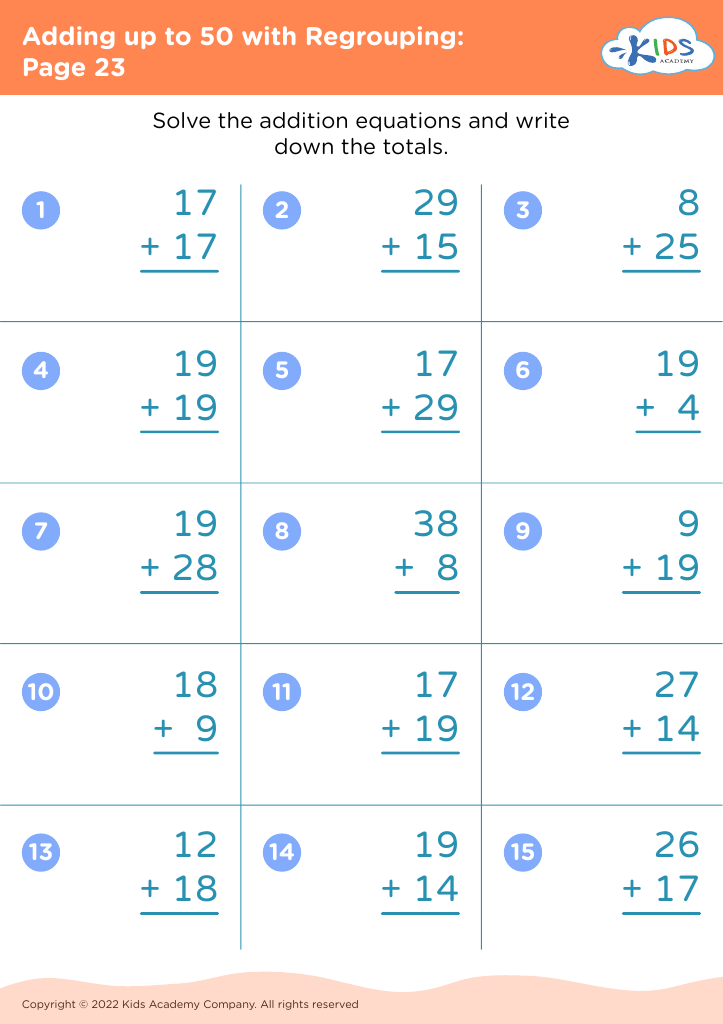
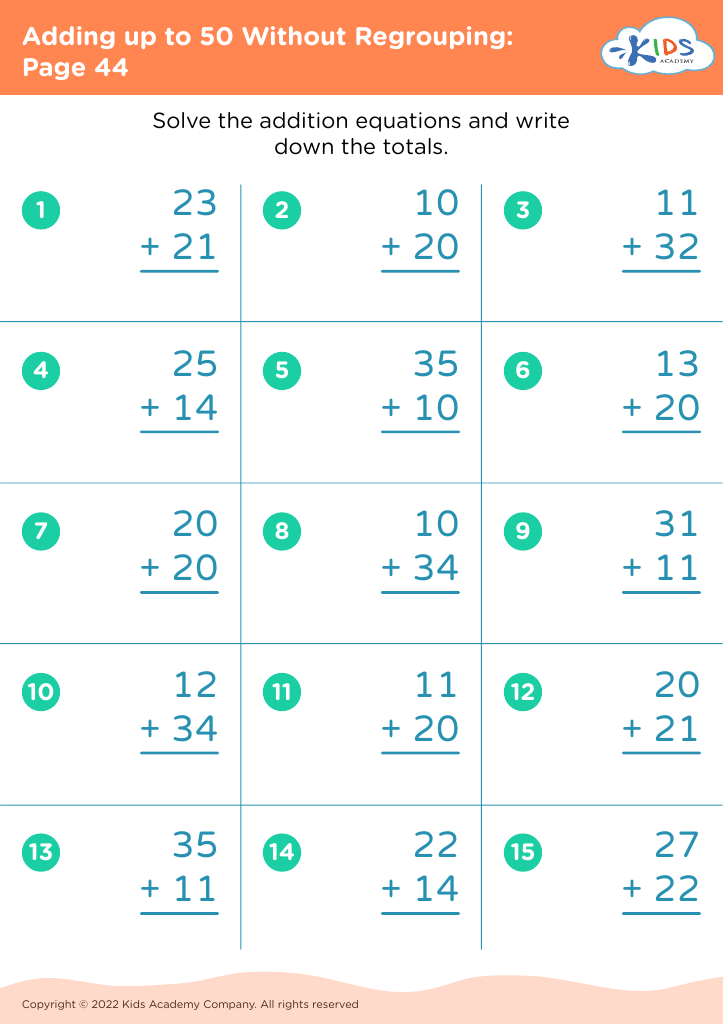
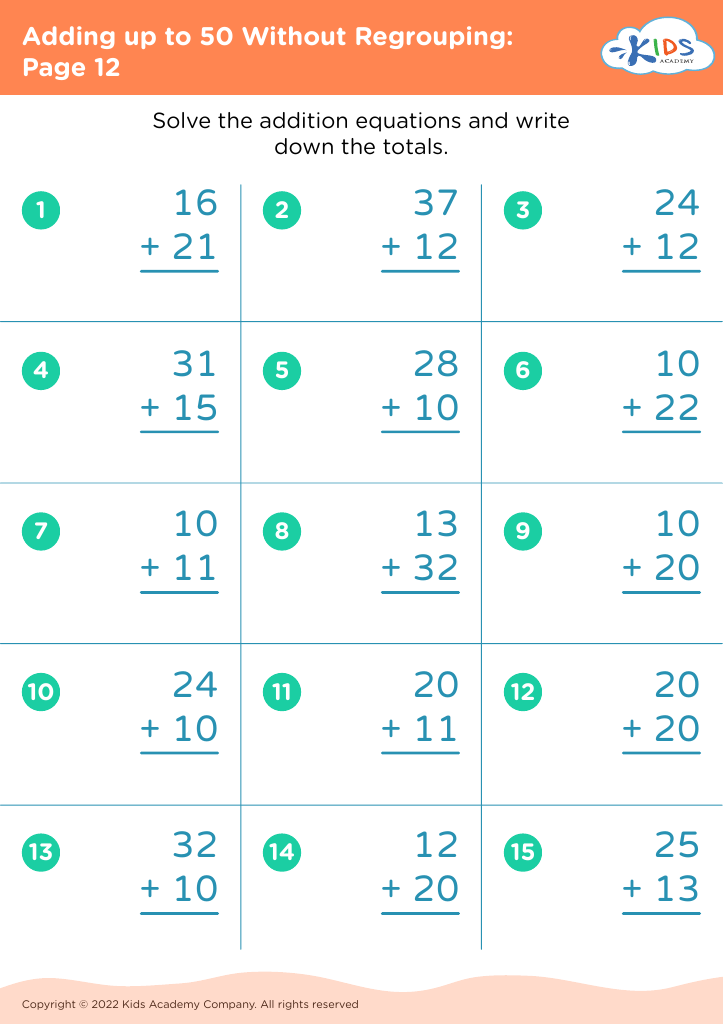
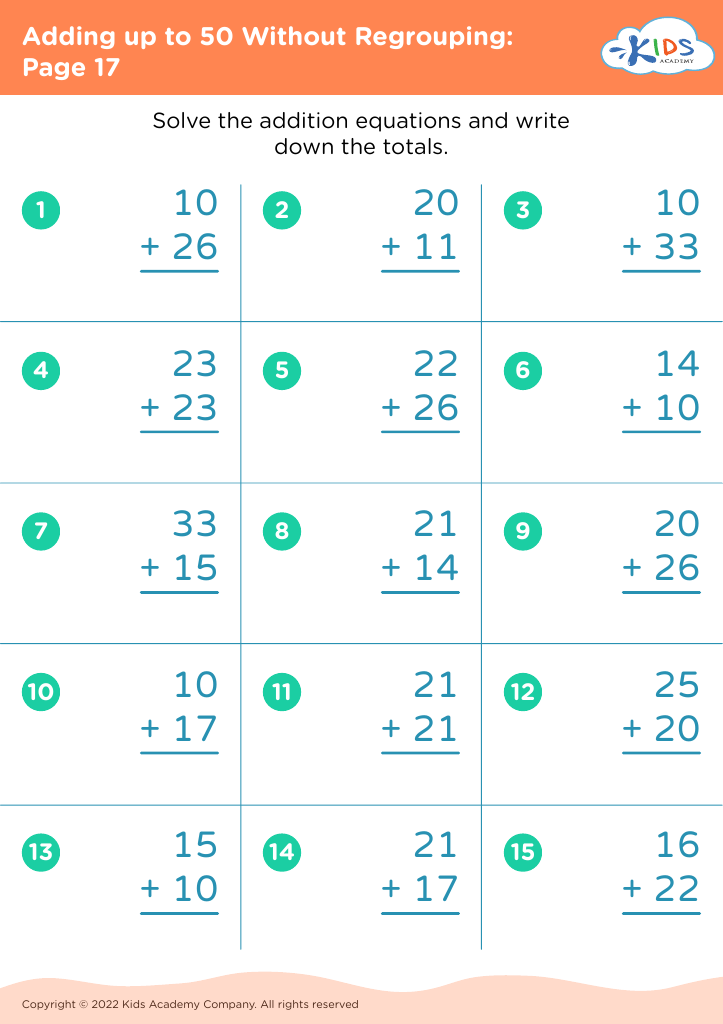
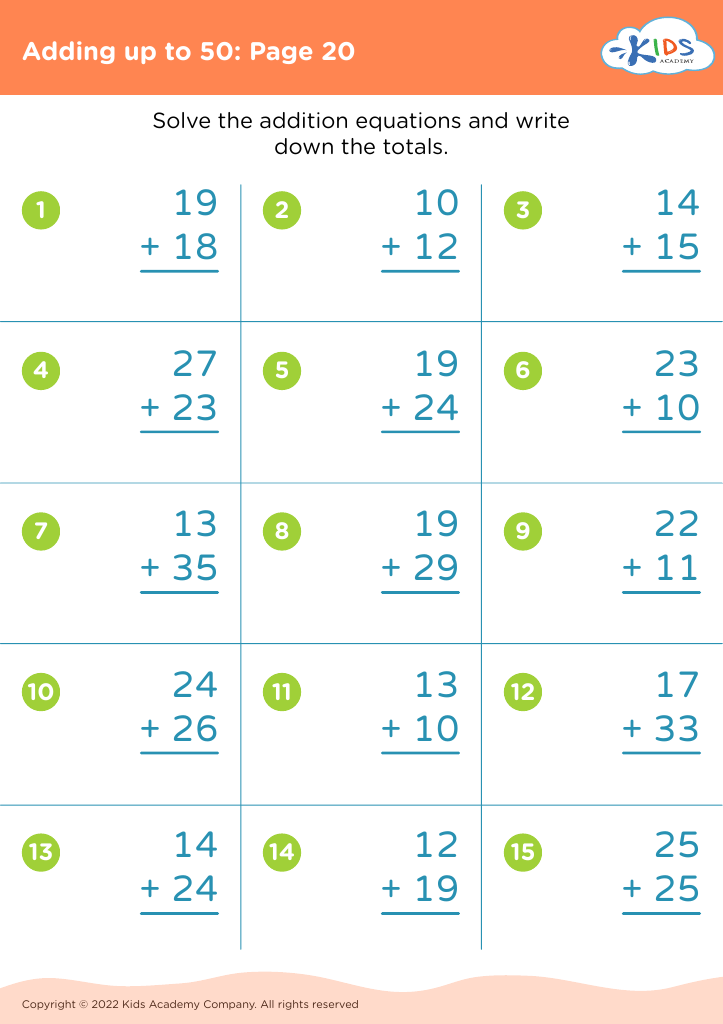




Enhancing number recognition and understanding addition up to 50 is pivotal for children aged 6-8, as this period forms the cornerstone of their mathematical development. Firstly, number recognition up to 50 aids in building numerical literacy, a fundamental skill not just for later complex mathematics, but also for everyday situations like reading clocks, handling money, and following measurements. When children can recognize and comprehend numbers, they can also develop confidence in their ability to interact with the quantitative world around them.
Moreover, addition up to 50 introduces basic arithmetic operations, fostering critical thinking and problem-solving skills that extend beyond mathematics. Grasping the concept of addition fundamentally enhances cognitive development, helping kids learn to approach tasks systematically and logically.
Teachers and parents play a critical role in nurturing these skills by creating a supportive and stimulating learning environment at this crucial stage. Engaging children with fun activities, like math games and interactive lessons, consolidates their understanding and makes learning enjoyable.
Collectively, bolstering number recognition and ensuring competence in addition up to 50 provides a vital numerical foundation. This encourages a positive outlook towards mathematics, significantly easing the transition to more complex mathematical concepts in the future, and laying the groundwork for academic success and functional independence in daily life.








