Fraction Addition Adding up to 50 Worksheets for Ages 6-8
5 filtered results
-
From - To
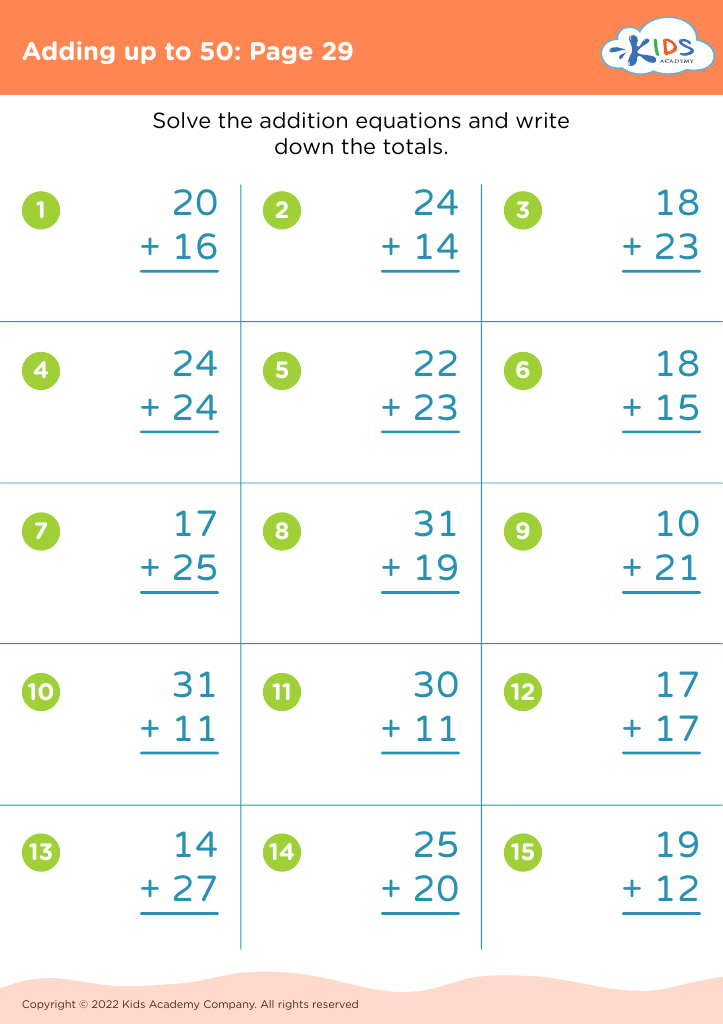
Discover our Fraction Addition Adding Up to 50 Worksheets designed for ages 6-8, perfect for helping young learners build essential math skills! These interactive worksheets provide a fun and engaging way to introduce and reinforce fraction addition concepts. Children will explore adding fractions with a focus on sums that do not exceed 50, enhancing their number sense and problem-solving abilities. With colorful illustrations and easy-to-follow instructions, kids will enjoy practicing fractions while developing confidence in their math skills. Ideal for home or classroom use, these worksheets make learning enjoyable and support curriculum standards. Start your child's math journey today!
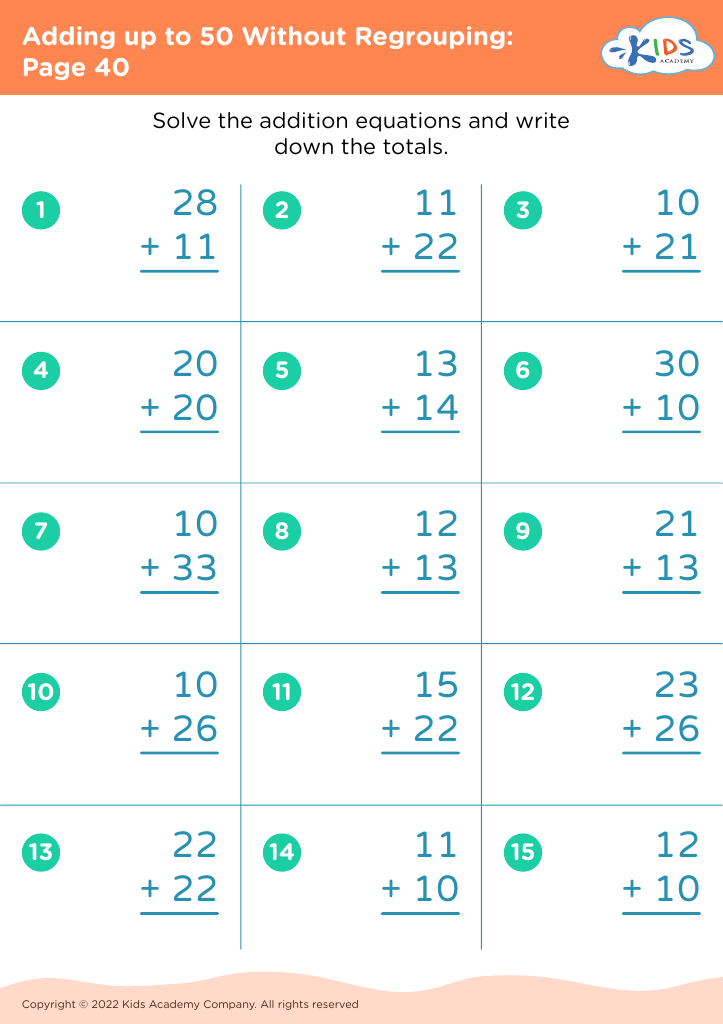
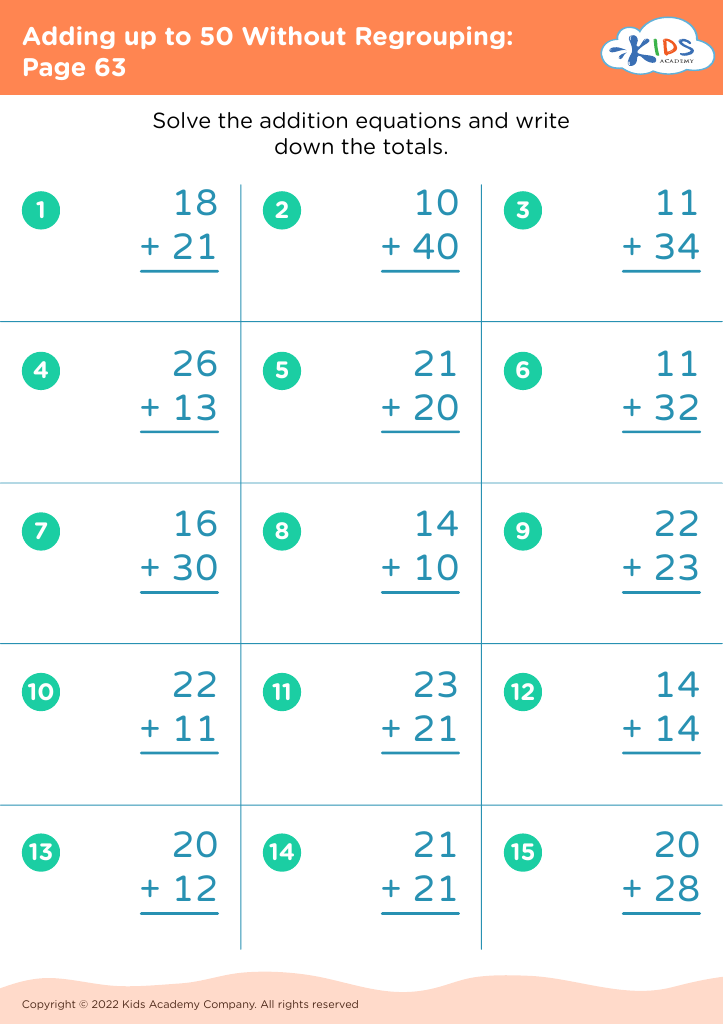
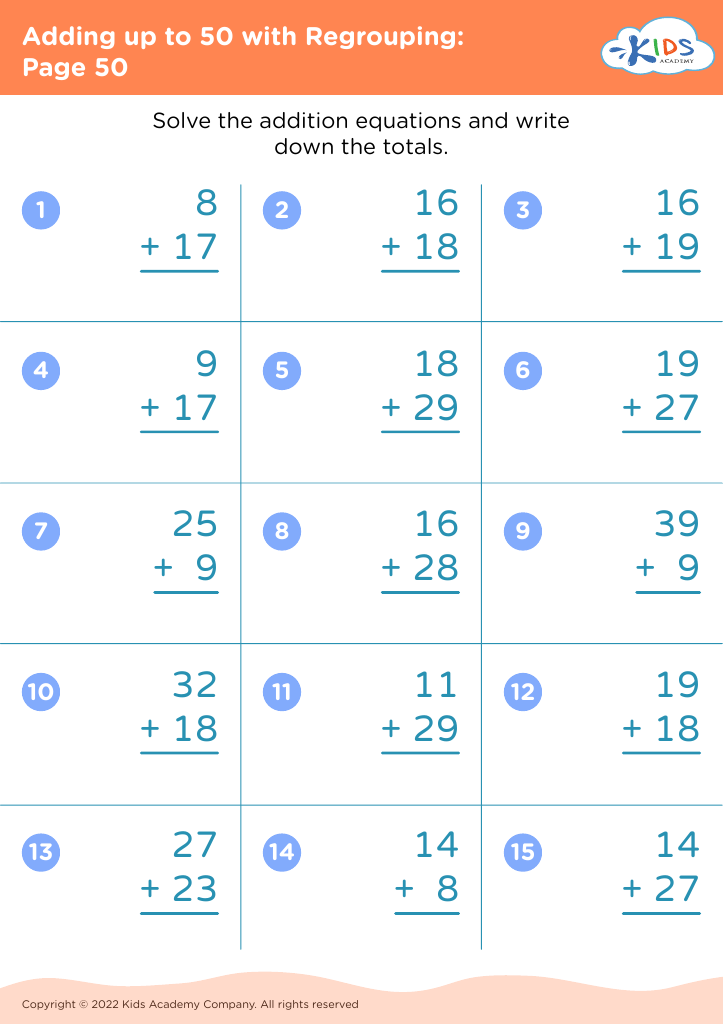
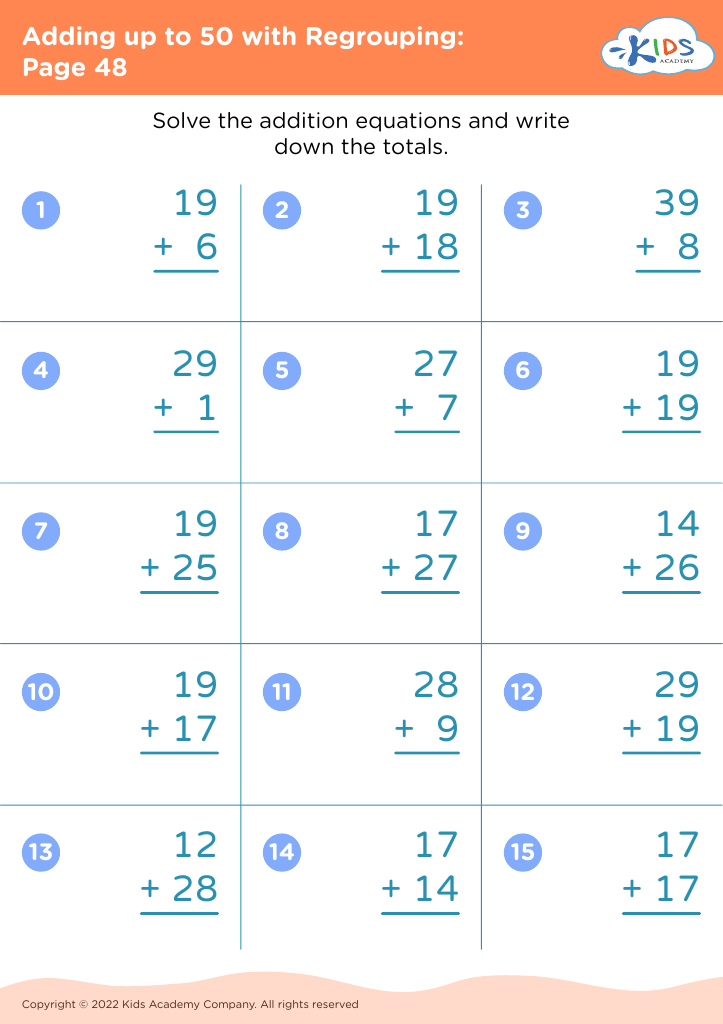




Fraction addition is an essential mathematical concept for children aged 6-8, as it lays the foundation for critical thinking and problem-solving skills. Understanding how to add fractions up to a whole number, such as 50, helps students grasp the idea of part-whole relationships, which is fundamental in various real-life situations.
When parents and teachers focus on this skill, they not only prepare children for more complex math concepts later on but also foster a growth mindset in students. Mastering fractions enhances numerical fluency, enabling children to tackle challenges with more confidence. This is especially important around ages 6-8 when students are highly impressionable and developing their attitudes toward math.
Additionally, integrating fun and engaging activities involving fraction addition cultivates a love for learning and critical engagement with math. This can range from using visual aids, such as pie charts, to real-world applications, such as baking, where fractions are often used in recipes. Such connections can make learning more relatable and enjoyable.
In summary, understanding fraction addition equips children with problem-solving tools that extend beyond the classroom and empowers them to succeed in their overall mathematical journey. Supporting this skill is a valuable investment in their future academic and personal lives.








