Fraction comparison Adding up to 50 Worksheets for Ages 6-8
7 filtered results
-
From - To
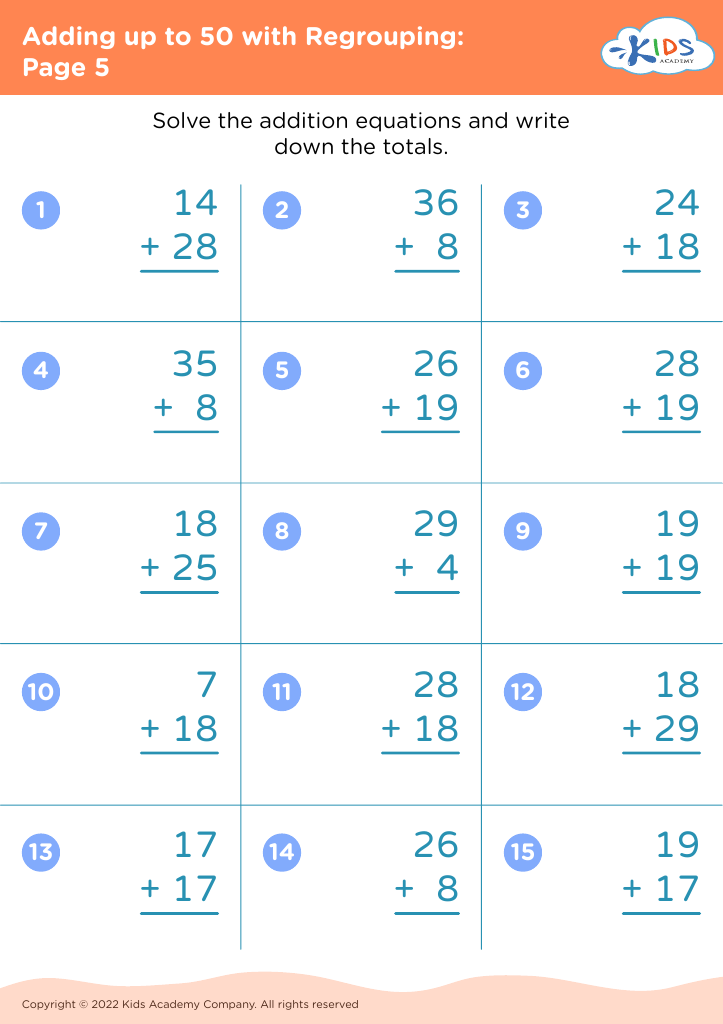
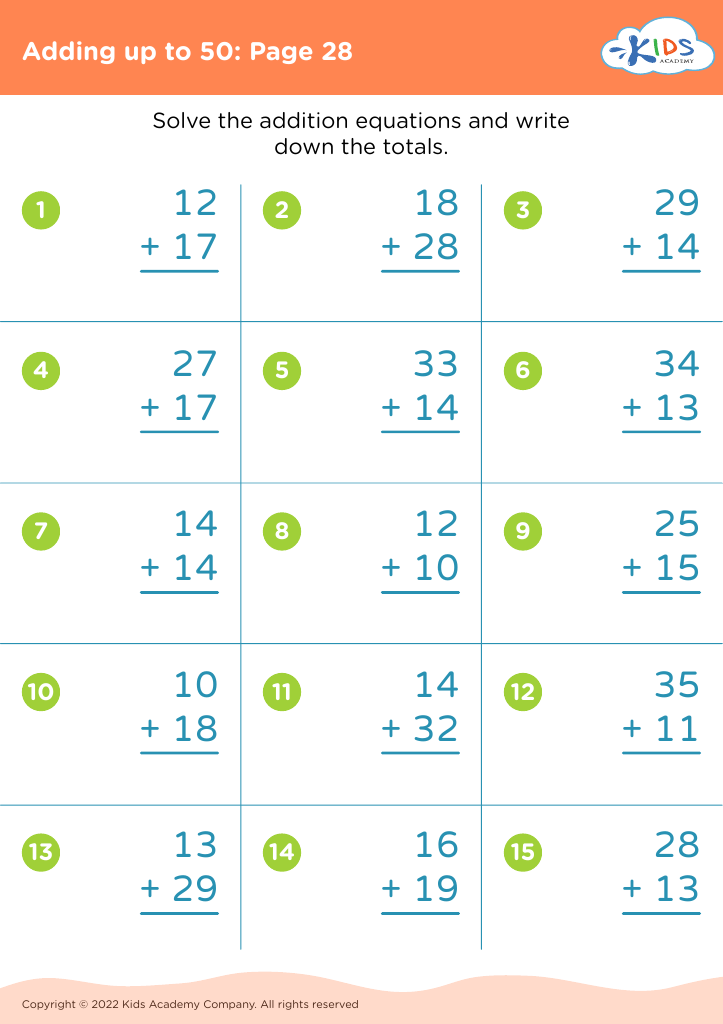
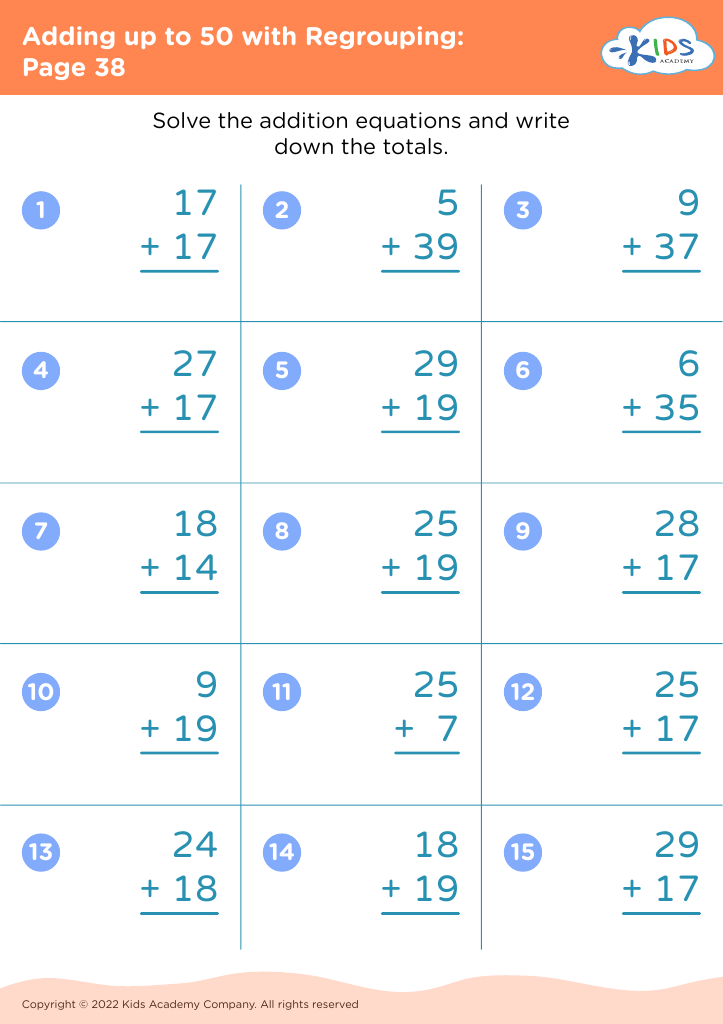
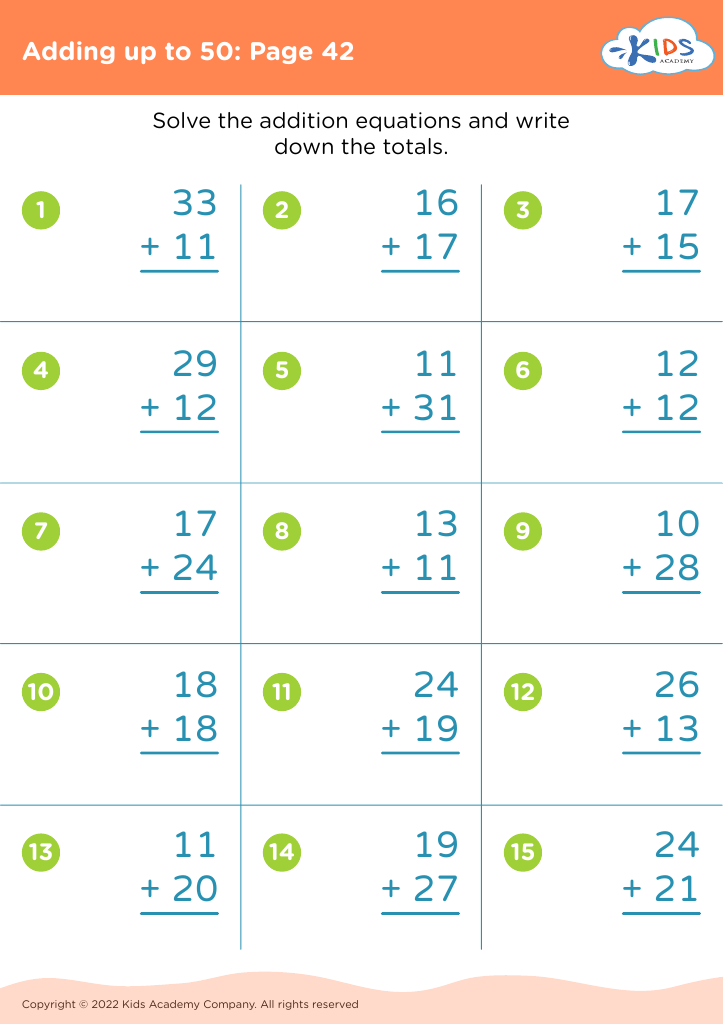
Explore our engaging "Fraction Comparison Adding Up to 50 Worksheets" designed specifically for children ages 6-8. These worksheets are perfect for helping young learners enhance their understanding of fractions while mastering addition skills. They'll learn how to compare different fractions accurately and see how they relate to the whole, all while tackling problems adding up to 50. Fun and interactive activities provide a solid foundation in math, ensuring kids build confidence and competence in their skills. Download these worksheets today to make learning fractions an enjoyable adventure for your child! Perfect for home practice or classroom use.
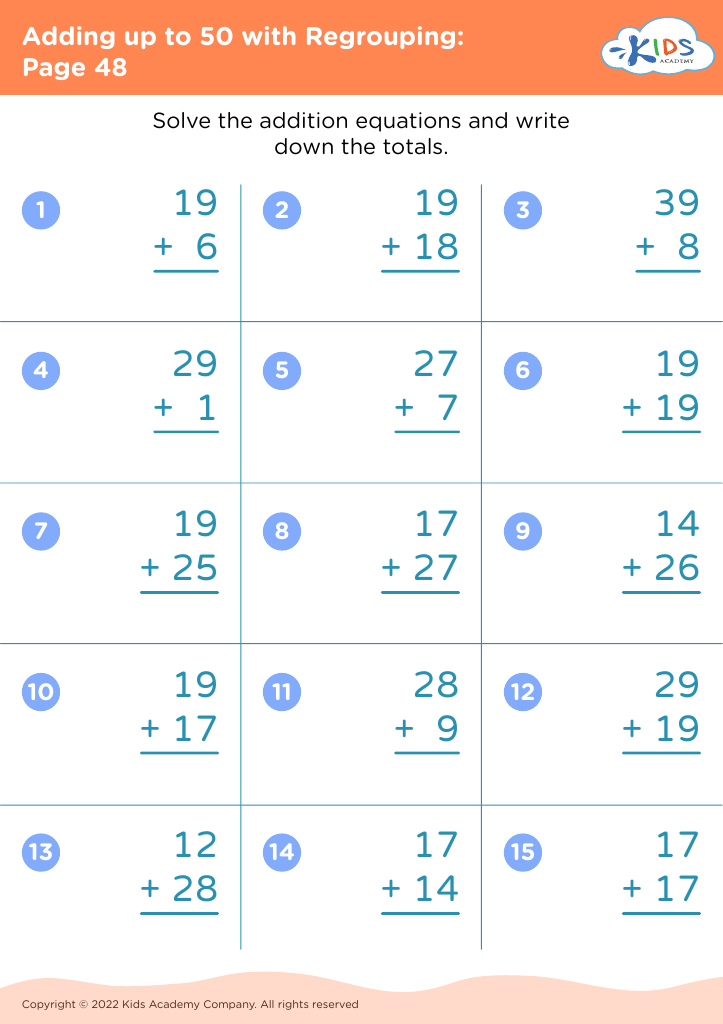
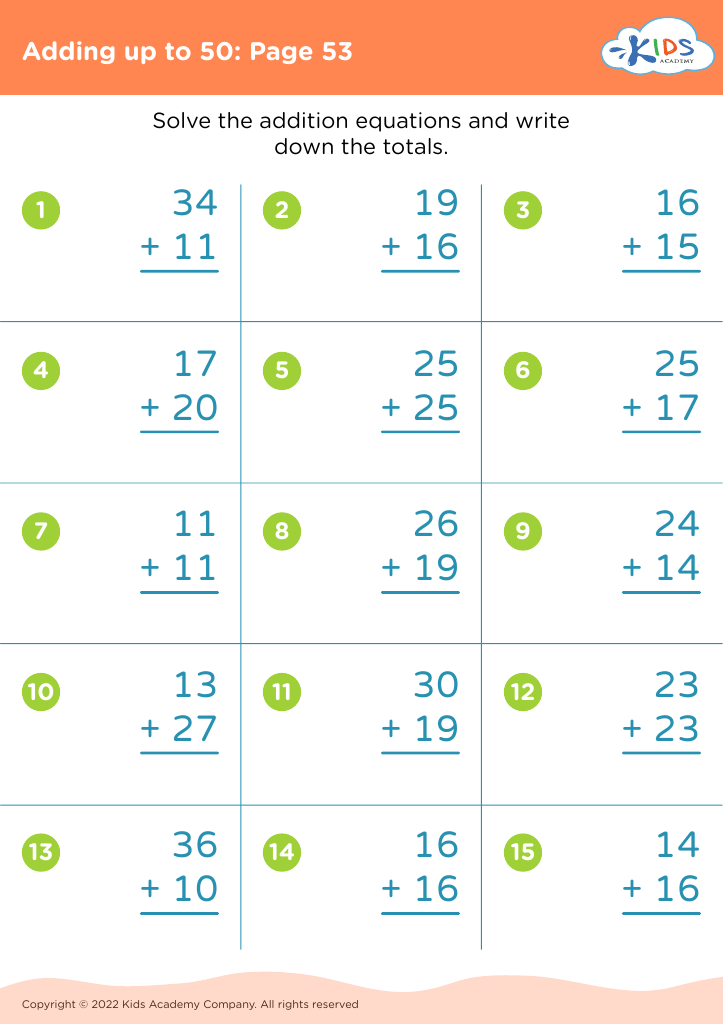
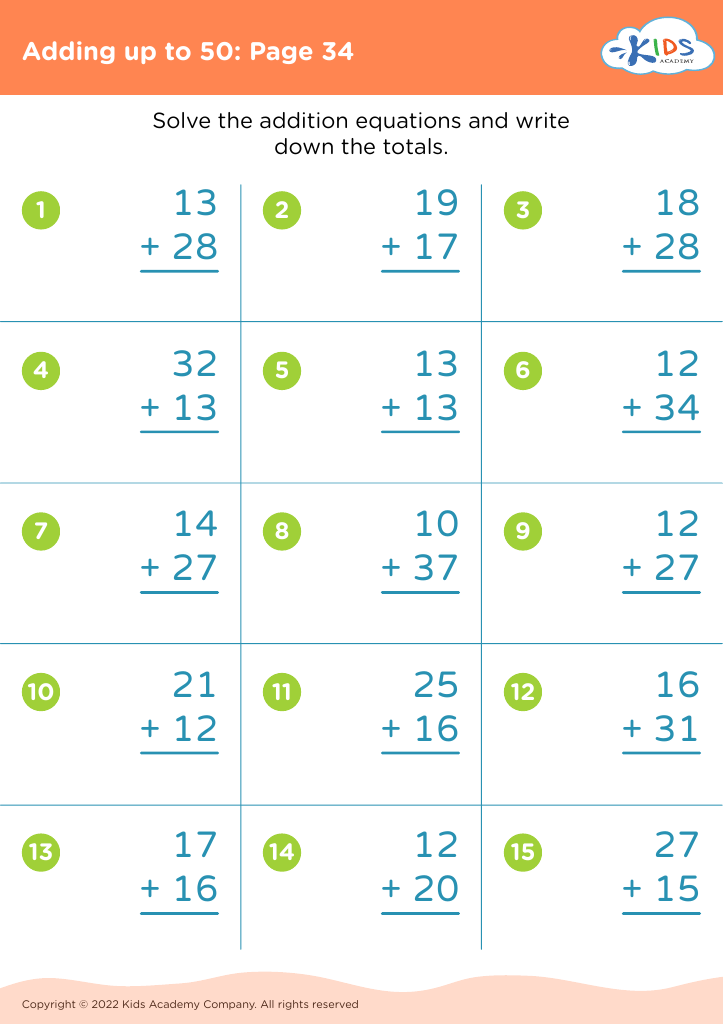




Understanding fraction comparison and addition is essential for children aged 6-8 as it lays a foundational skill essential for higher mathematics. Fractions, like 1/2 or 3/4, represent parts of a whole, making them crucial for daily life scenarios, such as cooking, shopping, and understanding time. When children learn to compare fractions, they develop critical thinking and problem-solving skills, identifying which portions are greater or lesser.
Moreover, introducing the concept of adding fractions that sum up to 50 can help reinforce their understanding of both fractions and whole numbers. This exercise encourages students to recognize relationships between numbers, promoting additive reasoning and enhancing their numerical fluency. As they learn to find common denominators and combine various fractions, they practice valuable mathematical strategies that can help with future mathematical concepts.
Parents and teachers play a vital role in nurturing these skills by providing engaging and practical activities. Encouraging an early understanding of these concepts fosters a love for math, builds confidence, and prepares children for more advanced topics later in their education. Ultimately, grasping fraction comparison and addition can empower children, enabling them to excel academically and apply their skills in the real world.








