Fraction simplification Adding up to 50 Worksheets for Ages 6-8
20 filtered results
-
From - To
Discover engaging "Fraction Simplification Adding up to 50" worksheets designed for kids ages 6-8! These educational printables help young learners master the fundamentals of simplifying fractions through exciting exercises and interactive challenges. Perfect for classroom or home use, our worksheets enhance arithmetic skills by focusing on addition within the friendly limit of 50. Encourage your child or students to build a solid mathematical foundation while having fun, developing critical thinking, and boosting confidence in math. Turn learning into an enjoyable adventure with Kids Academy's expertly crafted resources that inspire and educate young minds!
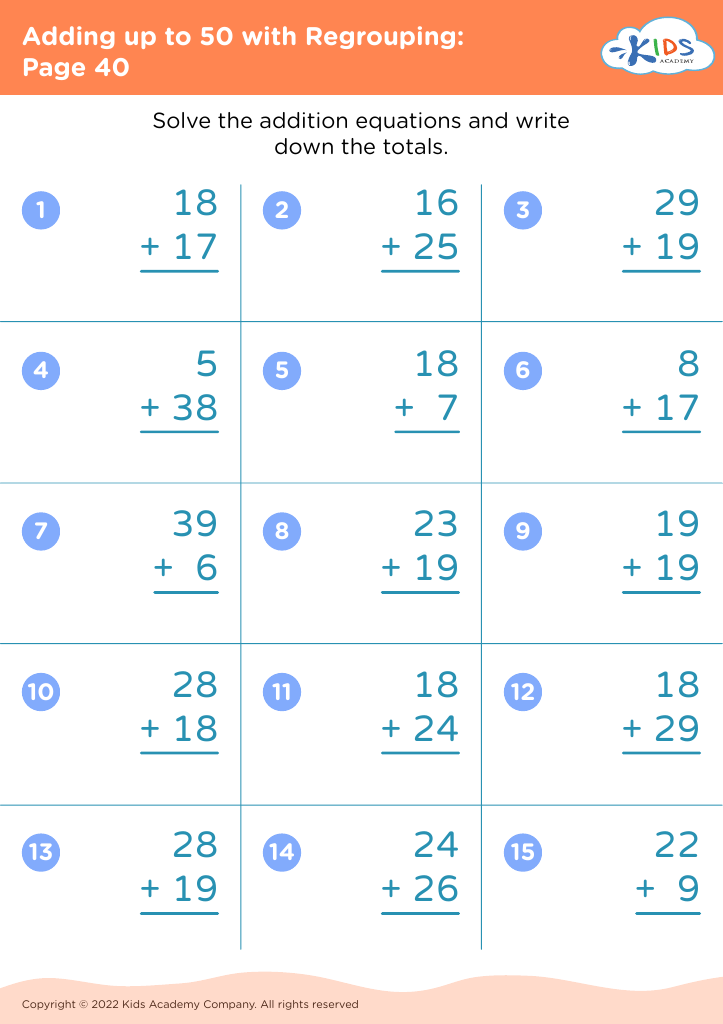
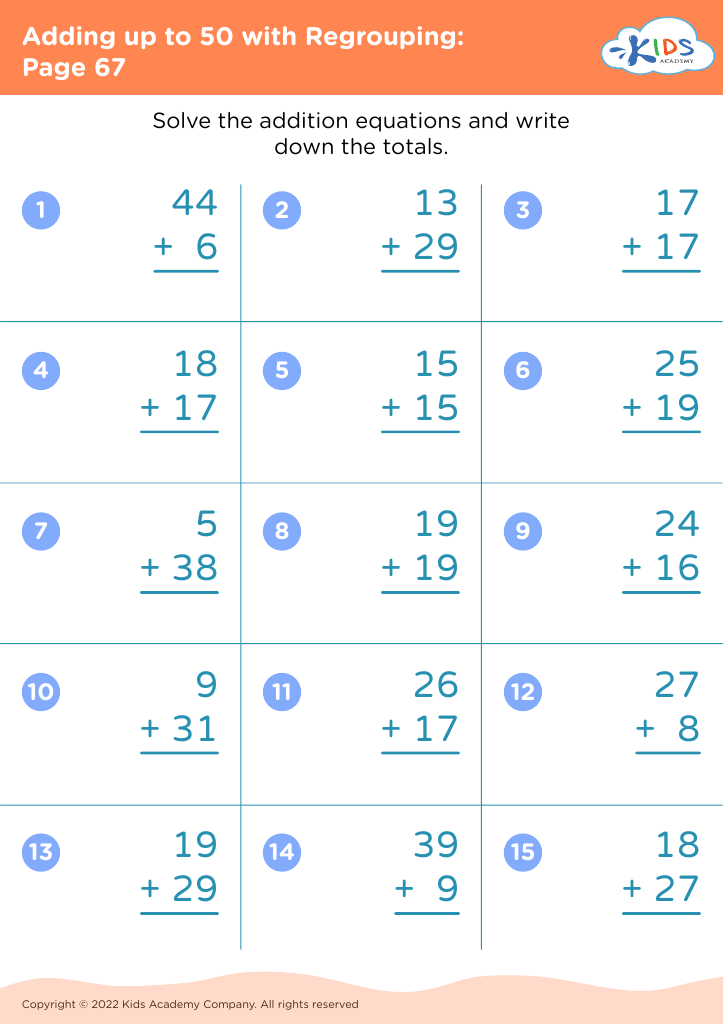
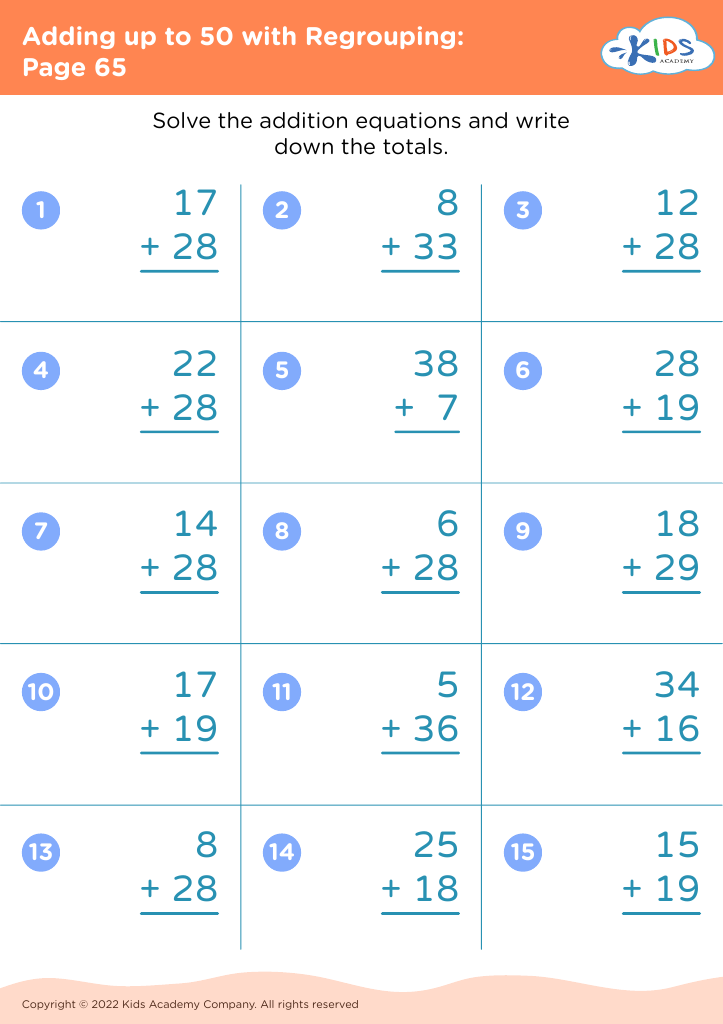
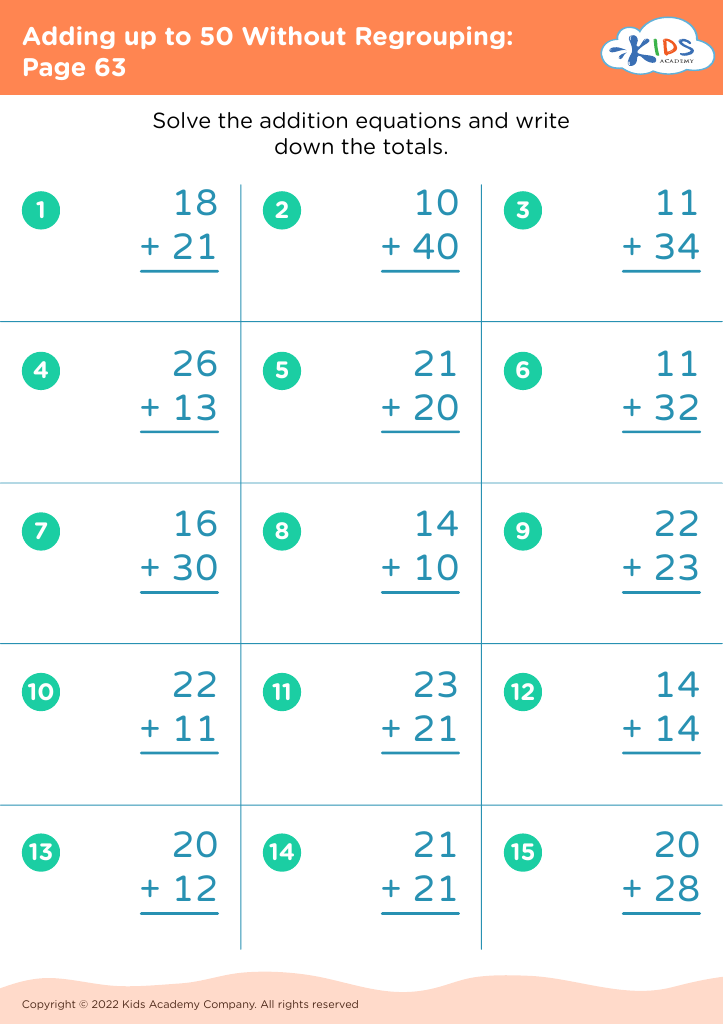
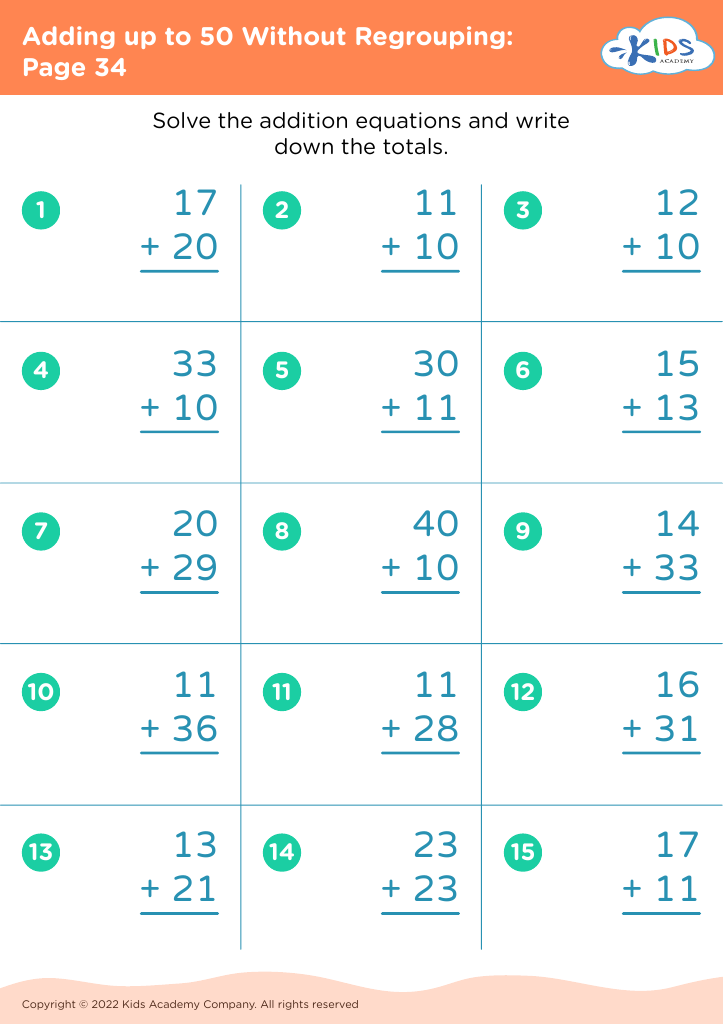
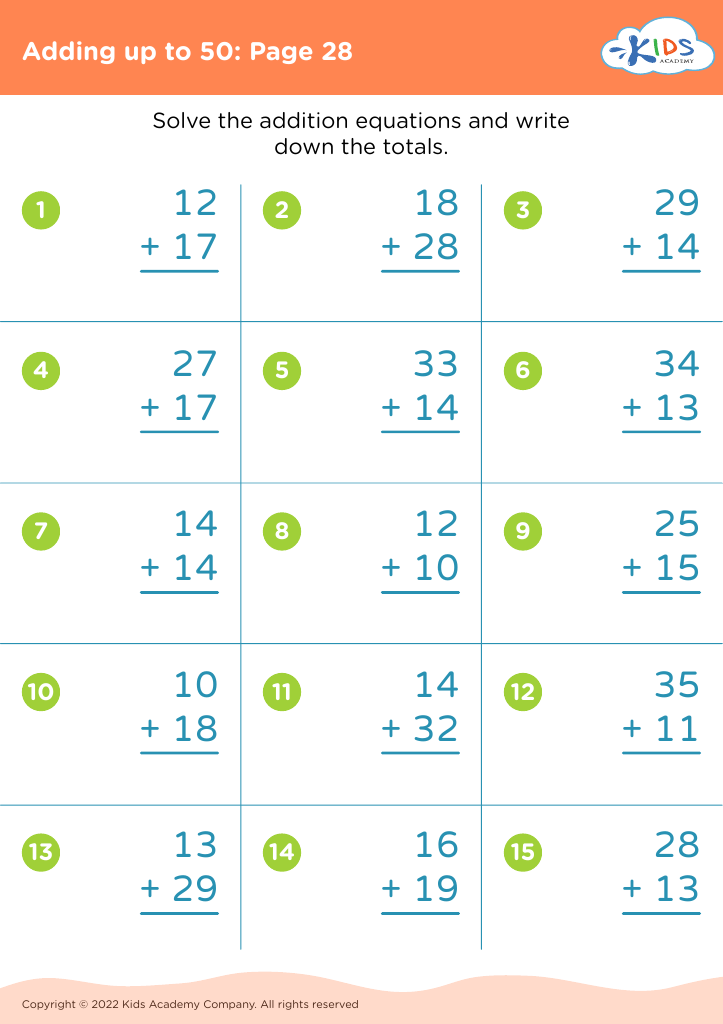
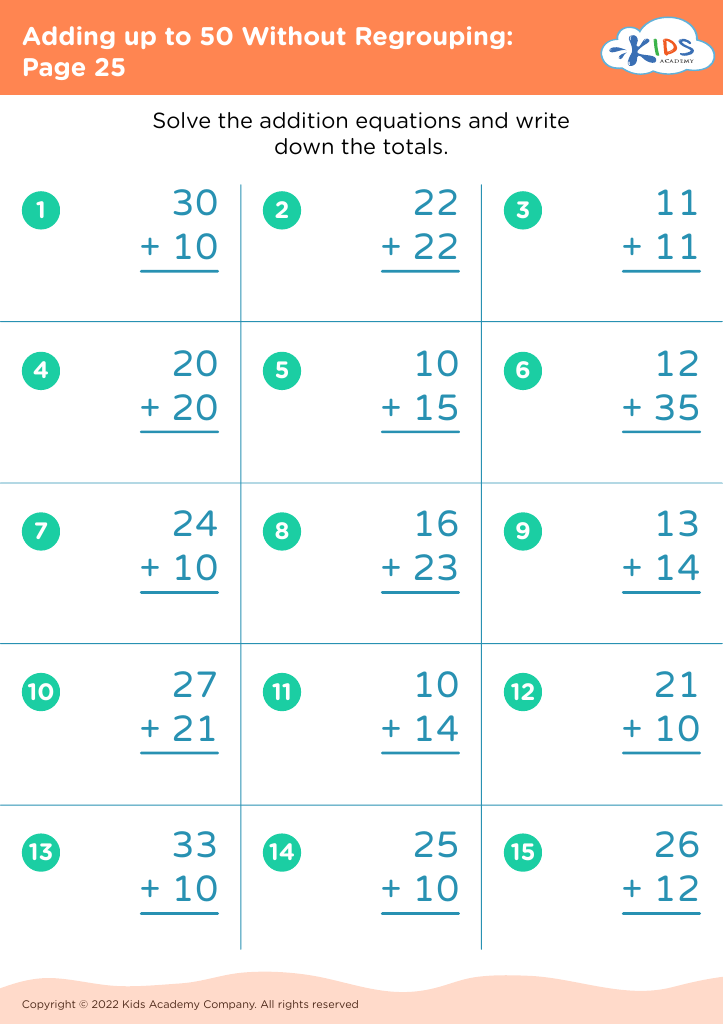
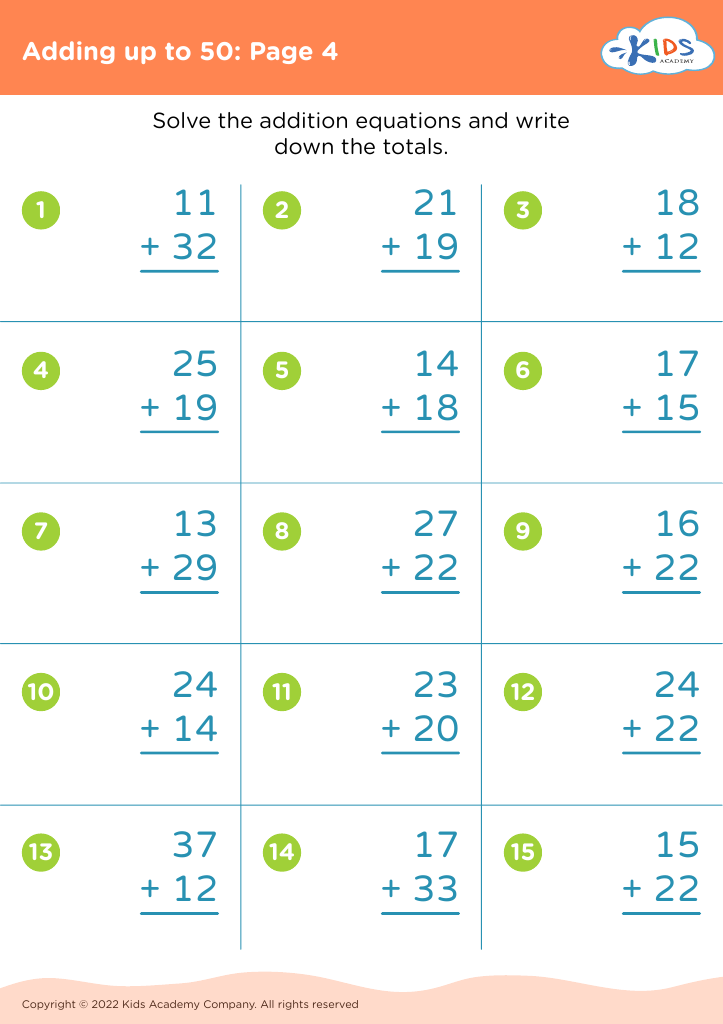
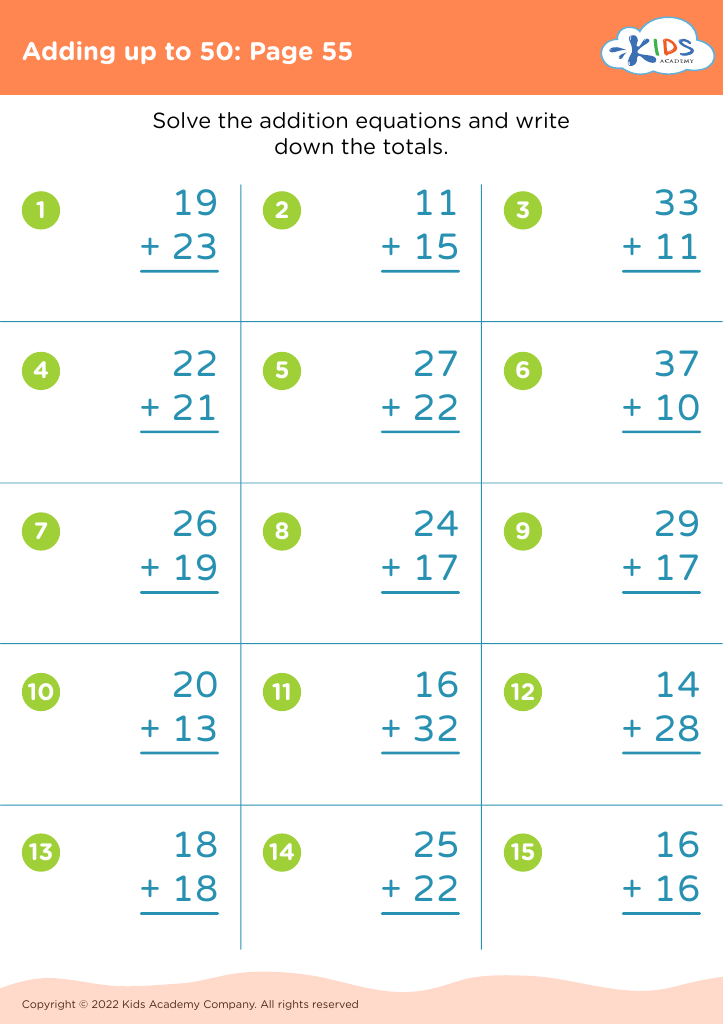
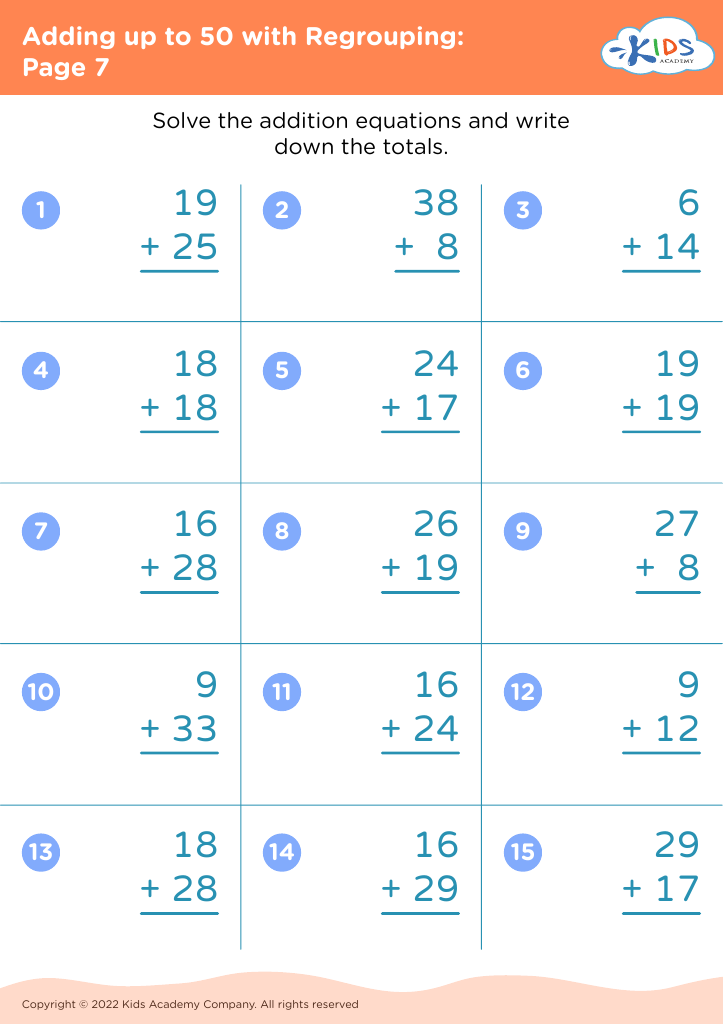
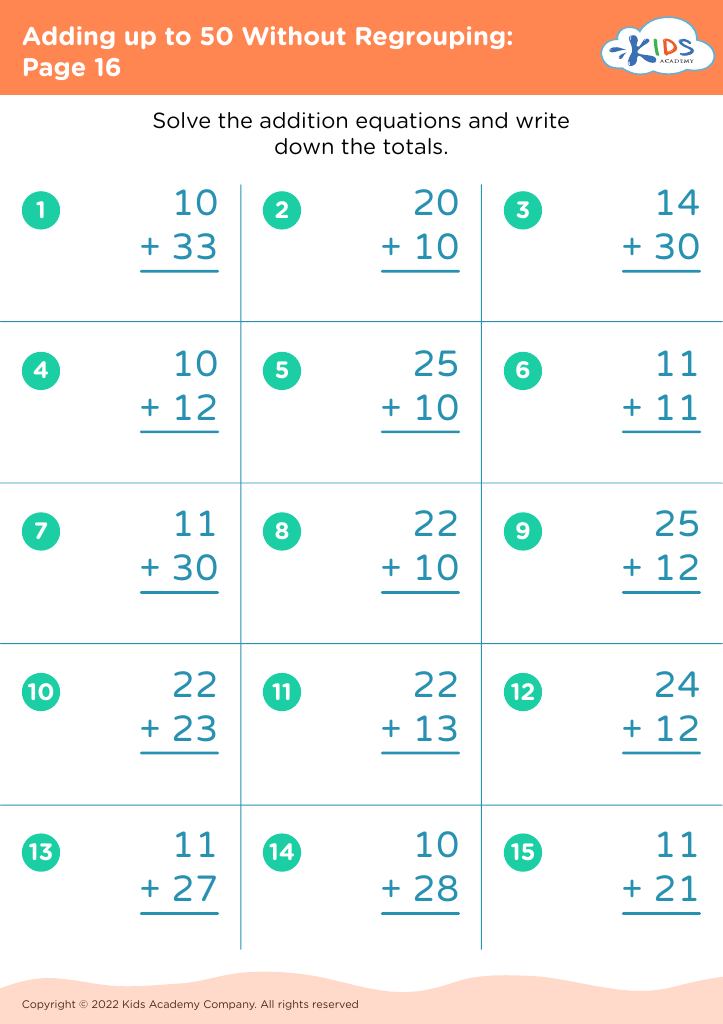
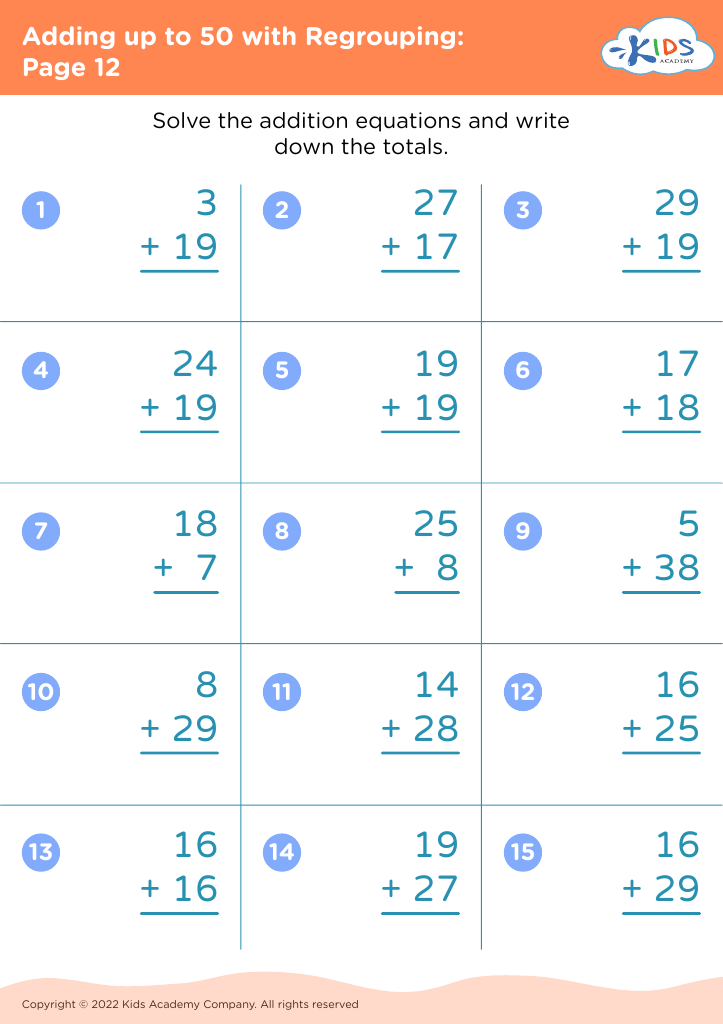
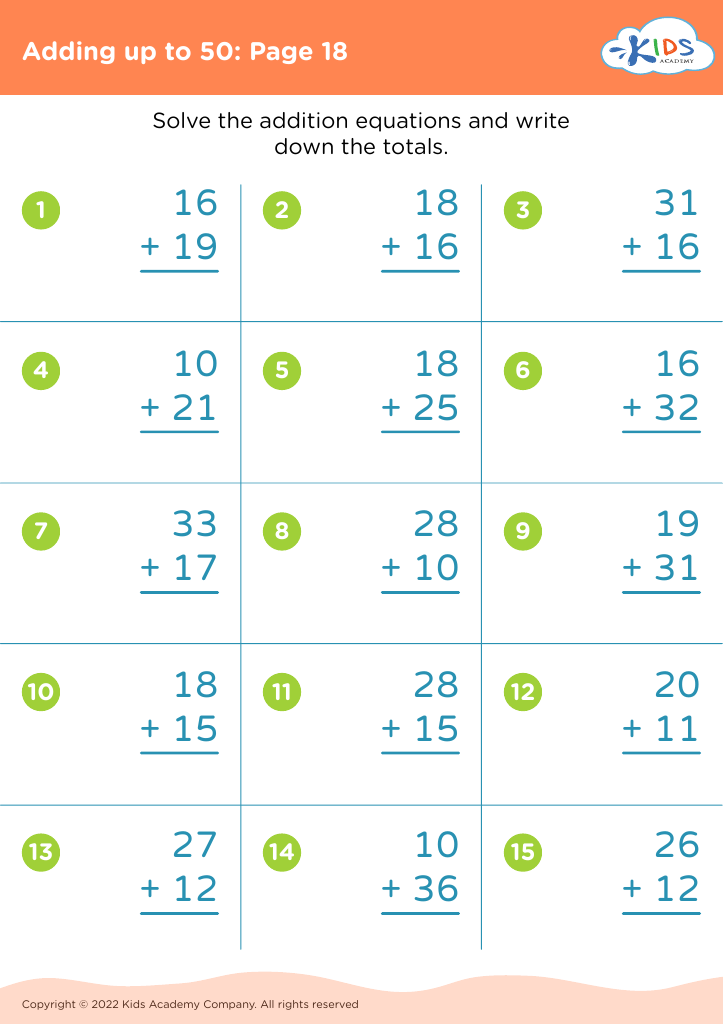
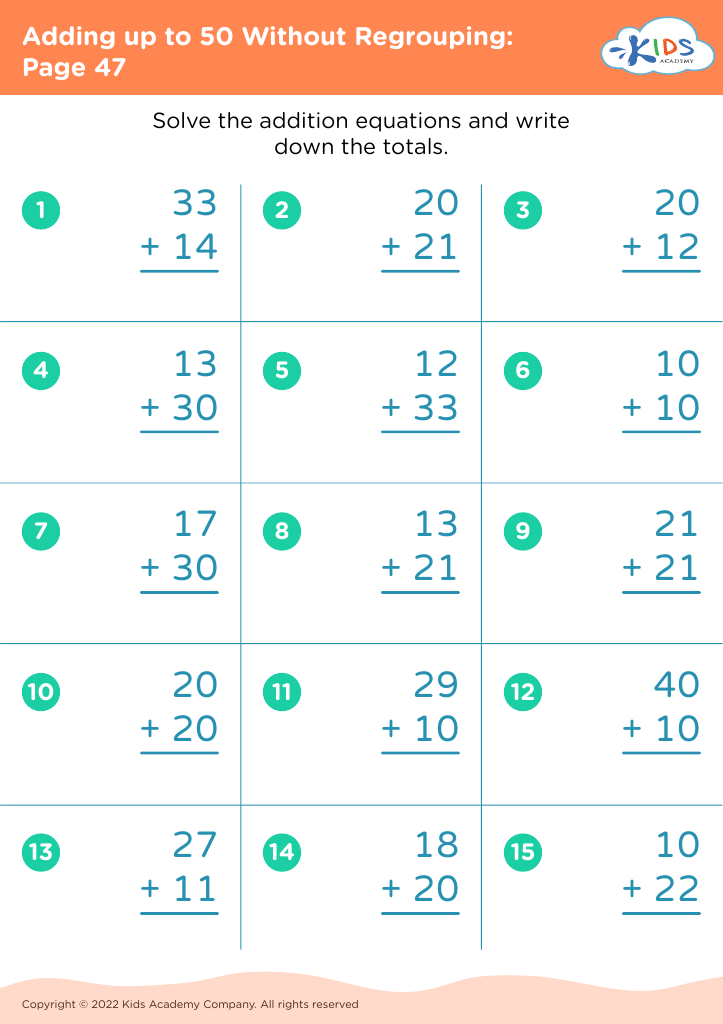
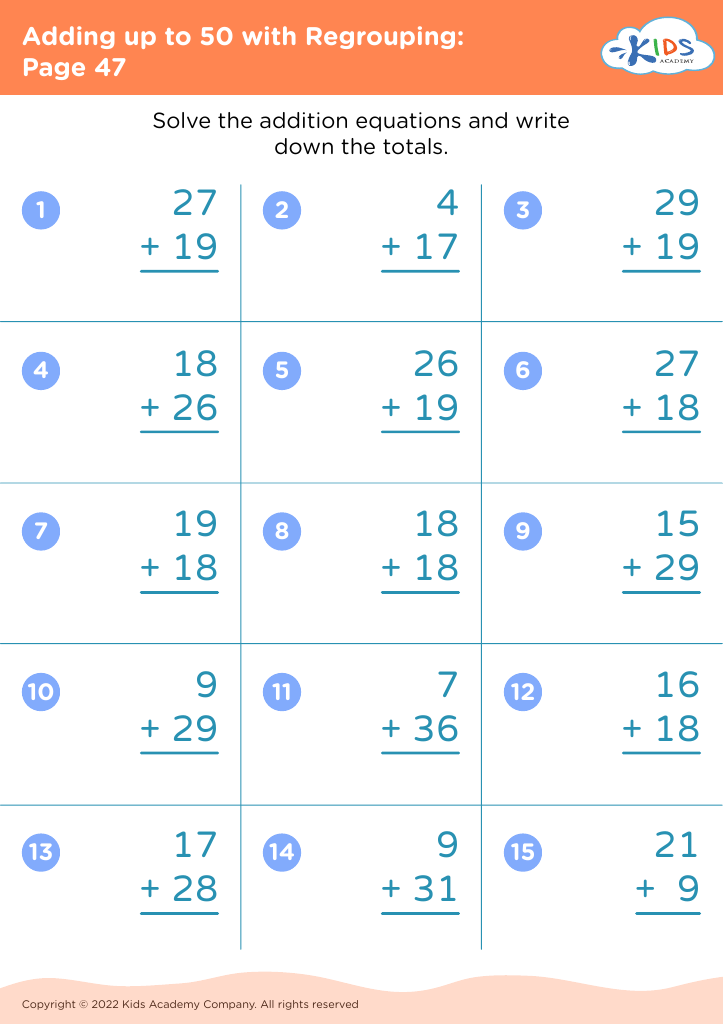
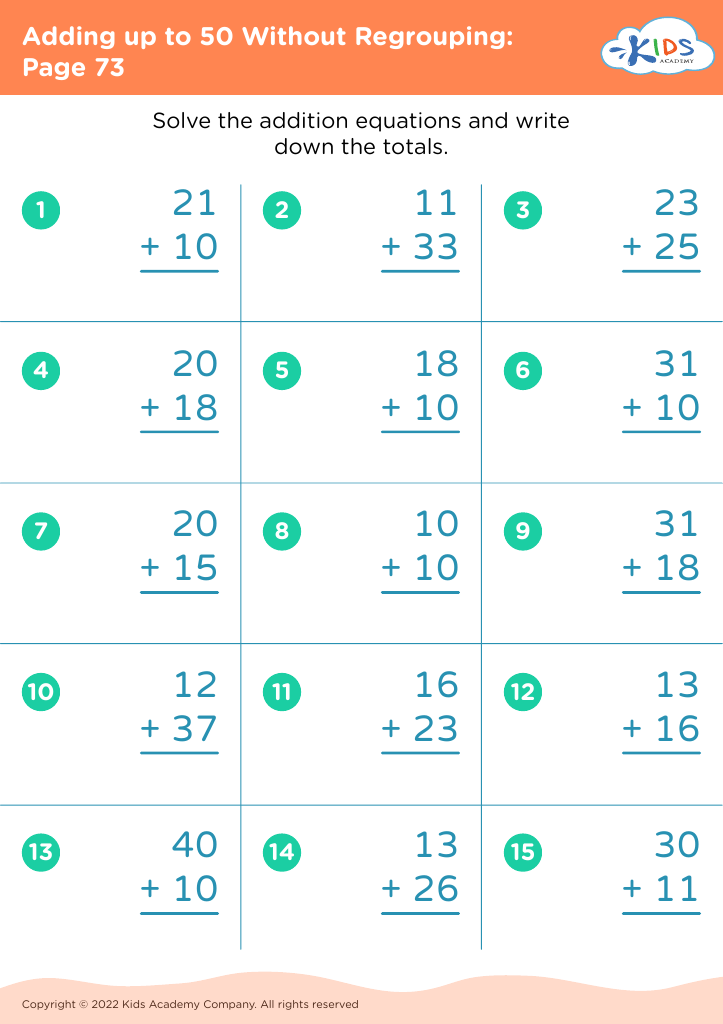
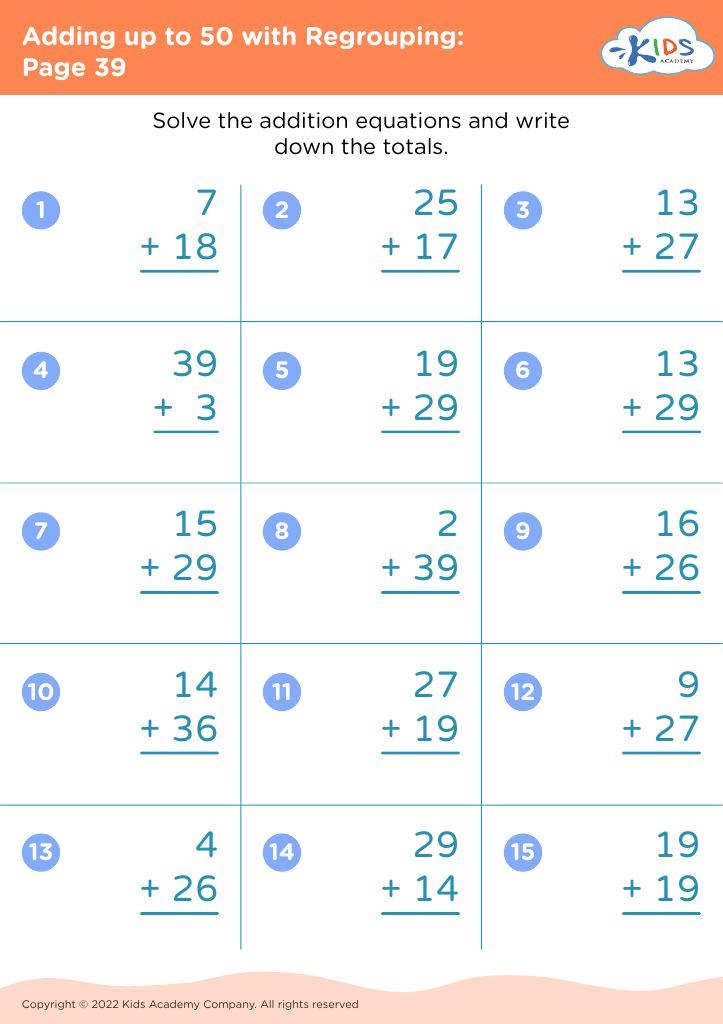
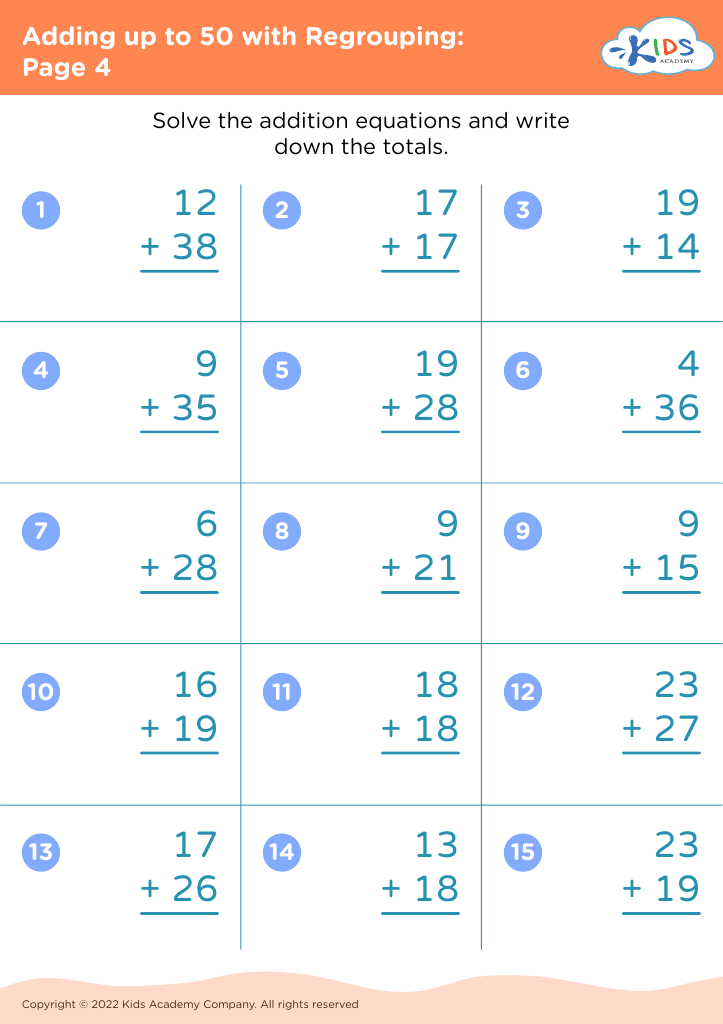
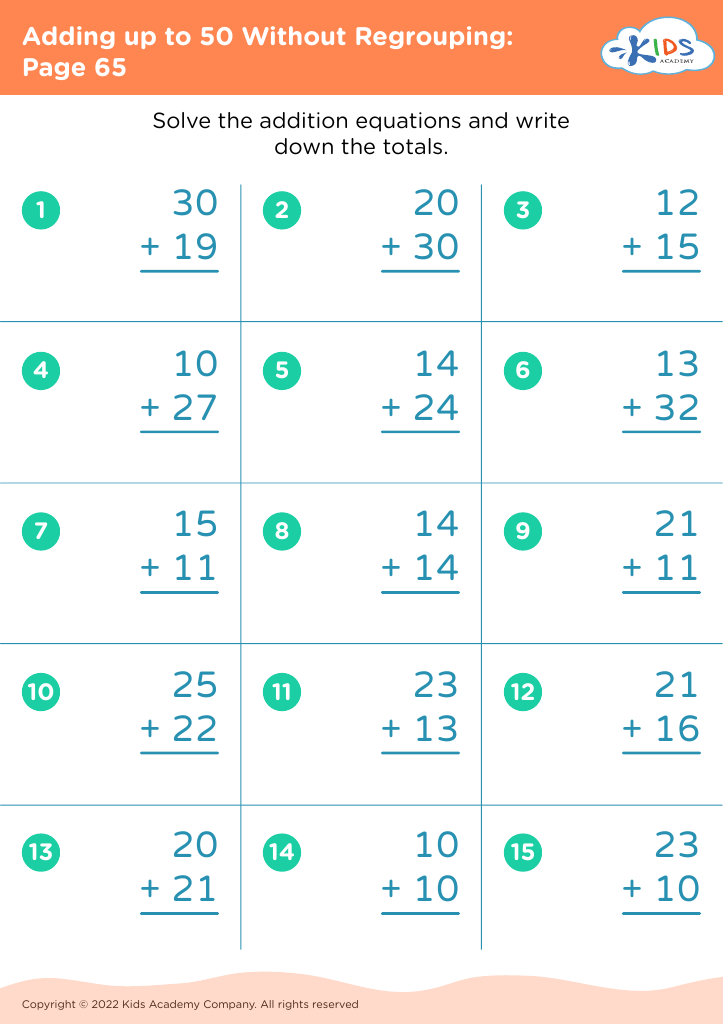
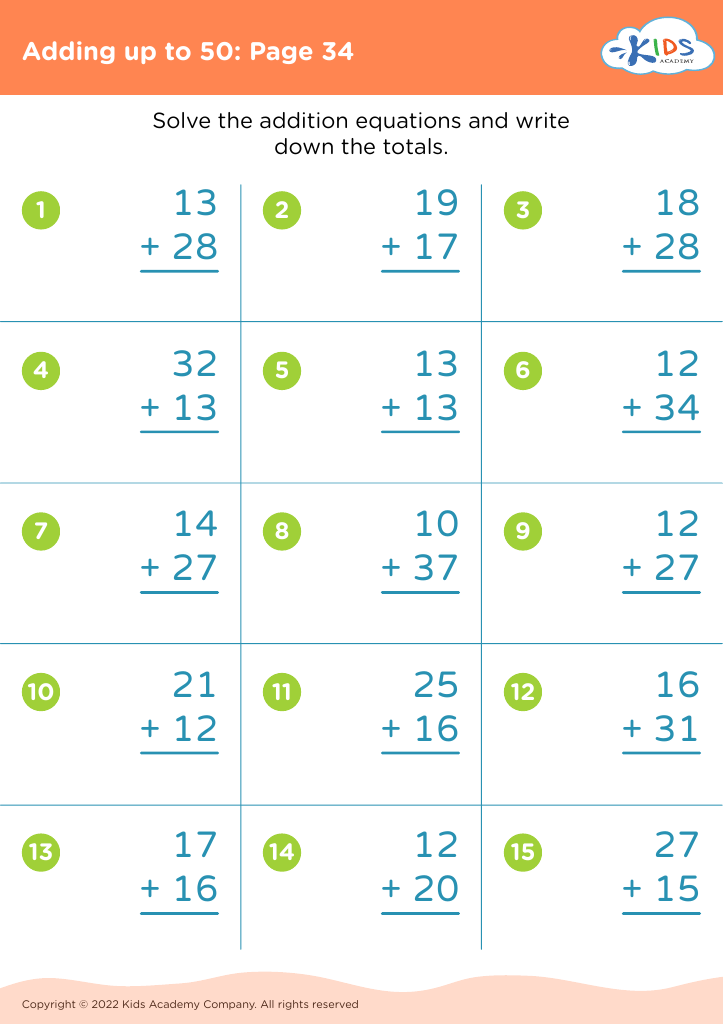




Understanding fraction simplification and basic addition up to 50 is a crucial foundational skill for children aged 6-8. At this developmental stage, children's cognitive abilities are rapidly expanding, and grasping key mathematical concepts sets the stage for future learning success.
Firstly, fraction simplification deepens children's understanding of equivalence and proportional reasoning. It helps them recognize that different fractions can represent the same value, which is essential for higher-level math topics like algebra and geometry. Simplifying fractions also enhances logical thinking and problem-solving abilities, as children must apply concepts of greatest common divisors and multiples.
Secondly, mastering addition up to 50 ingrains fluency in basic arithmetic, which is pivotal for everyday activities and advanced math learning. Proficiency in addition helps kids develop number sense, an intuitive grasp of how numbers work. When children easily add numbers up to 50, they gain confidence, reducing math anxiety and fostering a positive attitude toward learning.
Furthermore, these skills are not just academic. They translate into practical life abilities, like sharing equally, managing simple finances, and interpreting data—all critical for personal and professional success. Ensuring children have a firm grasp of these concepts at an early age makes math accessible and enjoyable, setting up a lifelong journey of learning and curiosity.








