Mathematical reasoning Adding up to 50 Worksheets for Ages 6-8
4 filtered results
-
From - To
Unlock your child's potential with our "Mathematical Reasoning Adding Up to 50 Worksheets" designed specifically for ages 6-8. These engaging worksheets help young learners develop essential addition skills and enhance their problem-solving abilities. As children explore different ways to sum numbers to reach 50, they will build a solid foundation in mathematical reasoning. Our carefully crafted activities allow for interactive learning, helping students grasp concepts through fun practice. Perfect for classroom use or at-home learning, these worksheets are a valuable resource to promote early math skills. Watch your child gain confidence as they become proficient in addition!
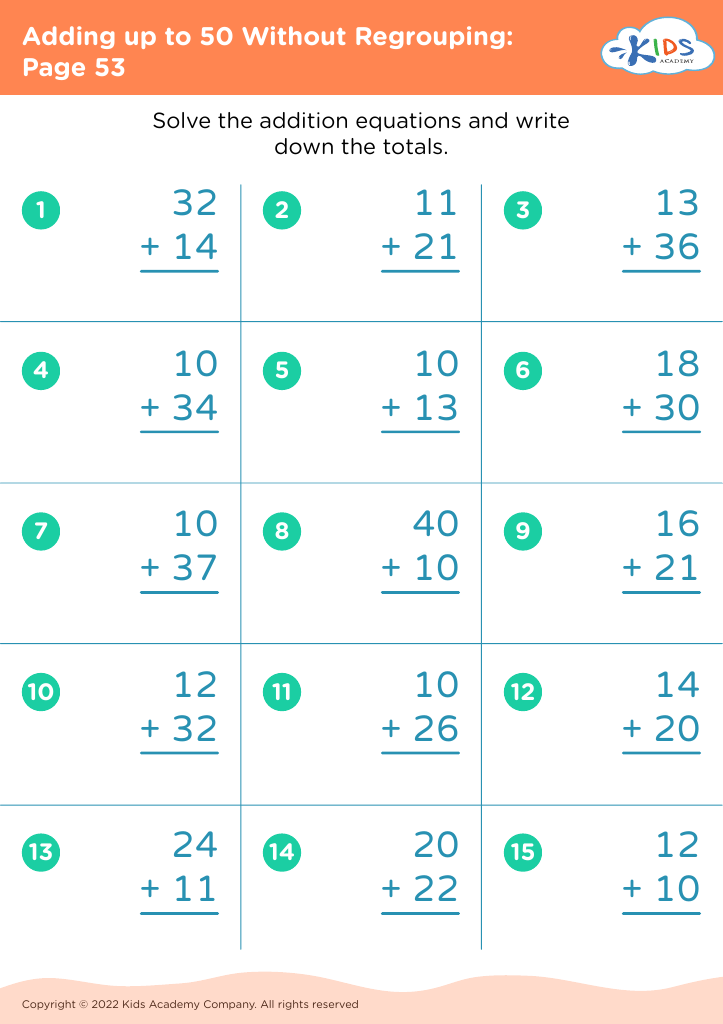
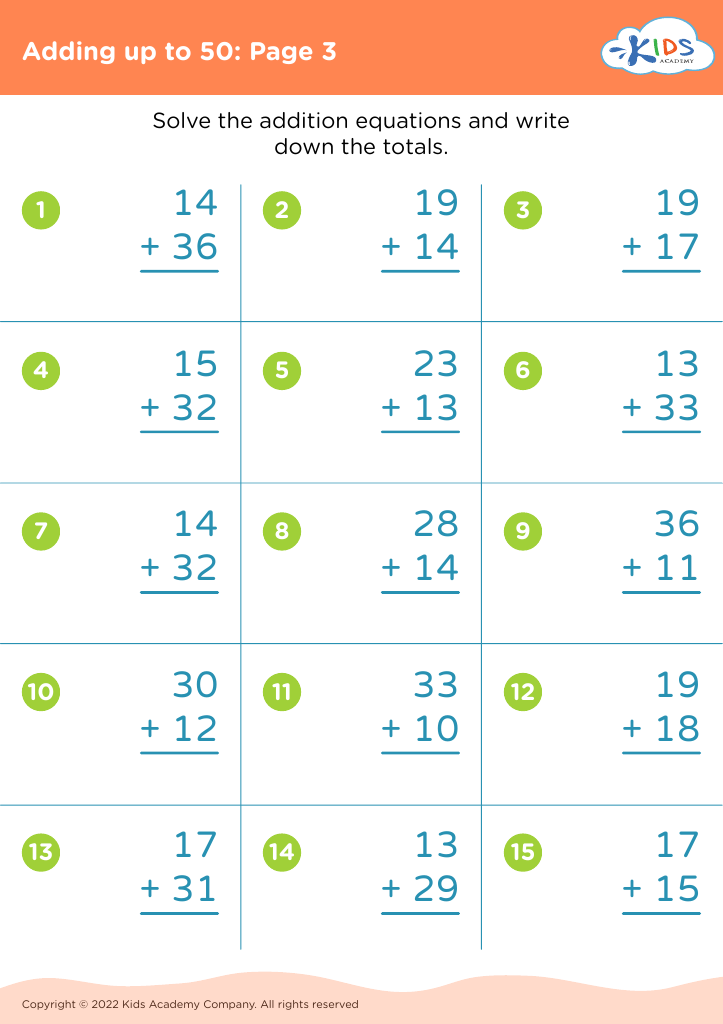
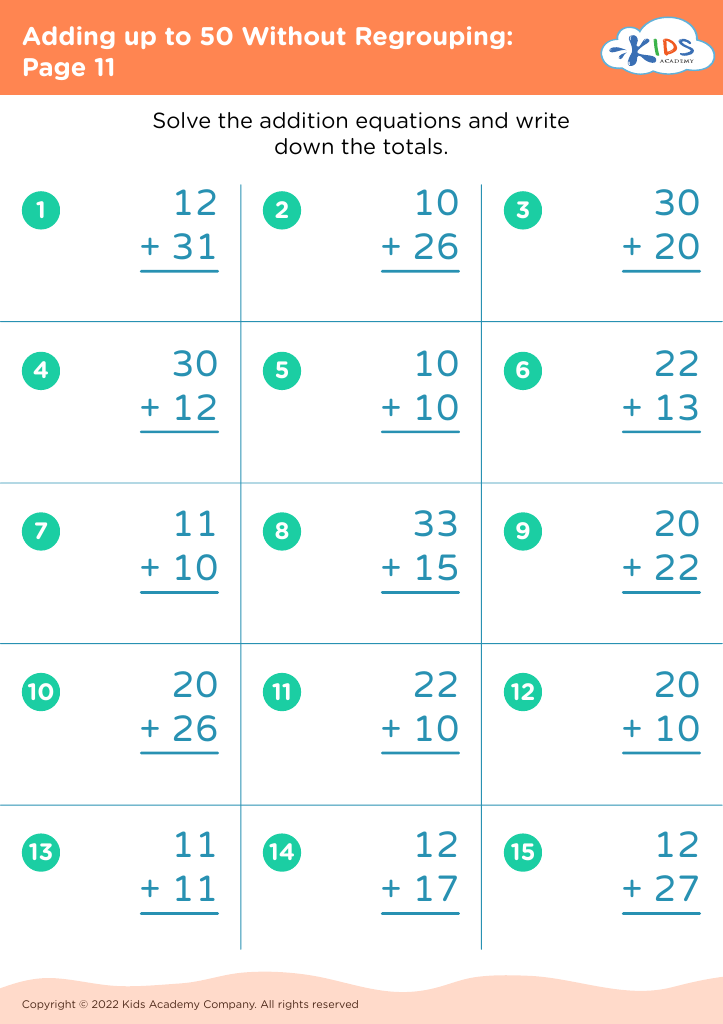
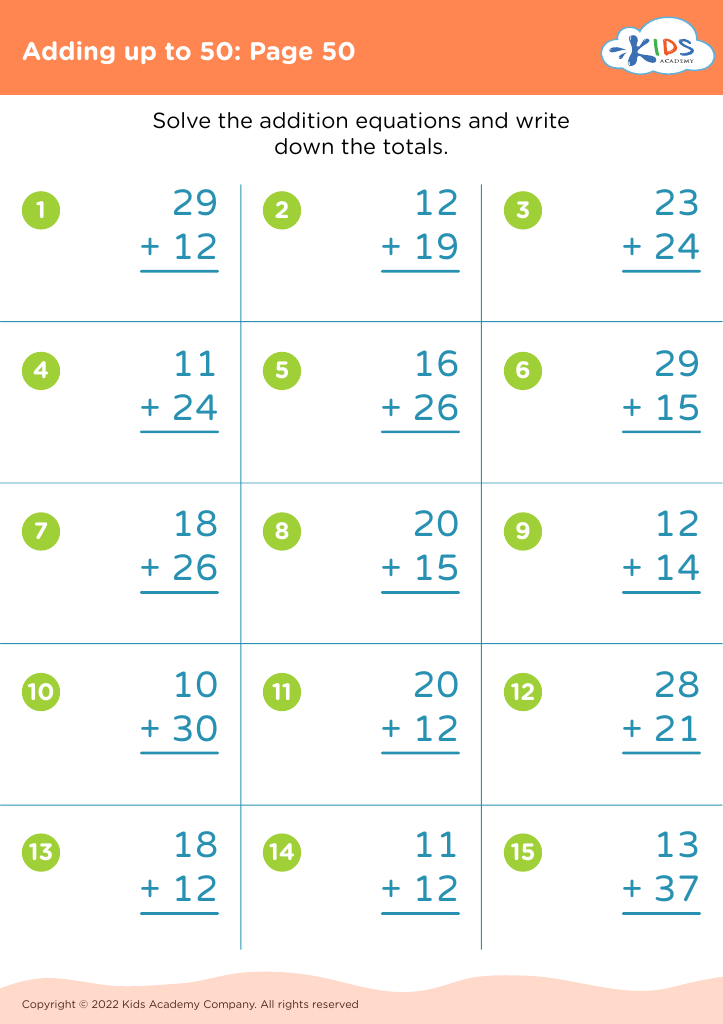




Mathematical reasoning, particularly in adding up to 50, is vital for children aged 6-8, as it lays the foundation for their overall math skills and cognitive development. At this age, children begin to transition from learning basic number facts to understanding more complex mathematical operations. Developing strong reasoning skills in adding can enhance their ability to solve problems, recognize patterns, and comprehend mathematical concepts in everyday situations.
Parents and teachers play a crucial role in nurturing this skill. By engaging children in activities that involve addition, such as using manipulatives, playing math games, or incorporating real-life scenarios, caregivers can foster a positive attitude towards math. This helps students see the subject as engaging and relevant, rather than intimidating.
Moreover, strong mathematical reasoning boosts confidence and encourages a growth mindset — where children learn that math skills can be developed through persistence and practice. Early proficiency in adding up to 50 equips students for future math challenges, allowing for smoother transitions into more complex topics, such as subtraction, multiplication, and eventually division. Investing in these skills now creates a strong mathematical foundation, ensuring children are well-prepared for their academic journey ahead.








