Problem Solving Adding up to 50 Worksheets for Ages 6-8
3 filtered results
-
From - To
Introducing our "Problem Solving Adding up to 50 Worksheets" designed specifically for children ages 6-8! These engaging and interactive worksheets foster critical thinking and help young learners develop essential math skills. Each worksheet features colorful illustrations and fun problem-solving scenarios, making math practice enjoyable and encouraging independent learning. With a variety of challenges that require students to add numbers up to 50, these worksheets support mastery of addition concepts and improve overall numeracy. Perfect for home or classroom use, these resources are designed to enhance your child’s confidence and inspire a love for math. Download and start your math journey today!
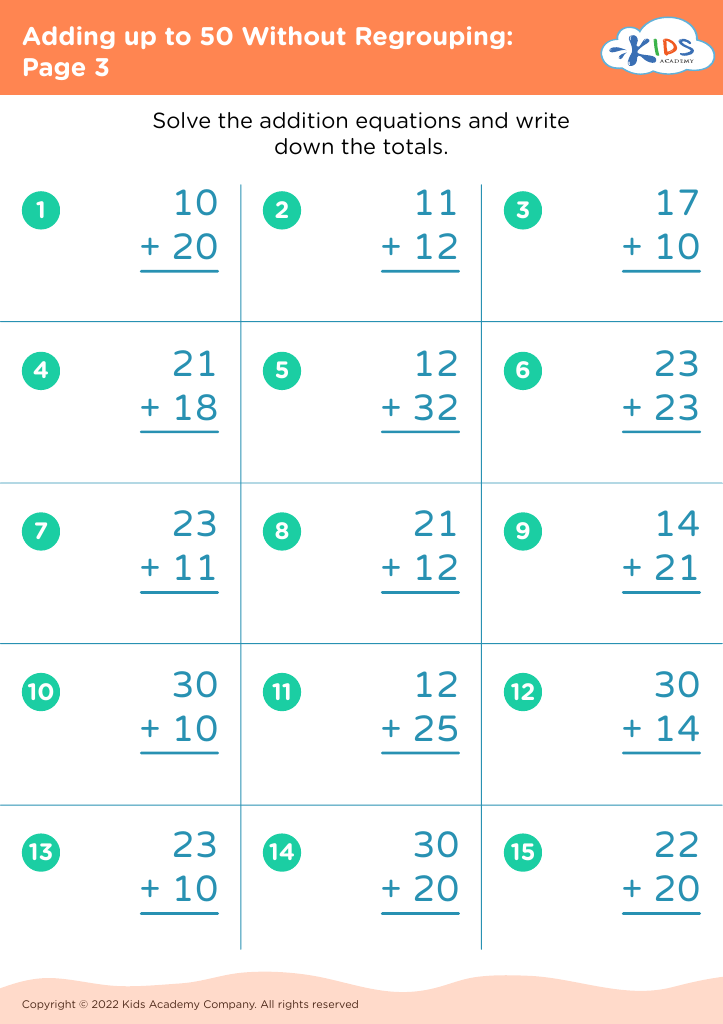
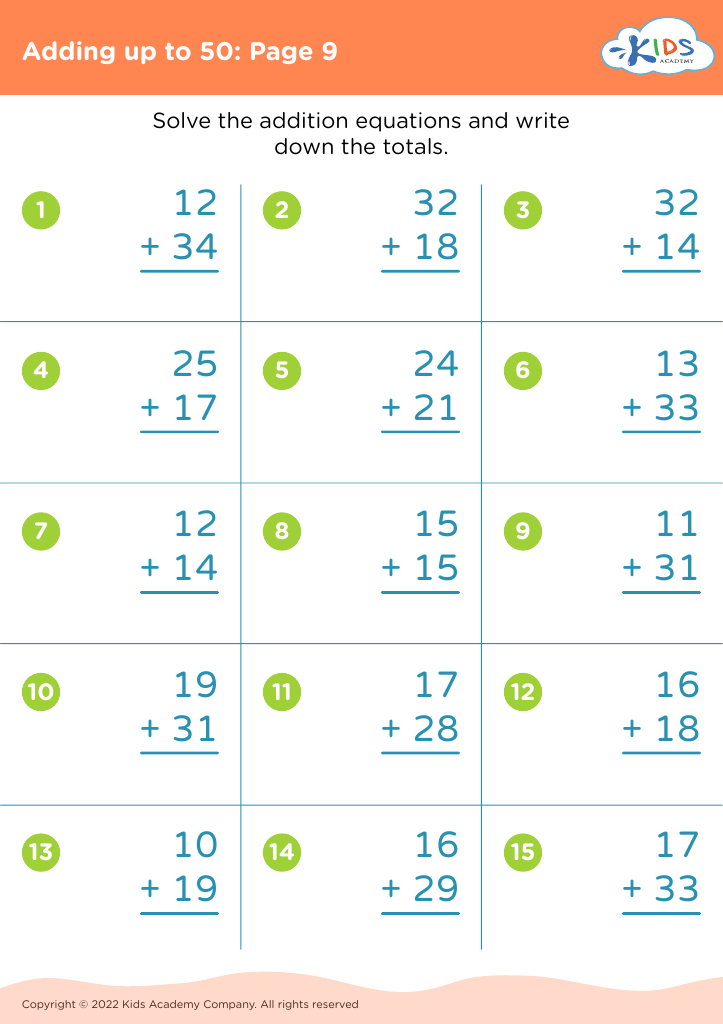
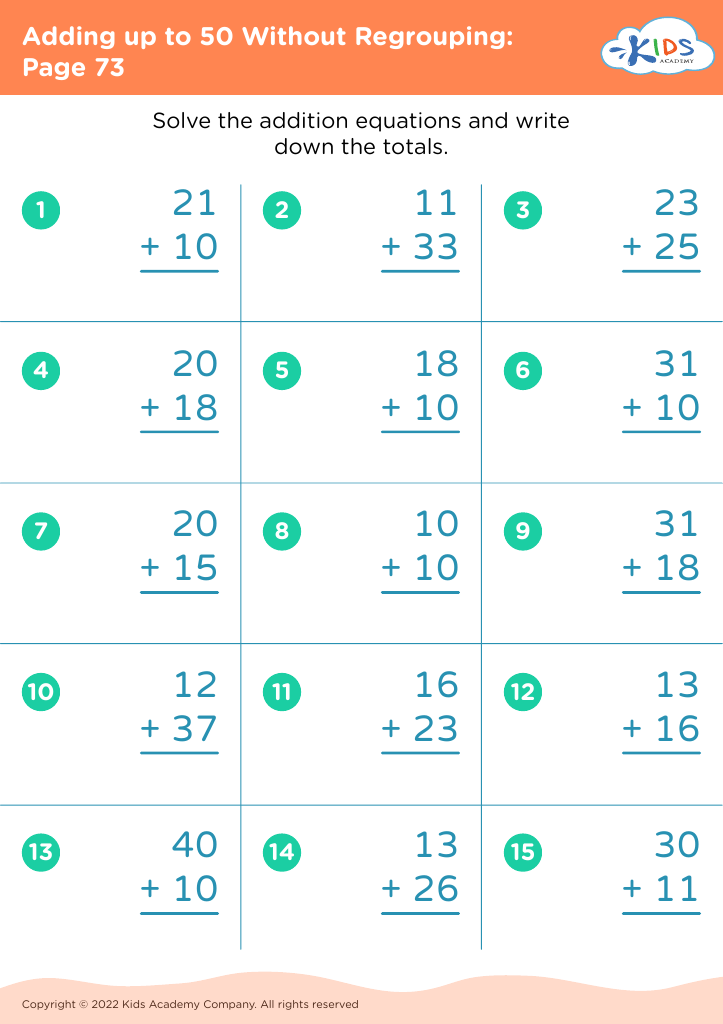




Parents and teachers should care about Problem Solving with addition up to 50 for children aged 6-8 because it lays the foundation for essential mathematical skills and cognitive development. At this stage, children are not just learning to add numbers but also developing critical thinking and reasoning skills. Mastering addition within this range enhances fluency, enabling children to approach more advanced concepts later.
Moreover, problem-solving activities foster perseverance and resilience. Kids learn to tackle challenges, figure out solutions, and understand the value of effort in overcoming difficulties. This not only builds a strong mathematical foundation but also translates into other areas of learning and daily life, encouraging a growth mindset.
Engaging in problem solving around addition helps children connect math to real-life situations, making learning meaningful and enjoyable. It enhances their ability to communicate mathematical ideas, collaborate with peers, and gain confidence in their skills.
Additionally, parents and teachers play a vital role in creating a supportive environment conducive to exploration and inquiry. By cultivating problem-solving skills in early learners, they prepare them for more complex mathematical challenges and for becoming informed, confident individuals in the future. Investing in these early skills is crucial for lifelong learning and success.








