Problem-solving abilities Adding up to 50 Worksheets for Ages 6-8
4 filtered results
-
From - To
Our "Problem-Solving Abilities: Adding up to 50 Worksheets" for ages 6-8 offer engaging resources to enhance your child's math skills. These worksheets focus on helping young learners build confidence in addition, logical thinking, and analytical skills by practicing sums up to 50. Utilizing fun visuals and diverse problem sets, each worksheet captivates your child's interest while reinforcing foundational math concepts. Designed by educational experts, our worksheets support curriculum standards and foster independent learning. Perfect for classroom use or at-home practice, these worksheets empower your child to tackle math challenges with ease and precision.
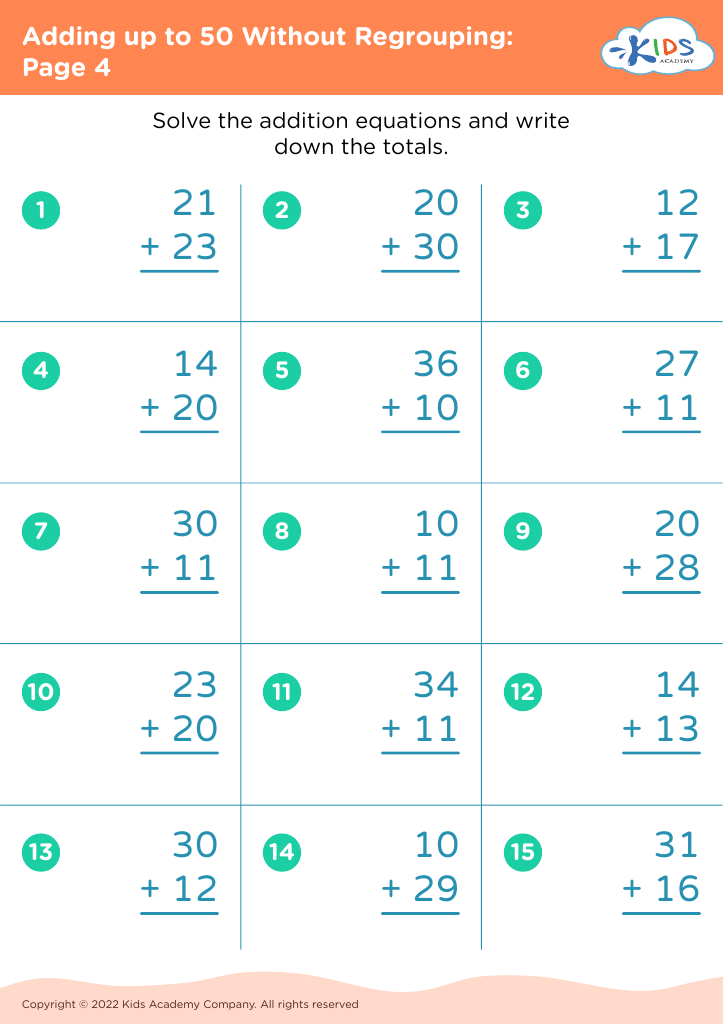
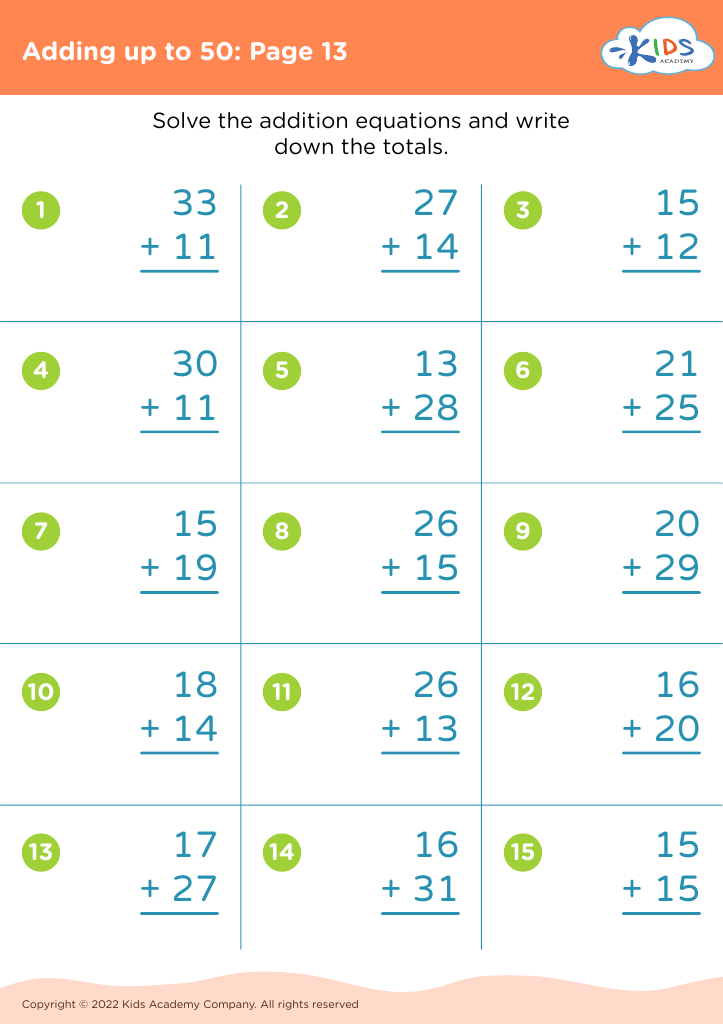
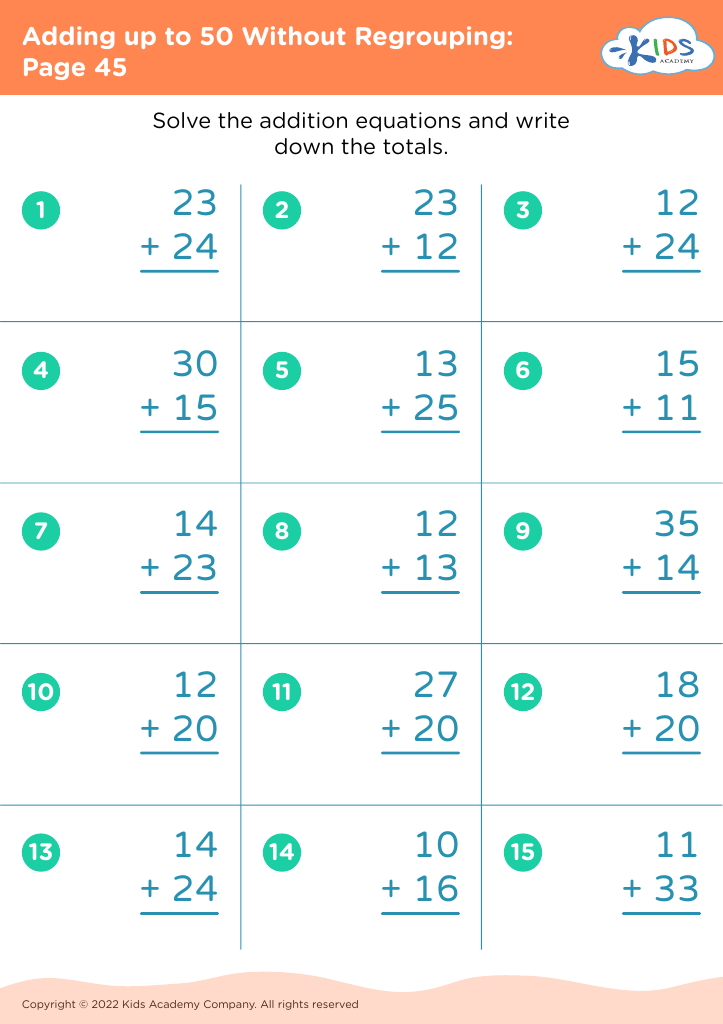
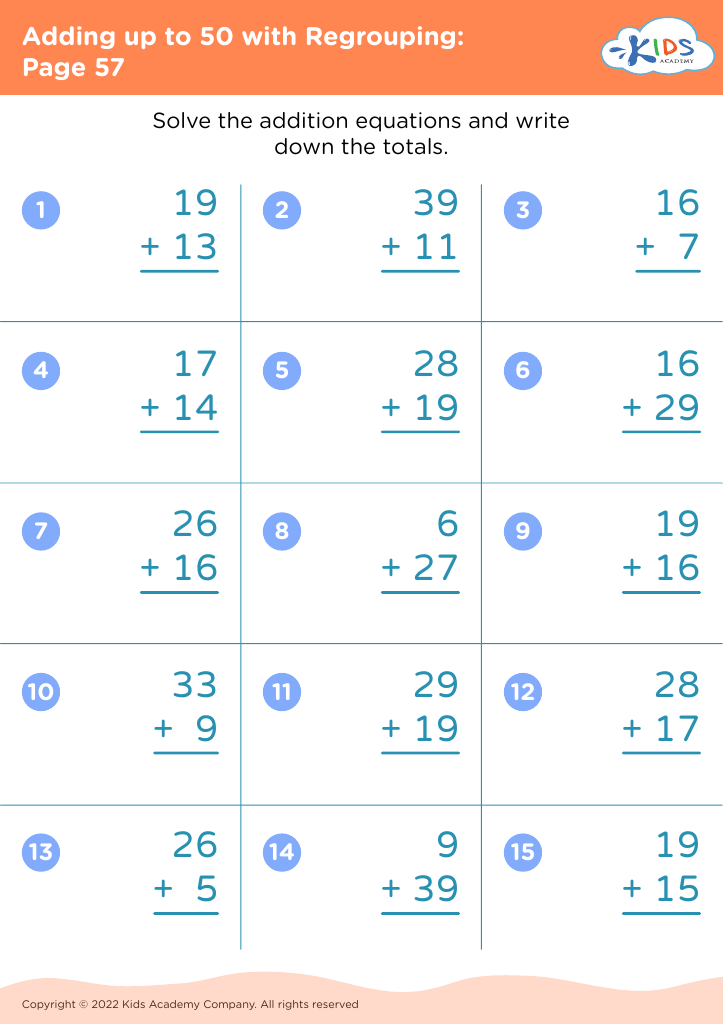




Problem-solving abilities are foundational skills that significantly impact a child's future educational success and overall cognitive development. For children aged 6-8, learning to solve addition problems that add up to 50 is crucial because it develops their numerical understanding and arithmetic skills in an accessible and engaging way. At this stage, children are transitioning from basic counting to more complex calculations, which form the building blocks for higher-level math skills.
First, mastering addition up to 50 helps strengthen mental math capabilities, critical for everyday life and academic pursuits. It enhances cognitive functions such as concentration, memory, and logical thinking. These skills are not only vital for mathematics but are transferable to other subjects, fostering a well-rounded intellectual development.
Second, problem-solving with numbers teaches important soft skills like persistence, patience, and analytical thinking. As children encounter more challenging problems, they learn to cope with difficulties and develop resilience. This results in boosted self-confidence, greater independence, and a more positive attitude towards learning.
Additionally, engaging with numerical problems encourages cooperative learning when shared with peers, fostering social skills and the ability to work in a team. Therefore, both parents and teachers should prioritize nurturing problem-solving abilities to support holistic growth, creating a strong foundation for future academic and life success.








