Problem-solving practice Adding up to 50 Worksheets for Ages 6-8
3 filtered results
-
From - To
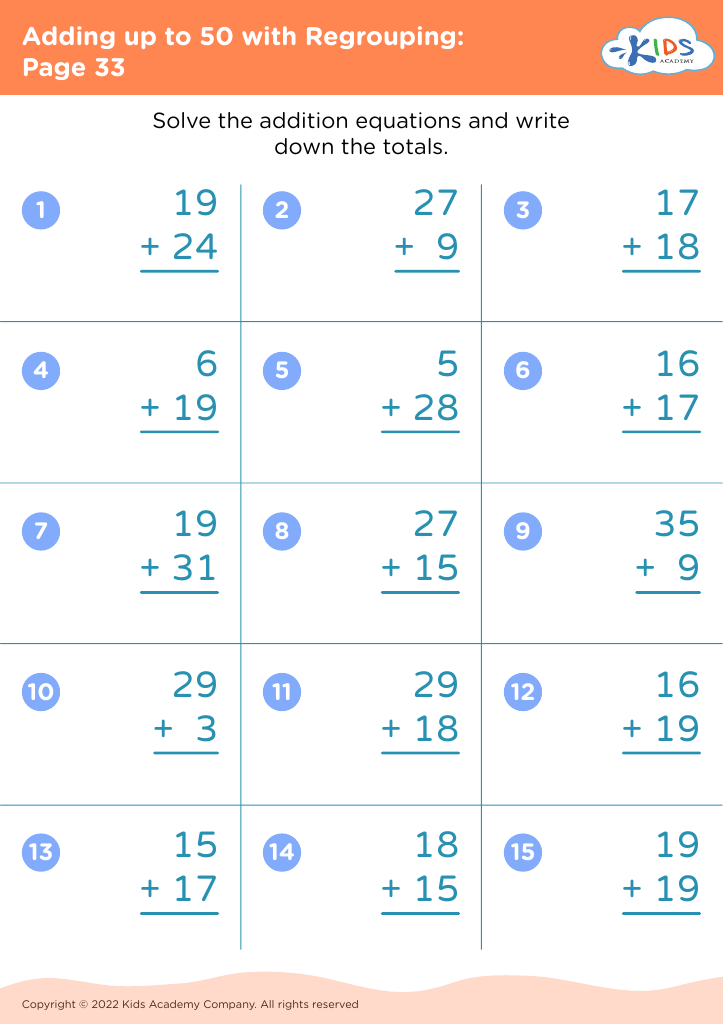
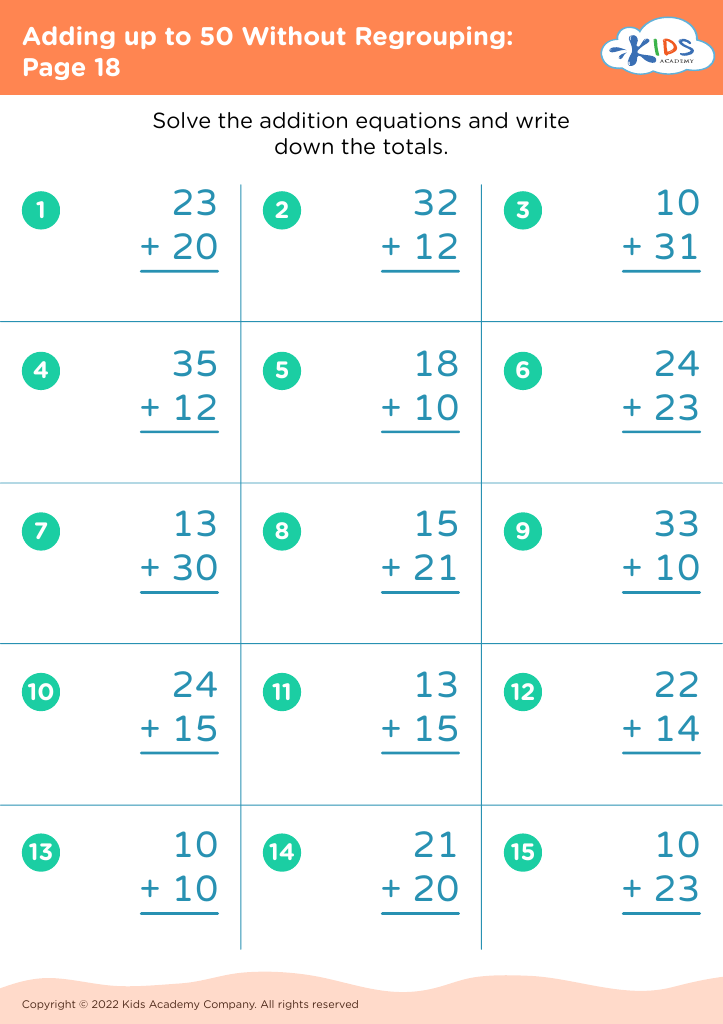
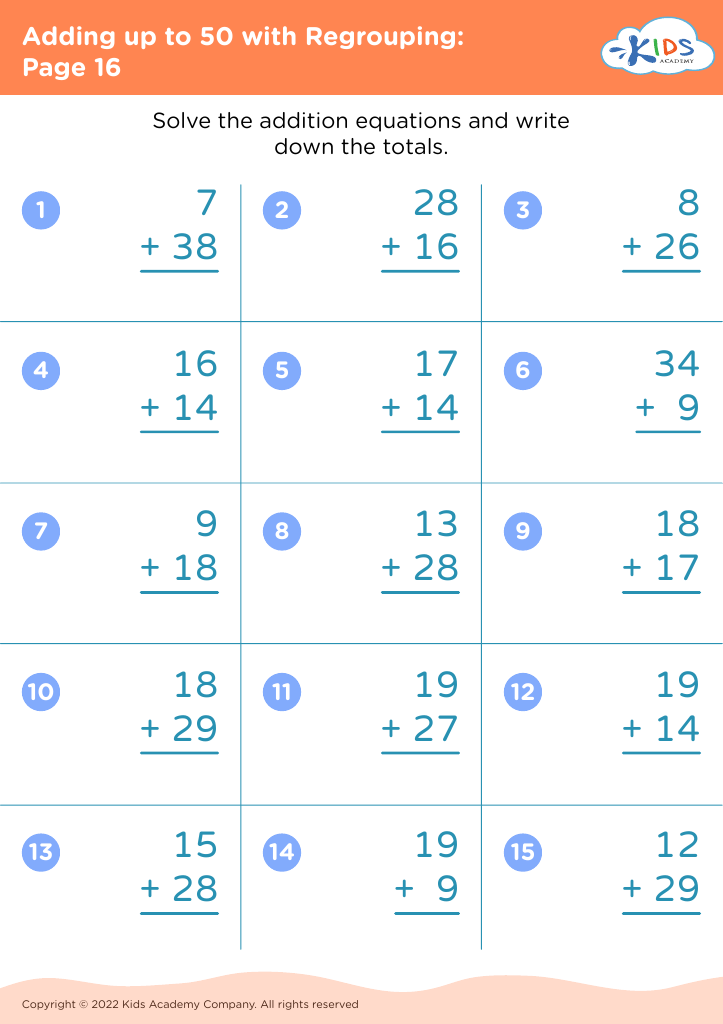
Enhance your child's math skills with our "Problem-Solving Practice: Adding Up to 50 Worksheets" designed for ages 6-8! These engaging and interactive worksheets focus on developing critical thinking and problem-solving abilities while making math enjoyable. Each worksheet presents fun and challenging scenarios that require students to apply their addition skills up to 50, fostering a love for learning. Perfect for classroom settings or home practice, these resources are tailored to meet educational standards and inspire confidence in young learners. Help your child master addition while building foundational math skills they can rely on for future lessons!




Problem-solving practice, especially for children aged 6-8, is crucial for their cognitive development and future academic success. At this age, children are beginning to develop their mathematical thinking and problem-solving skills, and practicing addition up to 50 plays a vital role in this process.
Firstly, mastering addition enhances a child’s confidence in math, which is essential as they progress to more complex concepts. When kids are comfortable with basic operations, they are more likely to engage positively with math, leading to a lifelong appreciation of the subject.
Secondly, problem-solving encourages critical thinking and logical reasoning. By engaging in addition problems, children learn to analyze situations, identify patterns, and devise strategies to find solutions. This analytical mindset extends beyond math, aiding in other subjects and real-life situations.
Additionally, collaborative problem-solving fosters communication skills and teamwork, as children often work in pairs or groups to tackle challenges. This social aspect is vital in developing their interpersonal skills.
Finally, when parents and teachers emphasize the importance of such practices, they contribute to a child's overall academic achievement and readiness for challenges ahead. Careful attention to such foundational skills paves the way for future learning and personal growth.








