Recognizing equivalent fractions Adding up to 50 Worksheets for Ages 6-8
3 filtered results
-
From - To
Welcome to our "Recognizing Equivalent Fractions Adding Up to 50" worksheets, specially designed for children aged 6-8! These engaging and colorful worksheets help young learners grasp the concept of equivalent fractions through fun exercises that involve addition and critical thinking. By incorporating friendly visuals and relatable examples, kids can see how different fractions can represent the same value while honing their addition skills up to 50. Perfect for classroom settings or at-home learning, these worksheets are an excellent resource for building math confidence and fluency in early learners. Explore, practice, and master equivalent fractions today!
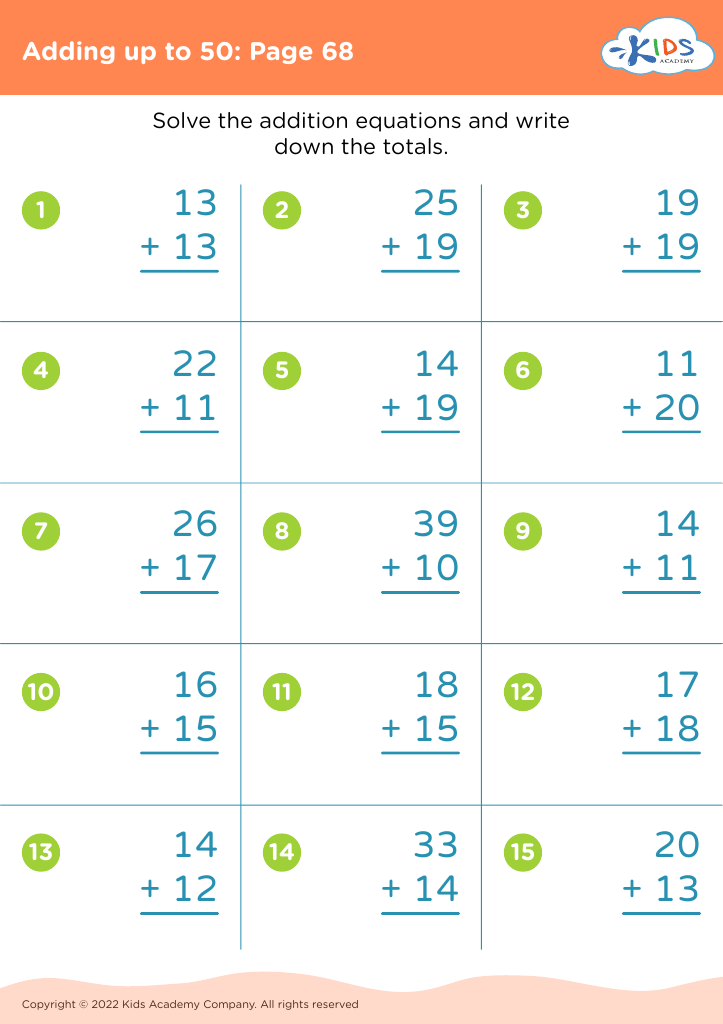
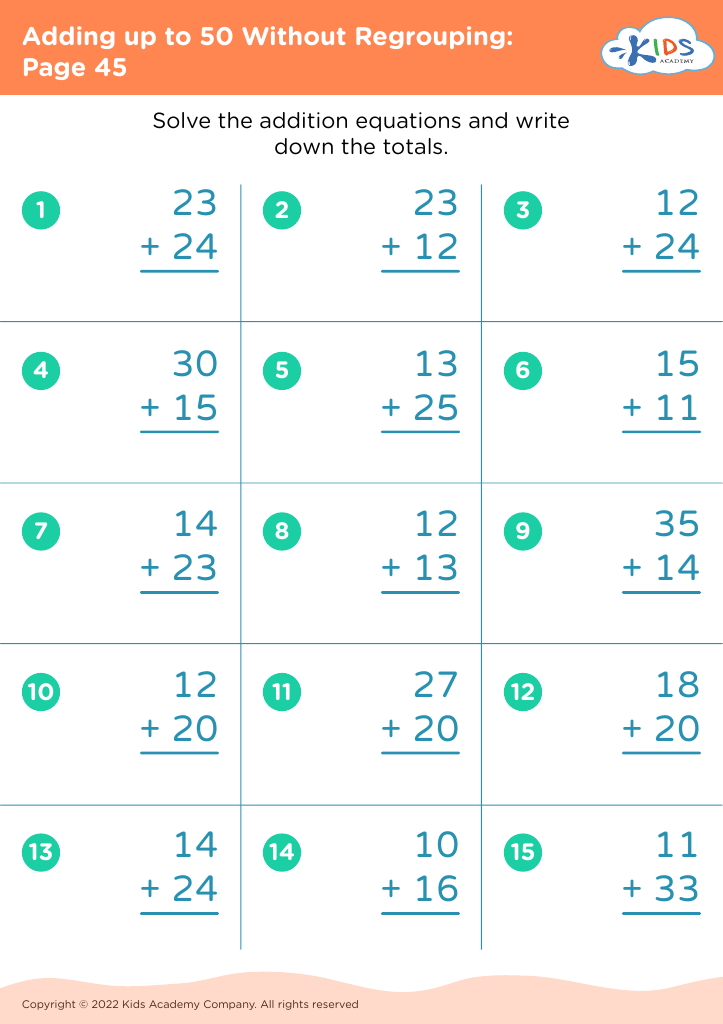
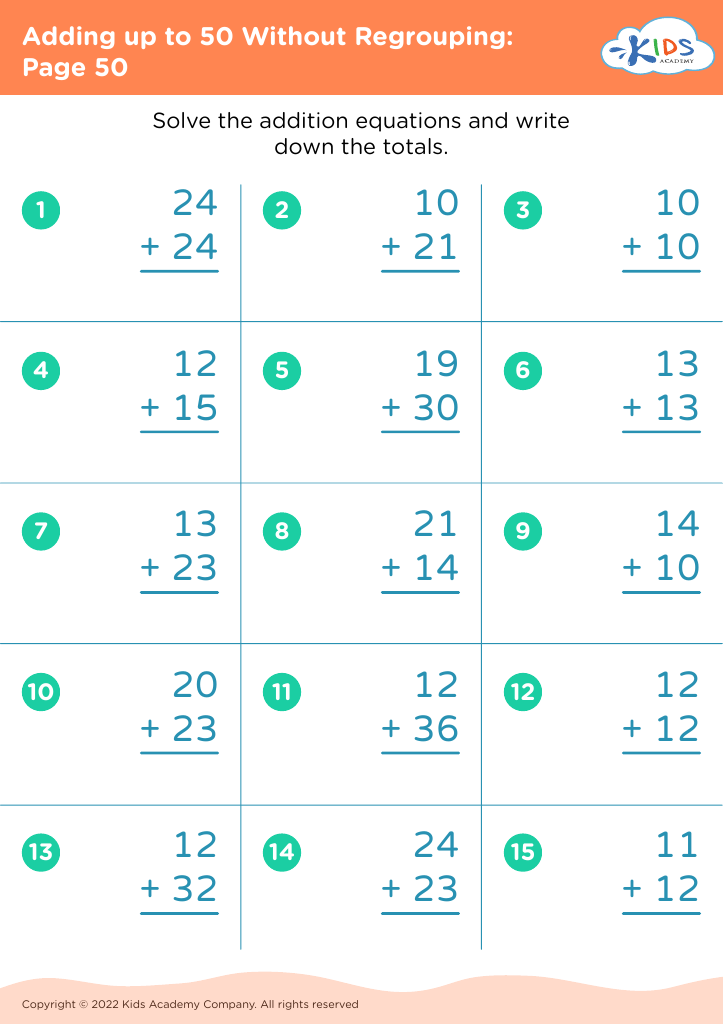




Recognizing equivalent fractions is a crucial mathematical skill for children aged 6-8. This foundational concept helps students understand the relationship between different fractions and empowers them with problem-solving abilities that are applicable in various real-world scenarios. When students learn to identify equivalent fractions, they enhance their number sense, ultimately preparing them for more complex mathematical concepts in the future.
Additionally, learning to add fractions that total up to 50 fosters an understanding of basic arithmetic and reinforces the idea of part-to-whole relationships. This skill strengthens a child’s ability to visualize numbers and grasp the concept of addition, which is essential for day-to-day math.
Parents and teachers should care about these skills because they go beyond paper and pencil; they encourage critical thinking and logic. In an age where STEM skills are increasingly vital for success, providing children with a solid foundation in fractions encourages engagement in mathematics and builds confidence. By fostering an environment that values these concepts, parents and teachers can help students develop a lifelong appreciation for math, promoting academic success and empowering independent problem-solving skills. Moreover, strong foundational skills in math contribute to future learning across various subjects.








