Shape identification Adding up to 50 Worksheets for Ages 6-8
3 filtered results
-
From - To
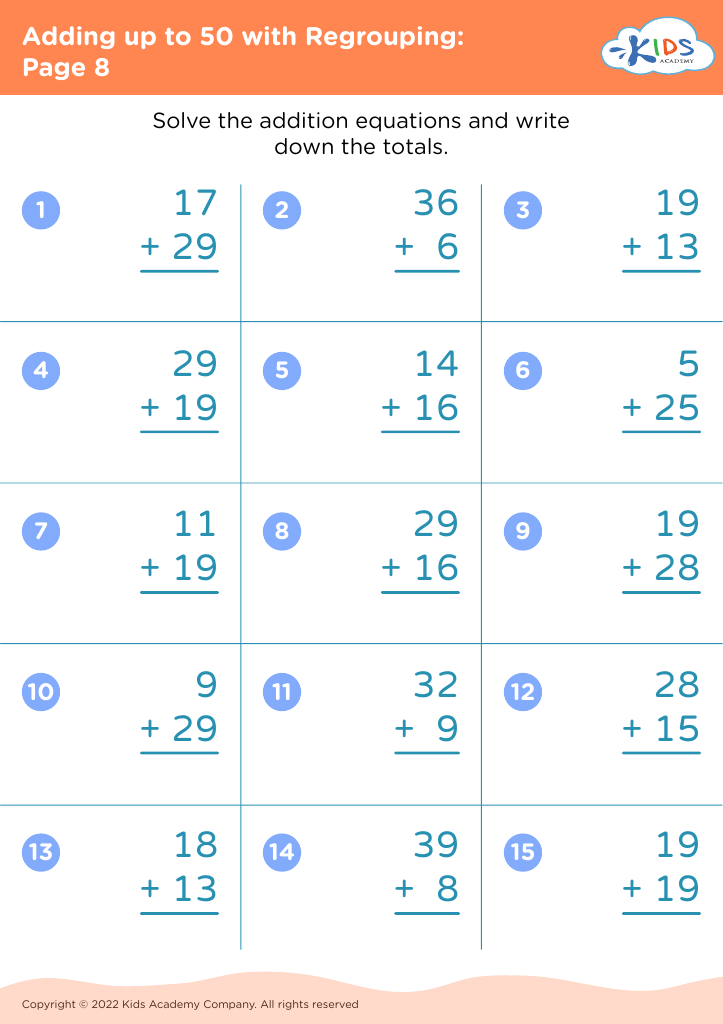
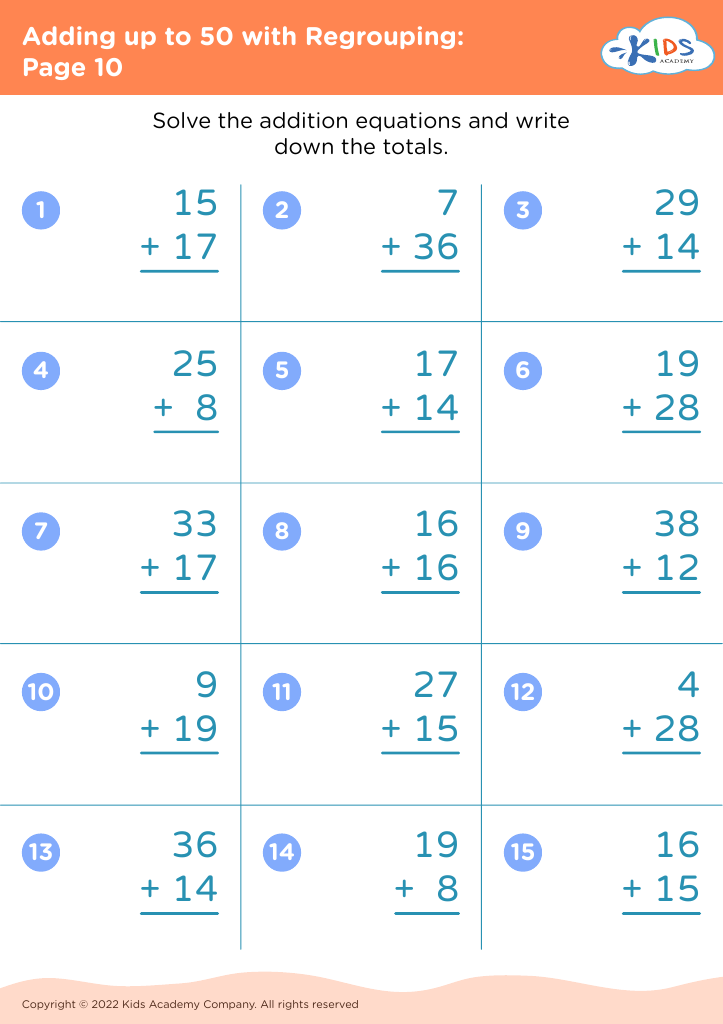
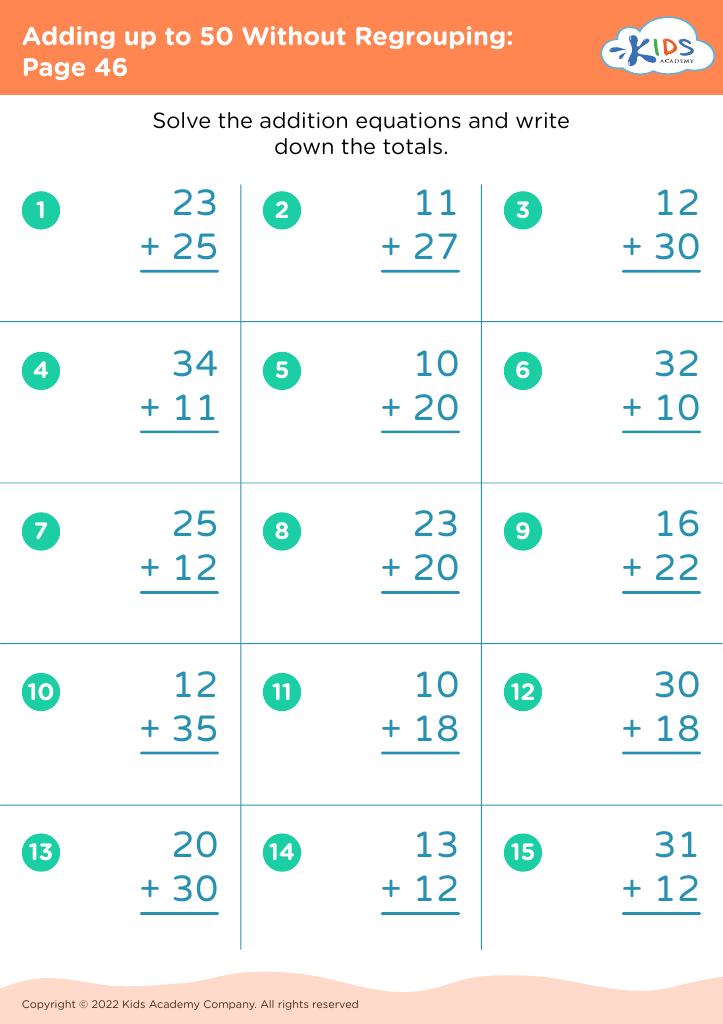
Introducing our engaging "Shape Identification Adding Up to 50 Worksheets" designed specifically for children aged 6-8! This collection features 100 worksheets that seamlessly blend shape recognition with arithmetic skills. Your little learners will explore various shapes while practicing addition concepts, boosting their confidence in math and enhancing their visual-spatial abilities. Each worksheet incorporates vibrant illustrations and fun activities that make learning enjoyable and interactive. Perfect for classroom use or at-home learning, these worksheets promote critical thinking and problem-solving. Foster a love for shapes and numbers in your child today with our comprehensive, hands-on learning resources that align with educational standards!




Shape identification and addition skills are crucial for children aged 6-8 as they lay the foundation for vital cognitive, mathematical, and spatial reasoning. Understanding shapes helps children recognize and categorize objects in their environment, which is essential for developing problem-solving skills. When children can identify common shapes like circles, squares, and triangles, they enhance their visual perception and critical thinking abilities.
Adding up to 50 is equally significant during this developmental stage, as it serves as an introduction to basic arithmetic, promoting a solid math foundation. Mastering addition builds confidence and encourages a positive attitude towards learning mathematics, setting the stage for more advanced concepts in the future.
Moreover, these skills intertwine with daily life experiences, such as recognizing shapes in art, architecture, or nature, and applying math when shopping or cooking. Engaging children in both shape identification and addition through educational games or hands-on activities makes learning enjoyable and effective.
Ultimately, fostering these abilities not only supports academic success, but also equips children with essential life skills, encouraging them to become curious learners and capable problem-solvers in their everyday lives. Investing in this learning is integral to their growth and development.








