Simplifying Fractions Adding up to 50 Worksheets for Ages 6-8
8 filtered results
-
From - To
Explore our engaging "Simplifying Fractions Adding up to 50 Worksheets" designed specifically for children aged 6-8! These interactive resources make learning fun while helping young learners grasp the concept of simplifying fractions. With playful visuals and age-appropriate exercises, students can enhance their math skills while working on addition problems that total up to 50. Our worksheets support early math development, fostering critical thinking and problem-solving abilities. Perfect for classroom activities or homeschooling, these worksheets encourage independent learning and provide ample practice to build confidence in mathematics. Get your little ones excited about math today! Visit us for more fun educational resources!
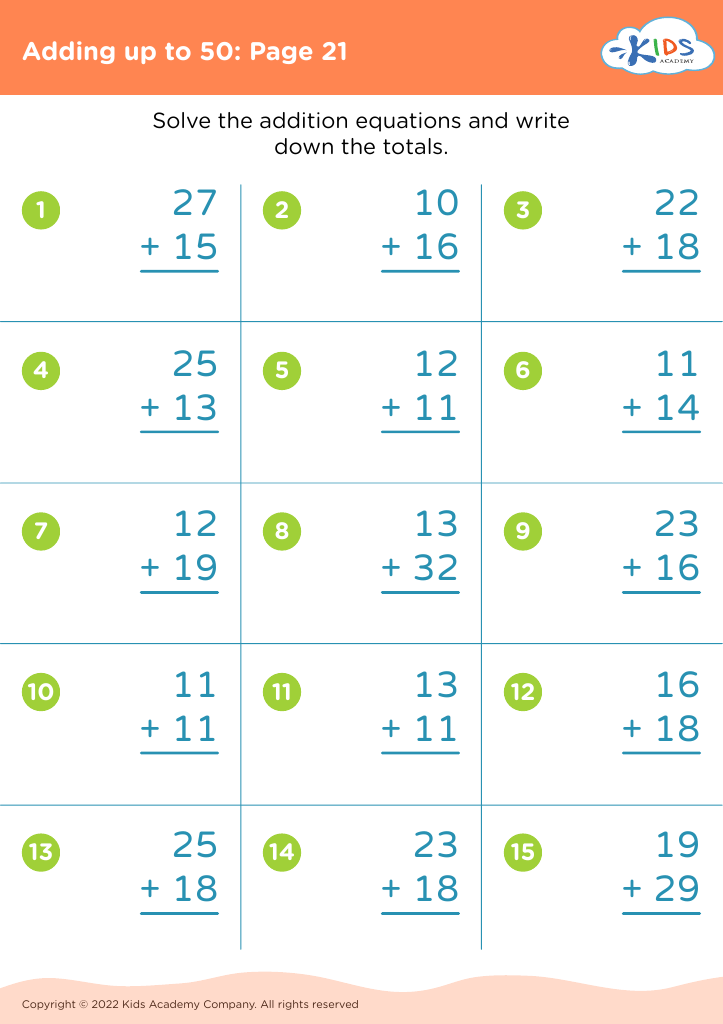
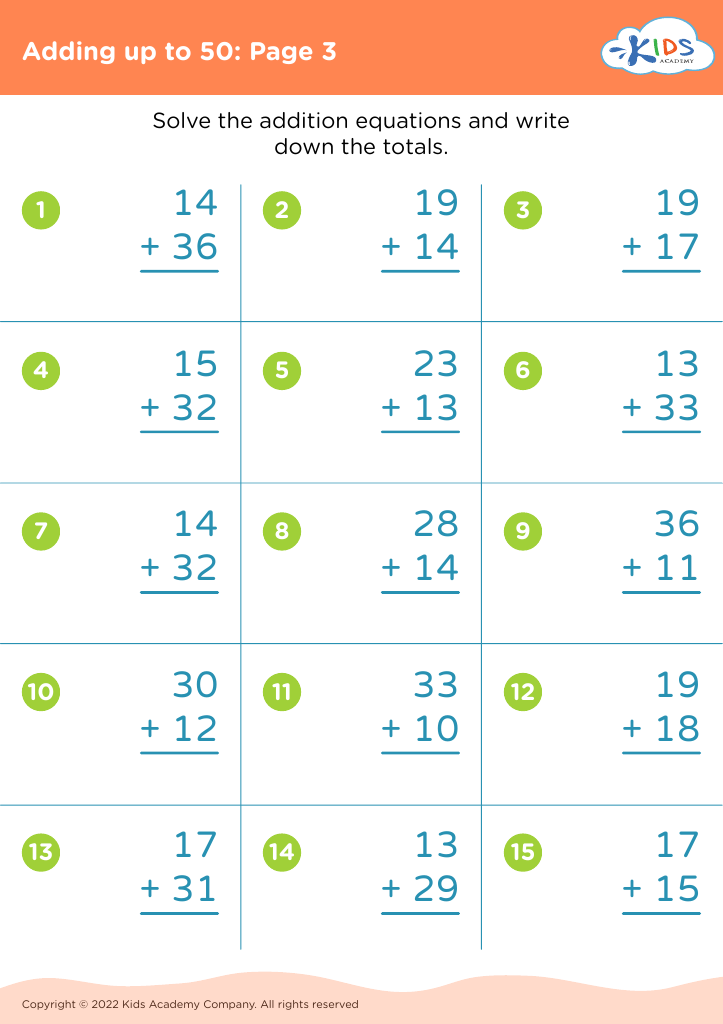
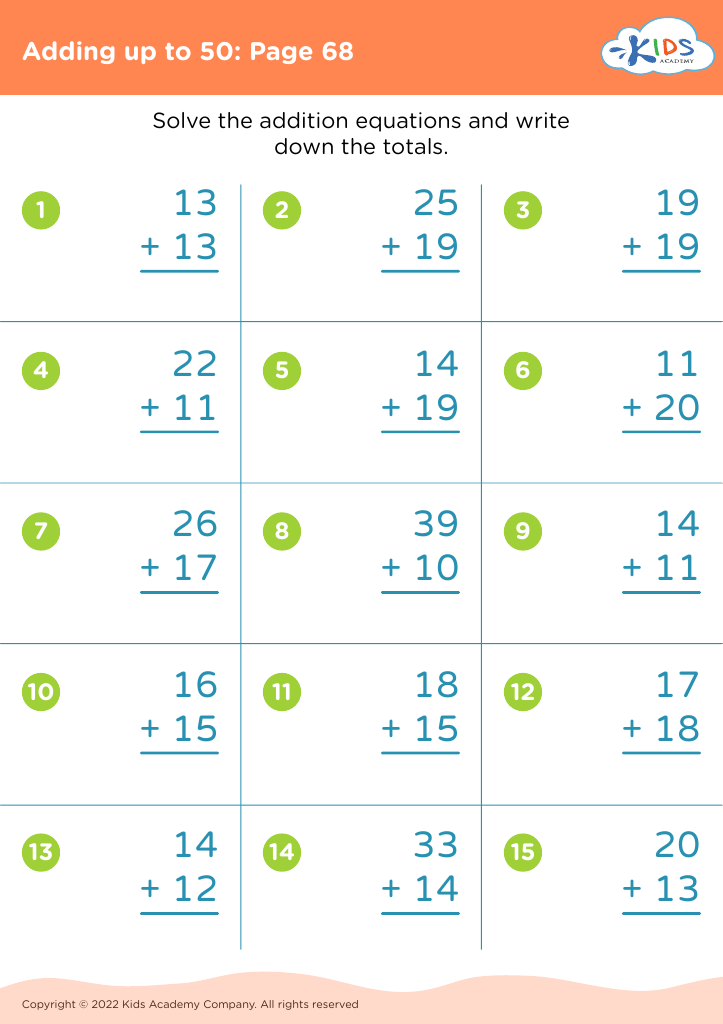
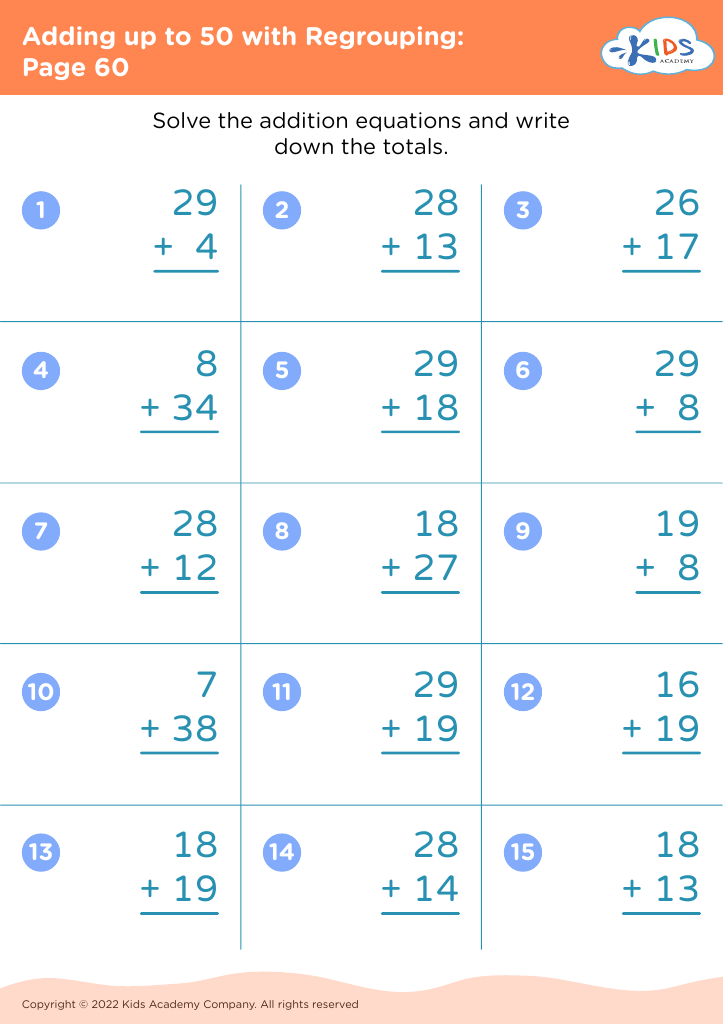
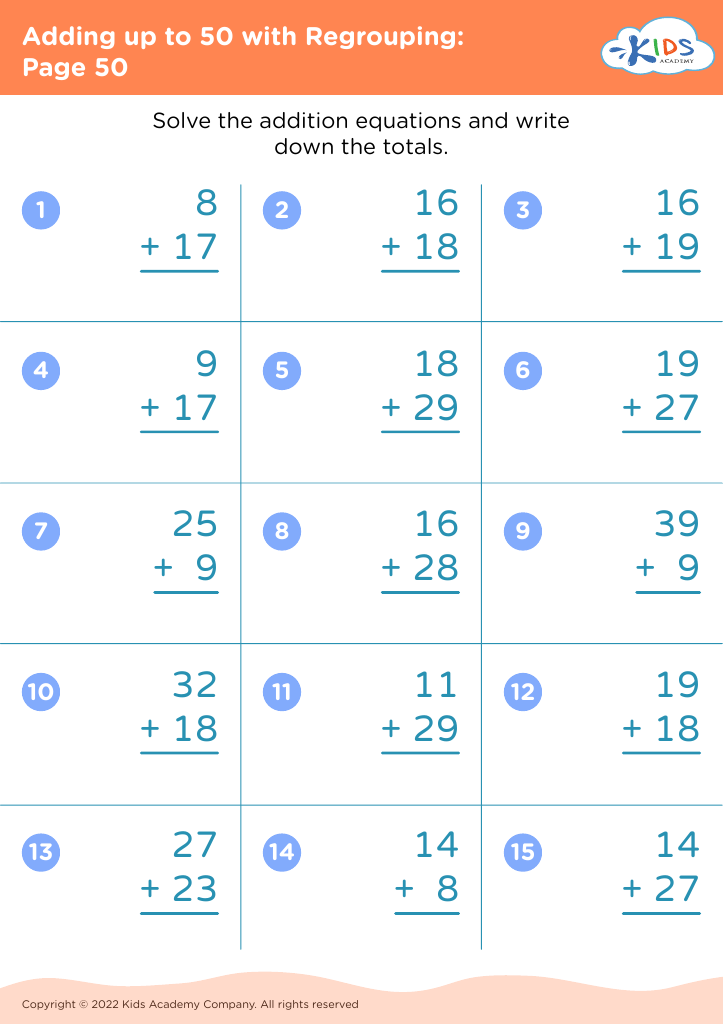
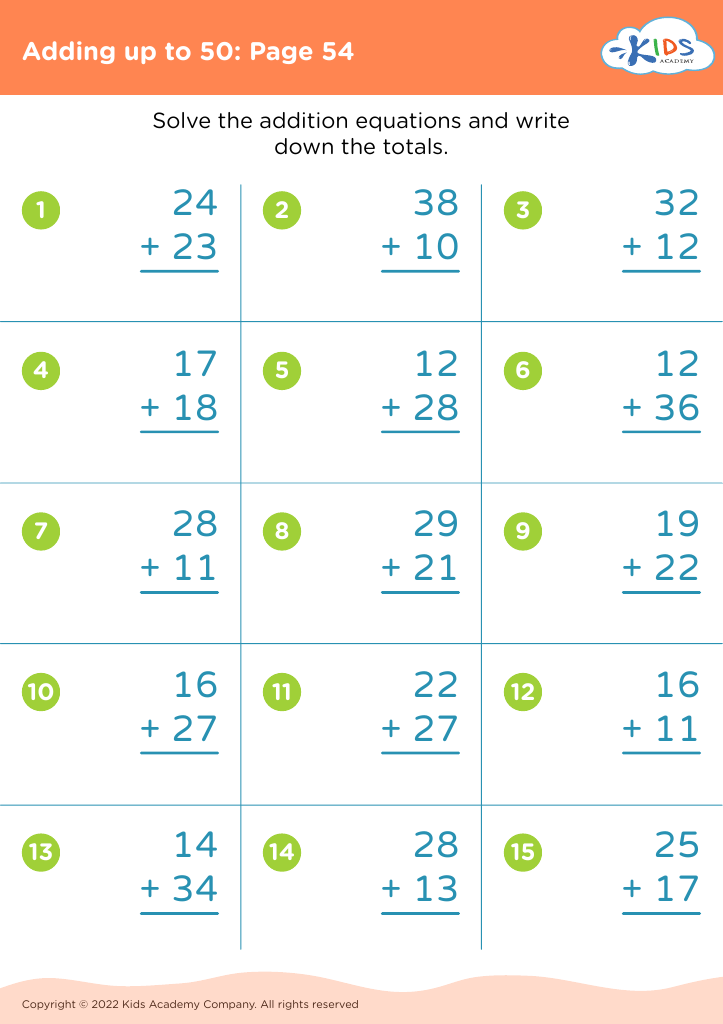
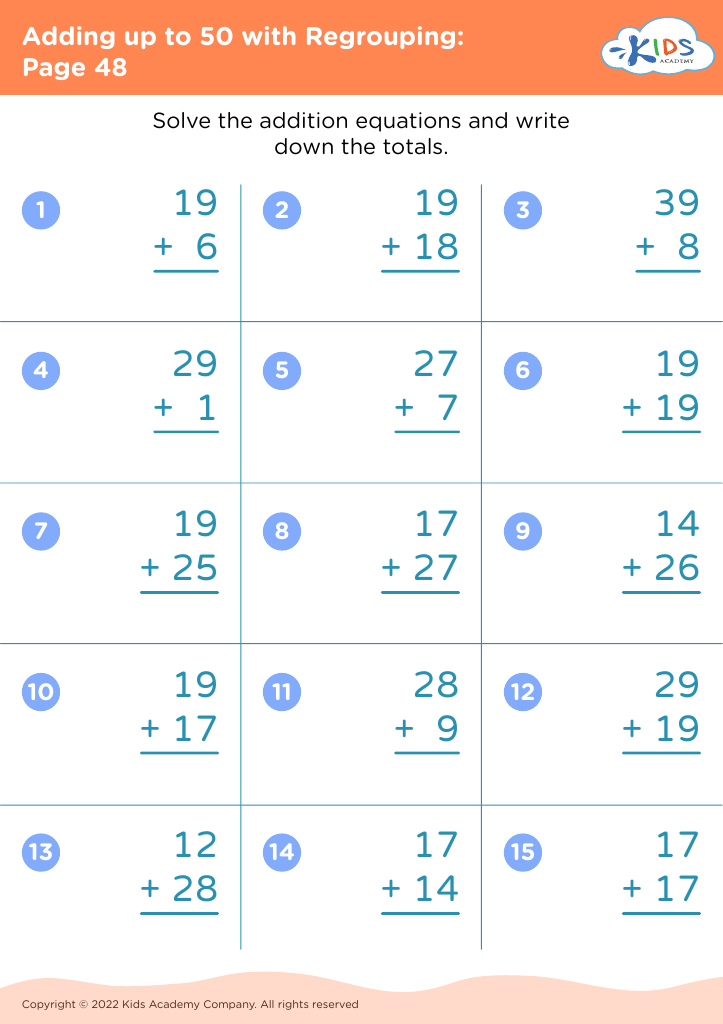
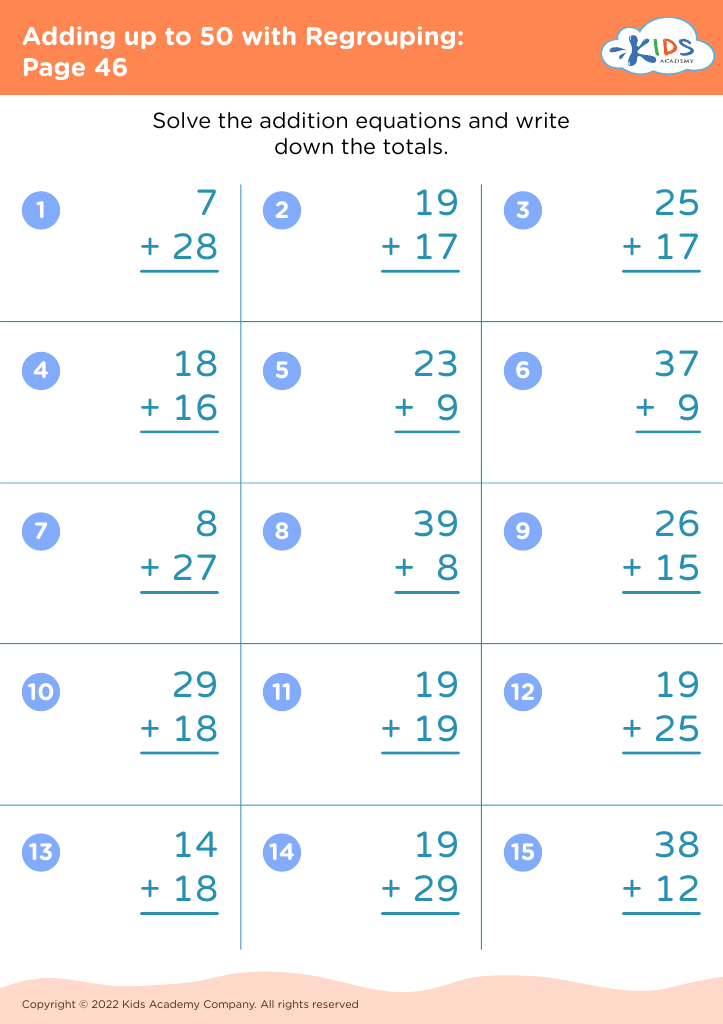




Simplifying fractions, especially concepts like "Adding up to 50," is crucial for children aged 6-8 as it builds foundational mathematical skills essential for their future academic success. This age group is at a critical stage of cognitive development, where they start to grasp abstract concepts. Simplifying fractions helps them understand numbers better, allows them to recognize relationships between different amounts, and promotes problem-solving skills.
Teaching this concept encourages logical reasoning and aids in developing their ability to manipulate numbers confidently. It also provides a bridge to more complex operations, laying the groundwork for proper arithmetic understanding.
Furthermore, mathematics is integrated into various aspects of daily life. By mastering the simplification of fractions and comprehending how numbers add up within a limited framework (such as 50), children enhance their ability to navigate real-life situations, such as sharing, cooking, or budgeting.
Parents and educators should emphasize these skills not only to instill mathematical knowledge but also to foster resilience, critical thinking, and a positive attitude towards learning. This hands-on approach can cultivate a lasting interest in math and encourage lifelong learners in a world increasingly centered around quantitative reasoning.








