Subtraction practice Adding up to 50 Worksheets for Ages 6-8
3 filtered results
-
From - To
Enhance your child's math skills with our "Subtraction Practice Adding up to 50 Worksheets for Ages 6-8." These engaging printable worksheets are perfect for young learners transitioning from simple counting to more complex subtraction problems. Designed specifically for children ages 6 to 8, our worksheets provide a variety of exercises to strengthen foundational subtraction skills, improve problem-solving, and build confidence in math. Each worksheet offers a fun and interactive way for your child to practice subtracting numbers up to 50, helping them grasp essential concepts. Ideal for classroom use or at-home practice, boost your child's math proficiency today!
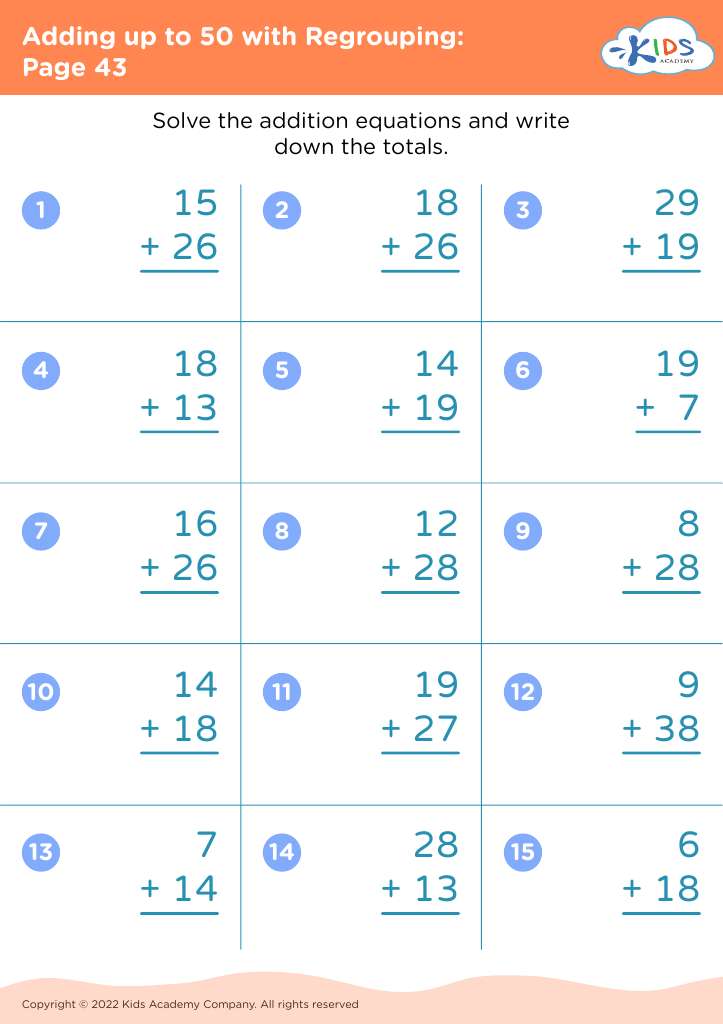
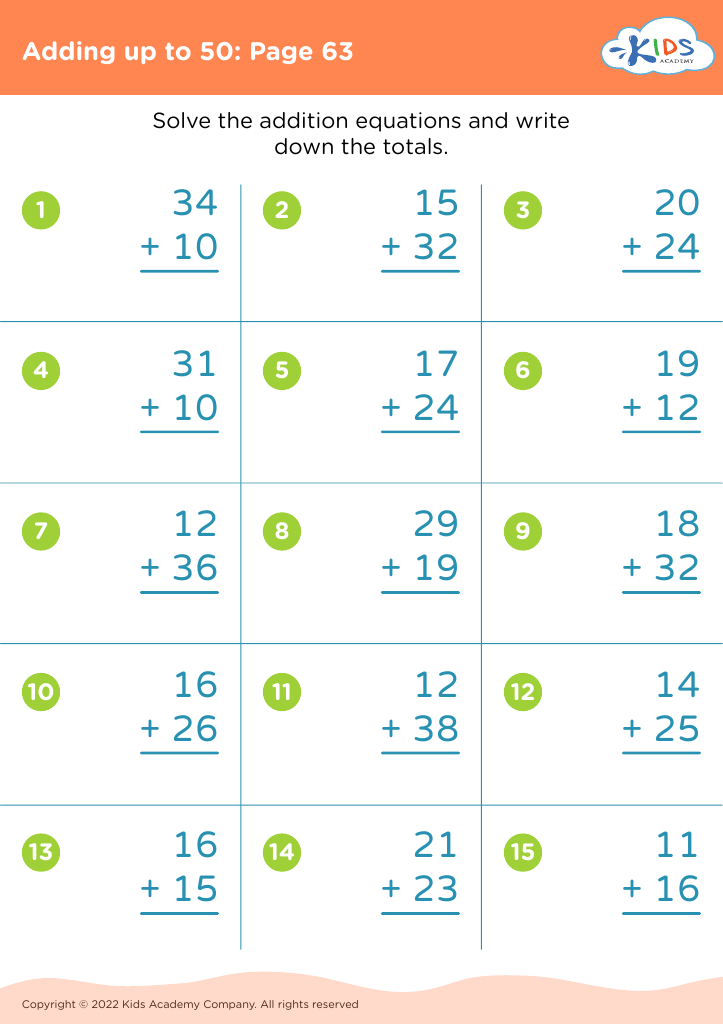
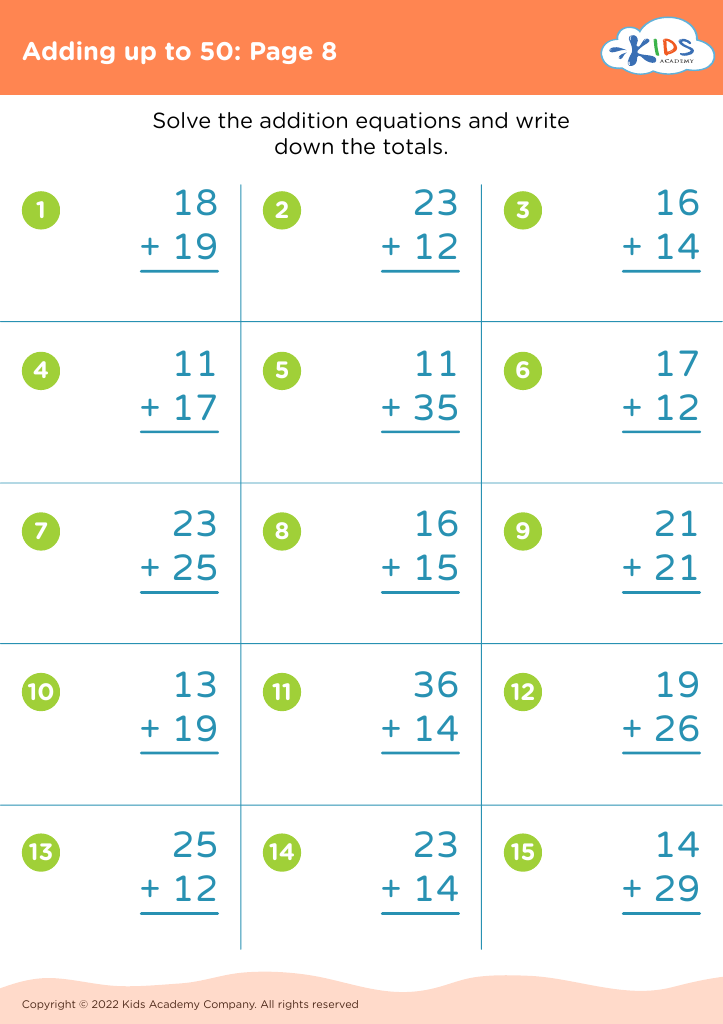




Parents and teachers should prioritize subtraction practice adding up to 50 for children aged 6-8 because it sets a crucial foundation for their mathematical understanding and overall cognitive development. At this age, children are transitioning from simple counting to more complex arithmetic operations, and mastering subtraction is key to fostering their numeracy skills.
Practicing subtraction within the range of up to 50 helps solidify their understanding of basic mathematical concepts, such as number sense, place value, and arithmetic operations. It also enhances problem-solving abilities as they learn to break down numbers, recognize patterns, and develop mental math strategies. These skills are not only essential for future math lessons but are also applicable in everyday situations, such as making change, measuring, and time management.
Additionally, frequent subtraction practice promotes confidence and a positive attitude towards math. It reduces math anxiety and helps children feel more competent in their abilities to tackle challenging tasks. Engaging in subtraction exercises regularly ensures that children are building a strong mathematical foundation, which is crucial for their academic success across various subjects.
In short, by caring about and encouraging subtraction practice, parents and teachers support the holistic development of early learners, equipping them with skills that are fundamental for both their academic journey and everyday life.








