Basic arithmetic comprehension Addition & Subtraction Worksheets for Ages 6-8
3 filtered results
-
From - To
Enhance your child's mathematical skills with our Basic Arithmetic Comprehension Addition & Subtraction Worksheets for ages 6 to 8! Designed for young learners, these engaging worksheets provide a fun way to practice essential math concepts. Covering a range of topics, they help children understand addition and subtraction through interactive exercises and vivid illustrations. Our worksheets reinforce key skills, making complex concepts easier to grasp. With clear instructions and various activities, kids can build confidence and improve their comprehension step by step. Perfect for home or classroom use, these resources make learning math enjoyable and effective. Start your child's math journey today!
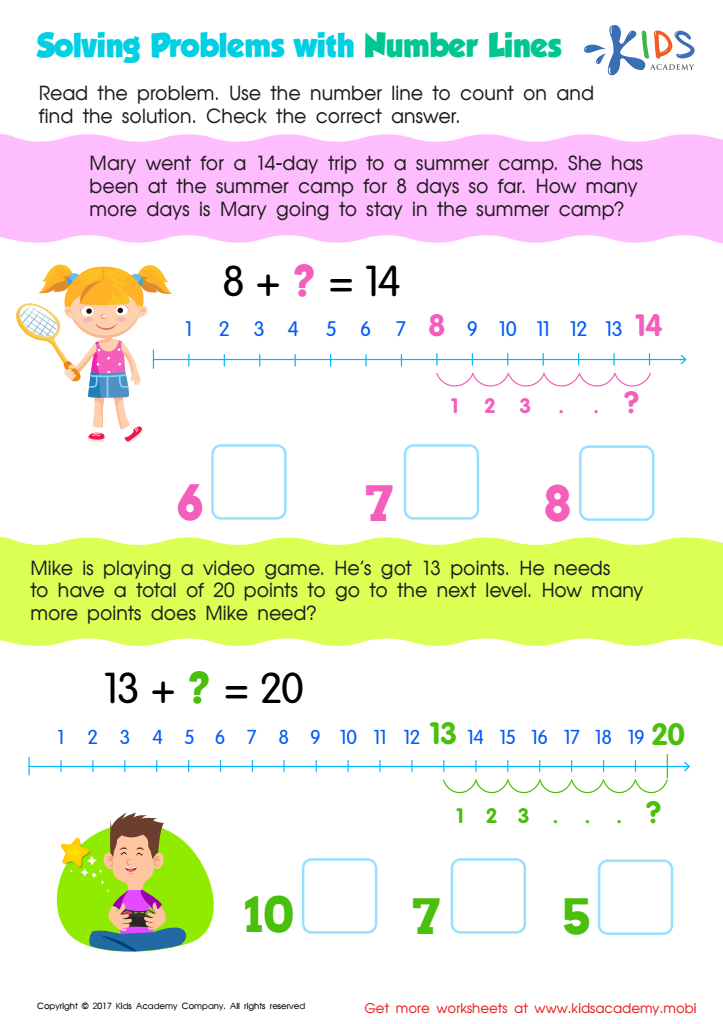
Solving Problems: Number Lines Worksheet
 Assign to My Students
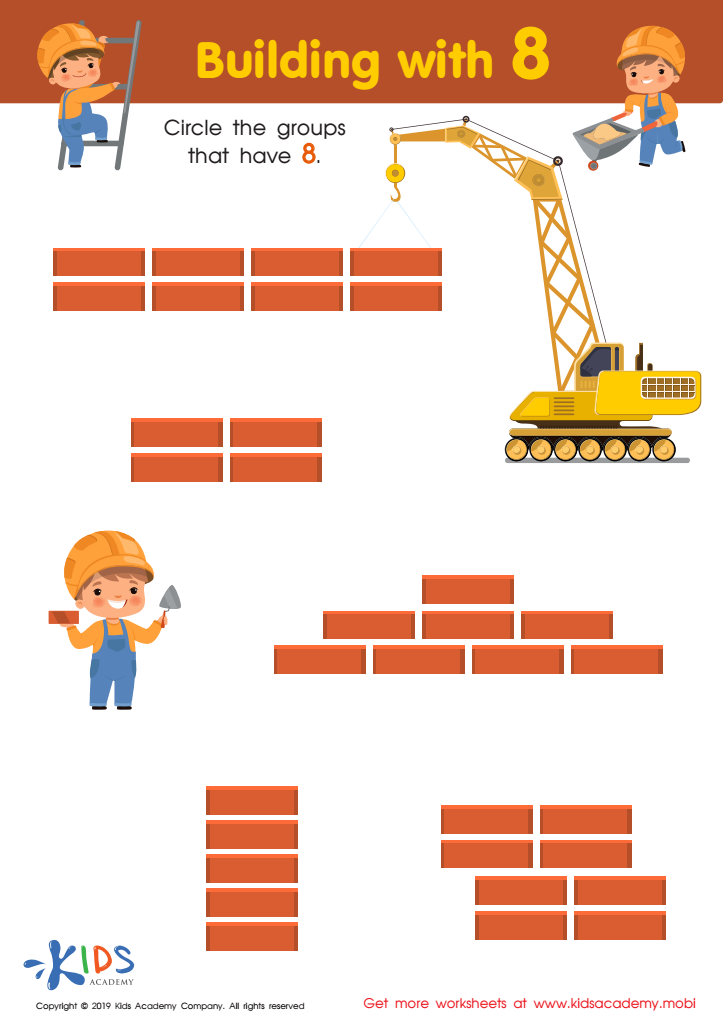
Building with 8 Worksheet
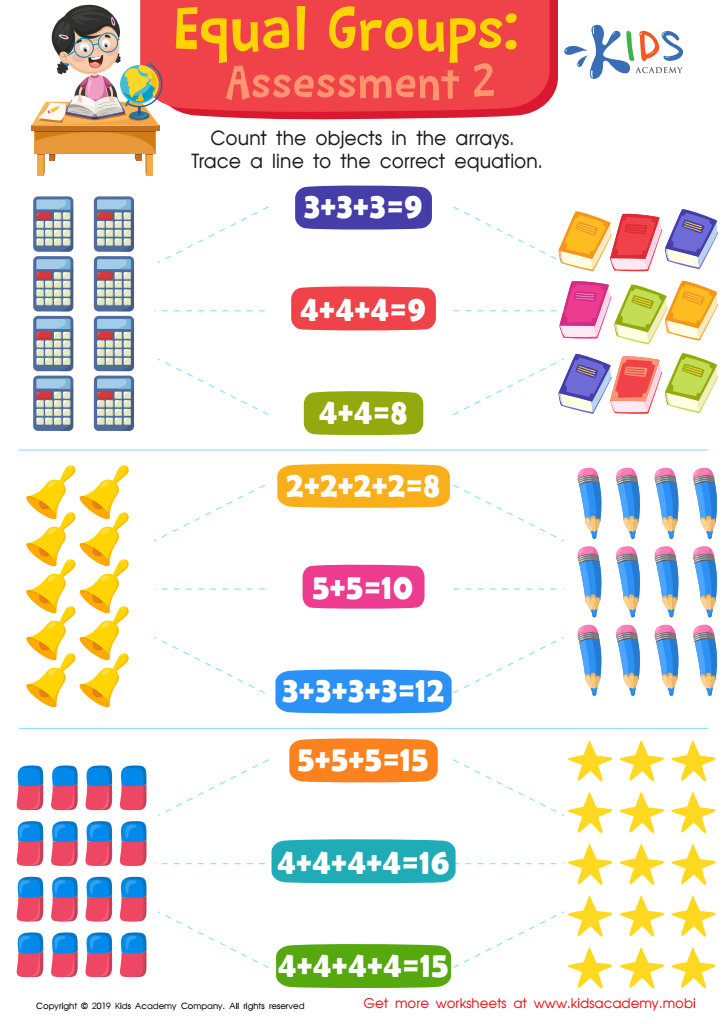
Equal Groups: Assessment 2 Worksheet








Basic arithmetic comprehension, particularly in addition and subtraction, is crucial for children aged 6 to 8 for several reasons. First, these foundational skills are essential for everyday life. Children encounter addition and subtraction in various daily activities, such as counting money, measuring ingredients while cooking, or dividing snacks among friends. A solid grasp of these concepts fosters confidence and independence.
Second, strong arithmetic skills are vital for academic success. During these formative years, children build the necessary cognitive scaffolding for more advanced math concepts, including multiplication, division, and problem-solving. Early proficiency in addition and subtraction can positively influence their performance across other subjects by enhancing logical reasoning and critical thinking abilities.
Furthermore, parents and teachers play a significant role in nurturing a child's attitude towards mathematics. Positive reinforcement and engaging activities that incorporate addition and subtraction can develop a love for learning and reduce anxiety related to math. This emotional connection encourages a growth mindset, where children see challenges as opportunities to improve.
In summary, by fostering basic arithmetic comprehension in addition and subtraction, parents and teachers help children establish critical life skills, academic confidence, and a positive attitude toward lifelong learning in mathematics.








