
Boost critical thinking Addition & Subtraction Worksheets for Ages 6-8
3 filtered results
Difficulty Level
Grade
Age
-
From - To
Subject
Activity
Standards
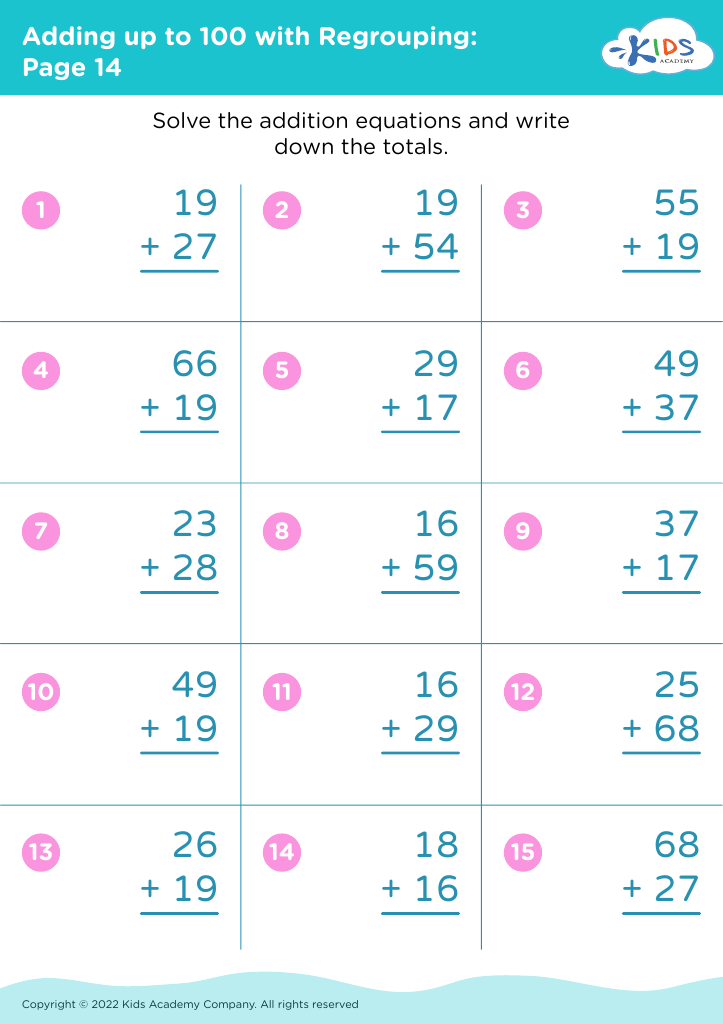
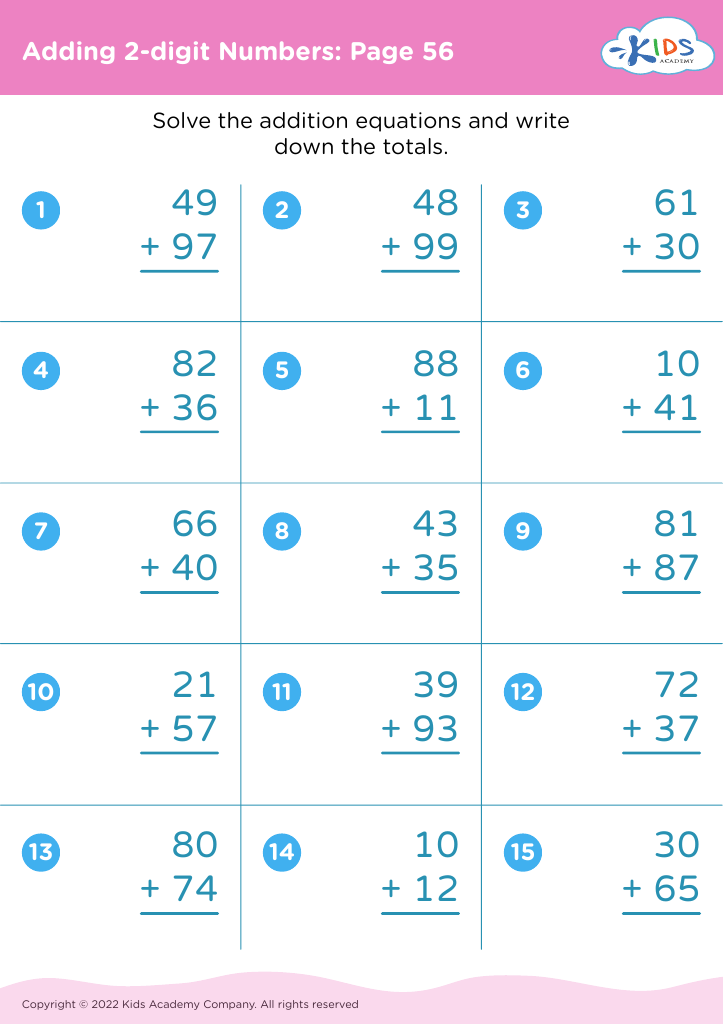
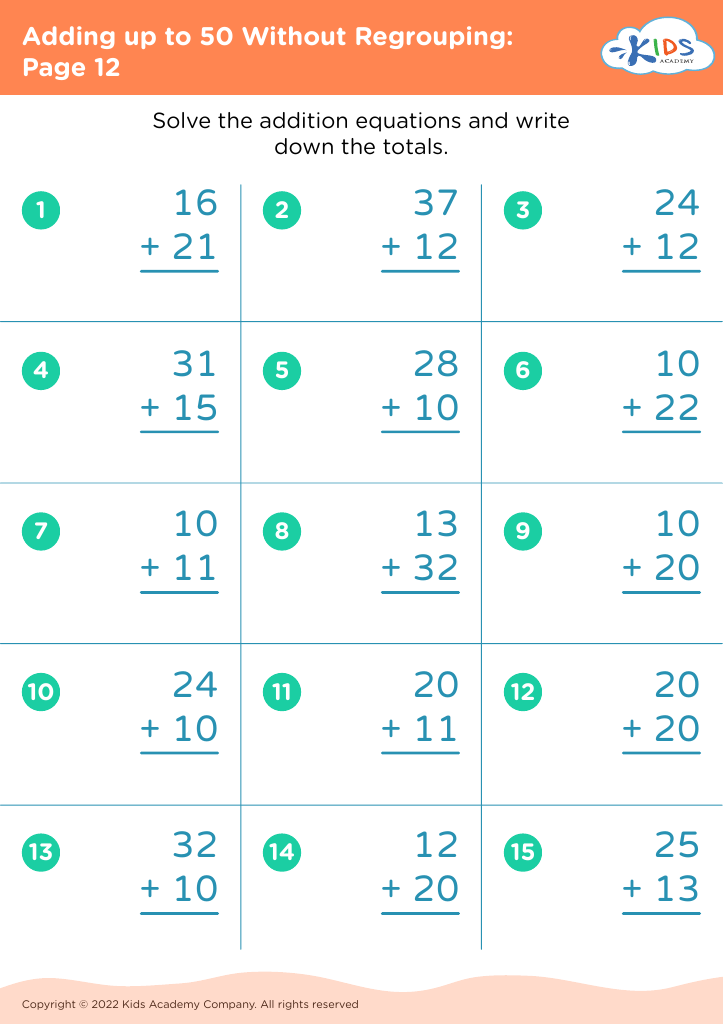
Introducing our "Boost Critical Thinking Addition & Subtraction Worksheets for Ages 6-8" designed to enhance your child's mathematical abilities while fostering essential critical thinking skills. These engaging and fun worksheets help young learners practice addition and subtraction through a variety of enjoyable activities, puzzles, and word problems. Each worksheet aims to build a strong foundation in math, improve problem-solving abilities, and develop logical reasoning. Perfect for both classroom use and at-home practice, these expertly crafted exercises are tailored to make learning challenging yet rewarding for 6-8-year-olds. Discover these invaluable resources and watch your child's confidence soar!
Favorites
With answer key
Interactive
Join Kids Academy for Free
Who is primarily going to use this learning content?








Boosting critical thinking in addition and subtraction for children aged 6-8 years is vital for their overall cognitive development. During these foundational years, kids are naturally curious and possess a remarkable capacity for learning. Introducing them to critical thinking through mathematical concepts helps lay the groundwork for advanced problem-solving skills they will need throughout their education and life.
First, understanding addition and subtraction forms the basis for future mathematical learning. If children grasp these concepts early, they are likely to find it easier to learn more complex math as they progress in school. Critical thinking aids in not just memorizing math facts but in comprehending why and how math works, fostering a deeper appreciation for the subject.
Second, critical thinking teaches children to analyze, synthesize, and evaluate information. These skills are necessary beyond the classroom, helping in decision-making, reasoning, and handling real-world situations. For example, determining the best way to share toys or equally divide snacks uses basic math and the ability to make logical decisions.
Lastly, engaging with addition and subtraction in a critical manner promotes curiosity and enjoyment in learning, creating a positive attitude towards education. This enthusiasm can lead to better academic performance and greater willingness to tackle challenging tasks in the future. Parents and teachers should support strategies that enhance these skills to ensure well-rounded intellectual growth.








