Comparing numbers Addition & Subtraction Worksheets for Ages 6-8
4 filtered results
-
From - To
Explore our "Comparing Numbers Addition & Subtraction Worksheets" designed for children aged 6-8! These engaging worksheets help young learners master essential math skills by comparing numbers, enhancing their understanding of addition and subtraction concepts. Our resources feature fun, interactive exercises tailored to develop critical thinking and problem-solving abilities. Each worksheet encourages students to practice identifying which numbers are greater or lesser while reinforcing foundational math strategies. Ideal for use at home or in the classroom, these printable worksheets are perfect for building confidence in young mathematicians. Start your child's journey in mastering numbers today with our thoughtfully crafted materials!
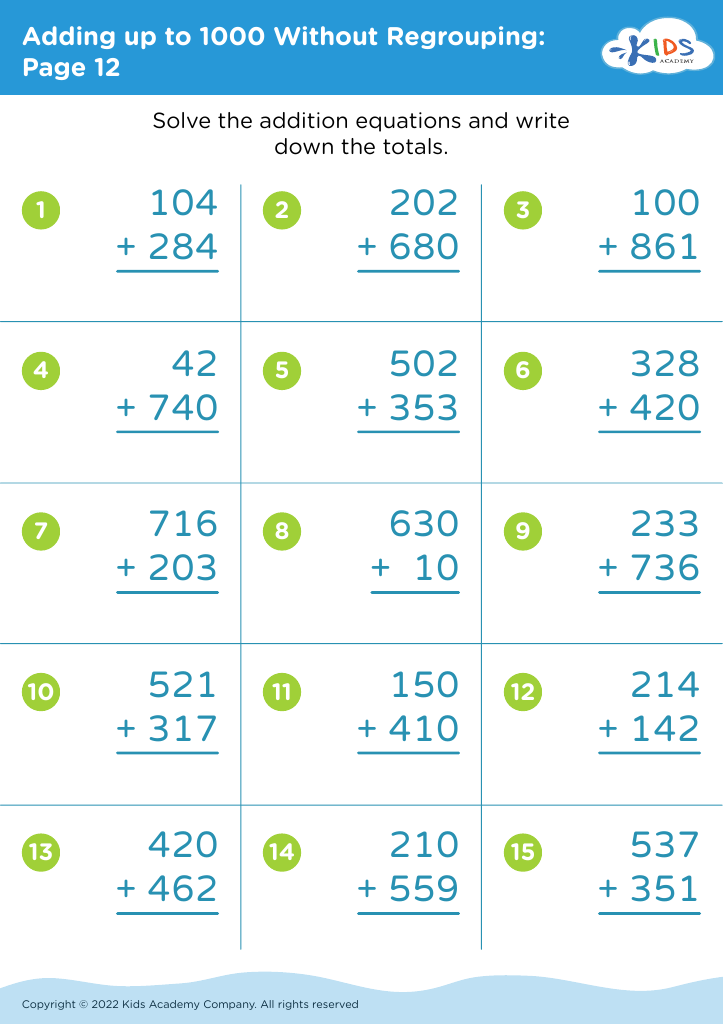
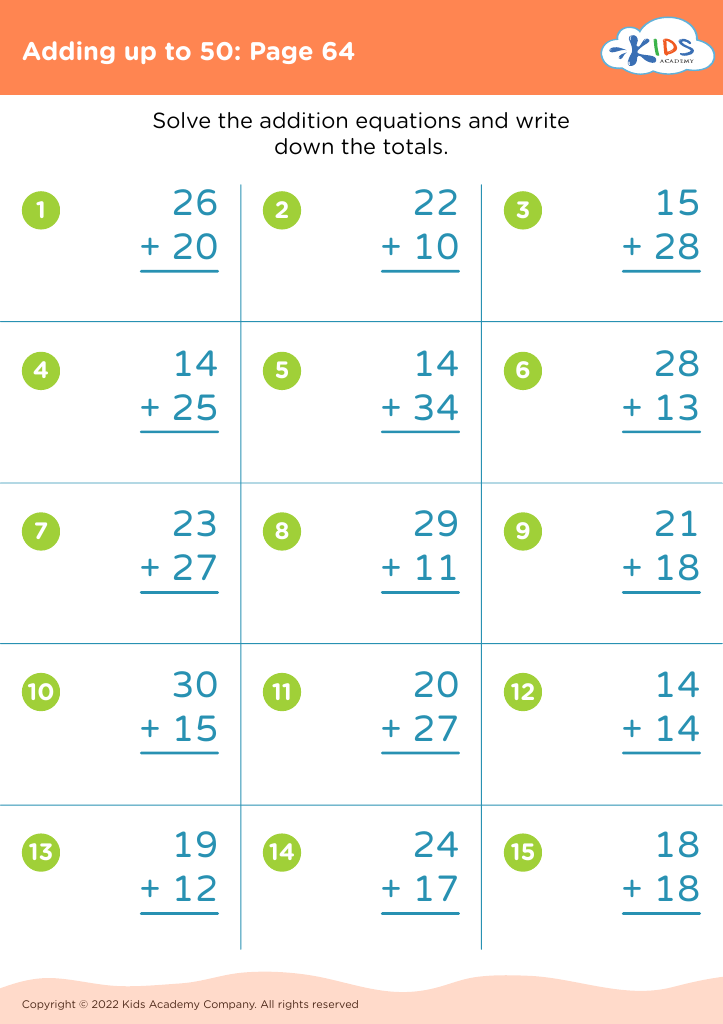
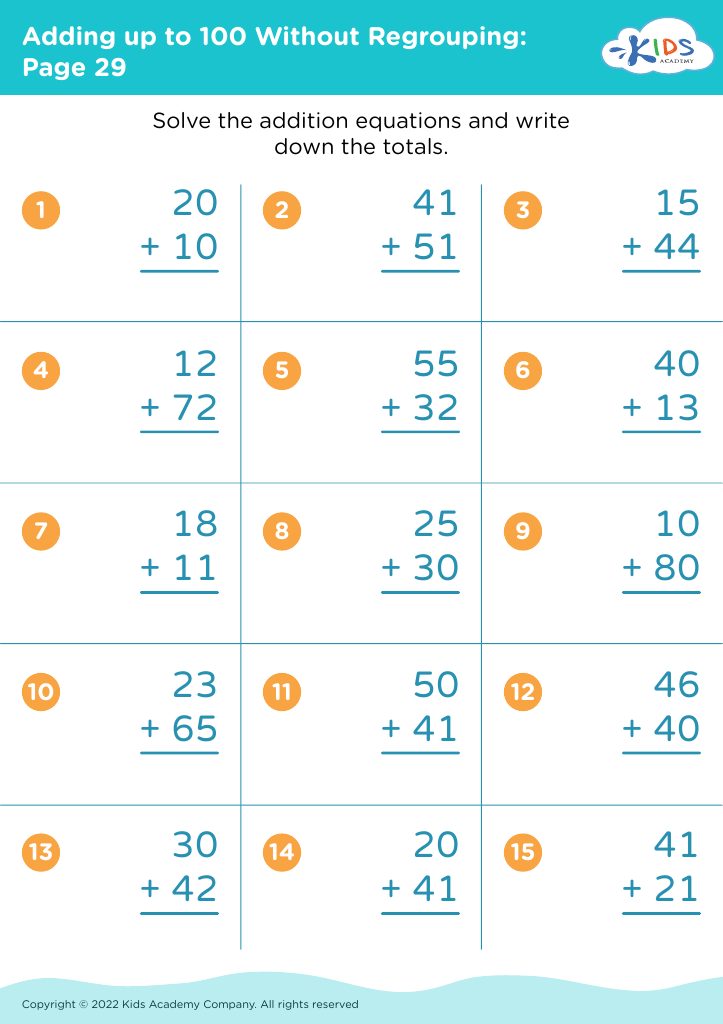
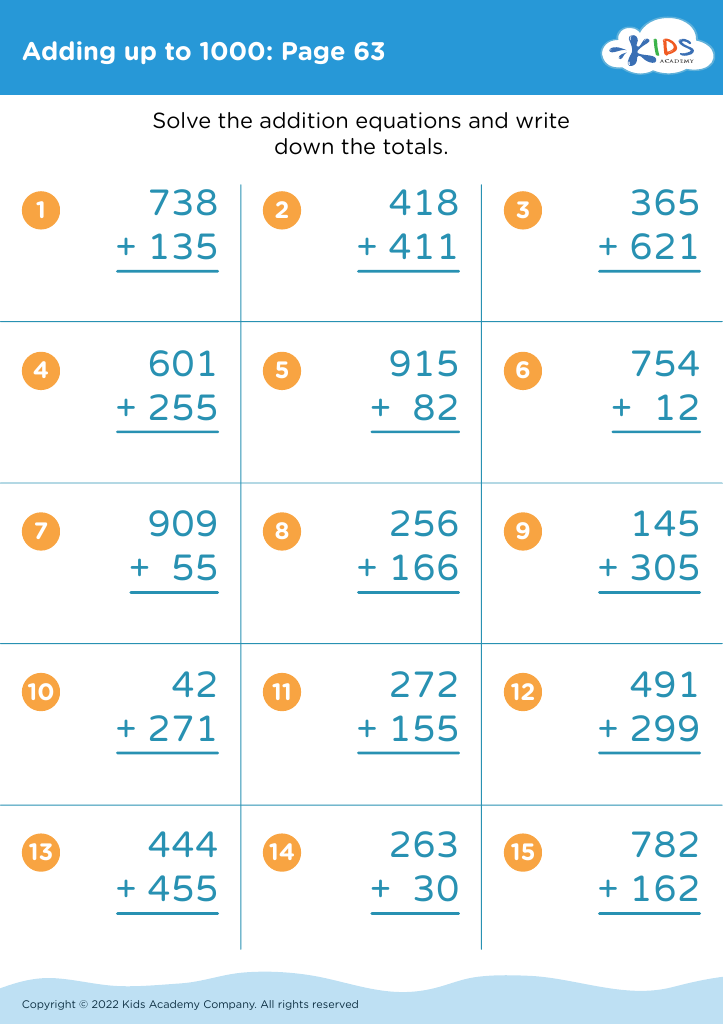








Comparing numbers, addition, and subtraction are fundamental concepts in early math education that form the foundation for a child's academic success. For children aged 6-8, understanding these concepts is crucial for developing critical thinking and problem-solving skills. When parents and teachers emphasize comparing numbers, they encourage children to analyze quantities, fostering a sense of numerical reasoning.
Addition and subtraction are not just basic operations; they introduce children to logical thinking and the relationships between numbers. Through these operations, children learn to identify patterns, develop estimation skills, and understand the concept of "more than" and "less than." These skills are vital not only for math but also for everyday decision-making and resource management.
Furthermore, engaging children in activities that involve comparing, adding, and subtracting numbers empowers them with confidence in their mathematical abilities. This confidence is essential for future learning, as students who grasp early math concepts are more likely to excel in higher-level mathematics.
Ultimately, a focus on these foundational skills ensures that children are well-prepared for more complex mathematical tasks in the future, leading to greater academic achievement and a love for learning. Thus, parents and teachers play a pivotal role in supporting this critical stage of development.








