Enhance fine motor skills Addition & Subtraction Worksheets for Ages 6-8
3 filtered results
-
From - To
Boost your child's mathematical skills and fine motor development with our specially designed Addition & Subtraction Worksheets for ages 6-8. Our printable worksheets offer engaging activities that combine arithmetic practice with tasks that enhance hand-eye coordination, precision, and dexterity. Each worksheet is structured to strengthen young learners' proficiency in basic math while simultaneously improving their writing grip and manipulation skills. With fun illustrations and varied exercises, kids stay motivated and enjoy their learning journey. Ideal for both classroom and home use, these worksheets are perfect for fostering vital math and motor skills at a crucial developmental stage.
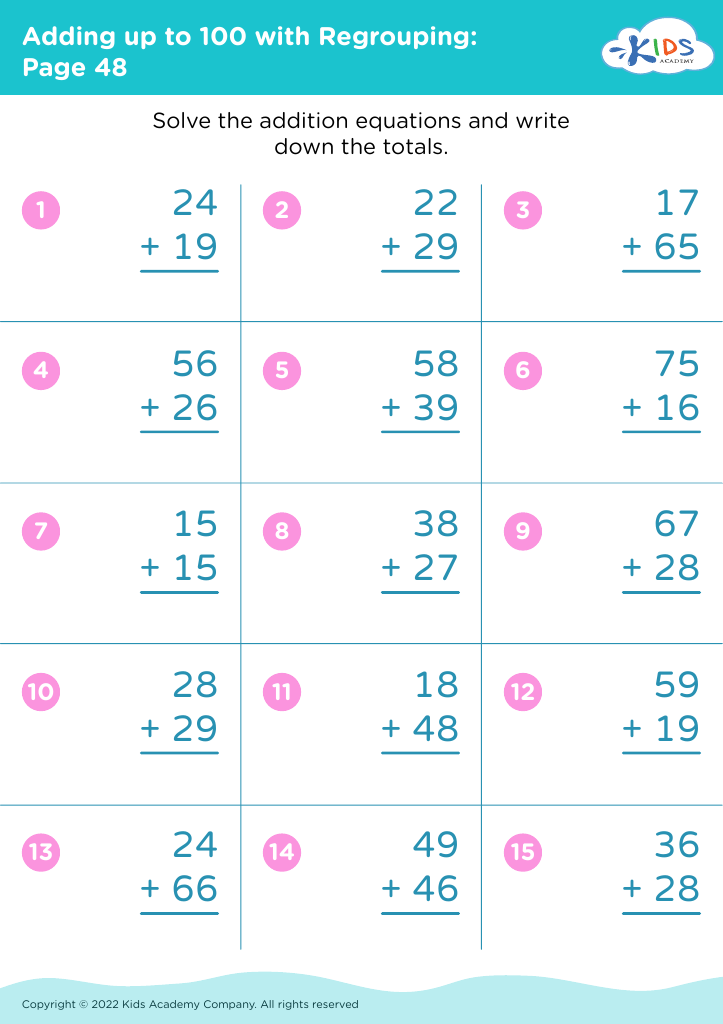
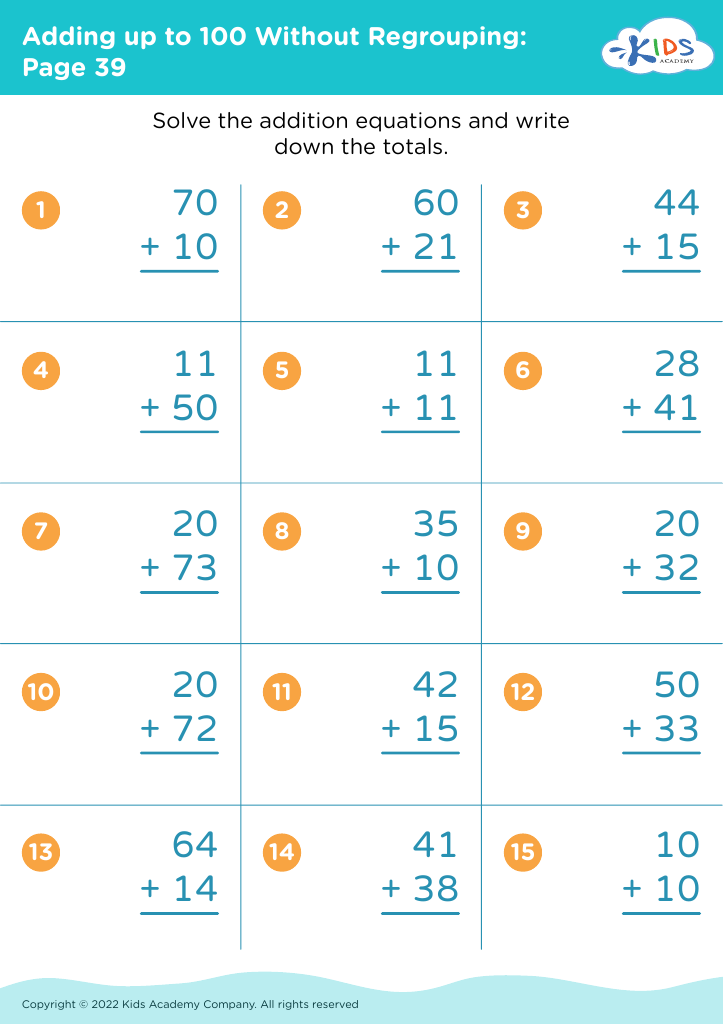
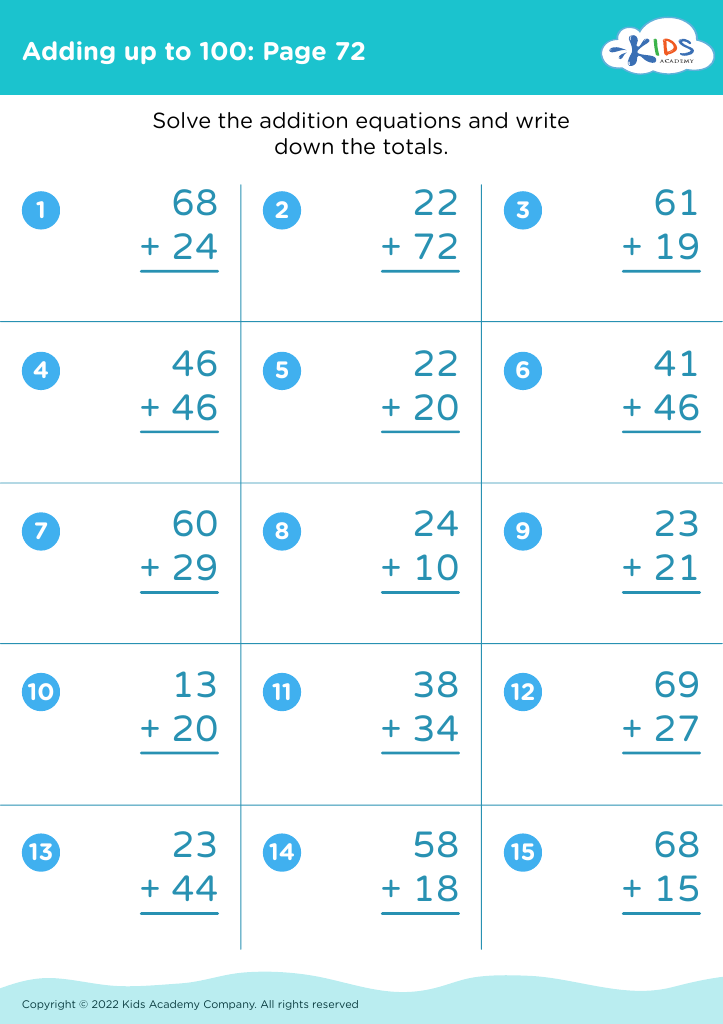








Enhancing fine motor skills in children aged 6-8 is crucial for their overall development and academic success. Fine motor skills involve the coordination of small muscles, especially in the hands and fingers, with the eyes. Mastery in this area is essential for everyday activities such as writing, drawing, and using scissors, which directly impact a child’s ability to succeed in school.
Integrating addition and subtraction exercises is a strategic way to advance these skills. When children use tools like pencils, counters, or small objects to work out math problems, they engage in fine motor activities that improve hand-eye coordination and dexterity. This enhancement goes beyond just academic benefits; it lays the groundwork for tasks requiring precision, such as tying shoelaces, buttoning clothes, and even manipulating digital devices.
Caring about this development means fostering a child’s independence, confidence, and academic achievements. Activities that blend fine motor skills with math learning promote concentration and cognitive development, gradually leading to better problem-solving abilities. For parents and teachers, prioritizing these interconnected skills not only prepares children for the rigors of formal education but also shapes their lifelong abilities to manage and excel in everyday tasks. It's about building a strong, adaptable foundation for their future.








