Enhance Vocabulary Addition & Subtraction Worksheets for Ages 6-8
4 filtered results
-
From - To
Boost your child's math skills with our "Enhance Vocabulary Addition & Subtraction Worksheets," designed specifically for ages 6-8! These engaging worksheets integrate essential math concepts with vocabulary enhancement, promoting both numerical and language development. Children will practice addition and subtraction through fun exercises that introduce and reinforce new words in context, enhancing their comprehension and retention. Perfect for homeschooling or classroom activities, our worksheets ensure a well-rounded educational experience. Help your young learners explore math concepts while broadening their vocabulary and communication skills. Download our printable worksheets today and watch your child's knowledge soar!
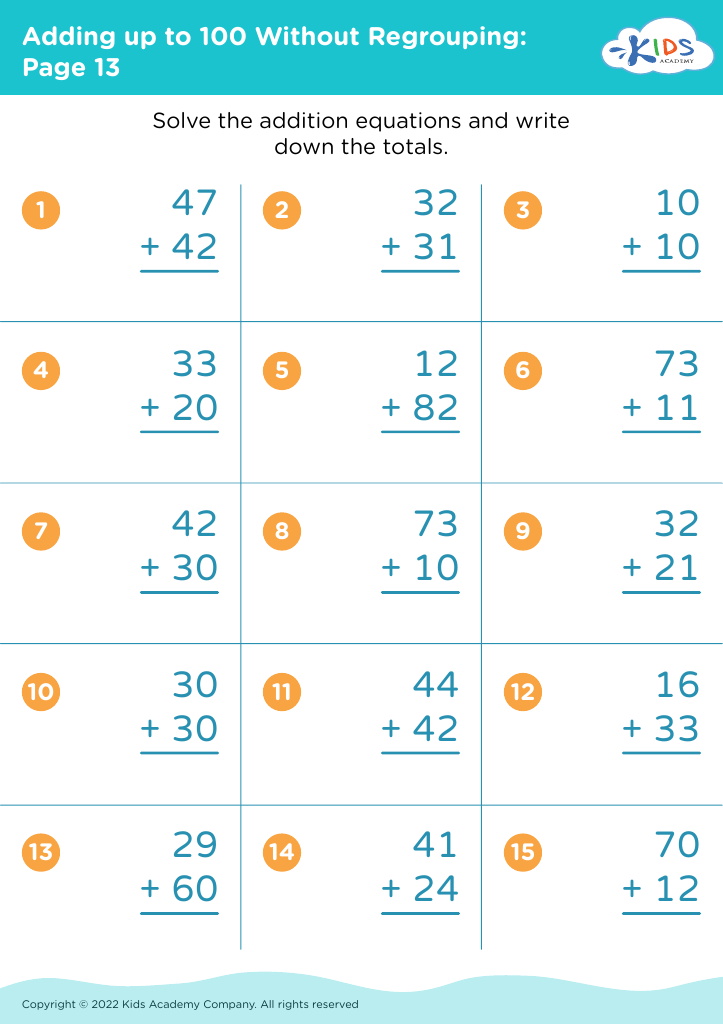
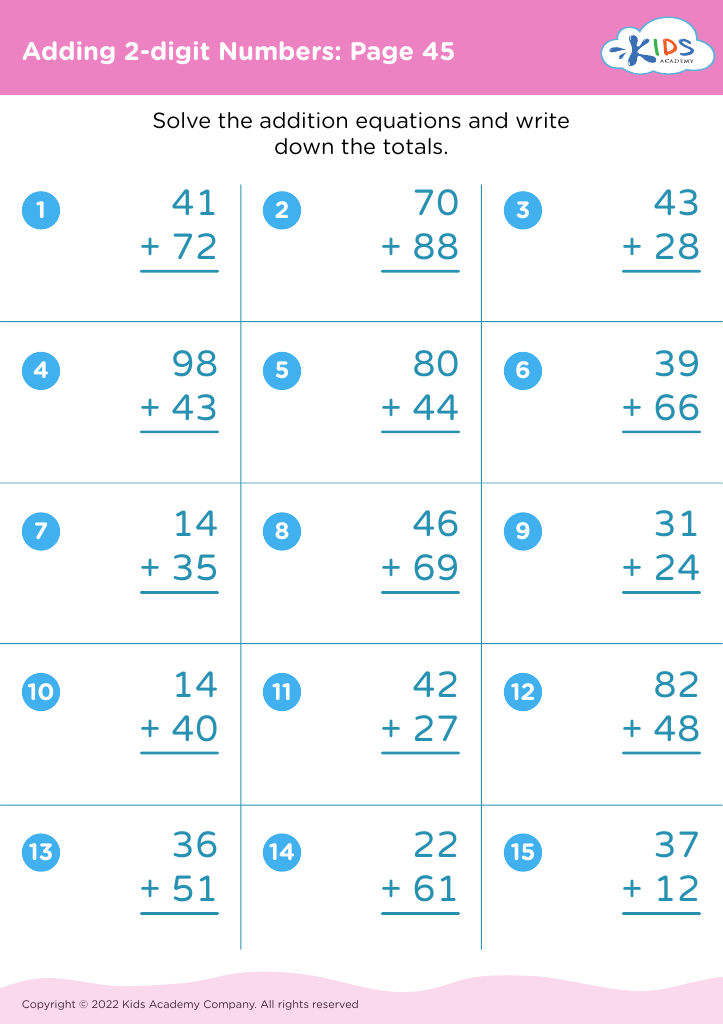
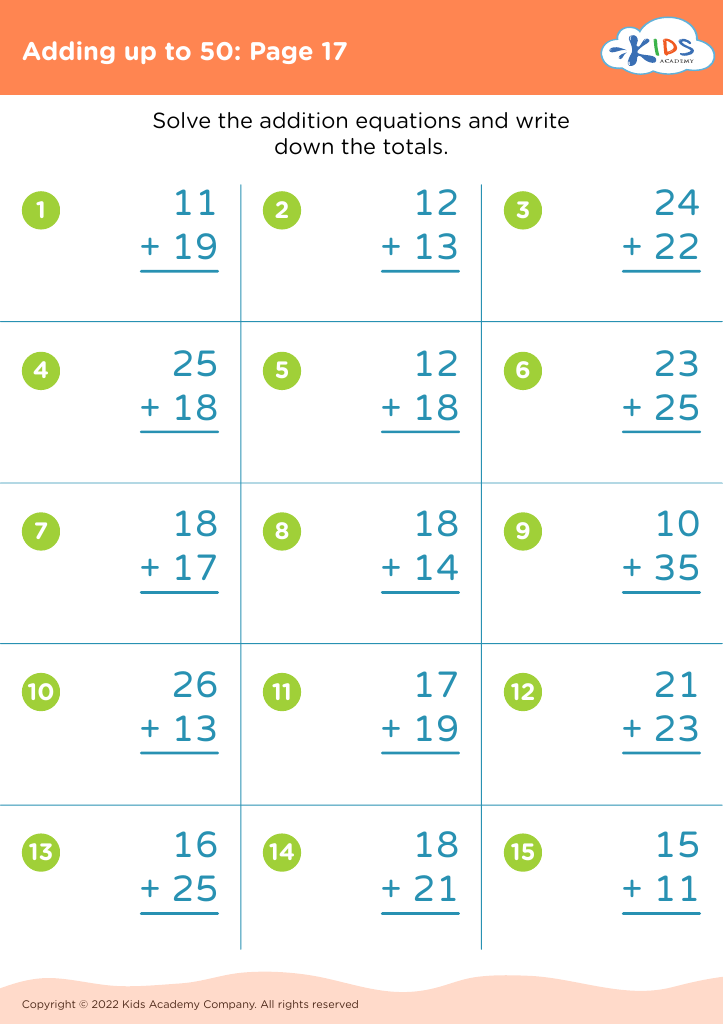
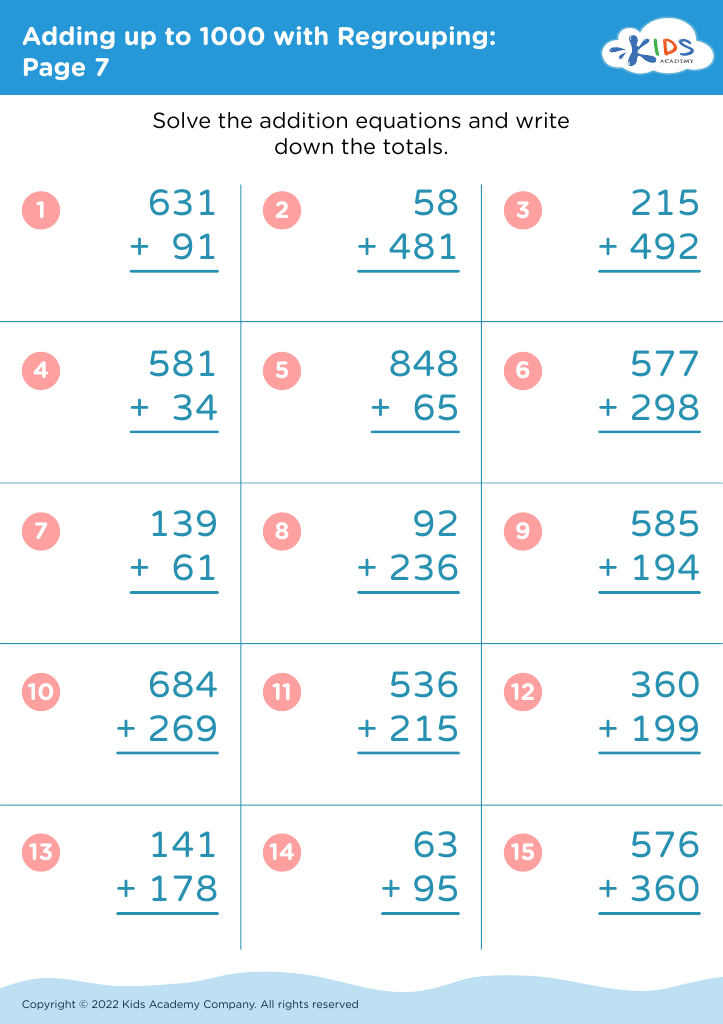








Enhancing vocabulary related to addition and subtraction for children aged 6-8 is crucial for their overall development and academic success. At this stage, children are not only learning basic arithmetic but also beginning to understand mathematical language, which lays the foundation for their future learning. A strong command of mathematical vocabulary helps students articulate their thought processes, allowing them to better grasp complex concepts as they progress in mathematics.
By focusing on enhancing vocabulary, parents and teachers can help children develop critical thinking skills. Understanding terms like "sum," "difference," "addend," and "equation" enables students to solve problems more effectively and fosters confidence in their abilities to tackle challenges.
Moreover, a rich vocabulary assists in improving reading comprehension. Students who can understand and engage with mathematical texts, word problems, and instructions are more likely to succeed in math-related activities.
Teachers can creatively implement games, storytelling, and interactive activities to make learning new terms enjoyable, while parents can reinforce these skills through everyday conversations and practice. Ultimately, enhancing vocabulary in math during these formative years equips children with essential tools that will benefit them throughout their education and everyday situations.








