Filters

48 filtered results

Clear all filters
Favorites
With answer key
Interactive

48 filtered results

Difficulty Level

Grade


Subject

    Check out this FREE Trial Lesson on Addition & Subtraction for age 6-8!

    Breaking Down 6

    Favorites
    With answer key
    Interactive
    • 6-8
    • Fine Motor Skills
    • Addition & Subtraction
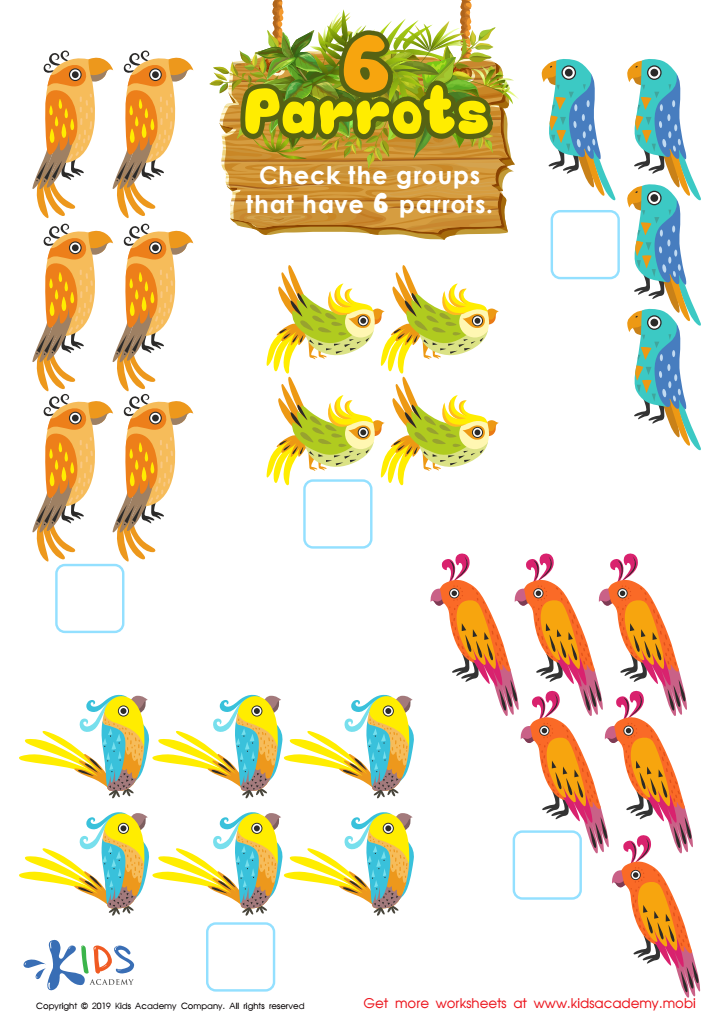
    6 Parrots Worksheet
    6 Parrots Worksheet

    6 Parrots Worksheet

    Love parrots? Here's a free worksheet to help your children practice counting to six with colorful parrot representations! Kids will adore counting the parrots and checking off groups of six - and it won't even feel like math! Just a fun way to make some new and exciting friends.
    6 Parrots Worksheet
    Worksheet
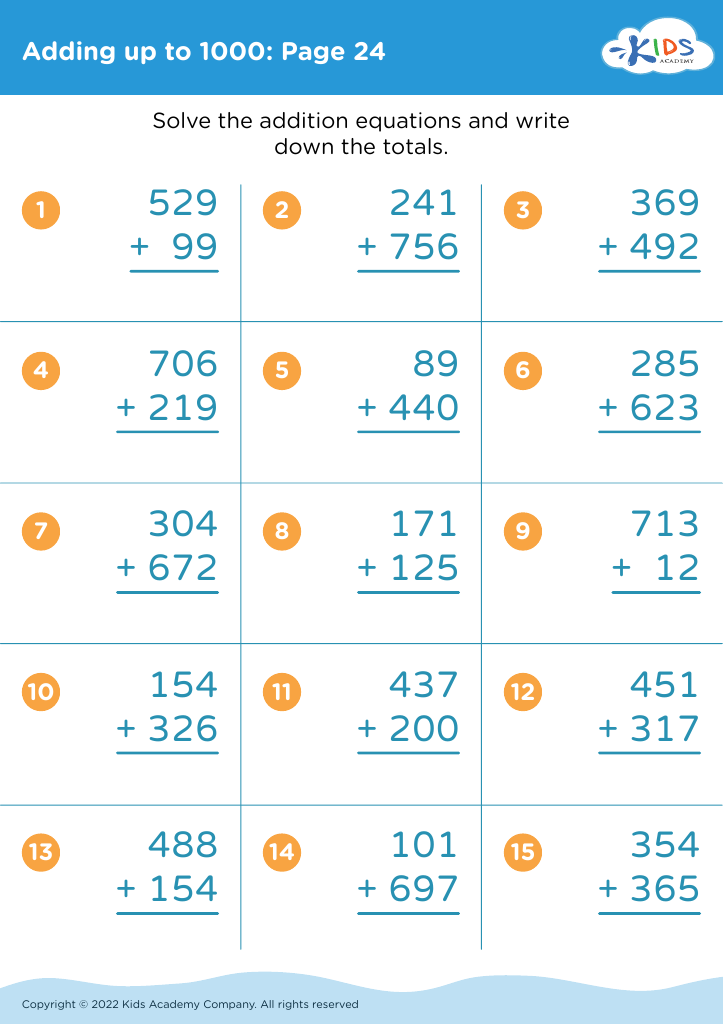
    Adding up to 1000: Page 24
    Adding up to 1000: Page 24

    Adding up to 1000: Page 24

    Adding up to 1000: Page 24
    Worksheet
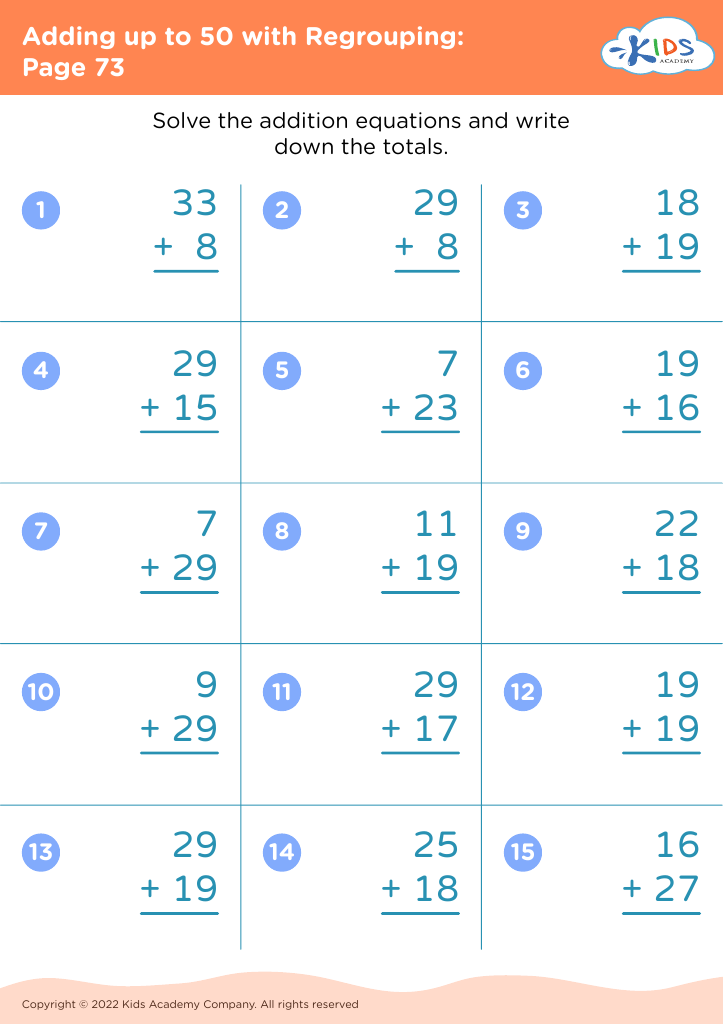
    Adding up to 50 with Regrouping: Page 73
    Adding up to 50 with Regrouping: Page 73
    Adding up to 50 with Regrouping: Page 73
    Worksheet
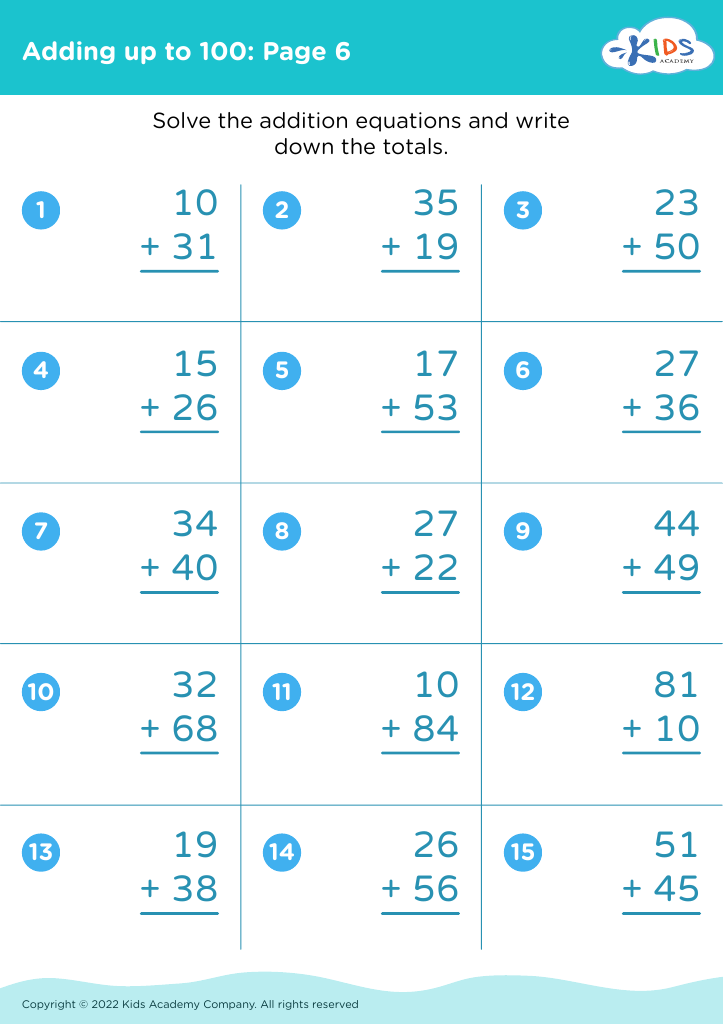
    Adding up to 100: Page 6
    Adding up to 100: Page 6

    Adding up to 100: Page 6

    Adding up to 100: Page 6
    Worksheet
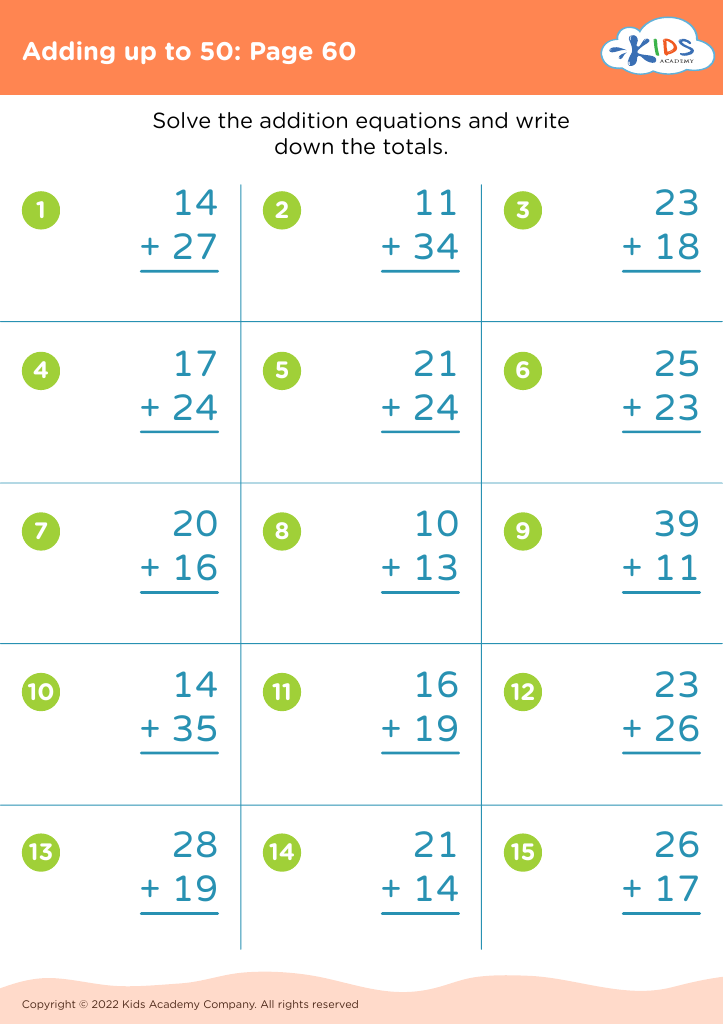
    Adding up to 50: Page 60
    Adding up to 50: Page 60

    Adding up to 50: Page 60

    Adding up to 50: Page 60
    Worksheet
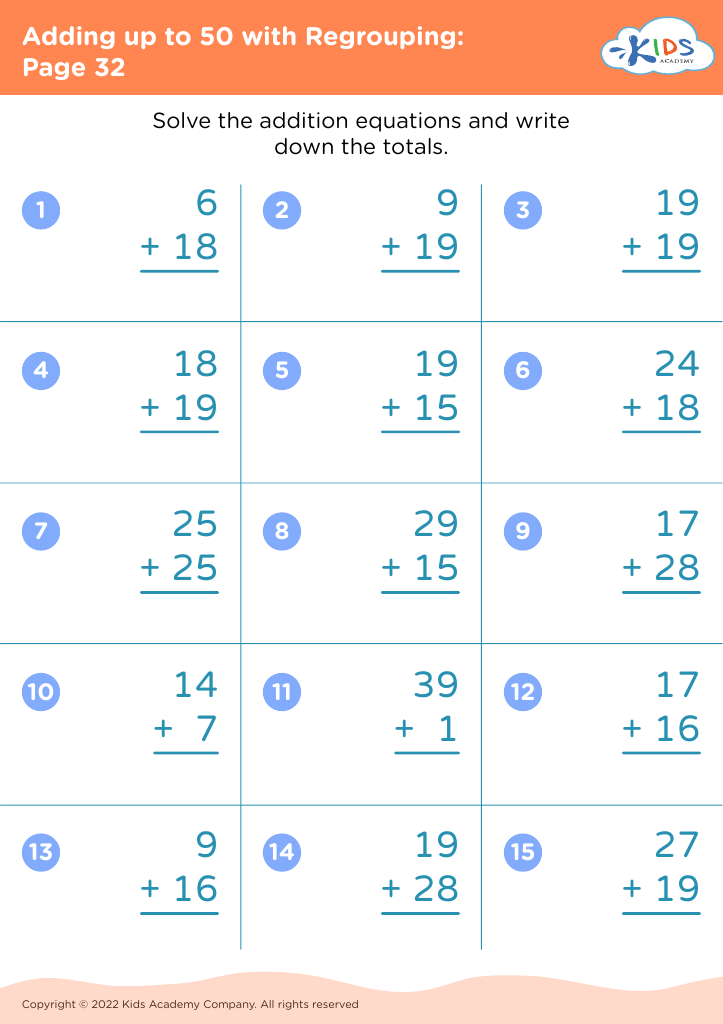
    Adding up to 50 with Regrouping: Page 32
    Adding up to 50 with Regrouping: Page 32
    Adding up to 50 with Regrouping: Page 32
    Worksheet
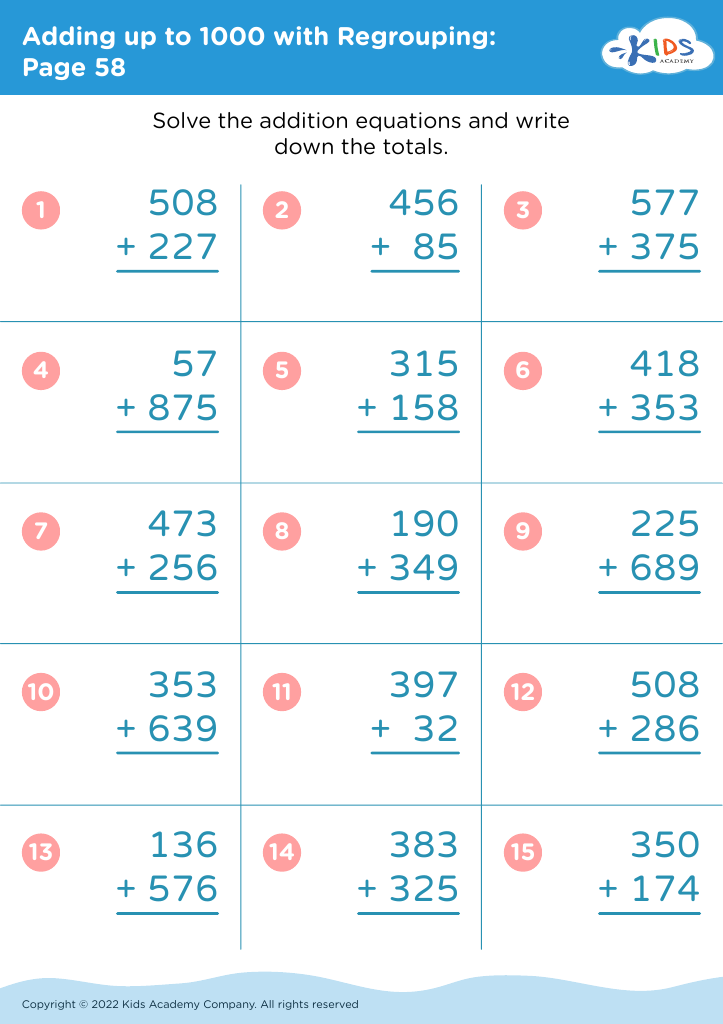
    Adding up to 1000 with Regrouping: Page 58
    Adding up to 1000 with Regrouping: Page 58
    Adding up to 1000 with Regrouping: Page 58
    Worksheet
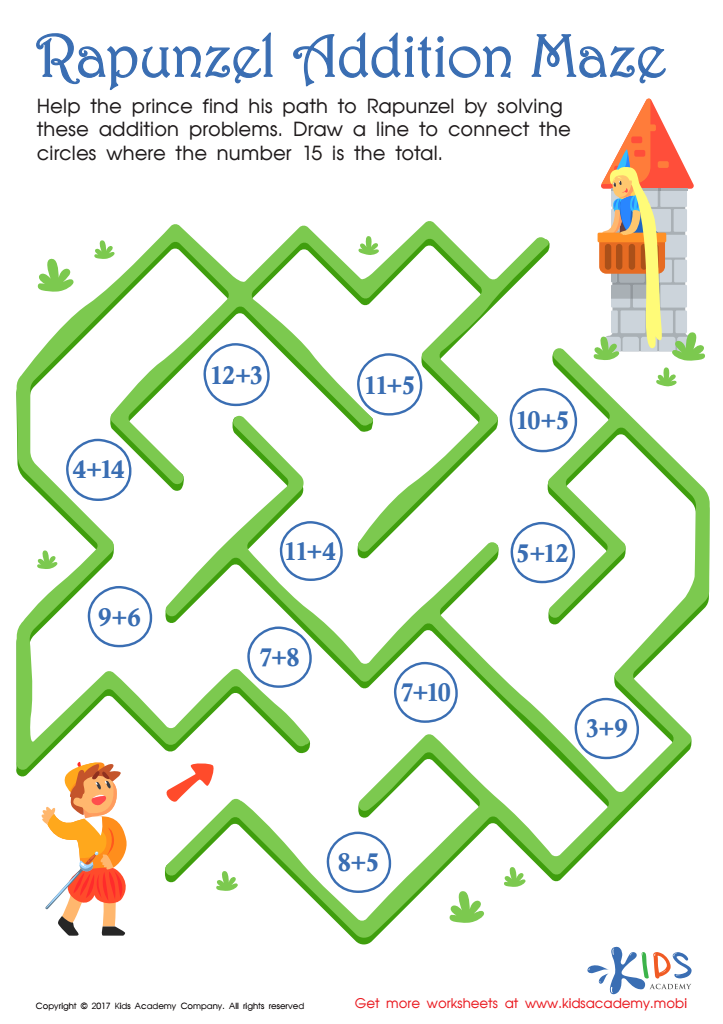
    Rapunzel Addition Maze
    Rapunzel Addition Maze

    Rapunzel Addition Maze Worksheet
    Motivate your child to practice math with a fun and meaningful Rapunzel addition maze! They'll learn single and double digit addition, problem solving, and gain confidence as they complete the maze and help the prince reach Rapunzel. They'll feel proud of their accomplishment when they finish!
    Rapunzel Addition Maze Worksheet
    Worksheet
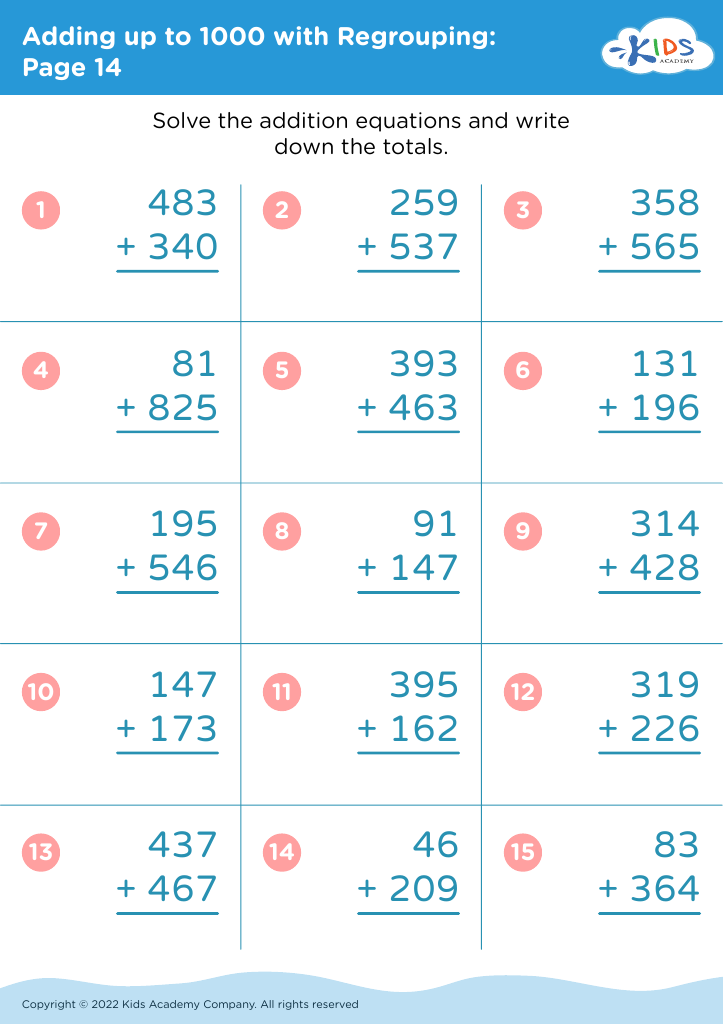
    Adding up to 1000 with Regrouping: Page 14
    Adding up to 1000 with Regrouping: Page 14
    Adding up to 1000 with Regrouping: Page 14
    Worksheet
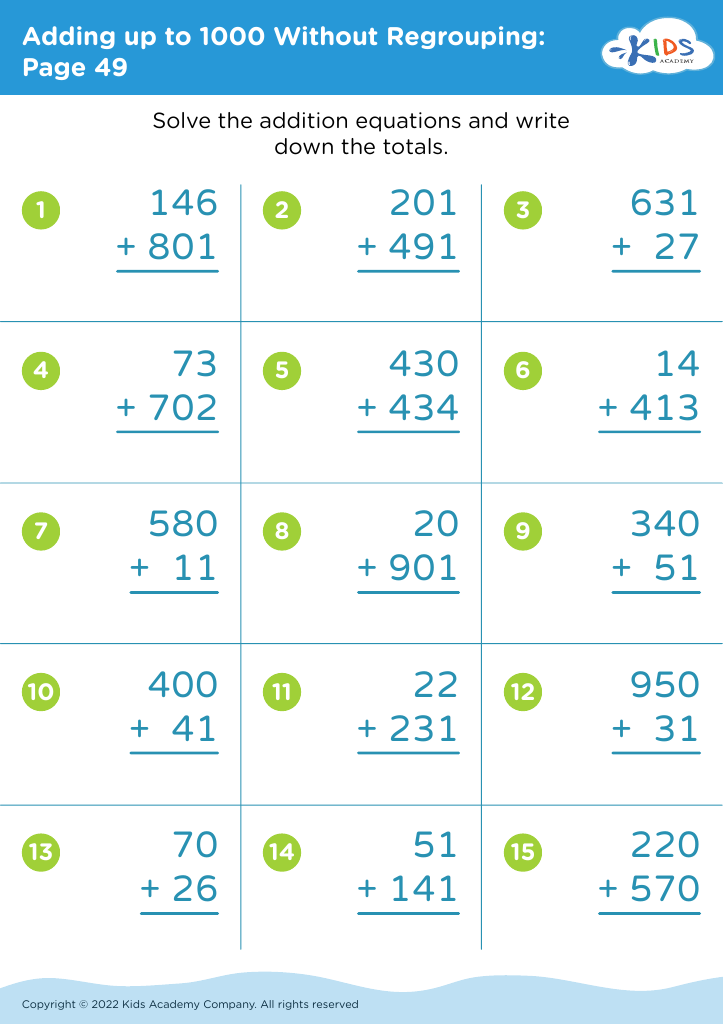
    Adding up to 1000 Without Regrouping: Page 49
    Adding up to 1000 Without Regrouping: Page 49
    Adding up to 1000 Without Regrouping: Page 49
    Worksheet
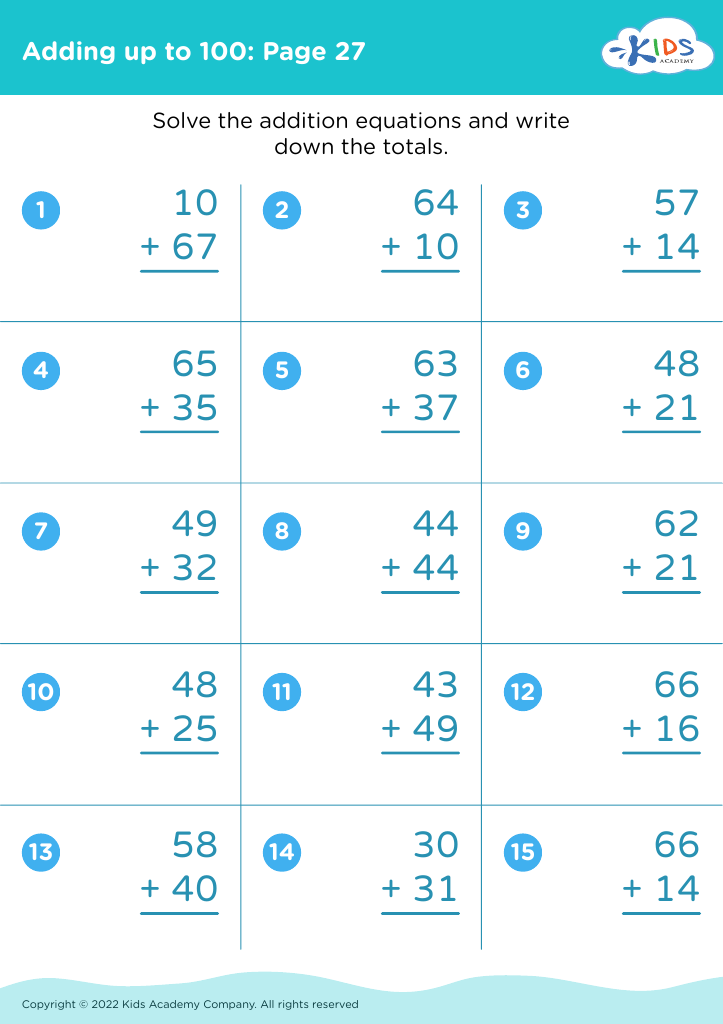
    Adding up to 100: Page 27
    Adding up to 100: Page 27

    Adding up to 100: Page 27

    Adding up to 100: Page 27
    Worksheet
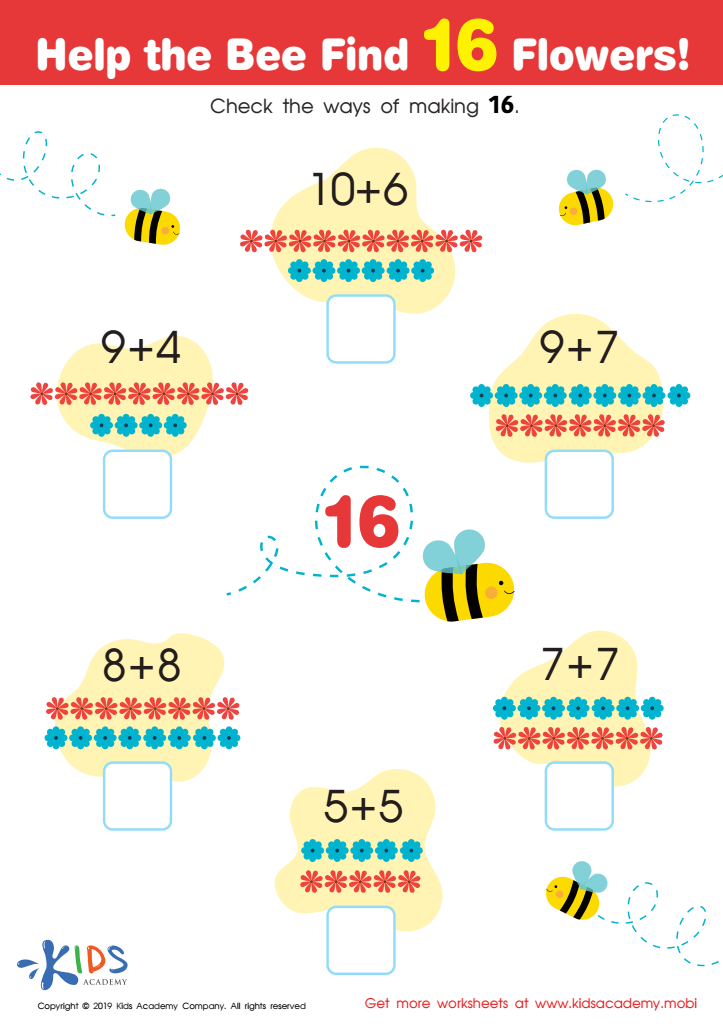
    Help the Bee Find 16 Flowers Worksheet
    Help the Bee Find 16 Flowers Worksheet
    Help the Bee Find 16 Flowers Worksheet
    Ask your students to count as high as they can. Show them that different numbers can equal the same figure with examples like 2+2=4 and 3+1=4. Ask for more examples, then help the bees find 16 flowers by checking the ways of making 16.
    Help the Bee Find 16 Flowers Worksheet
    Worksheet
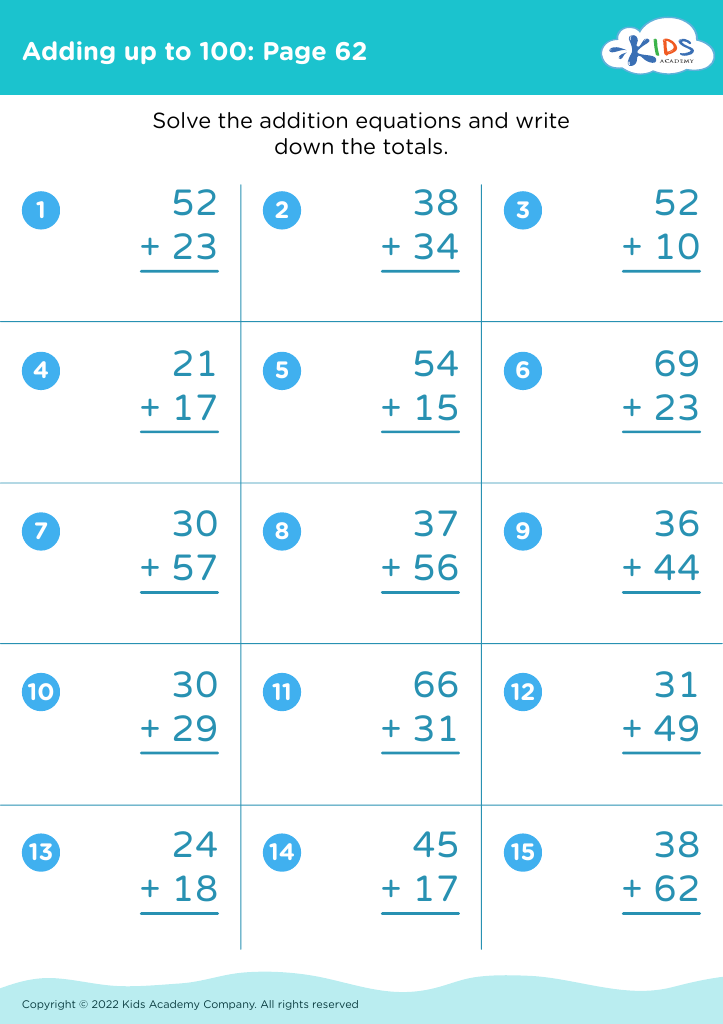
    Adding up to 100: Page 62
    Adding up to 100: Page 62

    Adding up to 100: Page 62

    Adding up to 100: Page 62
    Worksheet
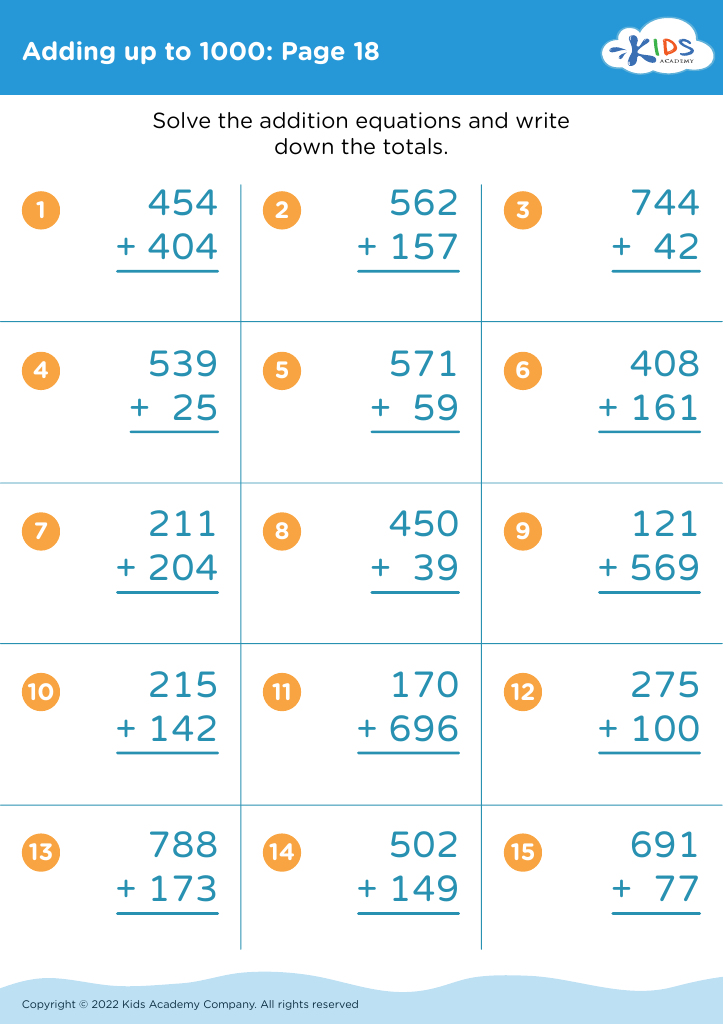
    Adding up to 1000: Page 18
    Adding up to 1000: Page 18

    Adding up to 1000: Page 18

    Adding up to 1000: Page 18
    Worksheet
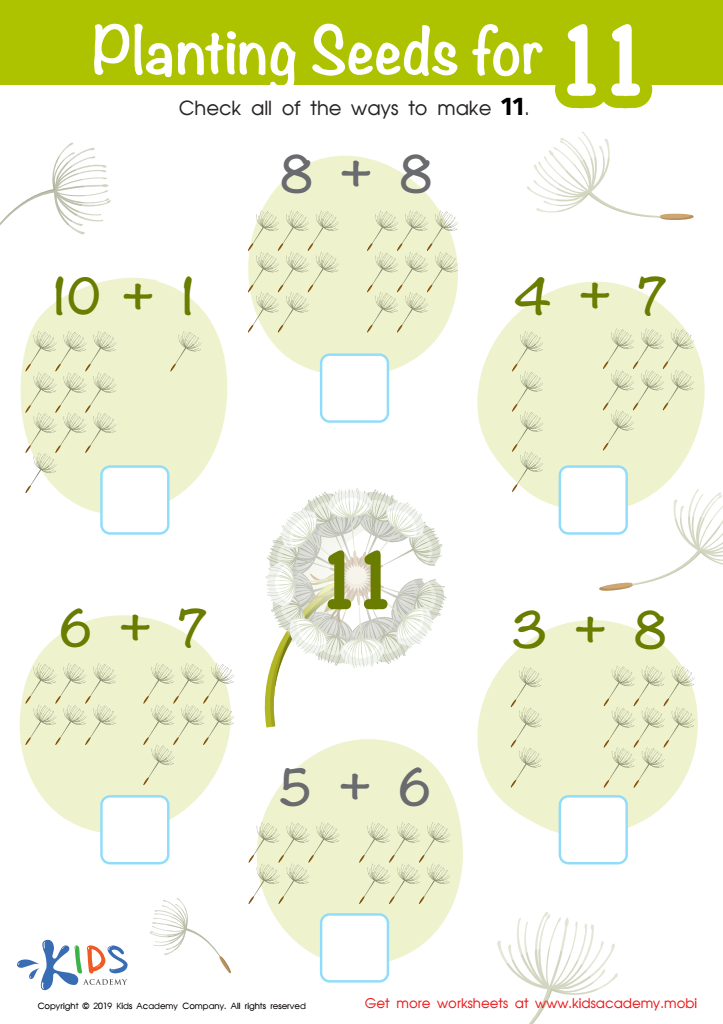
    Planting Seeds for 11 Worksheet
    Planting Seeds for 11 Worksheet

    Planting Seeds for 11 Worksheet

    Before starting, ask your students to count as high as they can. Explain that different numbers can add up to the same total. Give examples like 2+2 =4 and 3+1 =4. Ask if they can think of other examples. Then have them work through the equations in the printout and circle all that add up to 11.
    Planting Seeds for 11 Worksheet
    Worksheet
    Addition Robot Sorter Worksheet
    Addition Robot Sorter Worksheet
    Addition Robot Sorter Worksheet
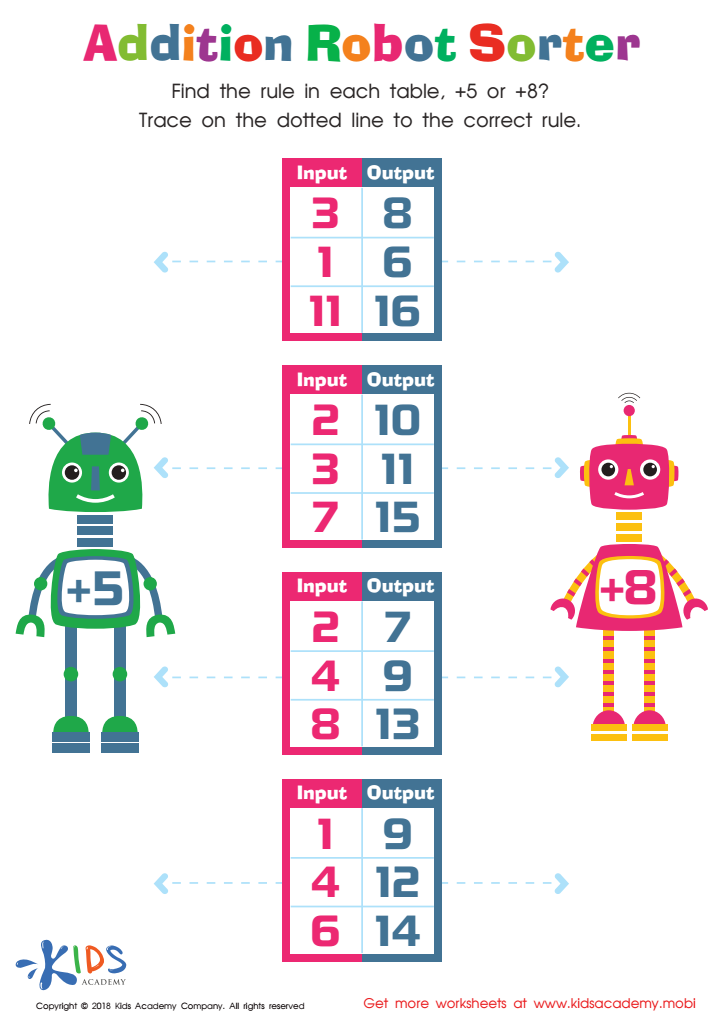
    This worksheet helps your child understand addition. Have them trace the dotted lines to the correct equations: +8 and +5. It's a great way to aid their mathematical comprehension and get them comfortable with adding equations.
    Addition Robot Sorter Worksheet
    Worksheet
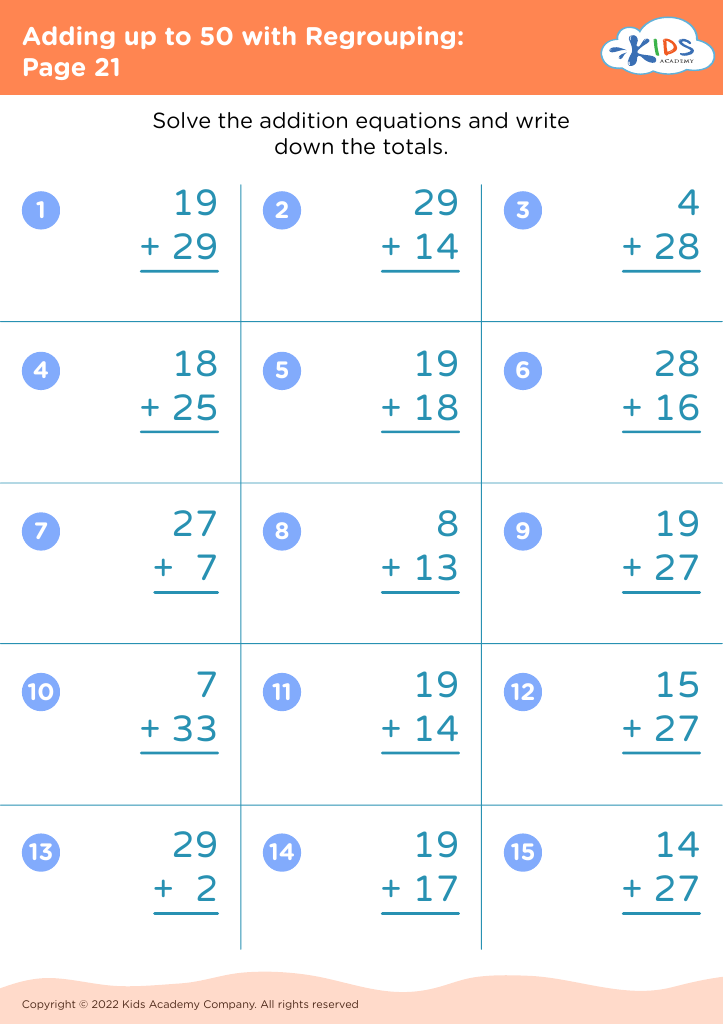
    Adding up to 50 with Regrouping: Page 21
    Adding up to 50 with Regrouping: Page 21
    Adding up to 50 with Regrouping: Page 21
    Worksheet
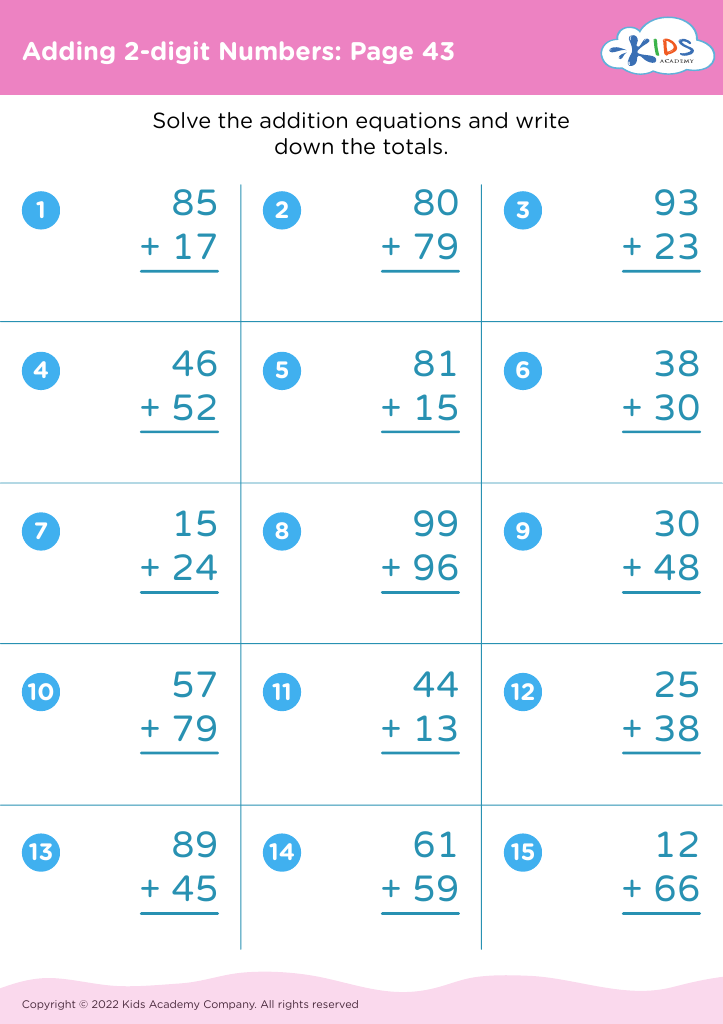
    Adding 2-digit Numbers: Page 43
    Adding 2-digit Numbers: Page 43

    Adding 2-digit Numbers: Page 43

    Adding 2-digit Numbers: Page 43
    Worksheet
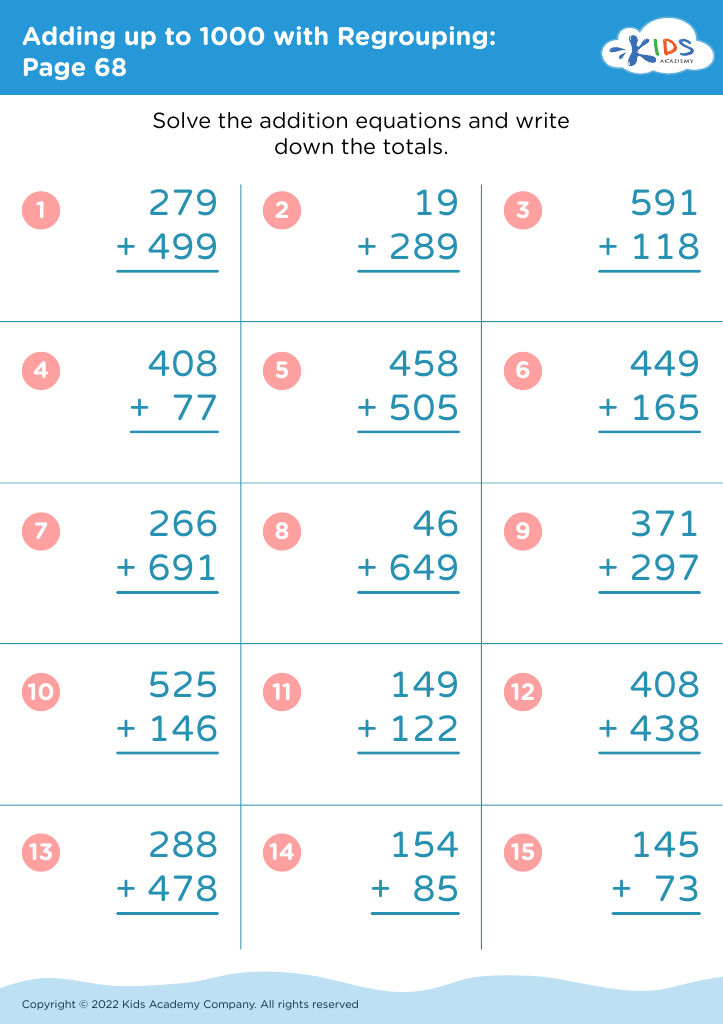
    Adding up to 1000 with Regrouping: Page 68
    Adding up to 1000 with Regrouping: Page 68
    Adding up to 1000 with Regrouping: Page 68
    Worksheet
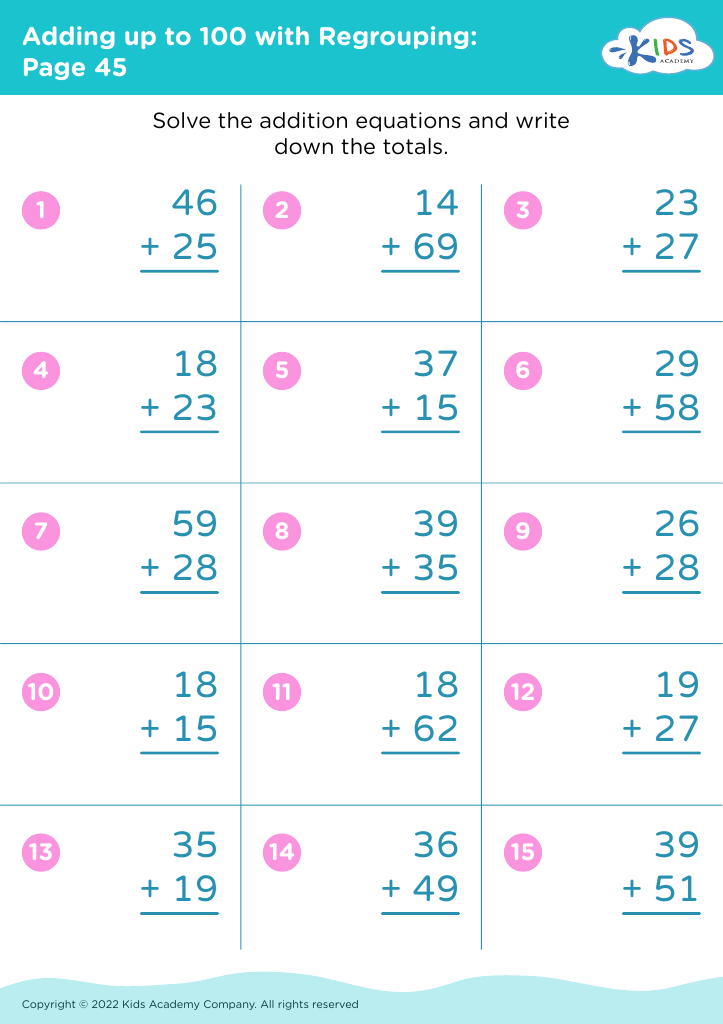
    Adding up to 100 with Regrouping: Page 45
    Adding up to 100 with Regrouping: Page 45
    Adding up to 100 with Regrouping: Page 45
    Worksheet
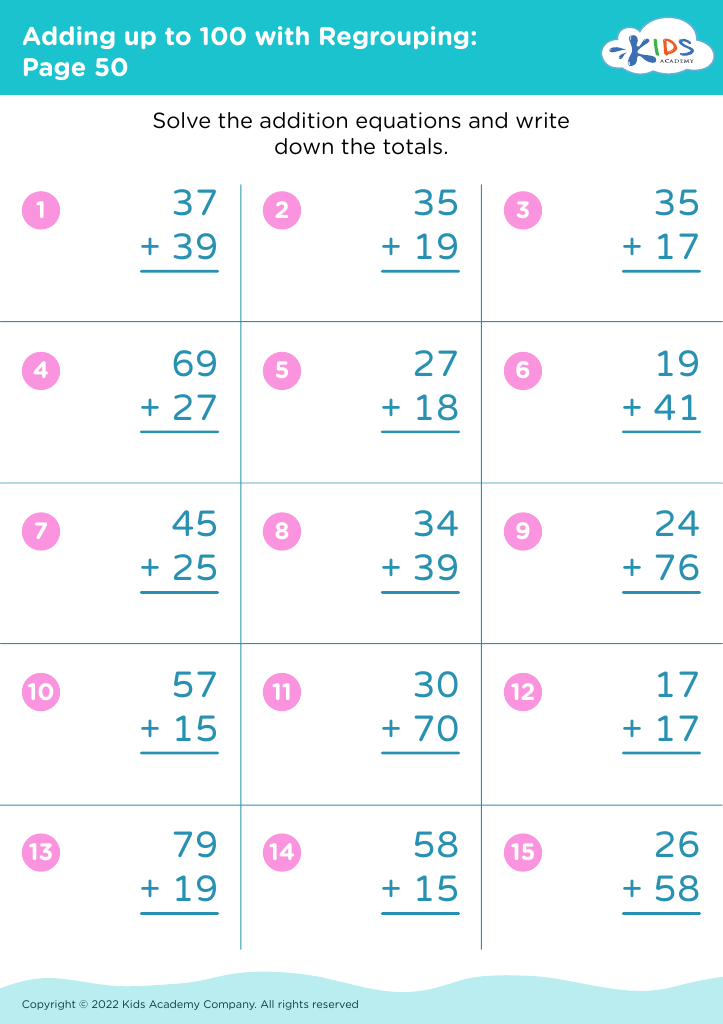
    Adding up to 100 with Regrouping: Page 50
    Adding up to 100 with Regrouping: Page 50
    Adding up to 100 with Regrouping: Page 50
    Worksheet
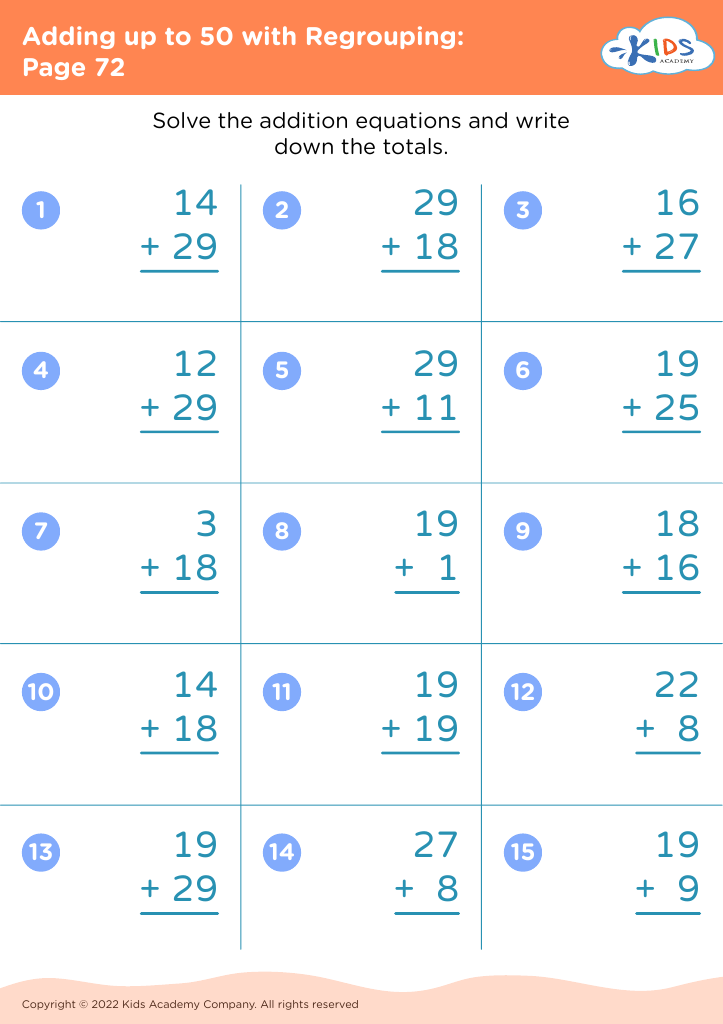
    Adding up to 50 with Regrouping: Page 72
    Adding up to 50 with Regrouping: Page 72
    Adding up to 50 with Regrouping: Page 72
    Worksheet
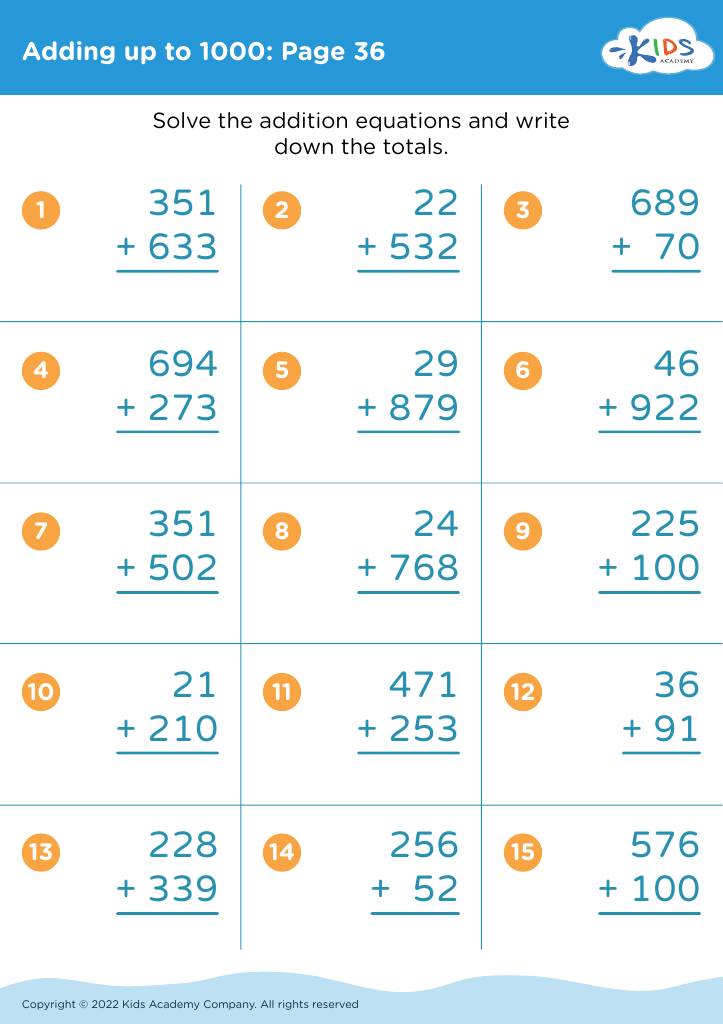
    Adding up to 1000: Page 36
    Adding up to 1000: Page 36

    Adding up to 1000: Page 36

    Adding up to 1000: Page 36
    Worksheet
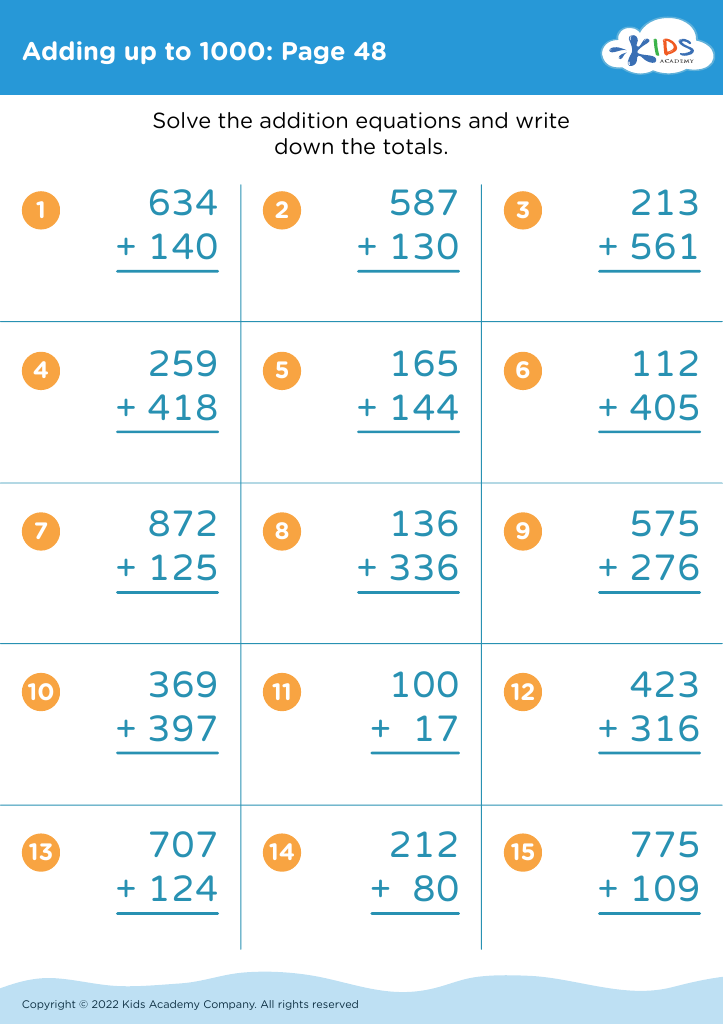
    Adding up to 1000: Page 48
    Adding up to 1000: Page 48

    Adding up to 1000: Page 48

    Adding up to 1000: Page 48
    Worksheet


    Fine motor skills are integral for children ages 6-8, as they underpin foundational learning in mathematics, particularly in addition and subtraction. These skills involve the coordination of small muscles in the hands and fingers, essential for writing, drawing, and manipulating objects, which directly impacts a child's ability to engage with mathematical concepts.

    As children learn addition and subtraction, they often use manipulatives like blocks or counters. Effective handling of these tools necessitates developed fine motor skills. Furthermore, strong fine motor proficiency supports clearer writing, which is vital when solving math problems on paper and communicating solutions.

    Teachers and parents should care about honing fine motor skills because such development can enhance a child’s confidence and enjoyment in learning. Kids who struggle with motor skills may become frustrated with arithmetic, leading to anxiety or aversion towards math altogether. By incorporating fun activities that promote fine motor growth, such as crafting or using finger paints, adults can create a more positive learning environment. Ultimately, fostering fine motor skills will not only aid academic success in addition and subtraction, but will also lay a foundation for more complex mathematical concepts in the future.