Identifying patterns Addition & Subtraction Worksheets for Ages 6-8
3 filtered results
-
From - To
Discover our engaging "Identifying Patterns: Addition & Subtraction Worksheets" designed for children ages 6-8. These educational resources help young learners recognize and understand numerical patterns through fun, interactive activities. Enhancing critical thinking and problem-solving skills, the worksheets provide a solid foundation in basic arithmetic operations. Perfect for both classroom and at-home learning, each worksheet is crafted to make math enjoyable and accessible. Boost your child's confidence in addition and subtraction while fostering a lifelong love for math. Visit our site to explore these versatile learning tools that support academic growth in a creative and supportive environment.
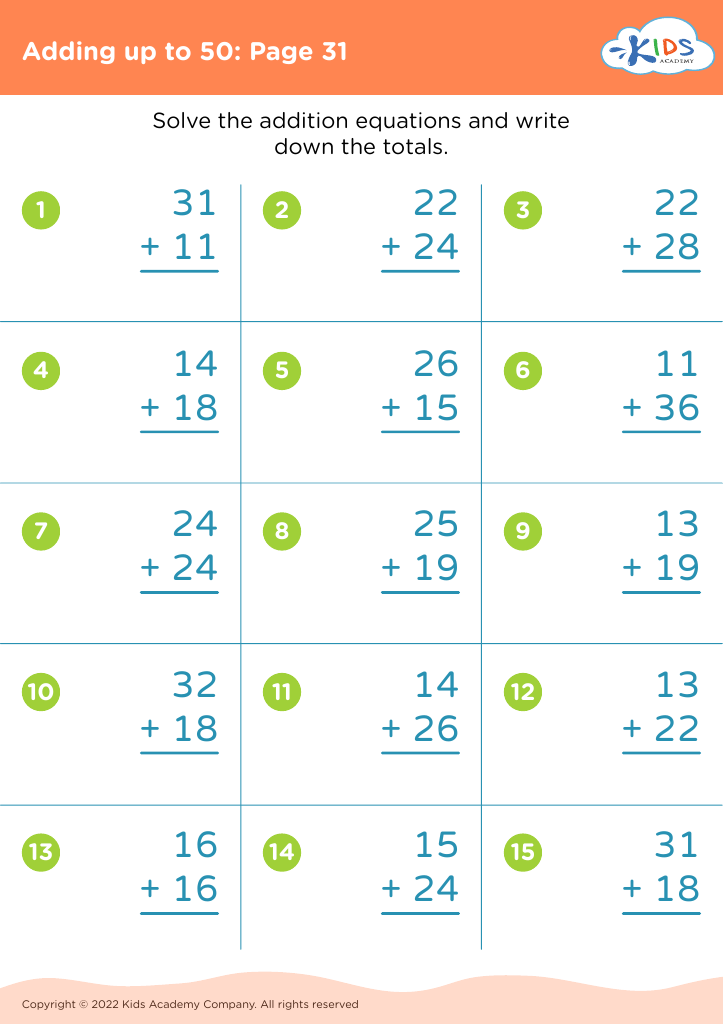
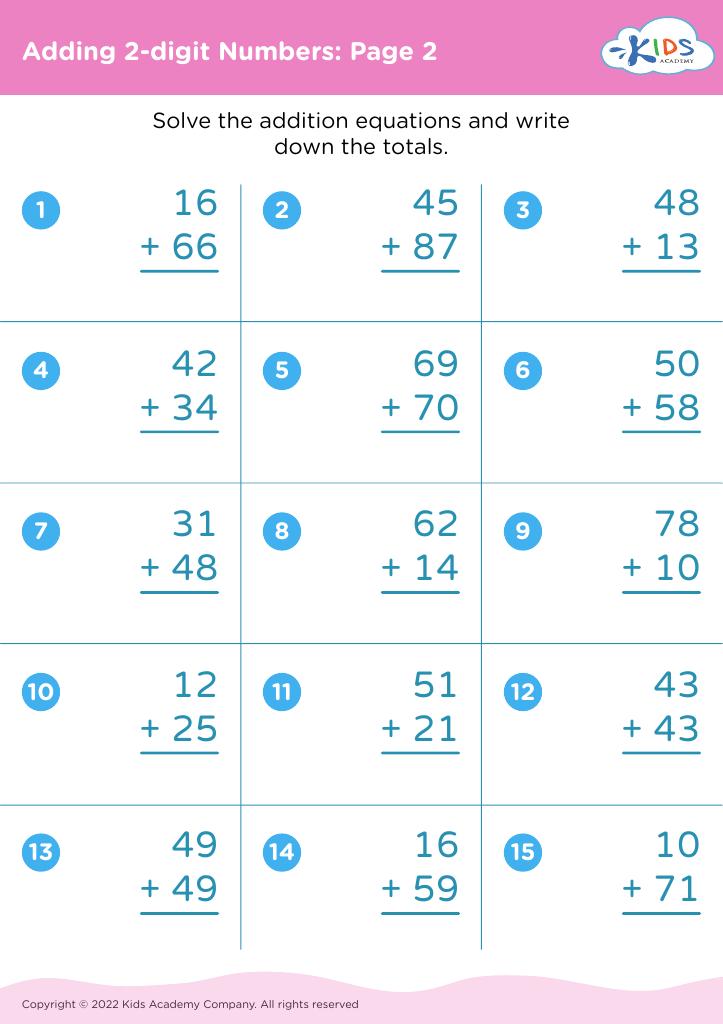
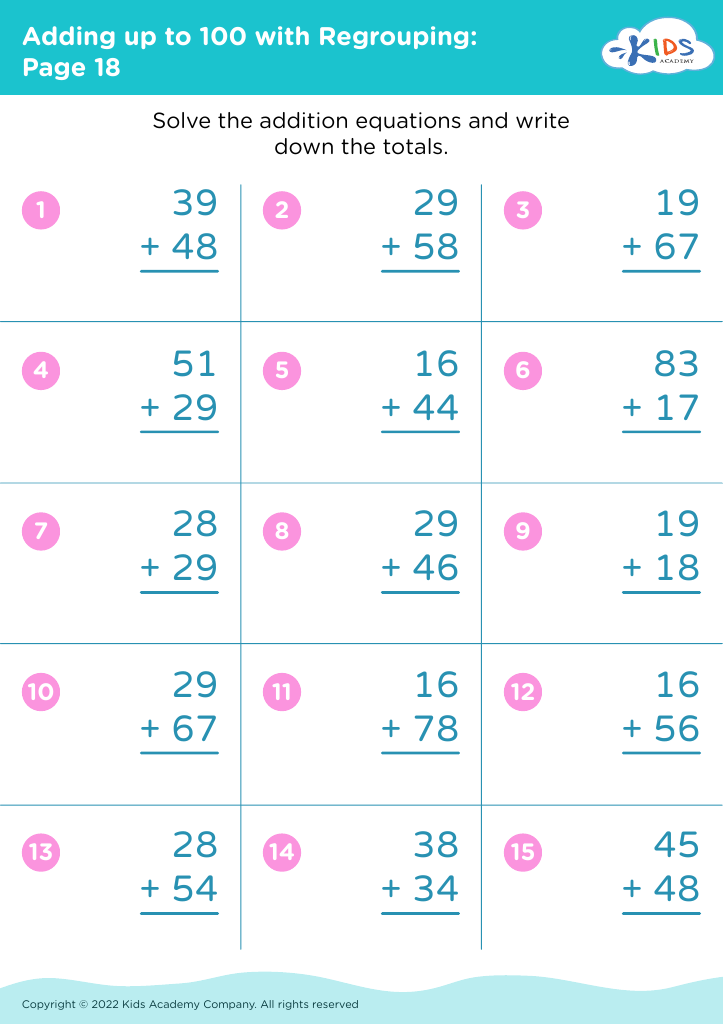








Identifying patterns in addition and subtraction is fundamental for children aged 6-8, as it builds a crucial foundation for their mathematical understanding and problem-solving skills. At this developmental stage, young minds are highly receptive to recognizing regularities and making connections, which are essential components of logical thinking.
When children learn to recognize patterns, they develop the ability to predict outcomes and identify relationships between numbers. This skill transcends basic arithmetic, enabling them to understand more complex mathematical concepts in the future. Recognizing patterns also fosters critical thinking and enhances cognitive abilities, making learning more intuitive and less memorization-dependent.
For parents and teachers, encouraging this skill means creating a supportive learning environment that prioritizes hands-on activities and interactive lessons. Simple pattern-based exercises in addition and subtraction help children visualize and internalize mathematical concepts, boosting their confidence and motivation.
Moreover, early proficiency in identifying patterns contributes to better academic performance, not just in mathematics but across various subjects. Effective pattern recognition aids in reading comprehension, spelling, and logical reasoning, thus supporting holistic educational development.
In conclusion, focusing on pattern identification in early addition and subtraction sets the stage for a child’s long-term success in mathematics and beyond, making it a significant area of emphasis for educators and parents alike.








