Improving math skills Addition & Subtraction Worksheets for Ages 6-8 - Page 2
32 filtered results
-
From - To
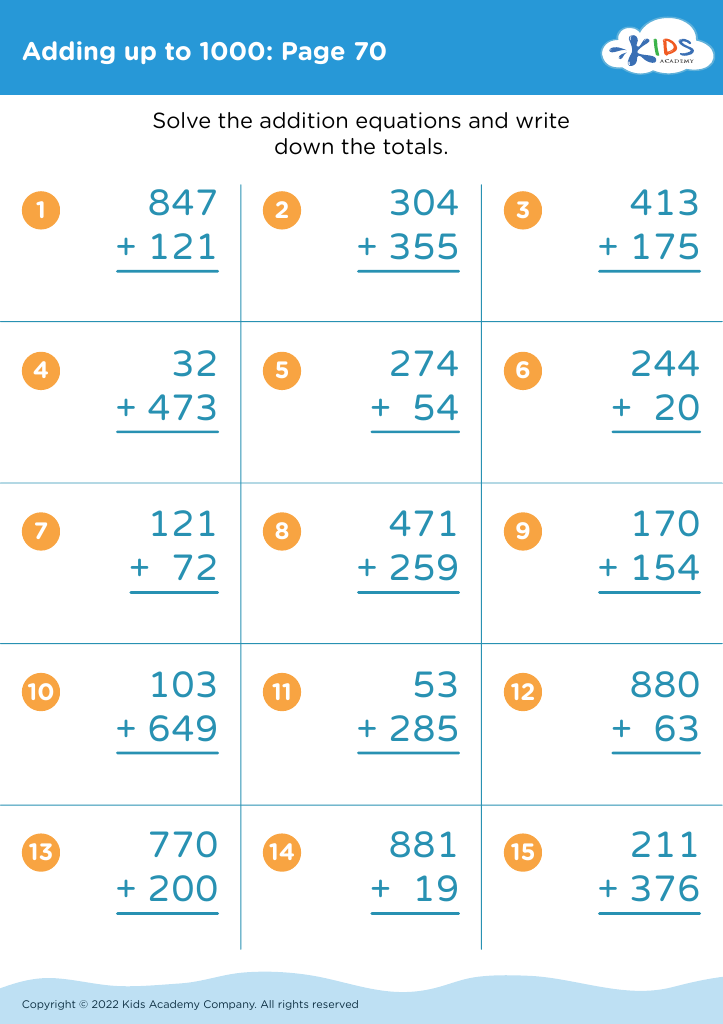
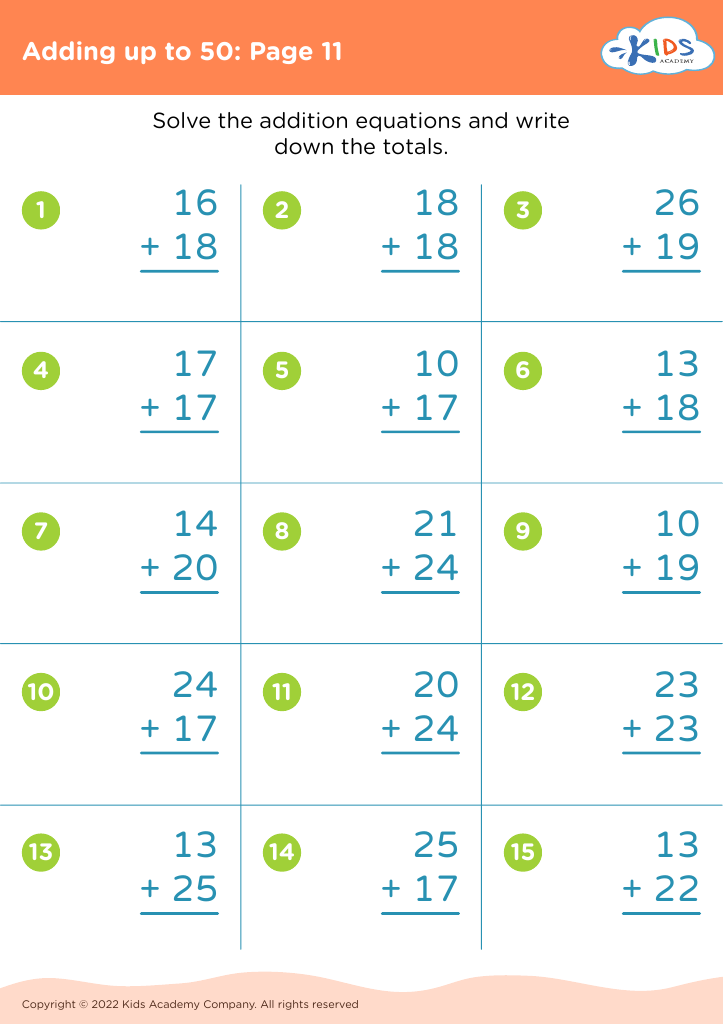
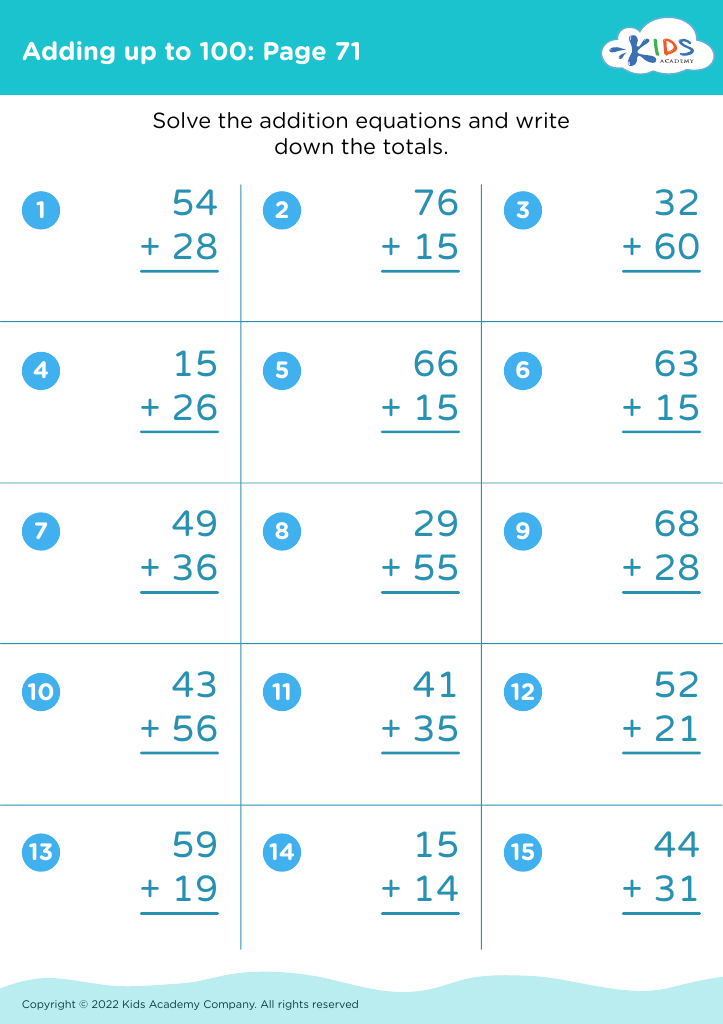
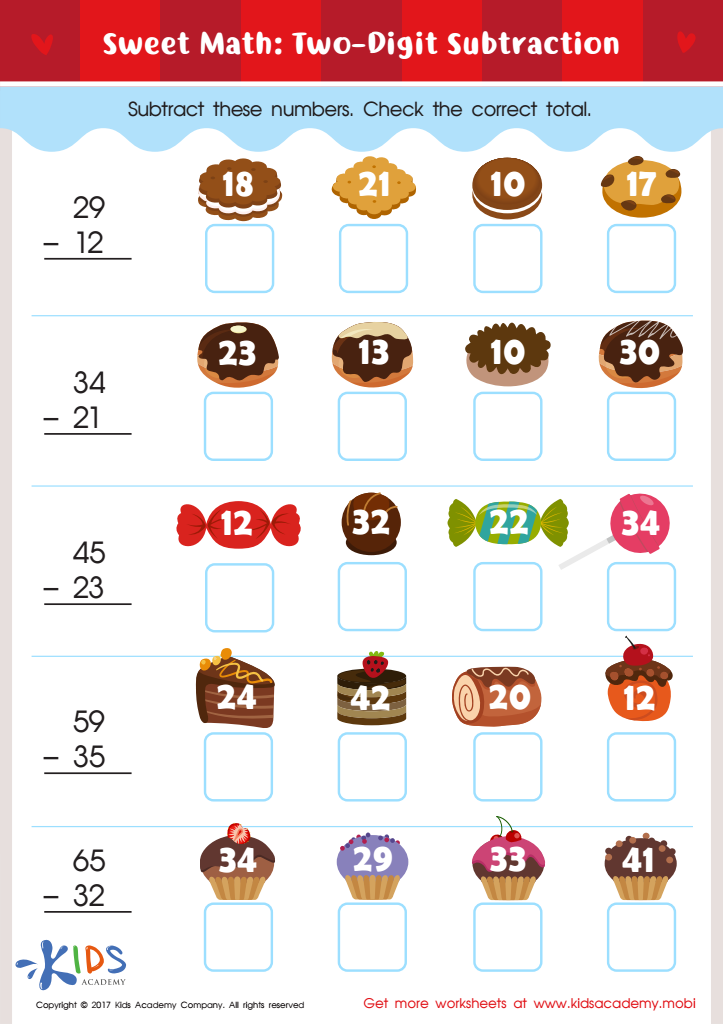
Two Digit Subtraction Worksheet
 Assign to My Students
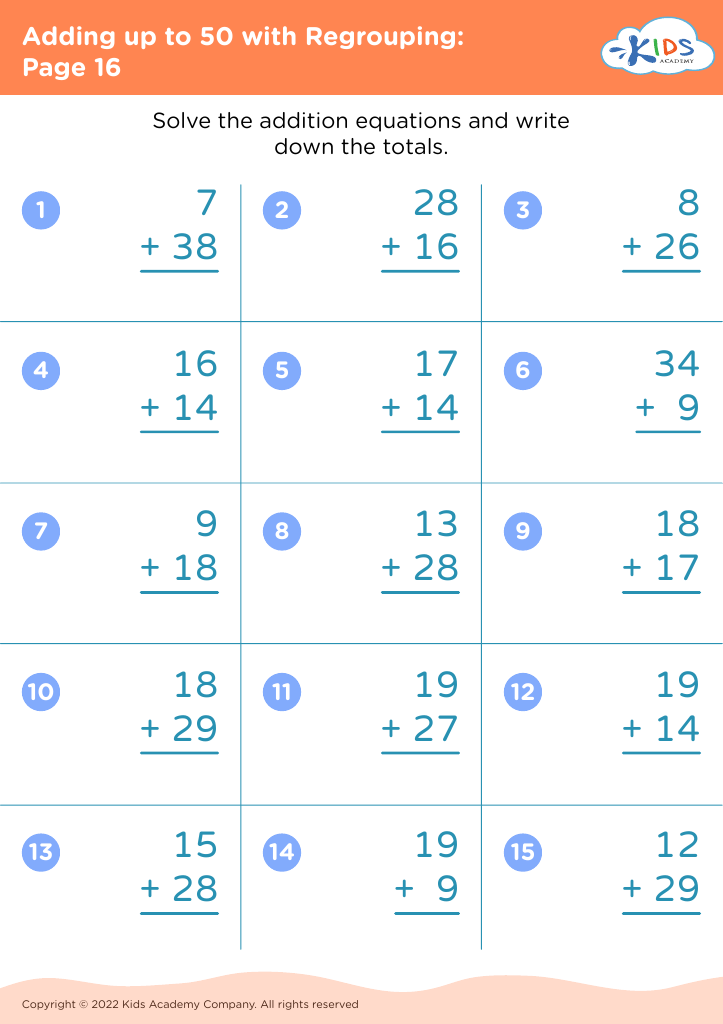
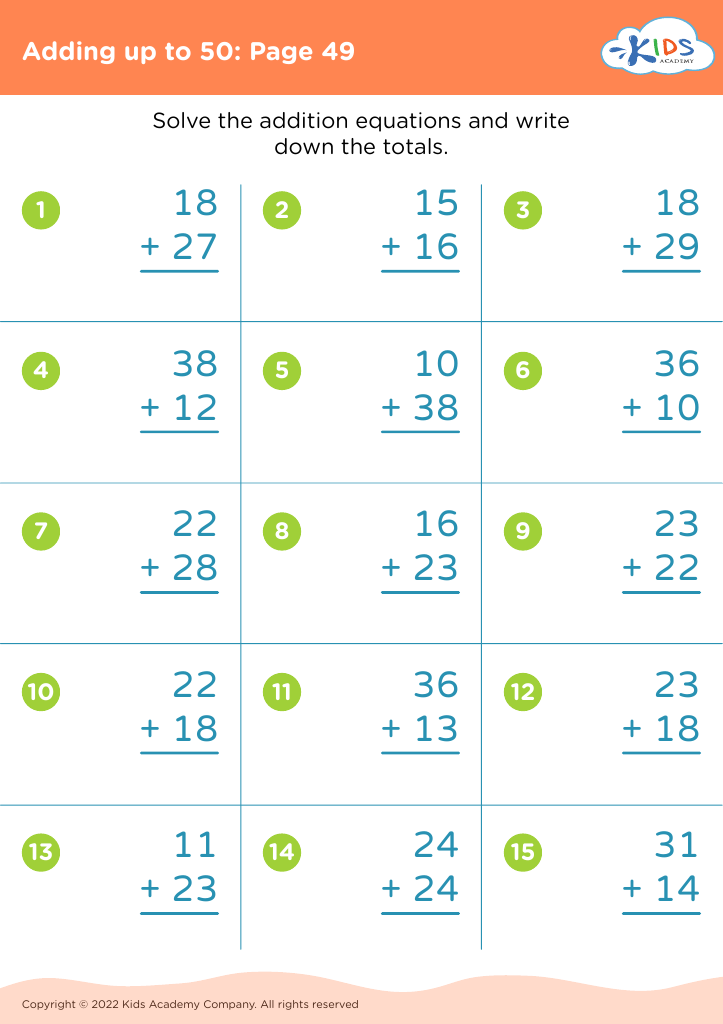
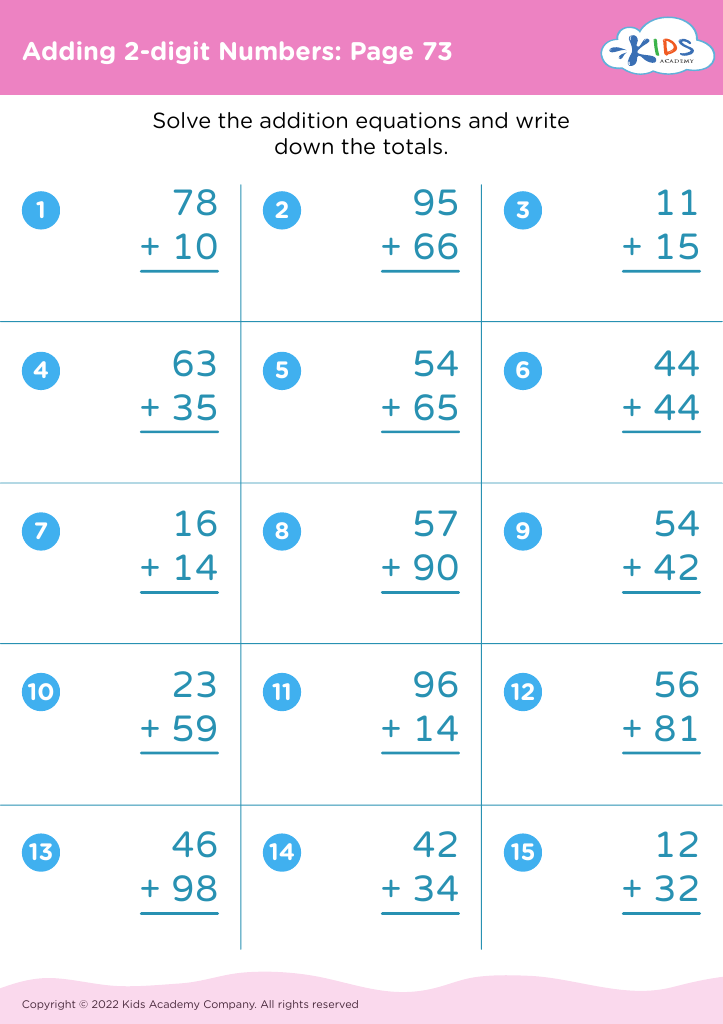
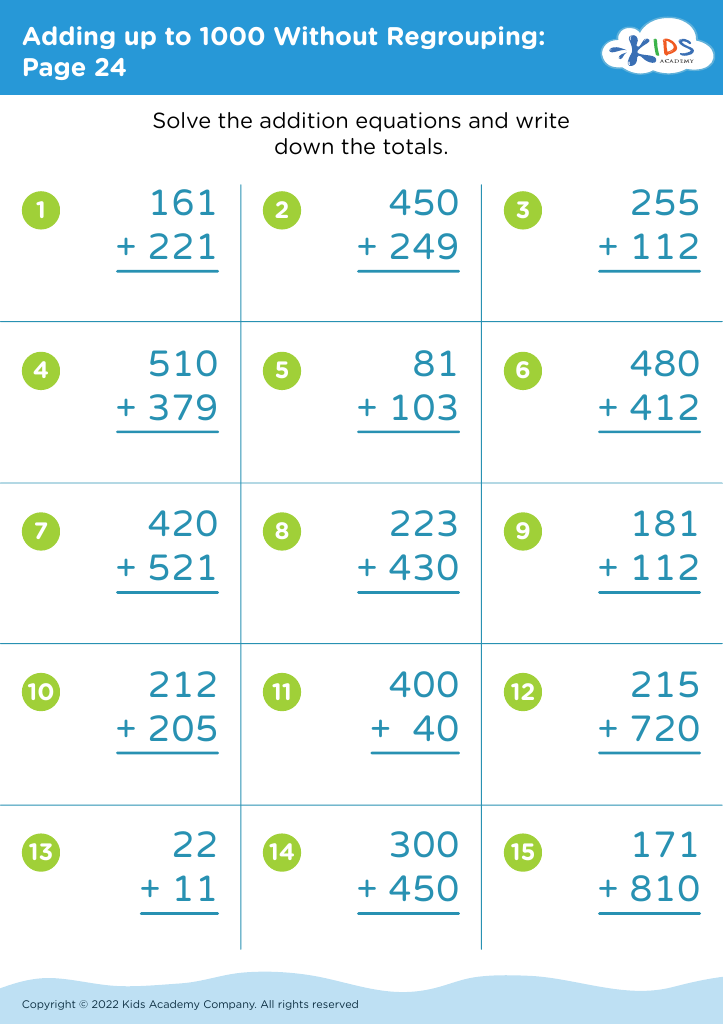








Improving math skills in addition and subtraction for children ages 6-8 is crucial because these are foundational operations vital for later mathematical learning. At this early age, understanding basic arithmetic sets the groundwork for more advanced topics, such as multiplication, division, and problem-solving, which they will encounter in higher grades.
These skills also foster logical thinking and problem-solving abilities, essential cognitive skills for overall academic success. Learning to add and subtract enhances a child's number sense, allowing them to comprehend quantities, make estimations, and understand the relationship between numbers. Moreover, mastering these skills builds confidence and reduces math anxiety, encouraging a positive attitude toward learning mathematics.
Incorporating addition and subtraction into everyday activities helps children see the relevance of math in real life. Whether it's counting snacks, calculating change, or understanding scores in games, practical applications make learning math both fun and meaningful. Teachers and parents play a critical role in creating an engaging and supportive environment. Consistent practice, encouragement, and the use of interactive tools and games can make math enjoyable.
Ultimately, strong addition and subtraction skills are not just school requirements; they are essential life skills that support academic achievement and daily activities, helping young learners grow into confident and competent individuals.








