Learn addition Addition & Subtraction Worksheets for Ages 6-8
3 filtered results
-
From - To
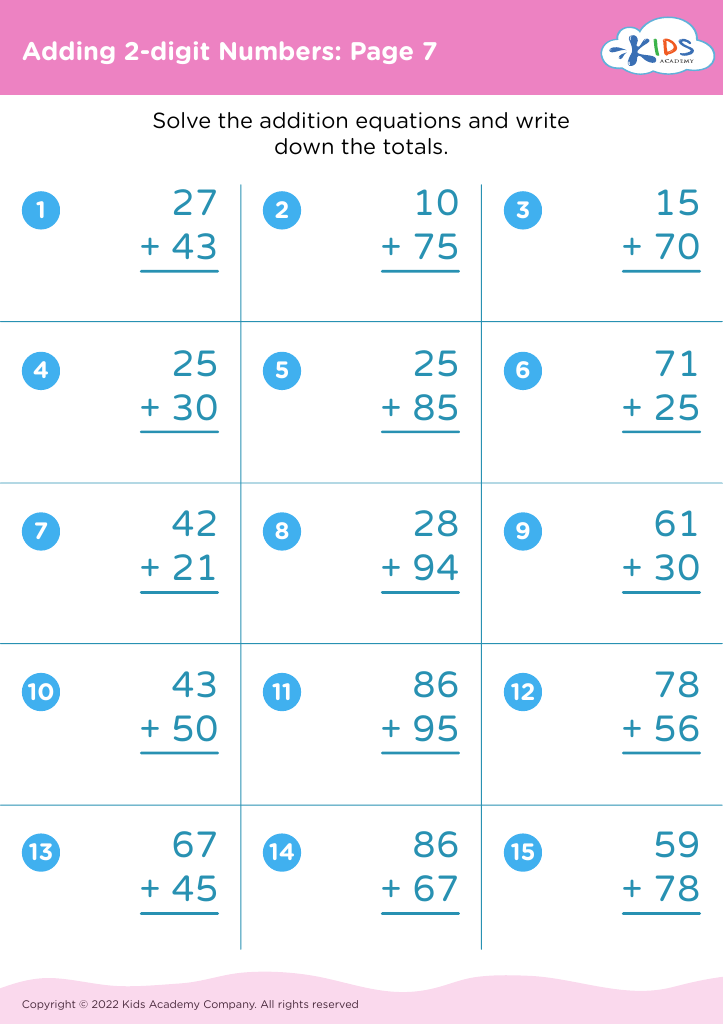
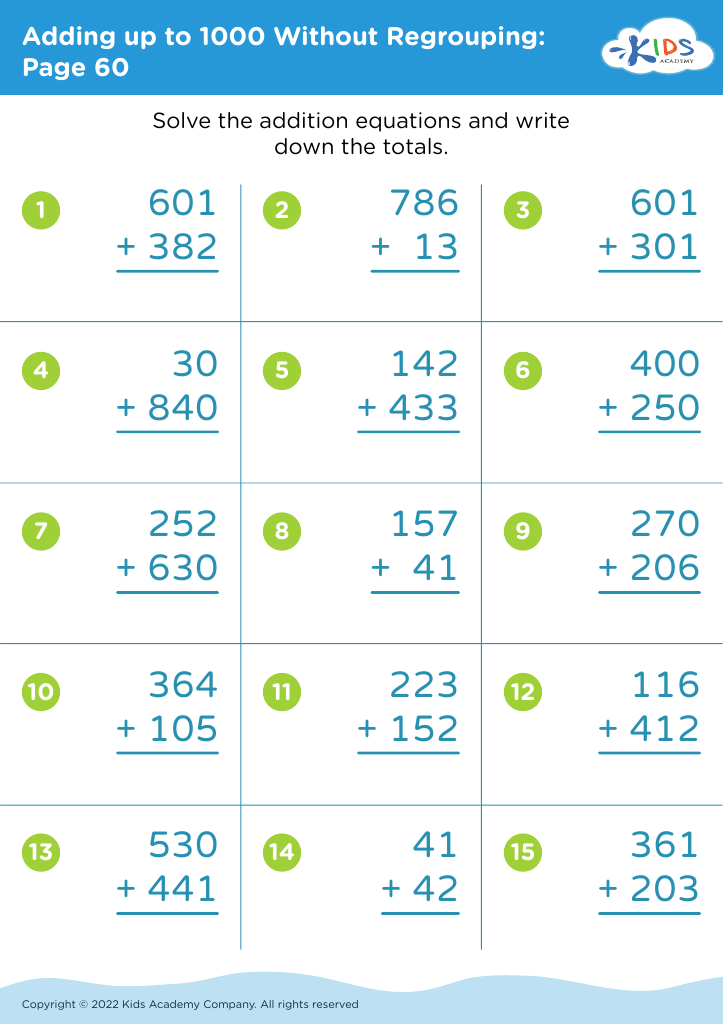
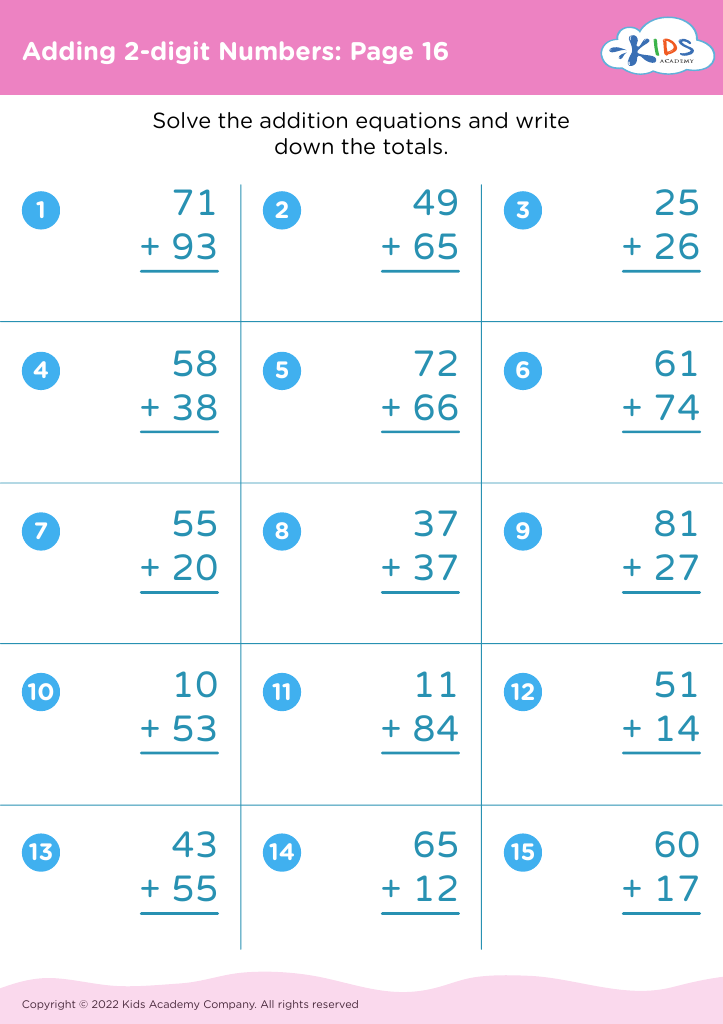
Discover our engaging "Learn Addition & Subtraction Worksheets for Ages 6-8," designed to make math fun and interactive for young learners! These worksheets, created by educational experts, help children build strong foundational skills in addition and subtraction. Featuring colorful exercises and real-world examples, our worksheets enhance problem-solving abilities and boost confidence. Perfect for home or classroom use, they cater to various learning styles, ensuring every child can succeed. Prepare your child for math mastery with our age-appropriate, printable worksheets that make learning addition and subtraction an enjoyable adventure. Explore now and watch their math skills soar!








Understanding addition and subtraction at an early age sets a foundational stone for all future mathematics learning, making it crucial for parents and teachers to focus on these skills for children aged 6-8. At this stage, children are in what could be described as their 'math formative years,' where grasping these basic arithmetic operations enhances their problem-solving abilities and logical reasoning. Mastering addition and subtraction aids in everyday tasks, such as understanding money, telling time, and even recognizing patterns.
Moreover, early proficiency in addition and subtraction not only boosts academic self-confidence but also ensures a smoother transition to more complex mathematical concepts like multiplication, division, and fractions. It creates a positive ripple effect: children who feel competent at math from early on are more likely to enjoy the subject and perform better in school and standardized tests.
From a developmental perspective, engaging with numbers improves concentration, memory, and attention to detail. It helps in developing mental math skills, enabling quicker and more efficient mathematical thinking. Parents and teachers play a pivotal role in nurturing these skills. Tailoring engaging activities and integrating real-life scenarios can make math enjoyable and relevant, fostering a lifelong appreciation and aptitude for the subject. Therefore, attending to addition and subtraction at this formative age is key to building numerate, capable, and confident learners.








