Learning number patterns Addition & Subtraction Worksheets for Ages 6-8
3 filtered results
-
From - To
Explore our engaging "Learning Number Patterns Addition & Subtraction Worksheets" designed specifically for children ages 6-8. These fun, interactive worksheets help young learners develop essential skills in number patterns while improving their addition and subtraction abilities. Each activity encourages critical thinking and problem-solving, allowing students to identify relationships between numbers and deepen their understanding of math concepts. With colorful graphics and age-appropriate exercises, these worksheets make learning enjoyable and effective. Perfect for classroom use or at-home practice, our resources are an excellent way for kids to build confidence in math and master foundational skills in a playful, engaging manner.
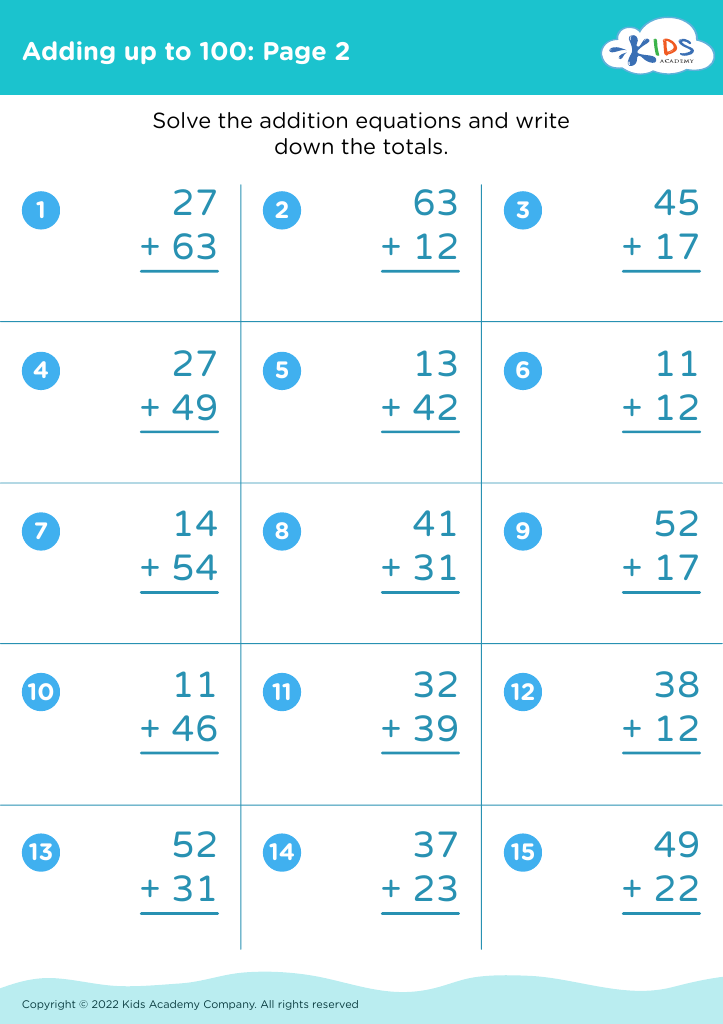
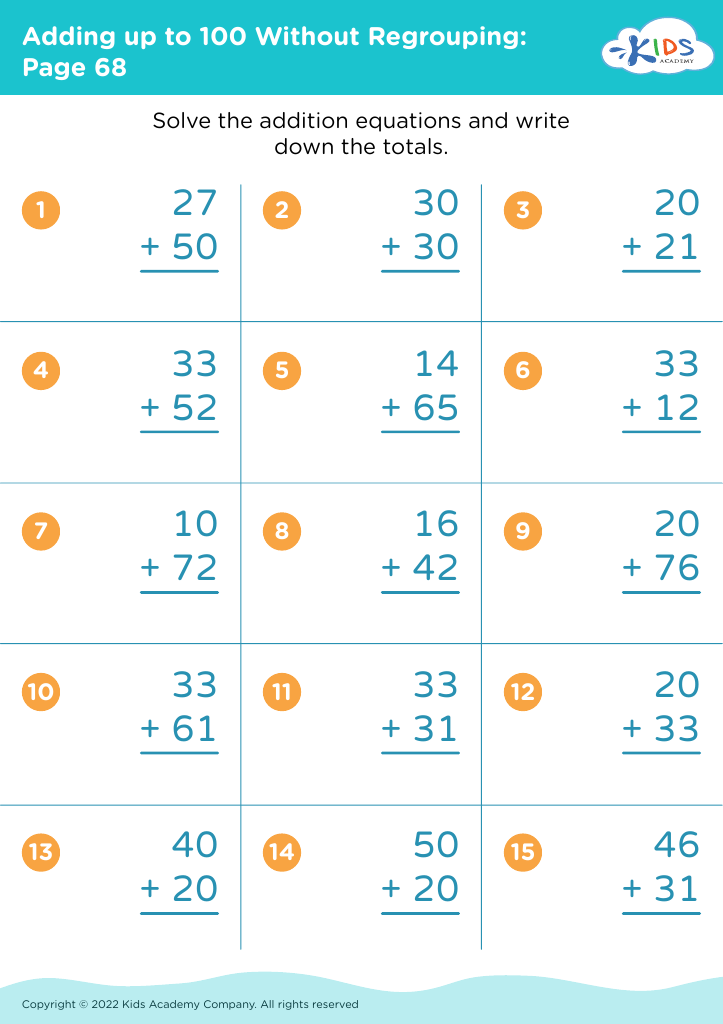
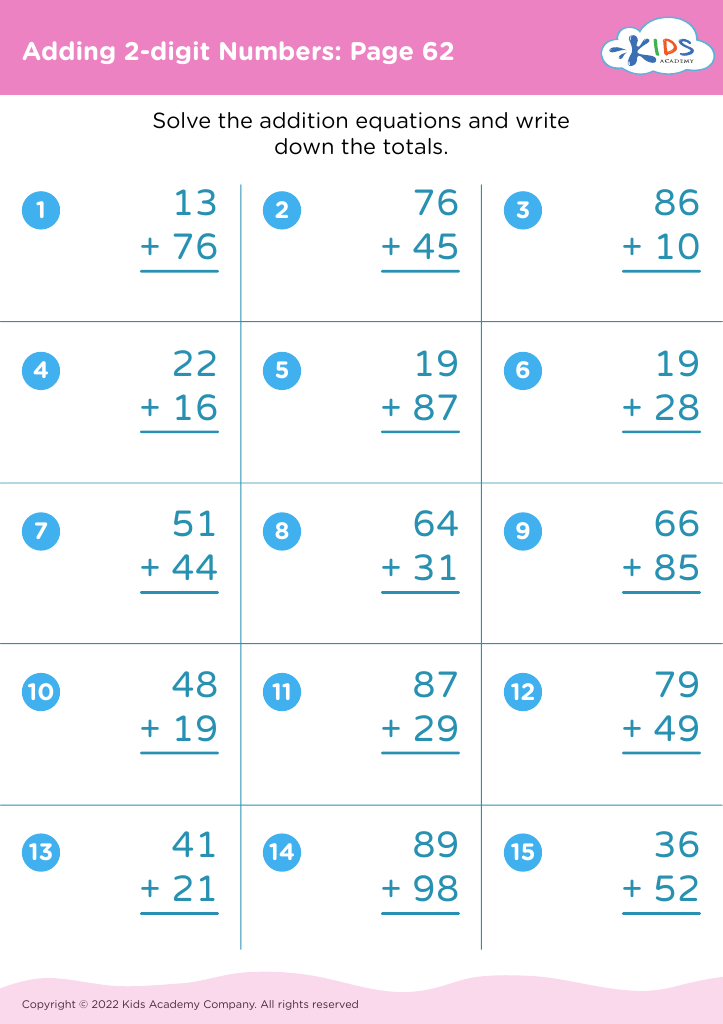








Understanding number patterns in addition and subtraction is crucial for children ages 6-8 as it forms the foundation of their mathematical development. At this age, children are transitioning from basic counting to more complex arithmetic, and recognizing patterns helps them grasp the relationships between numbers, fostering a deeper understanding of math concepts. When children learn to identify and utilize number patterns, they can perform calculations more efficiently, which instills confidence and reduces anxiety around math.
Moreover, number patterns are essential for developing problem-solving skills. Recognizing patterns enables children to predict outcomes and establish reliable processes, aiding in various mathematical operations, including multi-digit calculations and basic algebra in later years. For parents and teachers, introducing number patterns in a fun and engaging way, such as through games or storytelling, nurtures a love for learning. This positive association with math can lead to greater academic success.
By caring about and supporting children as they explore number patterns, parents and teachers equip them with valuable tools for future mathematics. Ultimately, fostering these skills not only enhances children's academic performance but also sets them on a path to become proficient, lifelong learners.








