Understanding division Addition & Subtraction Worksheets for Ages 6-8
5 filtered results
-
From - To
Explore our "Understanding Division, Addition & Subtraction" worksheets tailored for children ages 6-8! These engaging resources help young learners grasp essential math concepts, focusing on the crucial relationship between addition, subtraction, and division. Our carefully crafted worksheets feature vibrant illustrations, straightforward instructions, and interactive activities designed to make math fun and approachable. With a variety of exercises to spark curiosity, your child will build confidence in their problem-solving abilities. Whether practicing single-digit division or mastering operations, these worksheets provide the perfect foundation for a strong math understanding. Support your child's learning journey today!
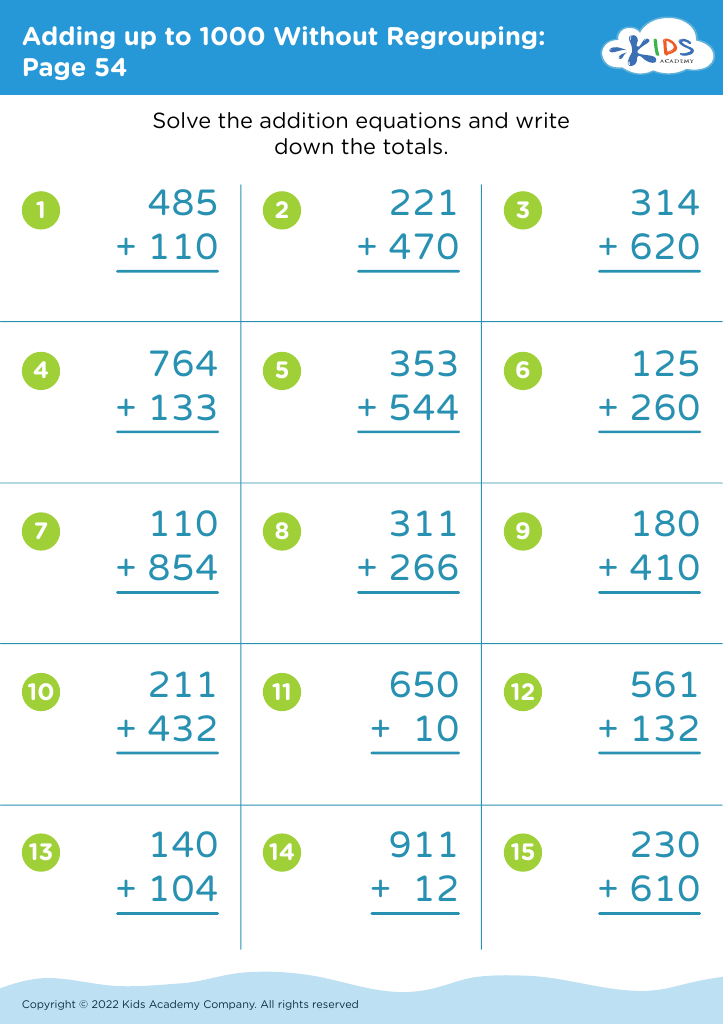
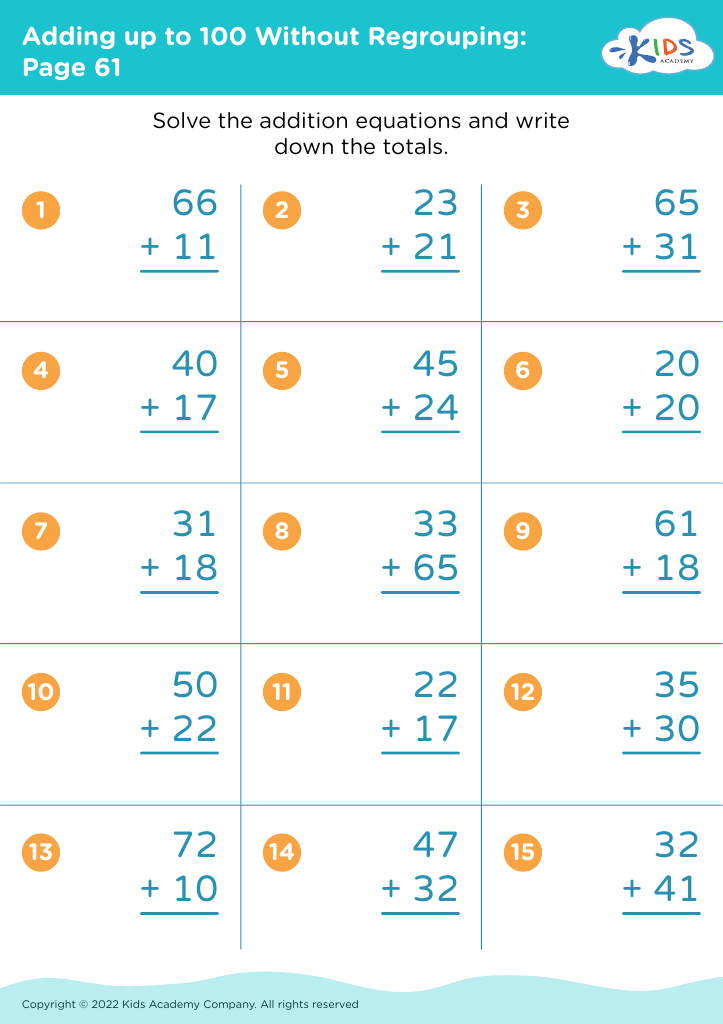
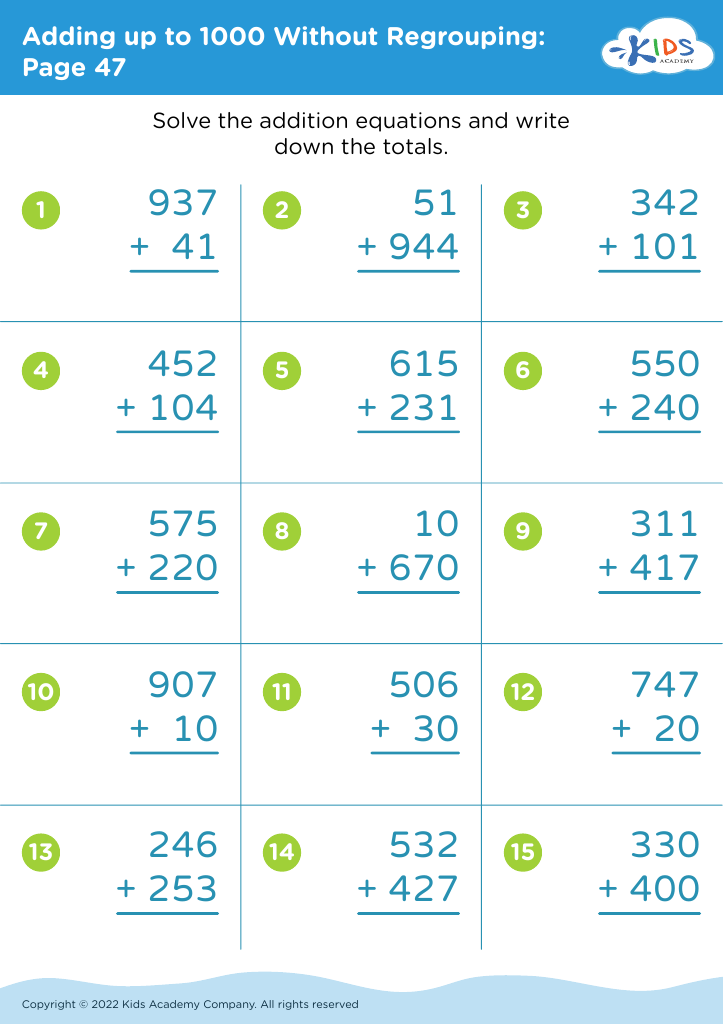
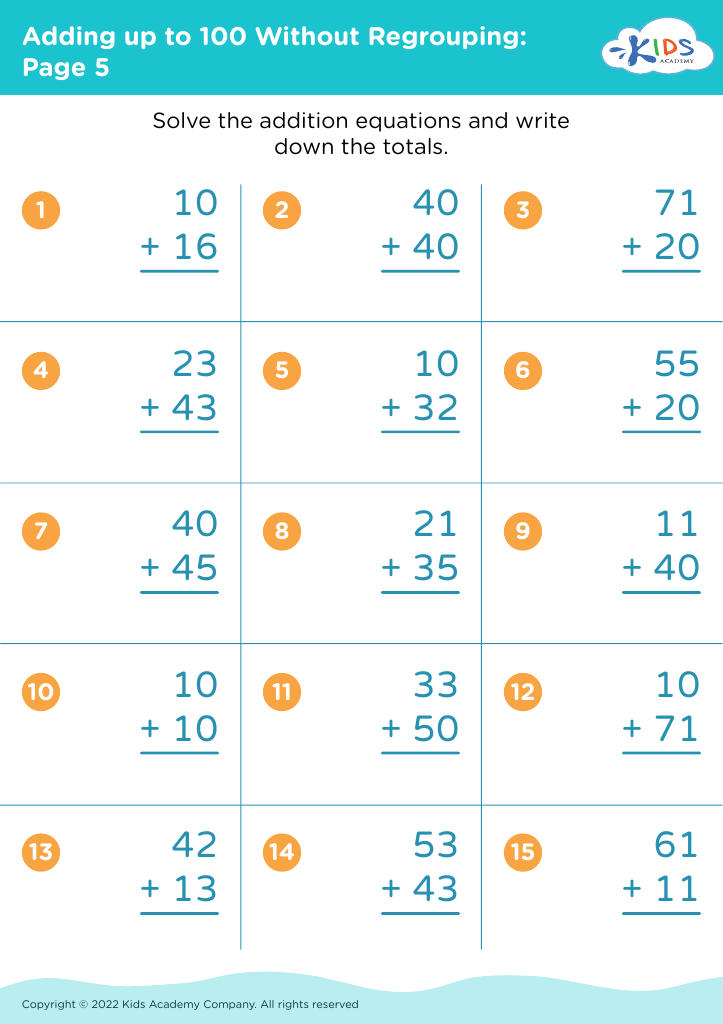
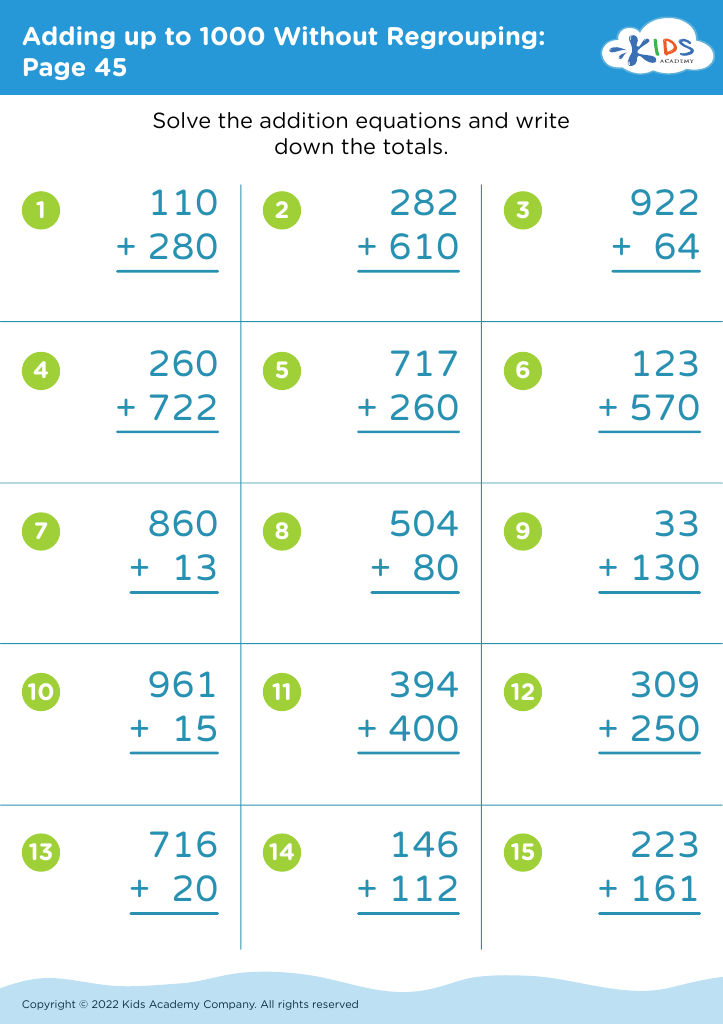








Understanding division, addition, and subtraction is crucial for children aged 6-8, as these foundational math skills serve as the building blocks for more complex mathematical concepts later on. Parents and teachers should care because a solid grasp of these operations lays the groundwork for a child’s academic success.
At this age, children start to encounter multi-digit numbers and simple word problems. Mastering addition and subtraction through various methods can enhance their problem-solving abilities and boost their confidence. Furthermore, learning division helps them comprehend the concept of grouping and sharing, which are integral to everyday situations.
Moreover, engaging with these operations fosters logical thinking, promotes better organizational skills, and encourages a deeper understanding of numerical relationships. When parents and teachers prioritize these skills, they not only provide academic support, but also promote a positive attitude towards math, combating math anxiety that can develop in later years.
Additionally, these skills are not isolated to math classes; they are applicable in life scenarios—be it managing finances, cooking, or planning activities. Therefore, nurturing a strong math foundation empowers children not just for school success, but also for lifelong practical application and critical thinking.








