Understanding equations Addition & Subtraction Worksheets for Ages 6-8
7 filtered results
-
From - To
Explore our "Understanding Equations: Addition & Subtraction Worksheets" designed for children ages 6-8! These engaging worksheets help young learners grasp the fundamentals of equations through fun and interactive activities. Students will strengthen their addition and subtraction skills by solving problems that lay the groundwork for more complex math concepts. Tailored specifically for early grade learners, our worksheets promote critical thinking and problem-solving abilities while aligning with educational standards. Perfect for both classroom and home use, these resources provide teachers and parents with the tools needed to foster a solid mathematical foundation. Unlock your child's math potential today!
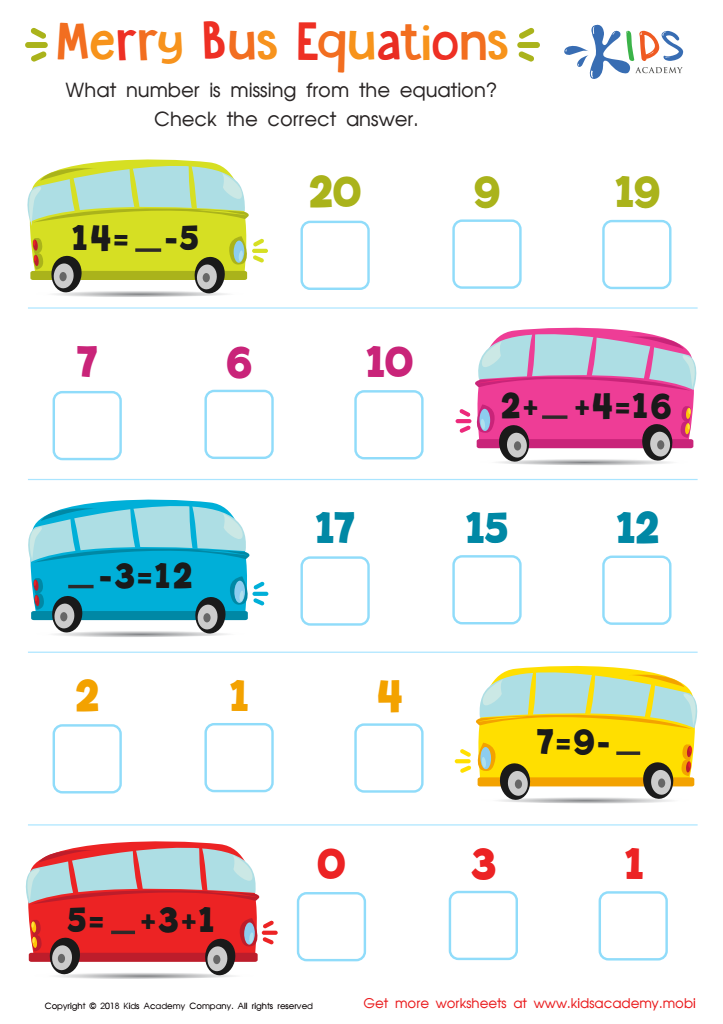
Merry Bus Equations Worksheet
 Assign to My Students
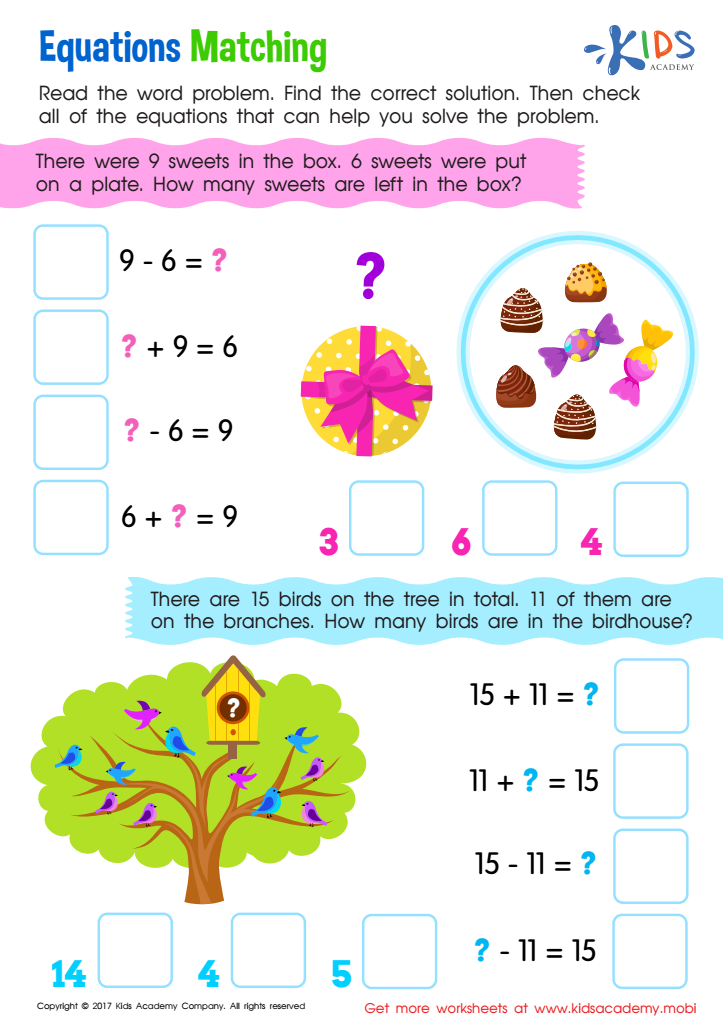
Equations Matching Word Problems Worksheet
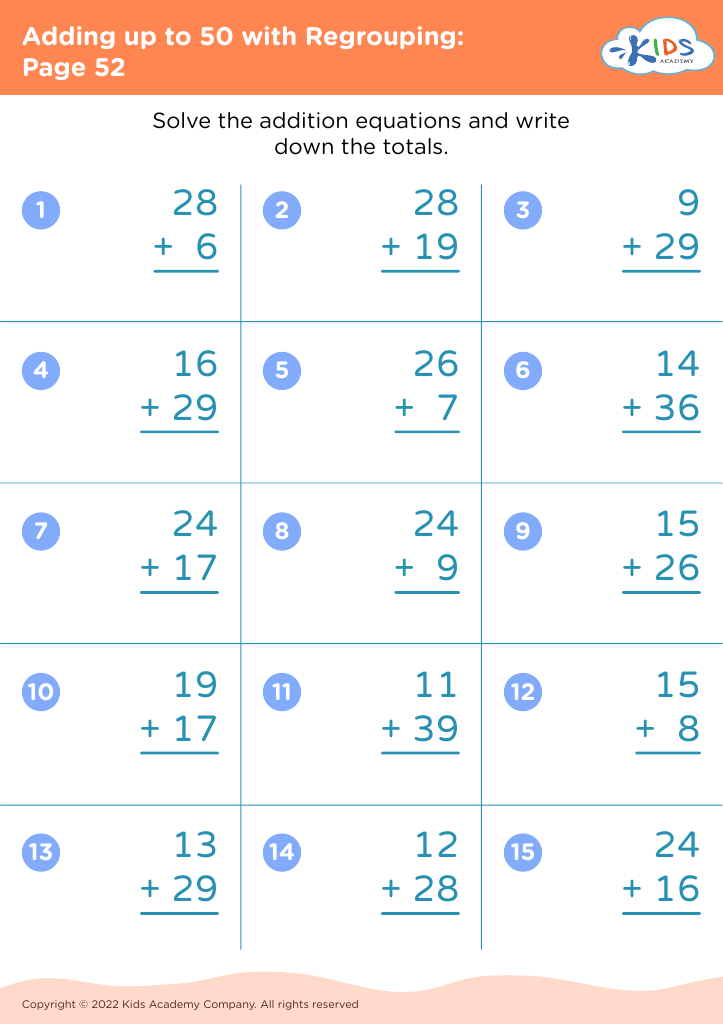
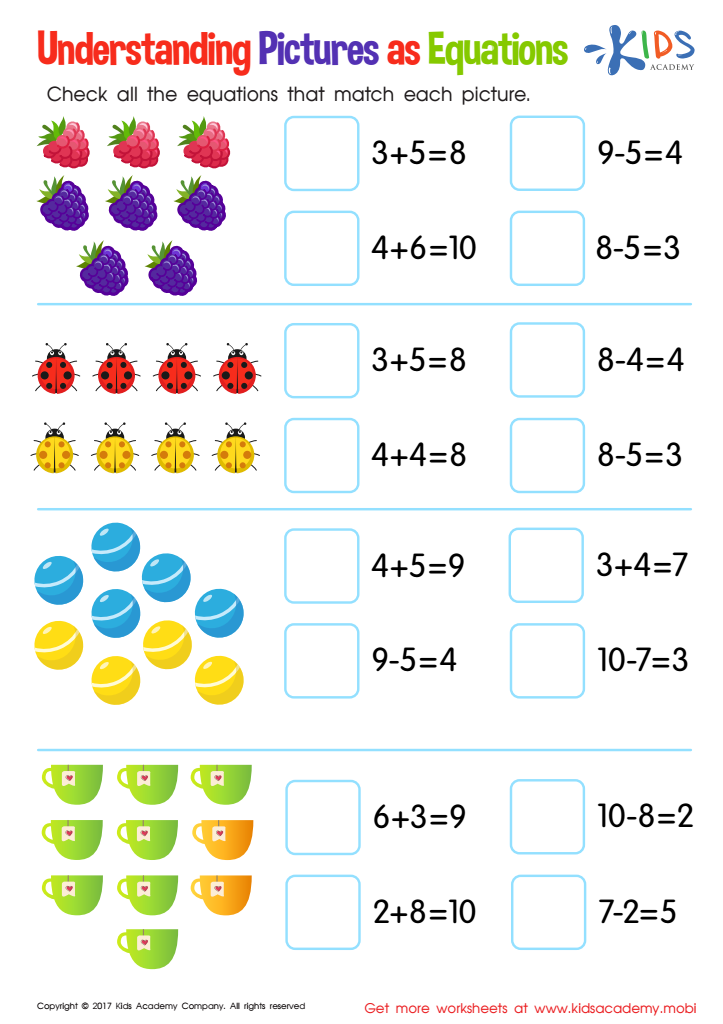
Understanding Pictures as Equations Worksheet
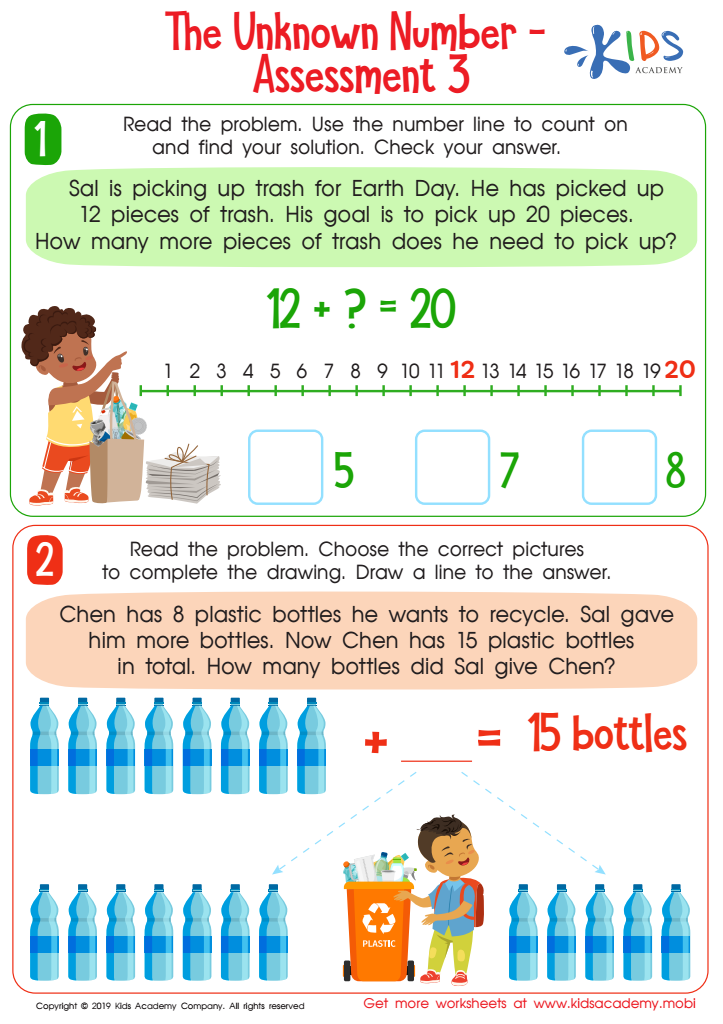
The Unknown Number - Assessment 3 Worksheet
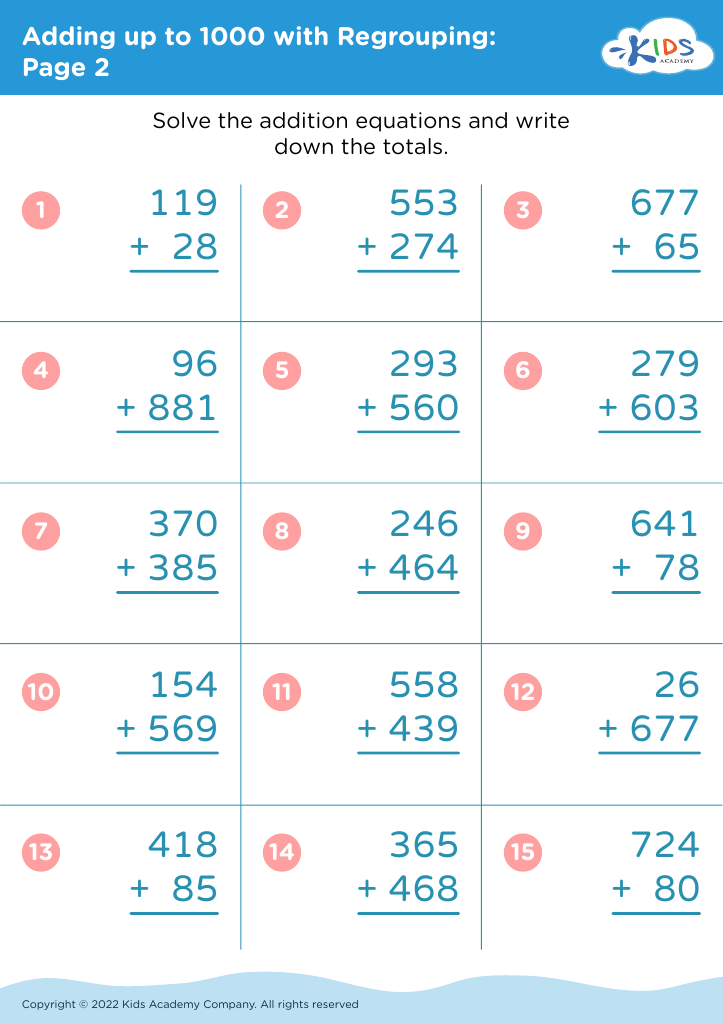
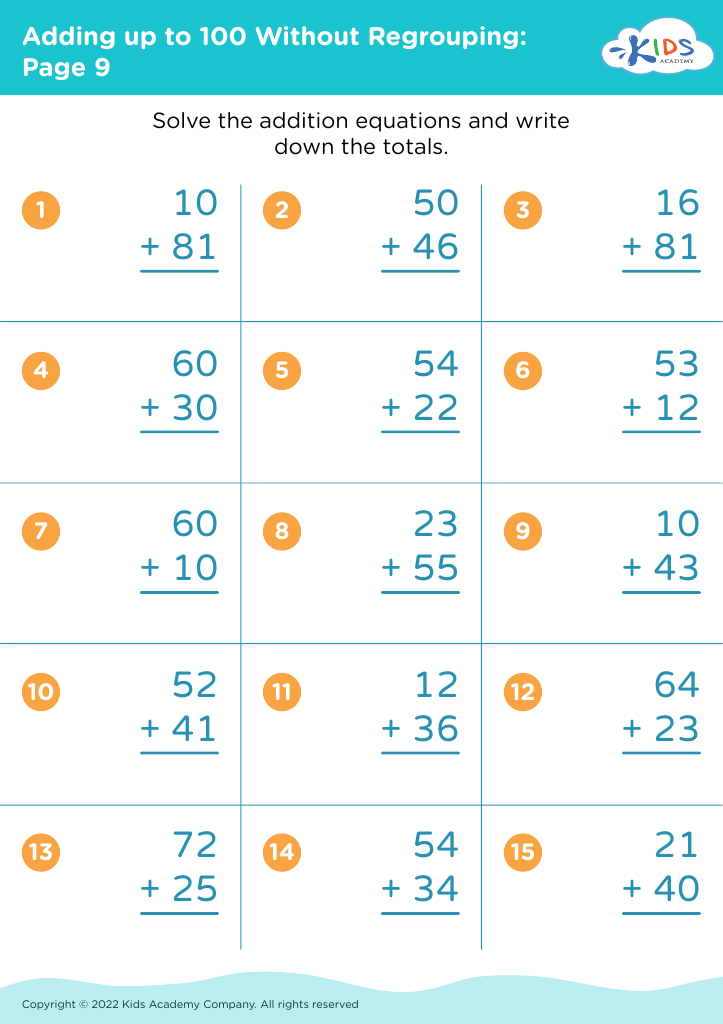








Understanding equations related to addition and subtraction is crucial for children aged 6-8, as it lays the foundation for more advanced mathematical concepts. At this age, children are beginning to develop their problem-solving skills and logical thinking. When they grasp the principles of simple equations, they learn to represent relationships between numbers, fostering a deeper understanding of how numbers interact. This comprehension is essential, as it helps children move beyond rote memorization of arithmetic to apply their knowledge in various contexts, including word problems and real-life situations.
Parents and teachers should care because mastery of these foundational skills boosts children’s confidence in their mathematical abilities. Early positive experiences with math encourage children to embrace challenges and develop a growth mindset. Moreover, a solid grasp of addition and subtraction equations also supports literacy development, as both subjects require critical thinking and comprehension skills.
By focusing on understanding equations, caregivers can significantly influence a child’s academic journey, fostering a love for learning and equipping them with essential skills for future educational success. Prioritizing these concepts ensures that children are well-prepared for more complex mathematical challenges in later grades, setting a strong foundation for their overall academic achievement.








