Understanding number patterns Addition & Subtraction Worksheets for Ages 6-8
3 filtered results
-
From - To
Explore our "Understanding Number Patterns Addition & Subtraction Worksheets" tailored for children aged 6-8! These engaging worksheets are designed to help young learners recognize and reinforce mathematical patterns through captivating exercises. By connecting addition and subtraction concepts with number patterns, students enhance critical thinking and problem-solving skills. The fun and interactive activities are perfect for both classroom use and at-home practice, making learning enjoyable and effective. Empower your child’s mathematical journey as they navigate through colorful illustrations and step-by-step instructions, transforming their understanding of numbers. Dive into the world of number patterns today and watch your young mathematician flourish!
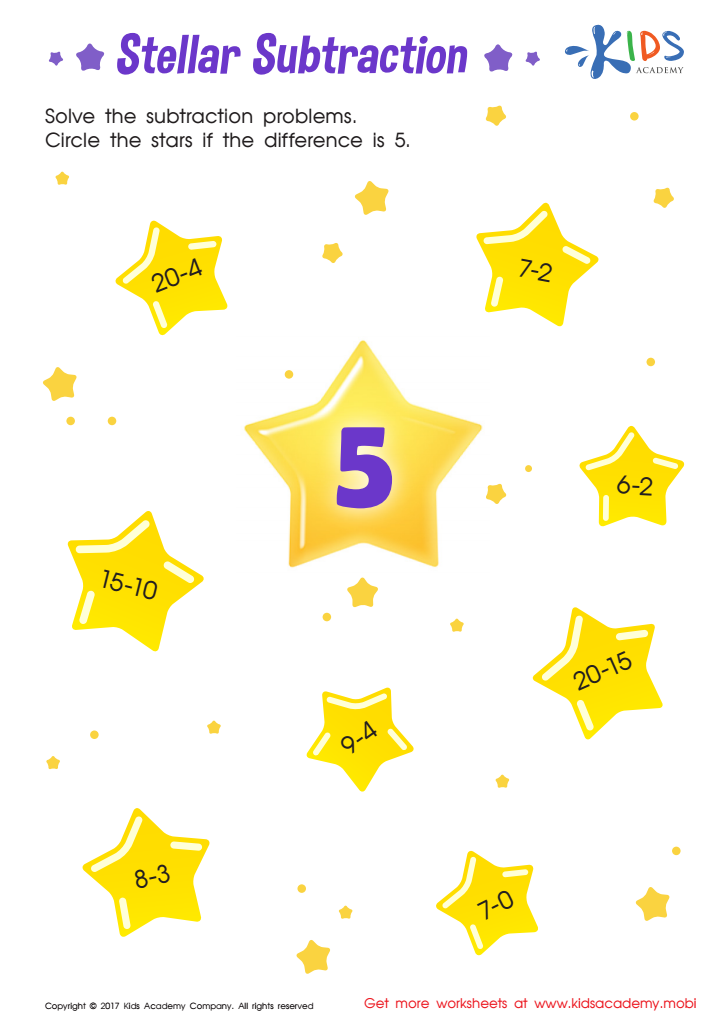
 Assign to My Students
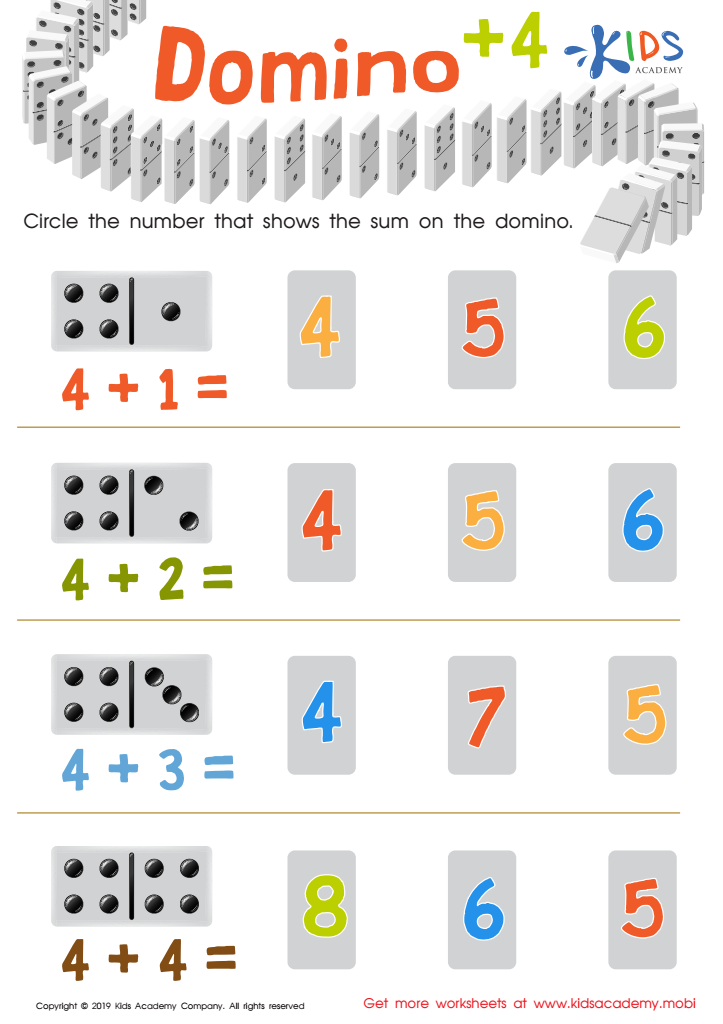
Domino +4 Worksheet








Understanding number patterns in addition and subtraction is crucial for children aged 6-8 as it lays the foundation for their overall mathematical proficiency. At this age, children are beginning to move beyond rote memorization and are ready to make connections between numbers. Recognizing patterns helps them understand concepts like the commutative and associative properties, which can simplify calculations and enhance problem-solving skills.
Parents and teachers should care because these foundational skills promote number sense and boost children's confidence in mathematics. When children see the relationships within numbers, they are better equipped to tackle more complex math problems in the future. Understanding patterns also encourages critical thinking as children learn to predict and apply strategies rather than relying solely on formulas.
Moreover, early engagement with number patterns fosters a positive attitude towards math. Exciting activities and games centered around finding patterns can make learning enjoyable and stimulate a lifelong interest in mathematics. Ultimately, investing time in understanding number patterns during these crucial years equips children with essential skills that will serve them in more challenging situations throughout their educational journey. By nurturing these abilities, parents and teachers can play a significant role in shaping competent and confident young mathematicians.








