Filters

34 filtered results

Clear all filters
Favorites
With answer key
Interactive

34 filtered results

Difficulty Level

Grade


Check out this FREE Trial Lesson on Addition & Subtraction for age 6-8!

X

Favorites
With answer key
Interactive
  • 6-8
  • Understanding patterns
  • Addition & Subtraction
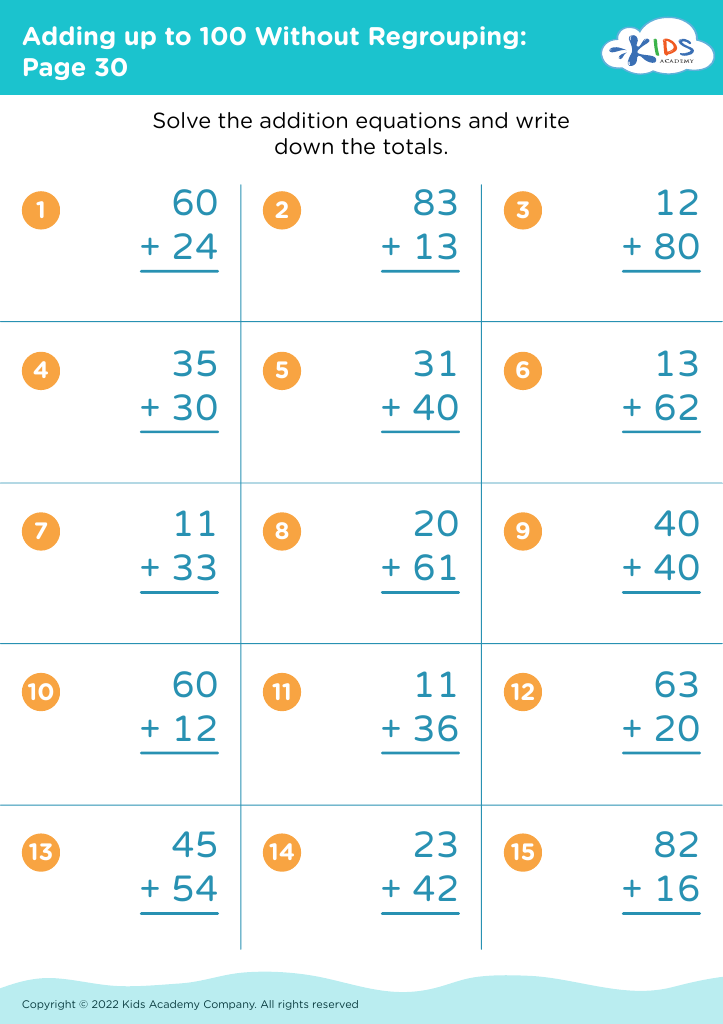
Adding up to 100 Without Regrouping: Page 30
Worksheet
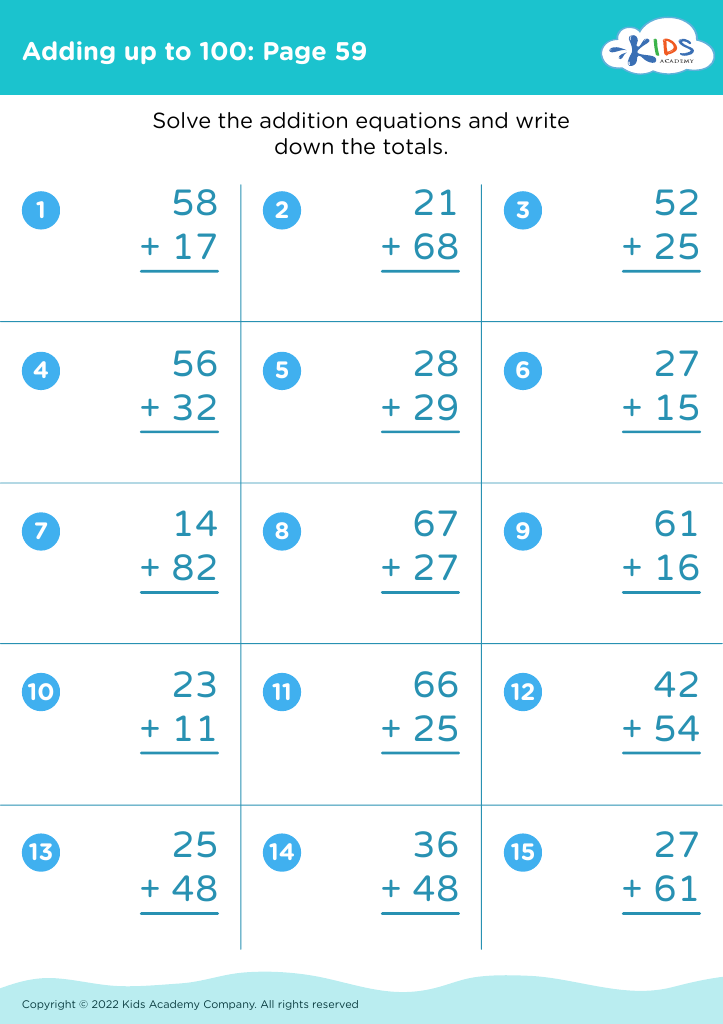
Adding up to 100: Page 59

Adding up to 100: Page 59

Adding up to 100: Page 59
Worksheet
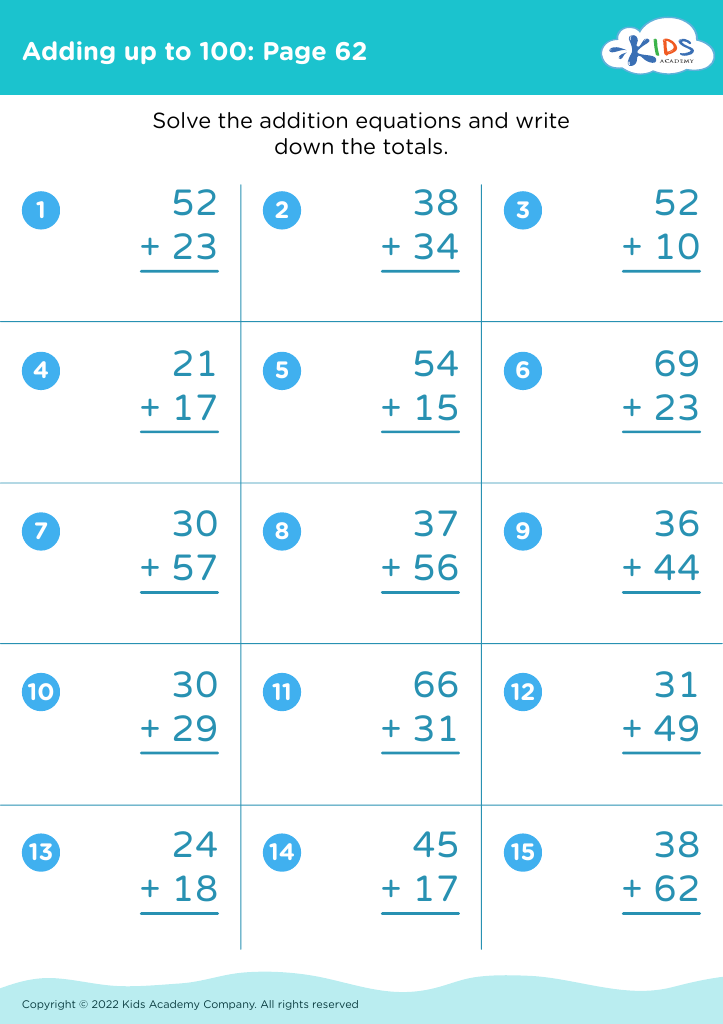
Adding up to 100: Page 62

Adding up to 100: Page 62

Adding up to 100: Page 62
Worksheet
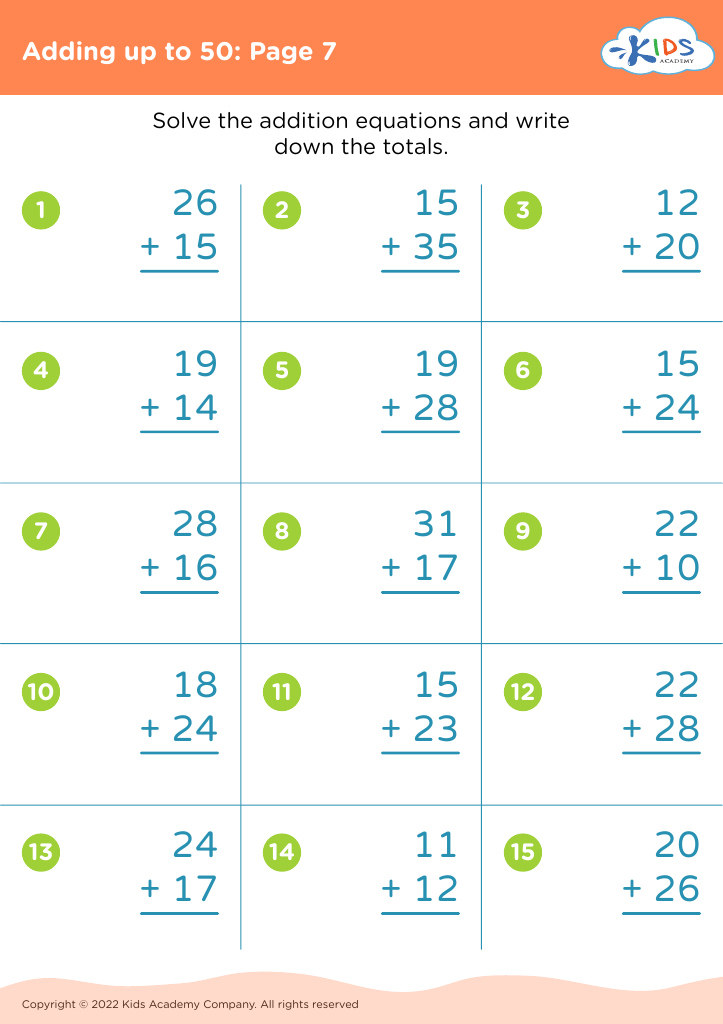
Adding up to 50: Page 7

Adding up to 50: Page 7

Adding up to 50: Page 7
Worksheet
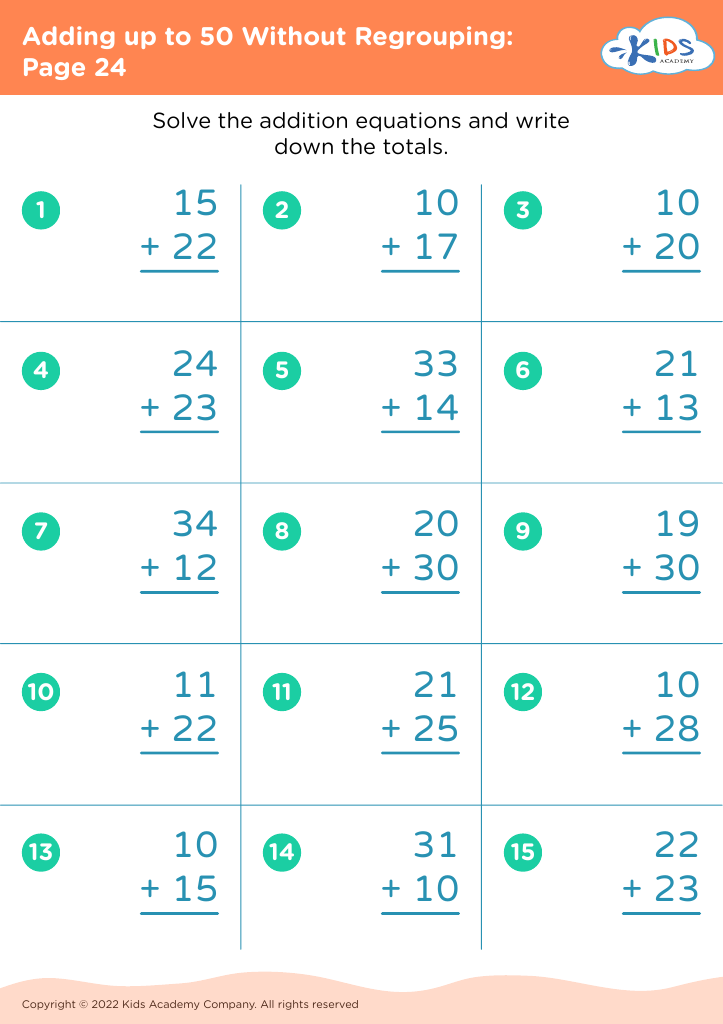
Adding up to 50 Without Regrouping: Page 24
Worksheet
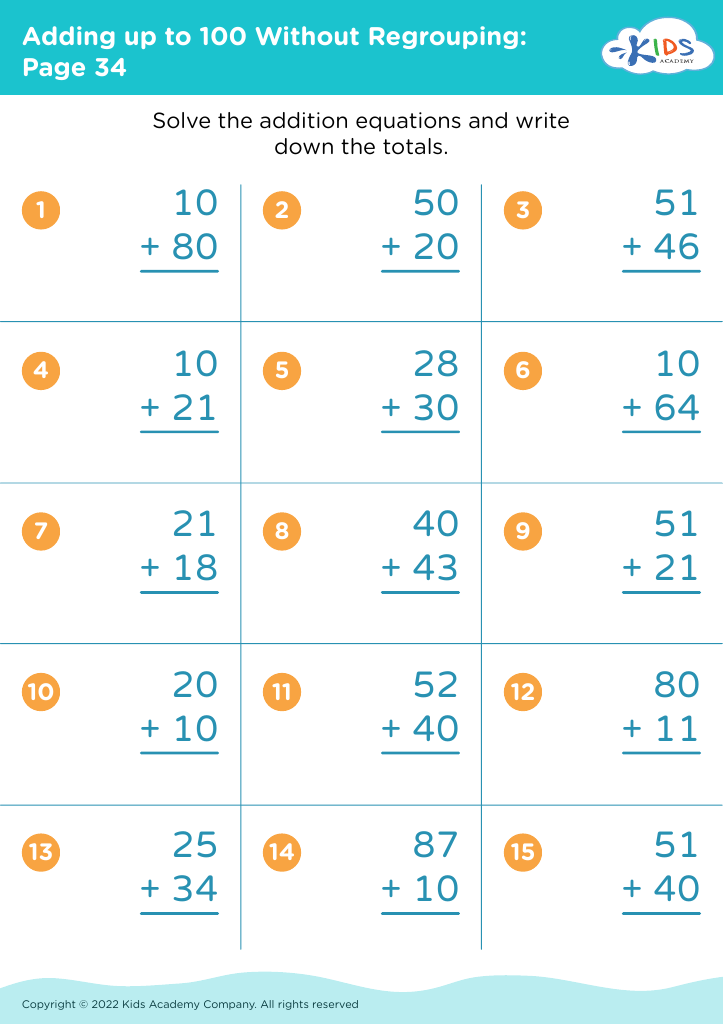
Adding up to 100 Without Regrouping: Page 34
Worksheet
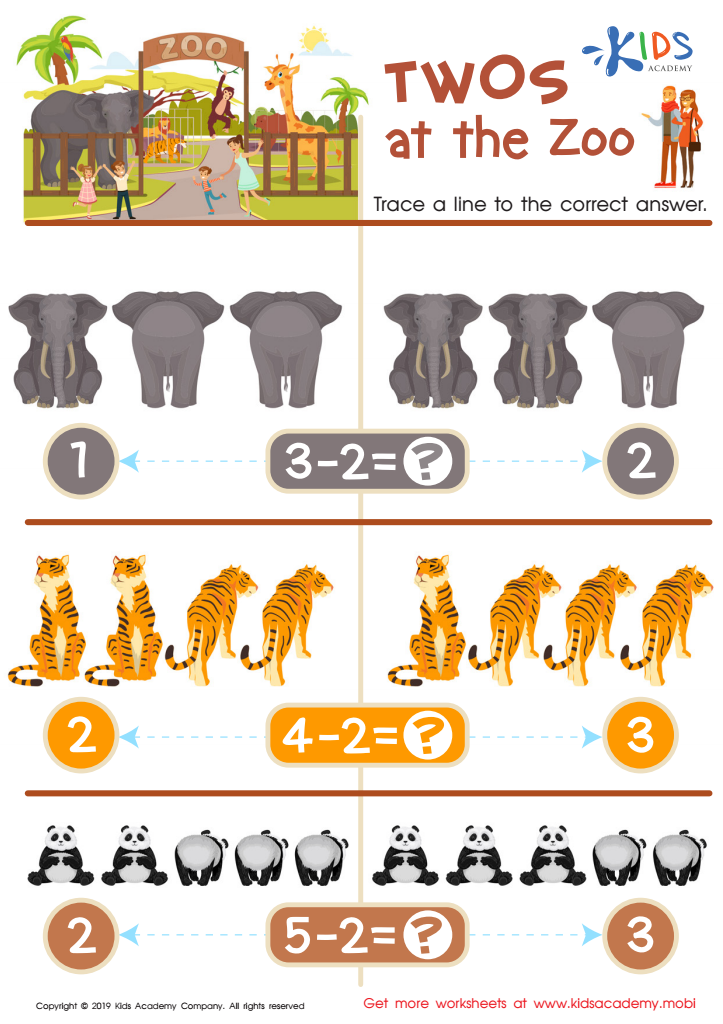
Twos at the Zoo Worksheet

Twos at the Zoo Worksheet

At the zoo, your kids can have fun with animals. Ask them to name their favorite ones and identify them in the printout. Count animals in each group together, then help your kids solve the equations and trace a line to the answer. It's an enjoyable way to combine learning and exploration!
Twos at the Zoo Worksheet
Worksheet
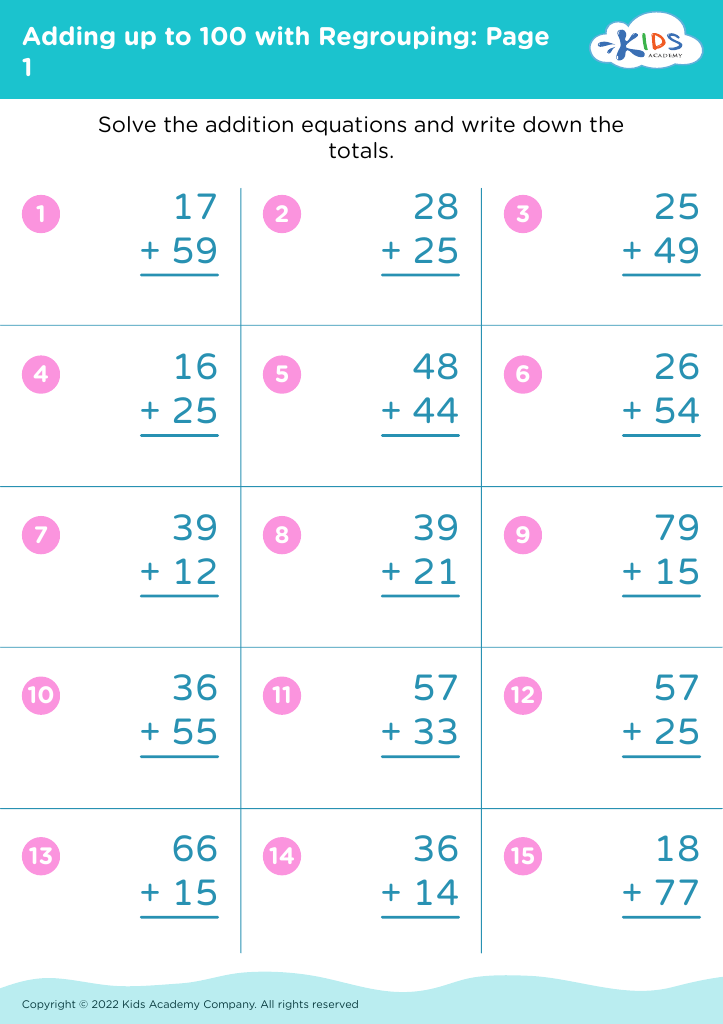
Adding up to 100 with Regrouping: Page 1
Worksheet
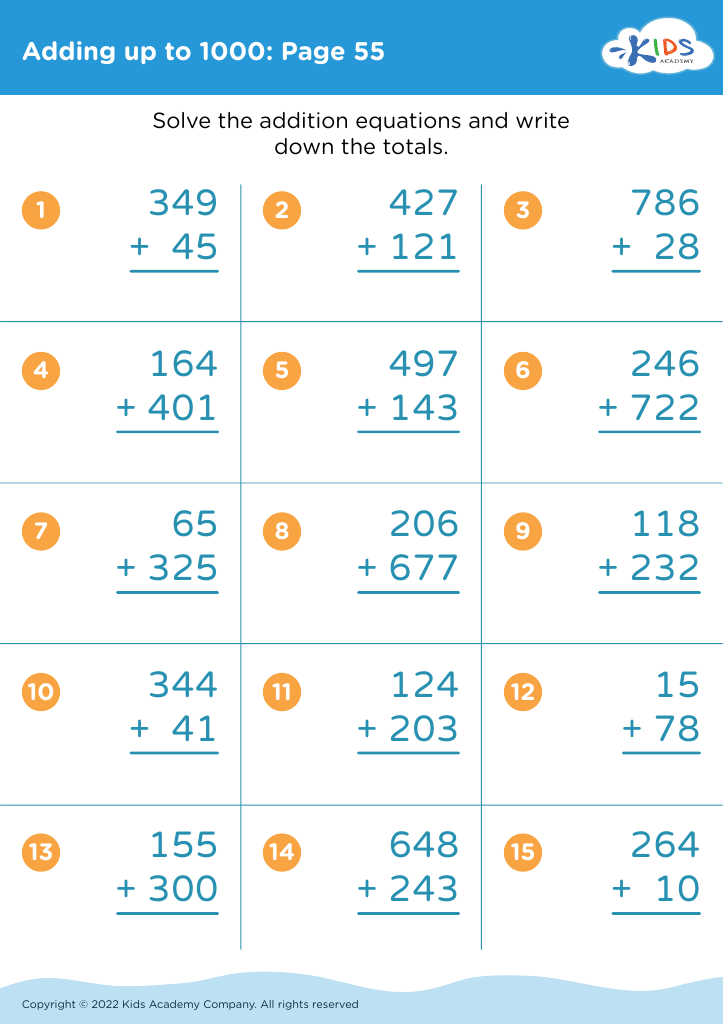
Adding up to 1000: Page 55

Adding up to 1000: Page 55

Adding up to 1000: Page 55
Worksheet
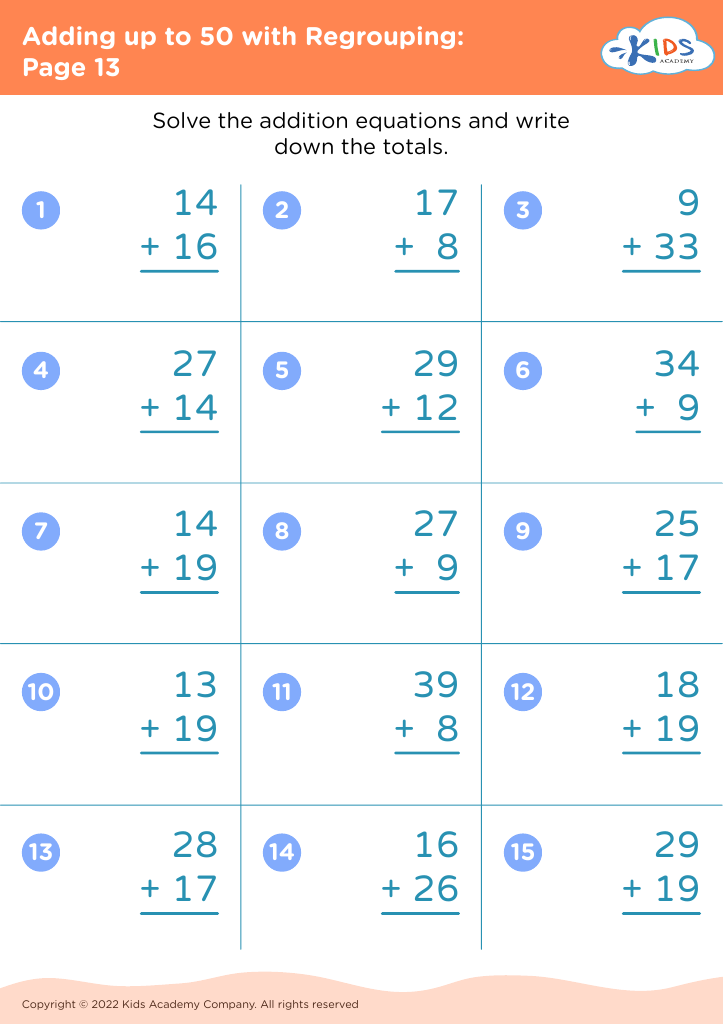
Adding up to 50 with Regrouping: Page 13
Worksheet


Understanding patterns in addition and subtraction is crucial for children aged 6-8 as it lays the foundation for their future math skills. During these formative years, children begin to recognize numbers and develop essential problem-solving abilities. Learning patterns helps them see relationships between numbers, enhancing their computational skills and making arithmetic more intuitive.

When children grasp patterns, they can predict outcomes and understand the concept of number operations more deeply. For instance, recognizing patterns in the number line aids in understanding how to add and subtract numbers effectively. This understanding fosters confidence and encourages a positive attitude towards tackling mathematical problems.

For parents and teachers, nurturing this understanding means equipping children with critical thinking skills that extend beyond mathematics. It empowers them to approach challenges systematically and creatively, which will serve them well across various subjects and real-life situations. Engaging children with patterns exercises, such as number games or visual aids, can make learning enjoyable and relevant. Ultimately, recognizing patterns in addition and subtraction not only sharpens children's mathematical skills but also promotes a lifelong love of learning. Investing time in this area can greatly enhance children's academic journeys and overall cognitive development.