Visual interpretation Addition & Subtraction Worksheets for Ages 6-8
4 filtered results
-
From - To
Discover engaging Visual Interpretation Addition & Subtraction Worksheets specially designed for children ages 6-8! These worksheets utilize colorful images and fun illustrations to enhance mathematical understanding, making learning enjoyable. By connecting visual aids to addition and subtraction concepts, young learners can improve their problem-solving skills and number sense while developing critical thinking abilities. Perfect for home or classroom use, our visually stimulating materials cater to different learning styles and help students grasp fundamental math skills effortlessly. Boost your child's confidence and proficiency in math with these interactive worksheets that make computations more relatable and fun! Explore our collection today!
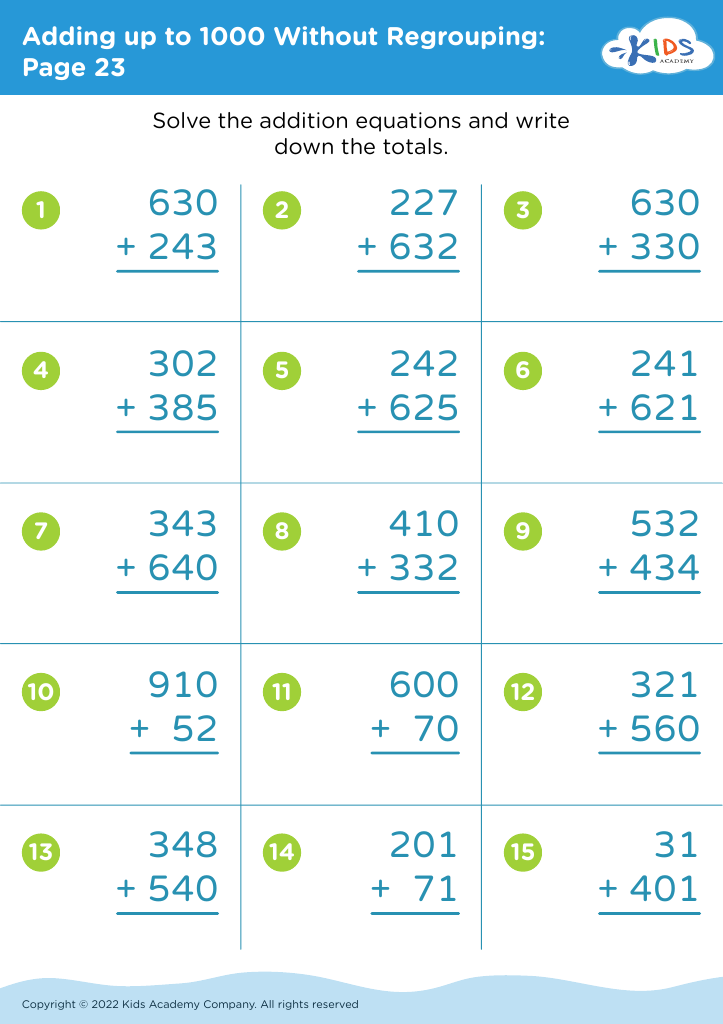
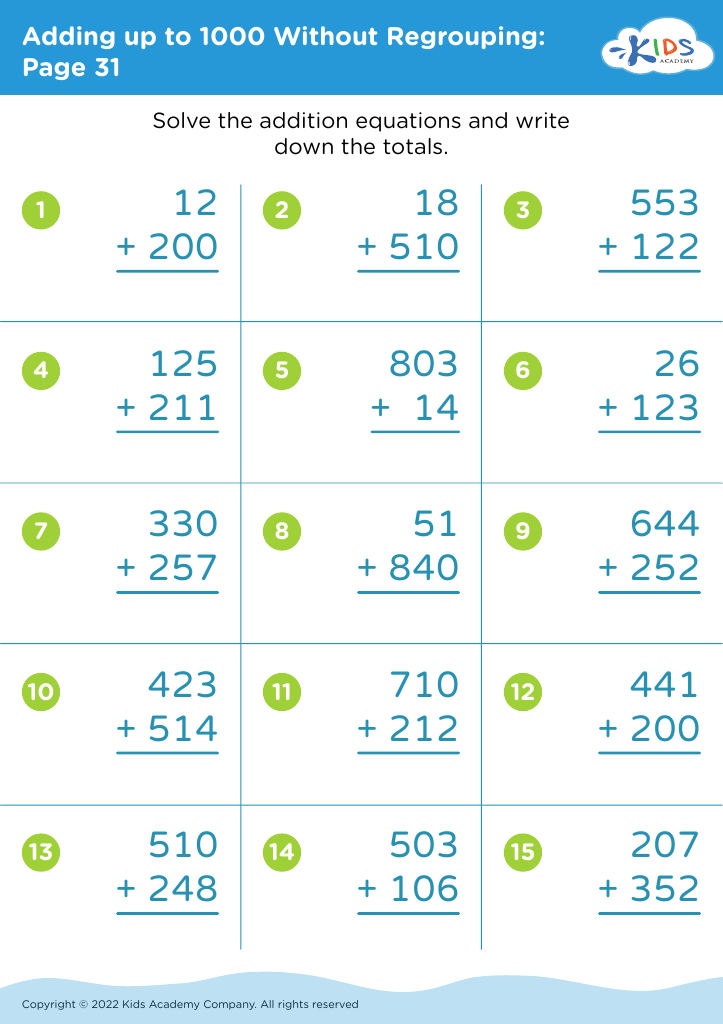
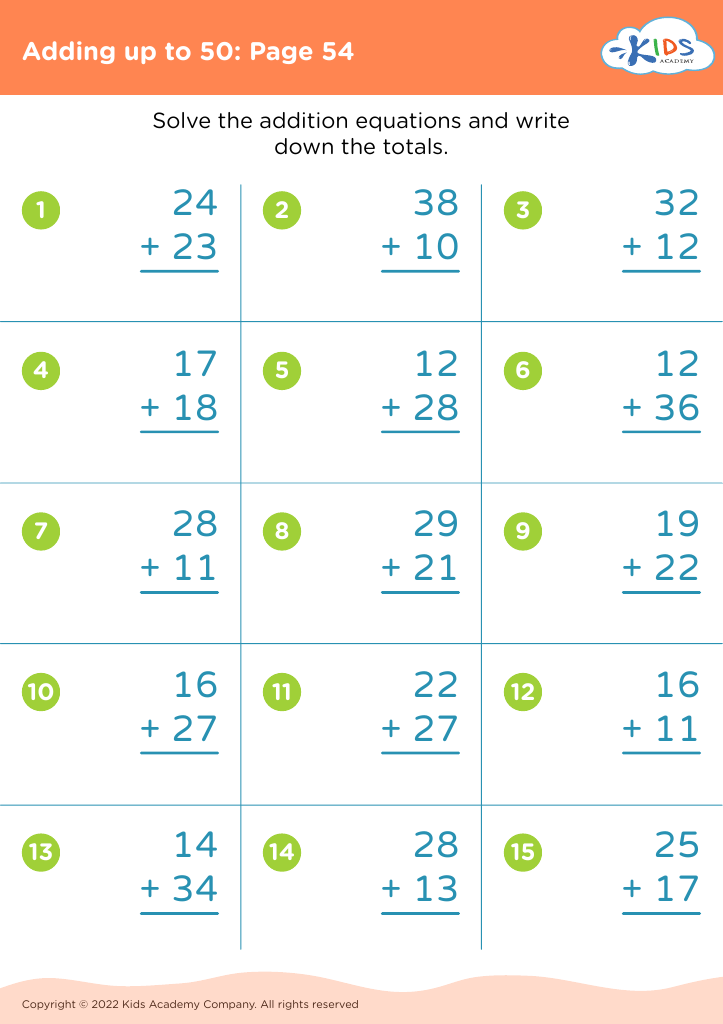
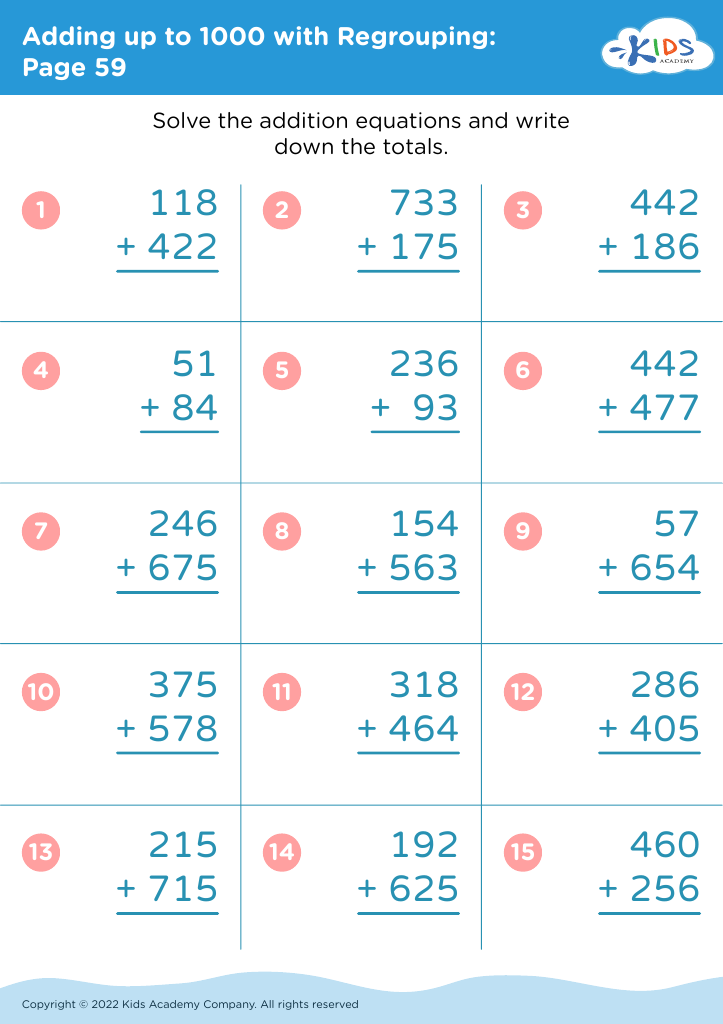








Parents and teachers should prioritize visual interpretation in addition and subtraction for children aged 6-8 because it lays the foundation for a strong mathematical understanding. At this developmental stage, children are transitioning from concrete to abstract thinking. Visual tools—like number lines, counters, and pictures—help them grasp the concepts of addition and subtraction through tangible experiences, making math more relatable and less intimidating.
Visual interpretation fosters critical thinking and problem-solving skills, as children learn to represent numbers and operations through various methodologies. It encourages them to see the relationships between numbers, enhancing their number sense and supporting mental math capabilities. Furthermore, engaging with visuals can promote engagement and retention. Children are more likely to enjoy math when it involves dynamic, hands-on learning rather than only traditional algorithms.
Additionally, by encouraging visual interpretation, parents and teachers can identify individual learning styles and needs, providing tailored support that boosts confidence and proficiency. As mathematics becomes increasingly important in everyday life, nurturing these skills early on equips children with essential tools for academic success and lifelong learning, helping them become adept and enthusiastic learners.








