
Boost critical thinking Addition Worksheets for Ages 6-8
3 filtered results
Difficulty Level
Grade
Age
-
From - To
Subject
Activity
Standards
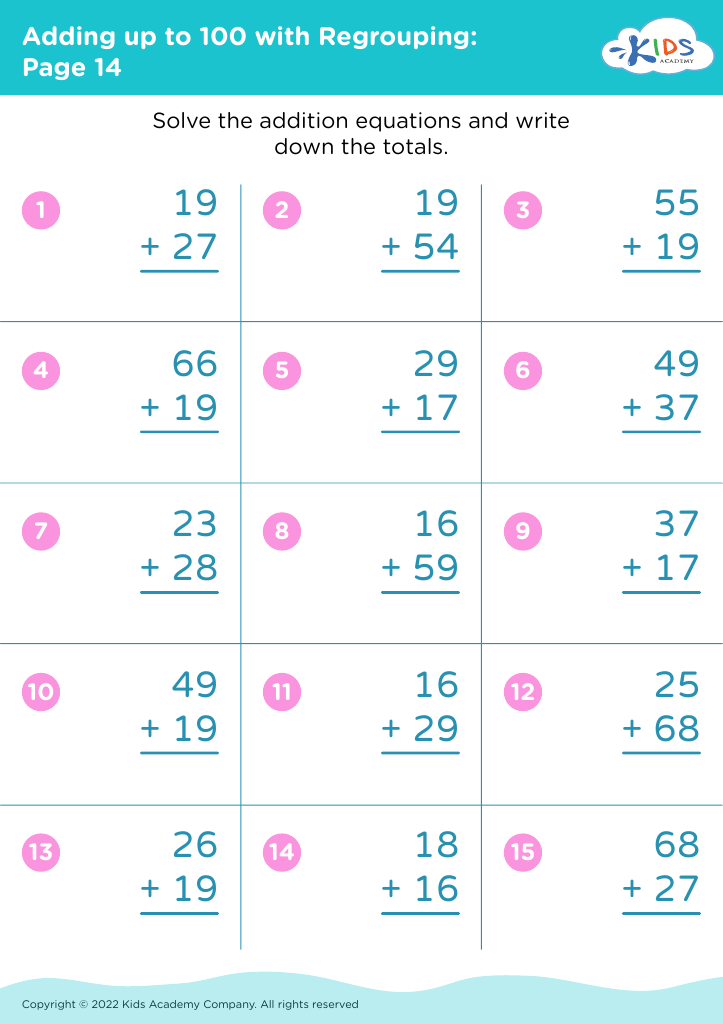
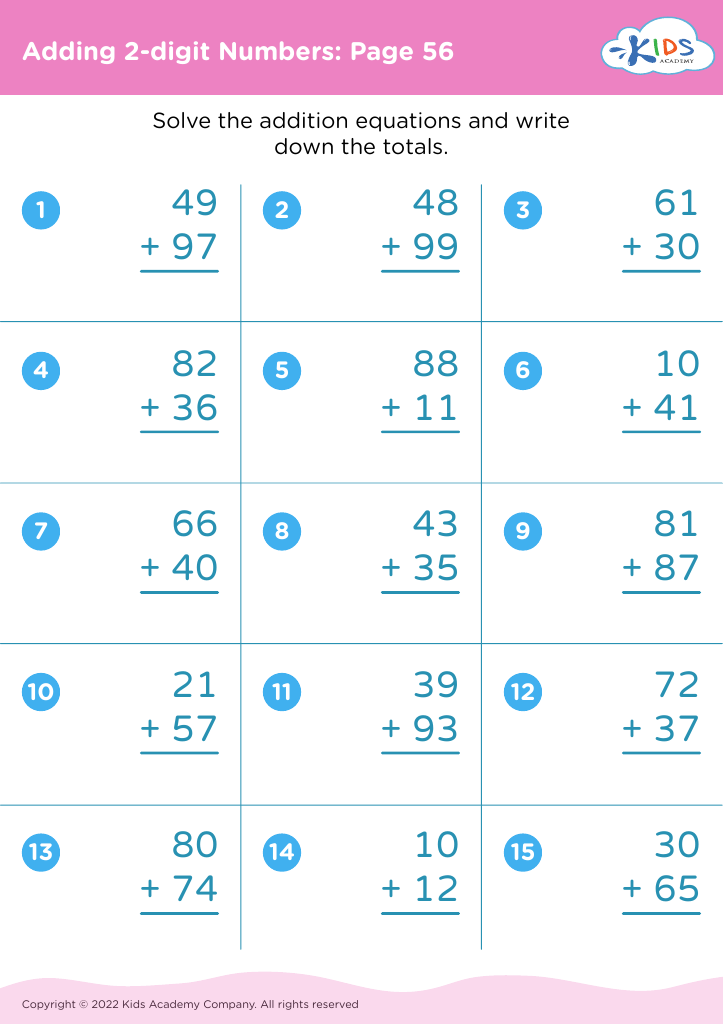
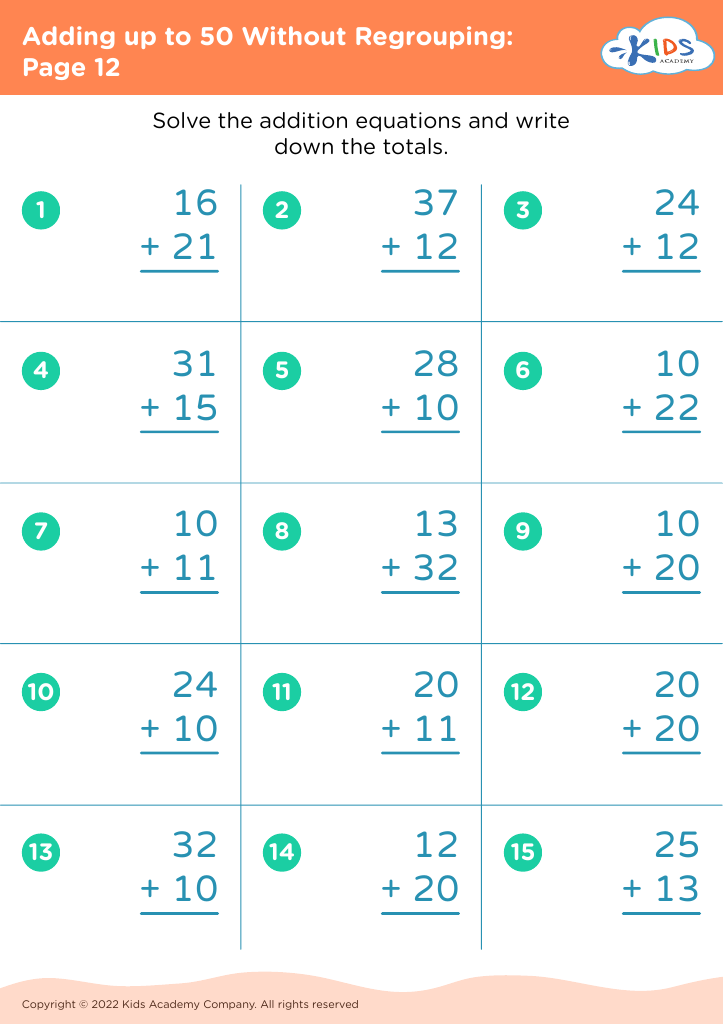
Enhance your child's mathematical skills with our "Boost Critical Thinking Addition Worksheets for Ages 6-8." These engaging resources are expertly designed to develop essential addition abilities while simultaneously encouraging critical thinking. Each worksheet provides fun, interactive activities that challenge young minds, aiming to build a solid foundation in math. With eye-catching visuals and age-appropriate problems, kids will stay motivated and interested in learning. These worksheets not only improve addition proficiency but also foster problem-solving skills and logical reasoning, ensuring a comprehensive approach to early math education. Perfect for classroom use or home practice!
Favorites
With answer key
Interactive
Join Kids Academy for Free
Who is primarily going to use this learning content?








Parents and teachers should prioritize boosting critical thinking skills in children aged 6-8 because these foundational years are crucial for developing cognitive abilities that significantly impact future learning and problem-solving capabilities. Critical thinking involves analyzing, evaluating, and synthesizing information, which helps children navigate various challenges and make informed decisions throughout life.
During the early stages of development, young minds are exceptionally receptive and adaptable, making it the ideal time to introduce activities and exercises that foster critical thinking. By engaging children in thought-provoking tasks, such as puzzles, open-ended questions, and exploratory play, parents and educators can nurture their curiosity and encourage a mindset geared towards inquiry and reflection.
Developed critical thinking skills enable children to understand mathematical concepts better, such as addition, not just as rote memorization but as a logical process. This understanding builds a strong mathematical foundation, which is crucial for more complex problem-solving in later years. Moreover, strong critical thinking skills support learning in all subjects, fostering creativity, improved communication skills, and emotional intelligence.
Investing time and effort in enhancing critical thinking abilities equips children with essential tools that lead to academic success, personal growth, and the ability to face life’s challenges with confidence and resilience. Parents and teachers play a vital role in this developmental phase, helping to shape well-rounded, adept thinkers.








