Filters

59 filtered results

Clear all filters
Favorites
With answer key
Interactive

59 filtered results

Difficulty Level

Grade


Enhance your child's math skills with our Counting Practice Addition Worksheets tailored for ages 6-8. These engaging printable resources from Kids Academy are designed to build a strong arithmetic foundation. Through fun and interactive activities, children will master counting, number recognition, and simple addition. Each worksheet is crafted to captivate young learners while reinforcing essential mathematical concepts. Perfect for classroom use or extra practice at home, our worksheets make math enjoyable and accessible. Empower your child with the confidence and proficiency they need to excel in math with our expert-designed addition worksheets.
Check out this FREE Trial Lesson on Addition for age 6-8!

Breaking Down 8

Favorites
With answer key
Interactive
  • 6-8
  • Counting practice
  • Addition
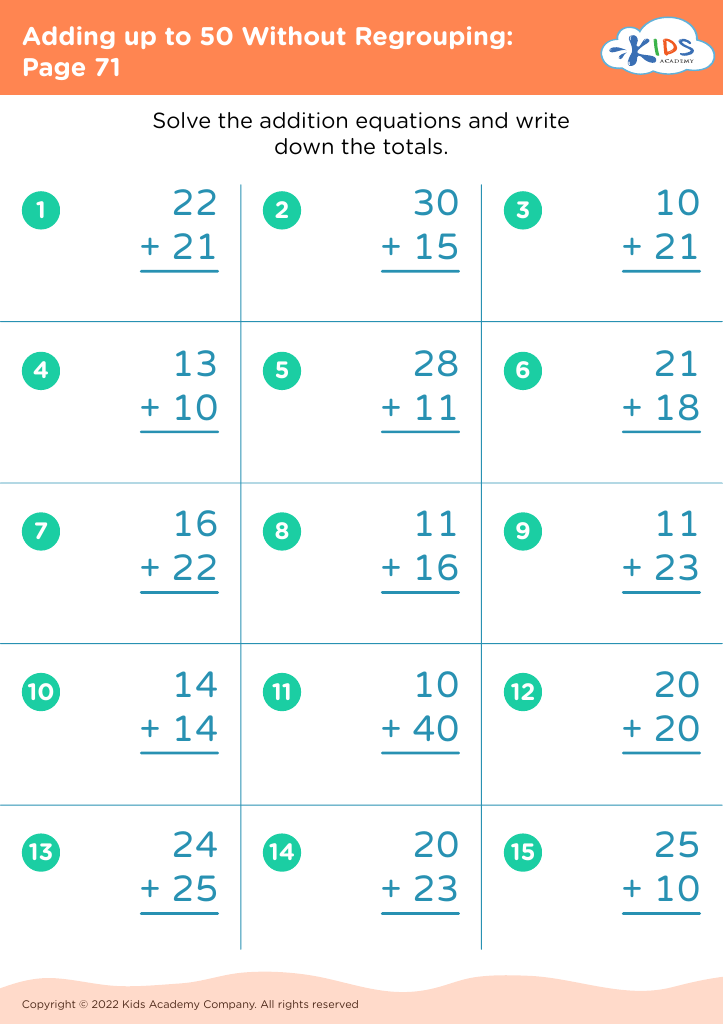
Adding up to 50 Without Regrouping: Page 71
Worksheet
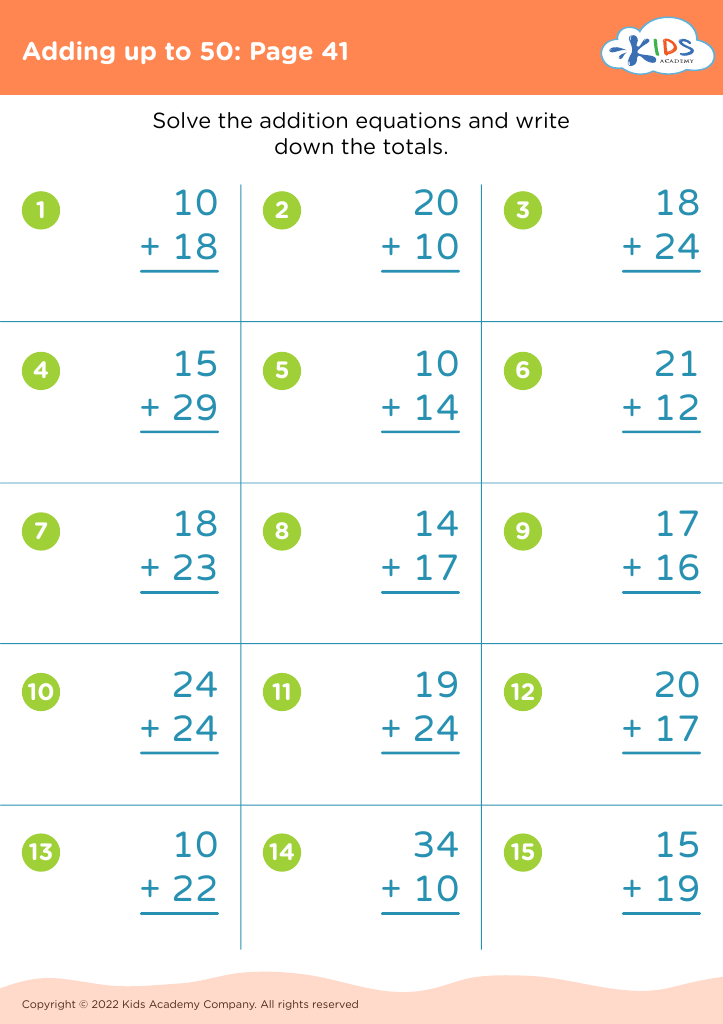
Adding up to 50: Page 41

Adding up to 50: Page 41

Adding up to 50: Page 41
Worksheet
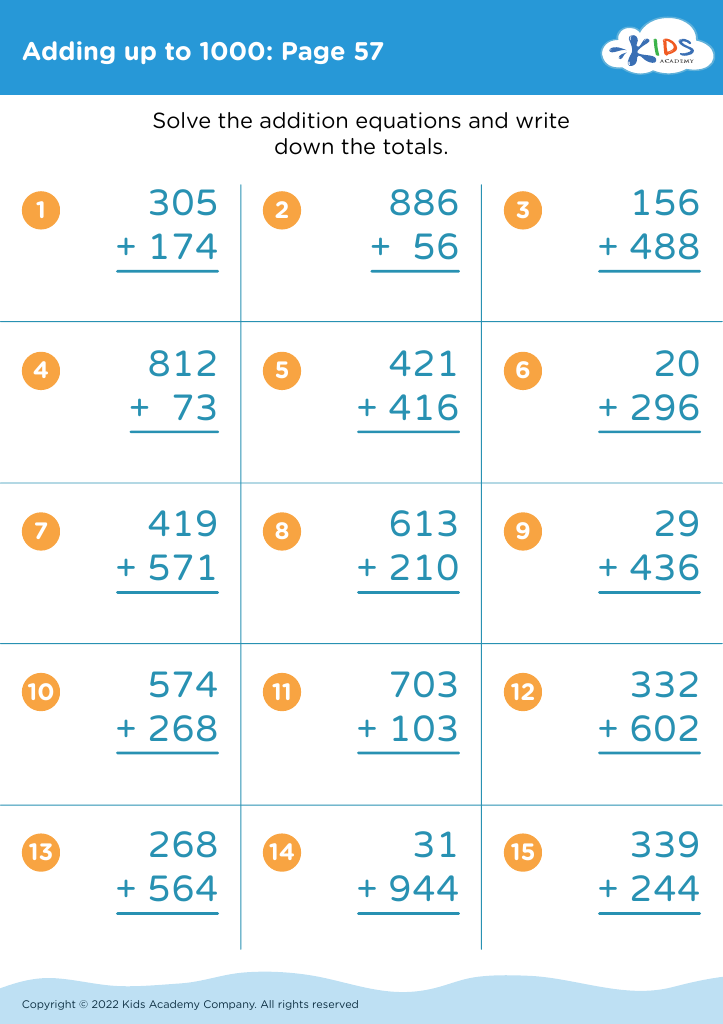
Adding up to 1000: Page 57

Adding up to 1000: Page 57

Adding up to 1000: Page 57
Worksheet
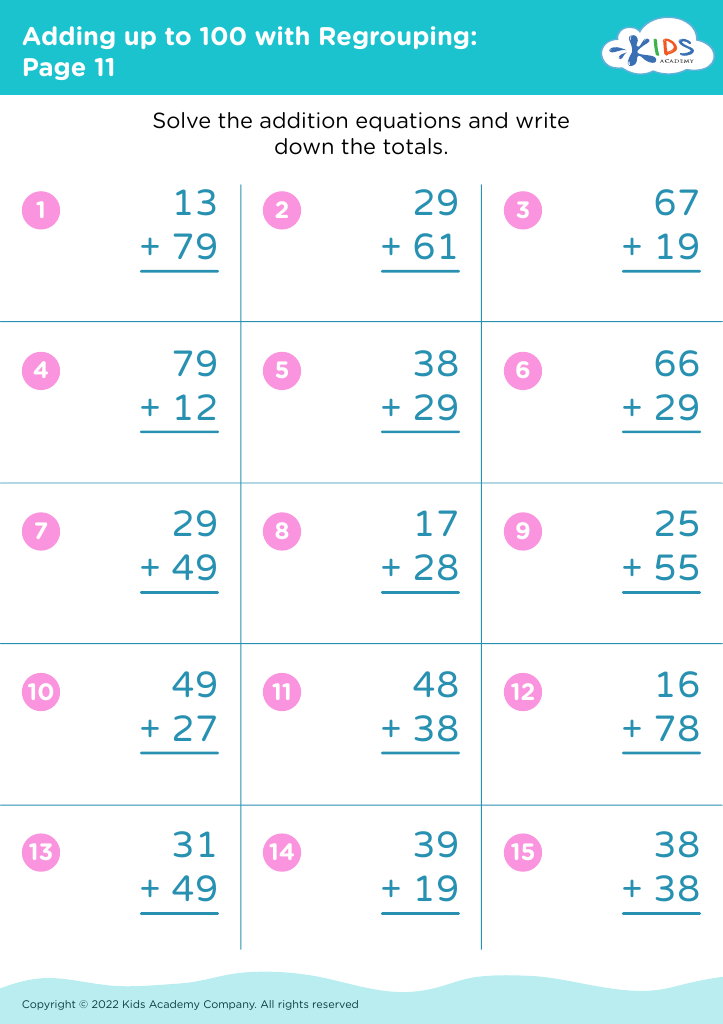
Adding up to 100 with Regrouping: Page 11
Worksheet
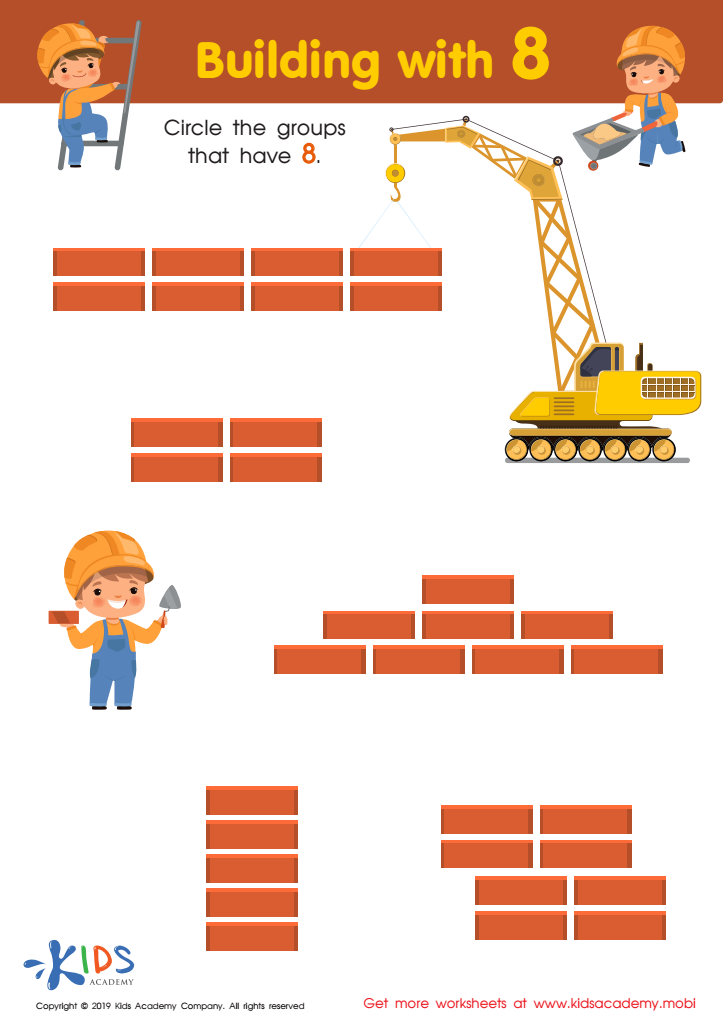
Building with 8 Worksheet

Building with 8 Worksheet

Your child can learn more with this simple exercise! Get them counting and help them circle the groups of 8 bricks. It's a great addition to their post-school lessons, supporting their counting skills. Plus, it's a fun way to learn!
Building with 8 Worksheet
Worksheet
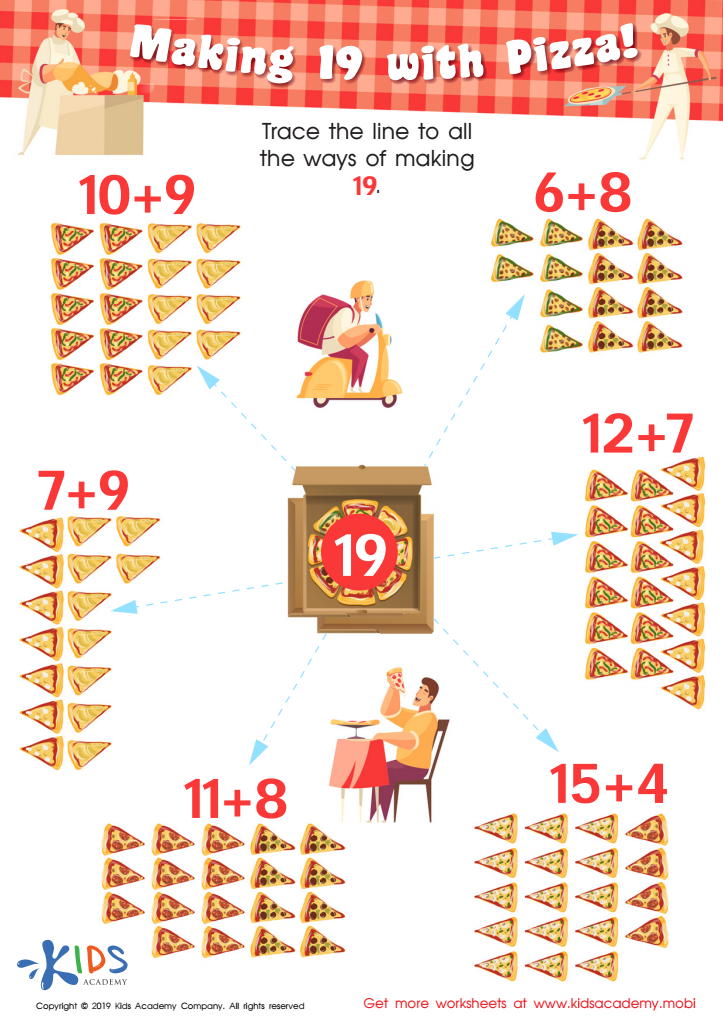
Making 19 with Pizza! Worksheet

Making 19 with Pizza! Worksheet

Who loves pizza? Your kids do! Next time you need to teach them math, make it fun by combining it with something they enjoy. This worksheet uses a pizza-themed problem to help them practice solving equations. Have them trace the line to figure out how to make 19. It's a great way to make learning math fun!
Making 19 with Pizza! Worksheet
Worksheet
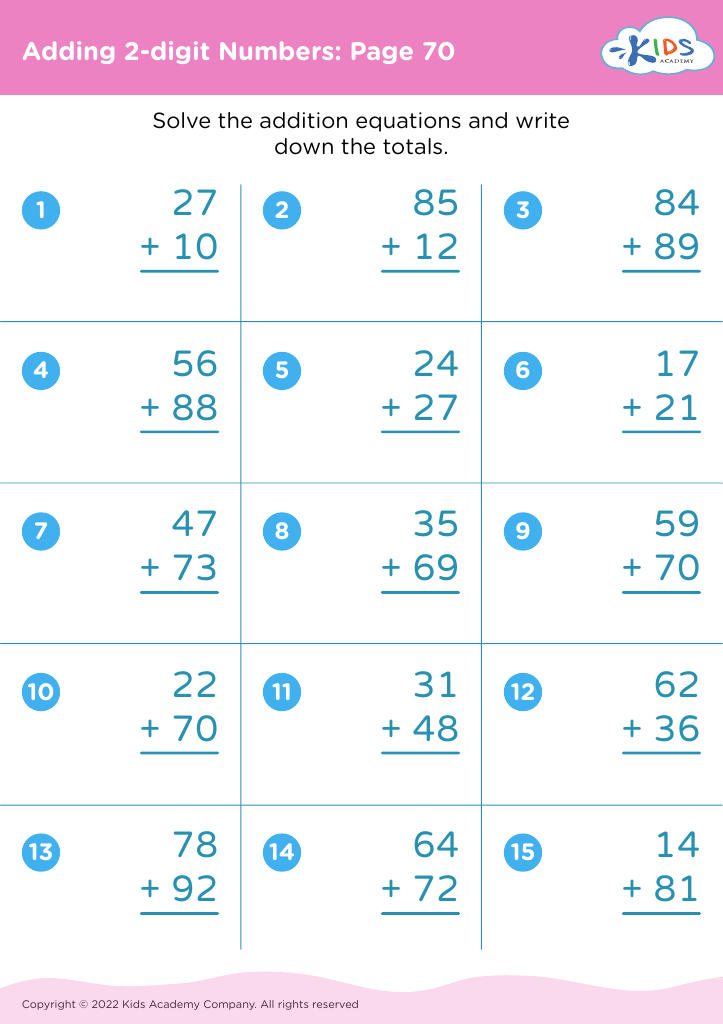
Adding 2-digit Numbers: Page 70

Adding 2-digit Numbers: Page 70

Adding 2-digit Numbers: Page 70
Worksheet
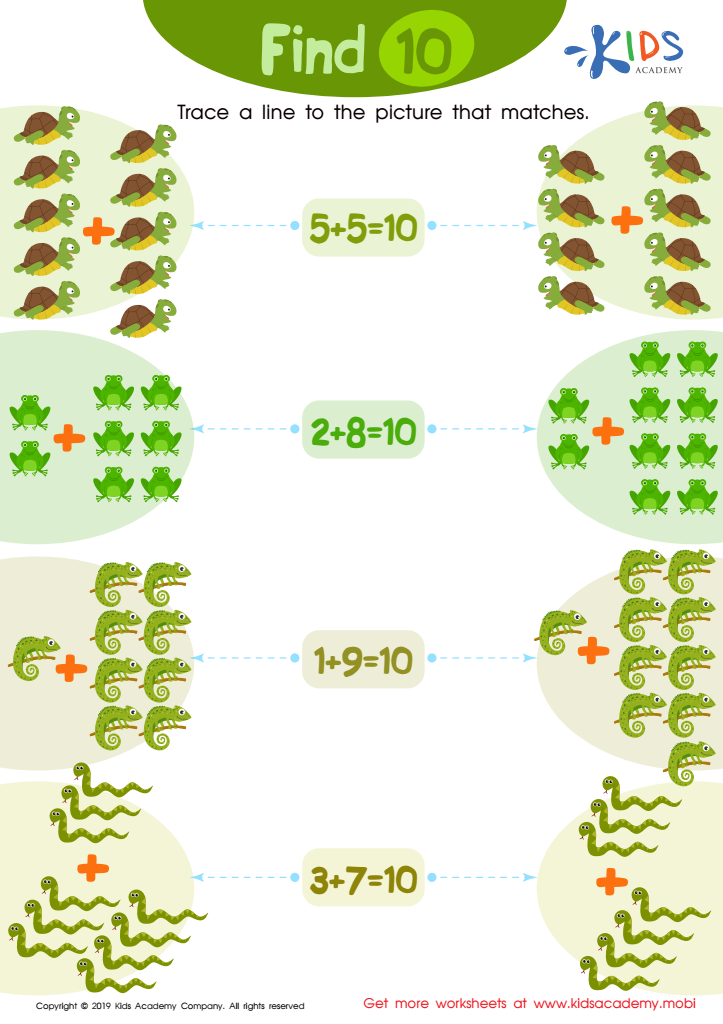
Find 10 Worksheet
Find 10 Worksheet

Find 10 Worksheet

Counting can be tricky, but your kids can master it with regular practice. Here's a fun activity to help: count the animals, then trace a line to the pictures that matches. With these tips, math will be an easy walk in the park.
Find 10 Worksheet
Worksheet
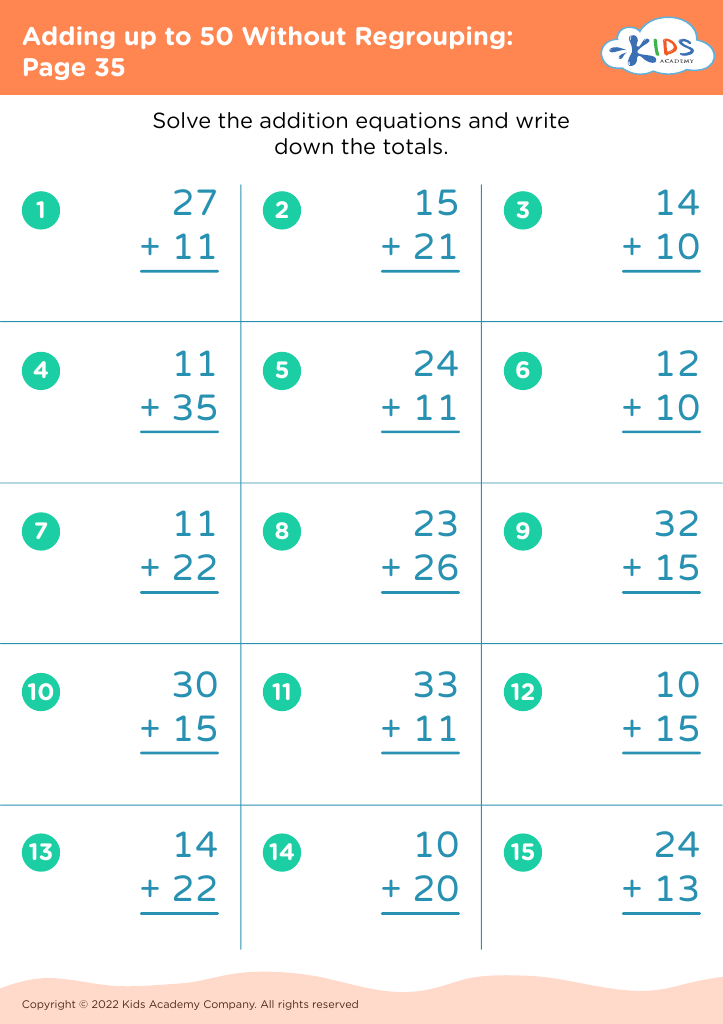
Adding up to 50 Without Regrouping: Page 35
Worksheet
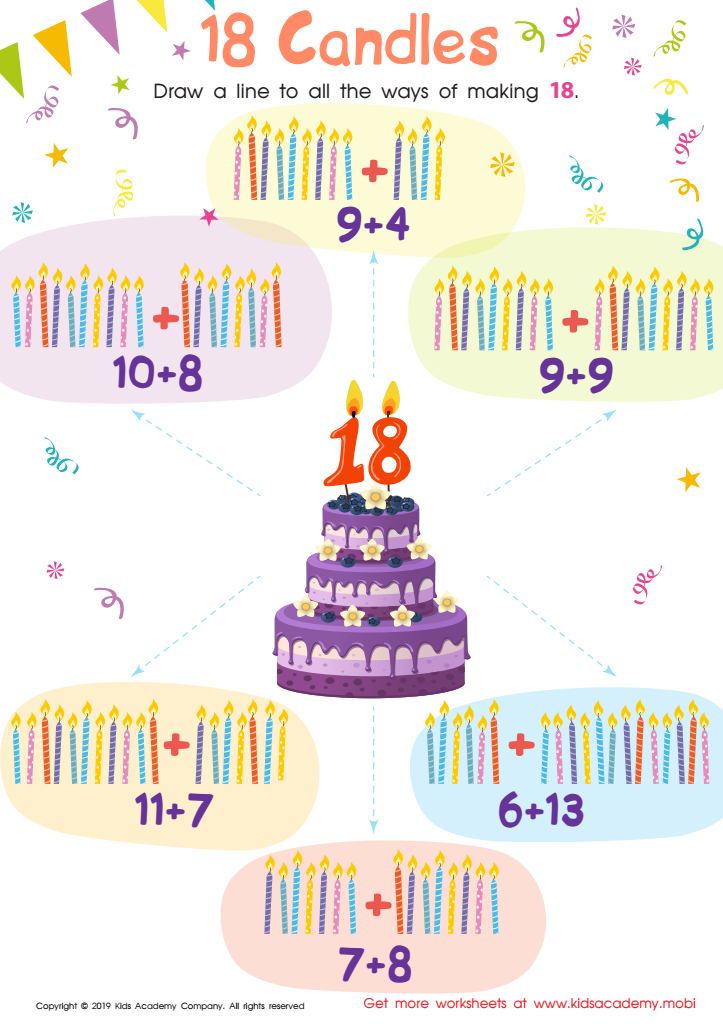
18 Candles Worksheet
18 Candles Worksheet
This worksheet is great for introducing your students to addition and subtraction. Help your kids solve the simple equations on it and draw a line from the birthday cake with 18 on it to all the solutions. Practice like this will prepare them to tackle more complex math problems.
18 Candles Worksheet
Worksheet
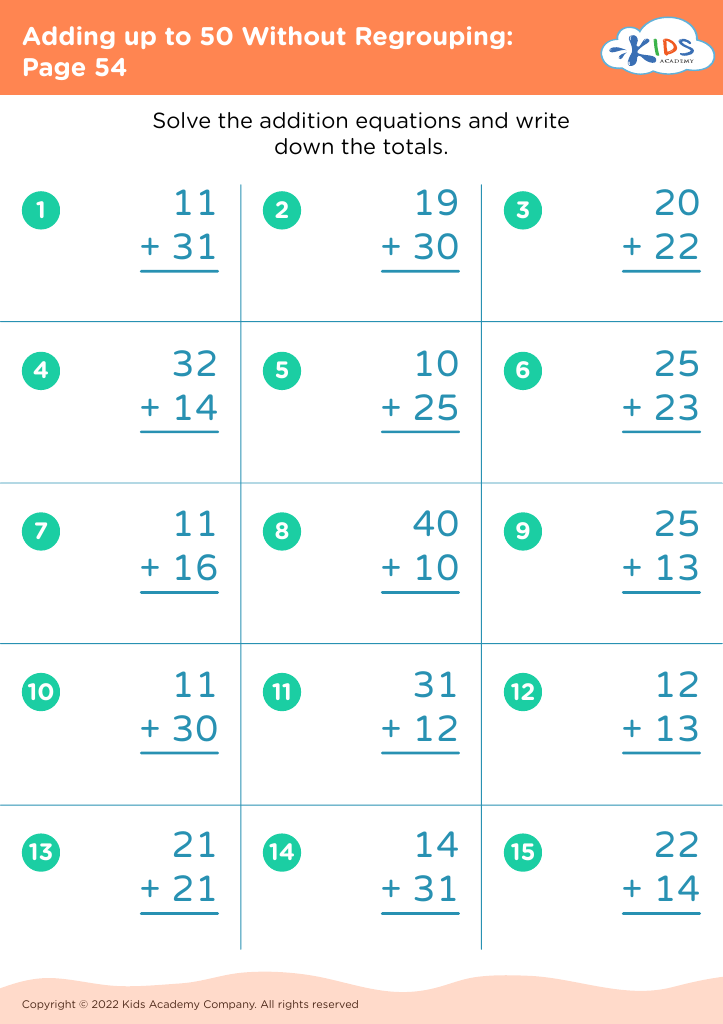
Adding up to 50 Without Regrouping: Page 54
Worksheet
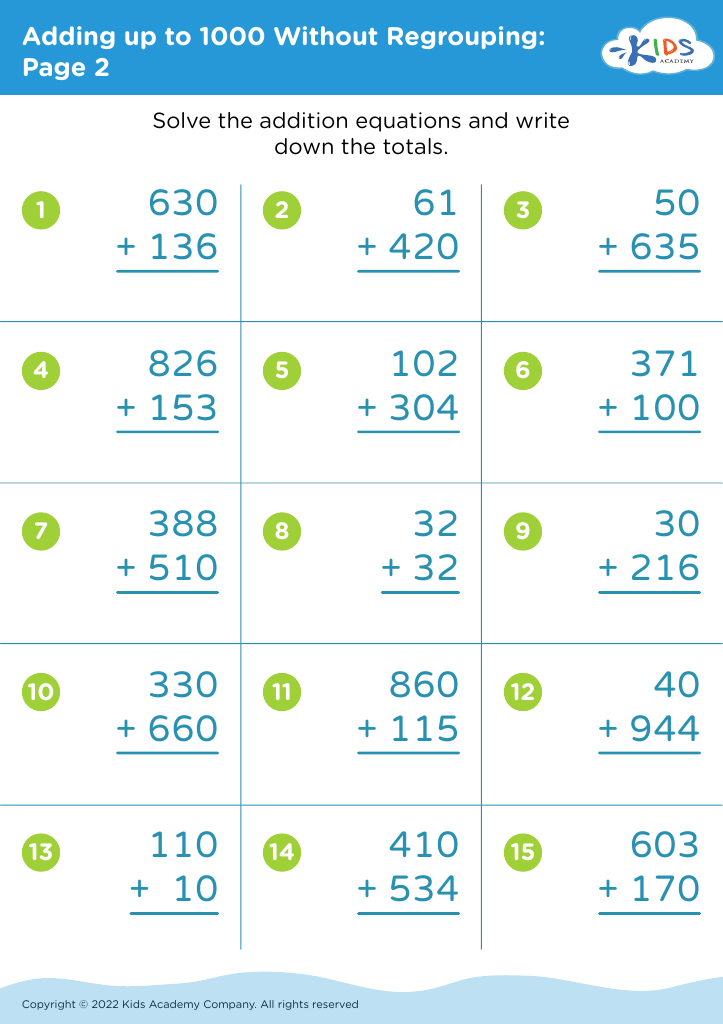
Adding up to 1000 Without Regrouping: Page 2
Worksheet
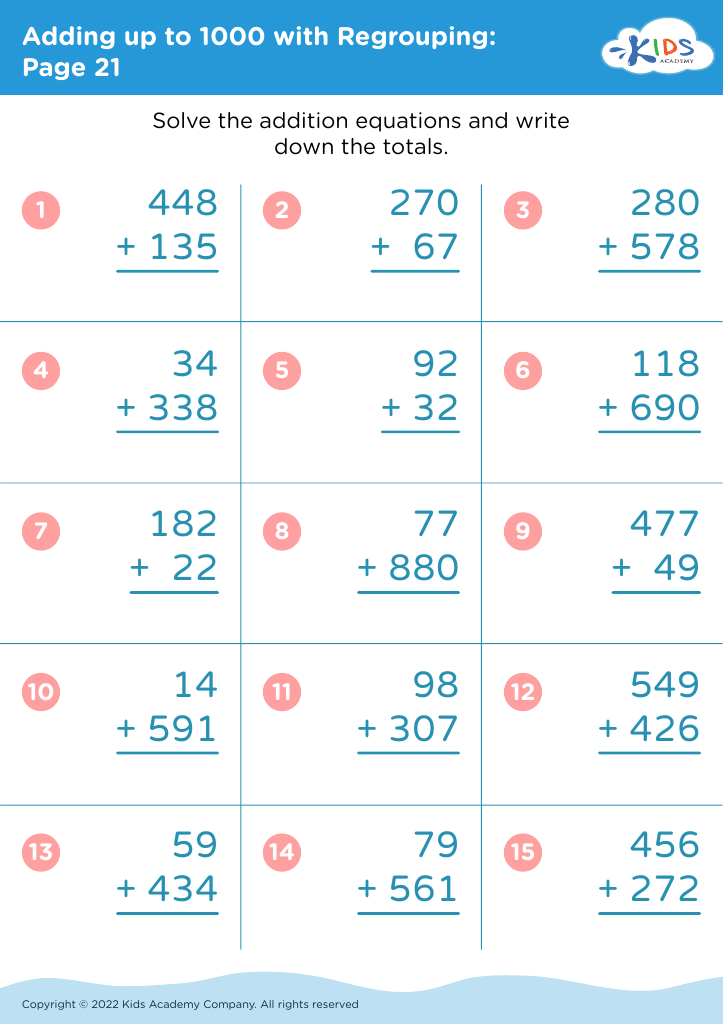
Adding up to 1000 with Regrouping: Page 21
Worksheet
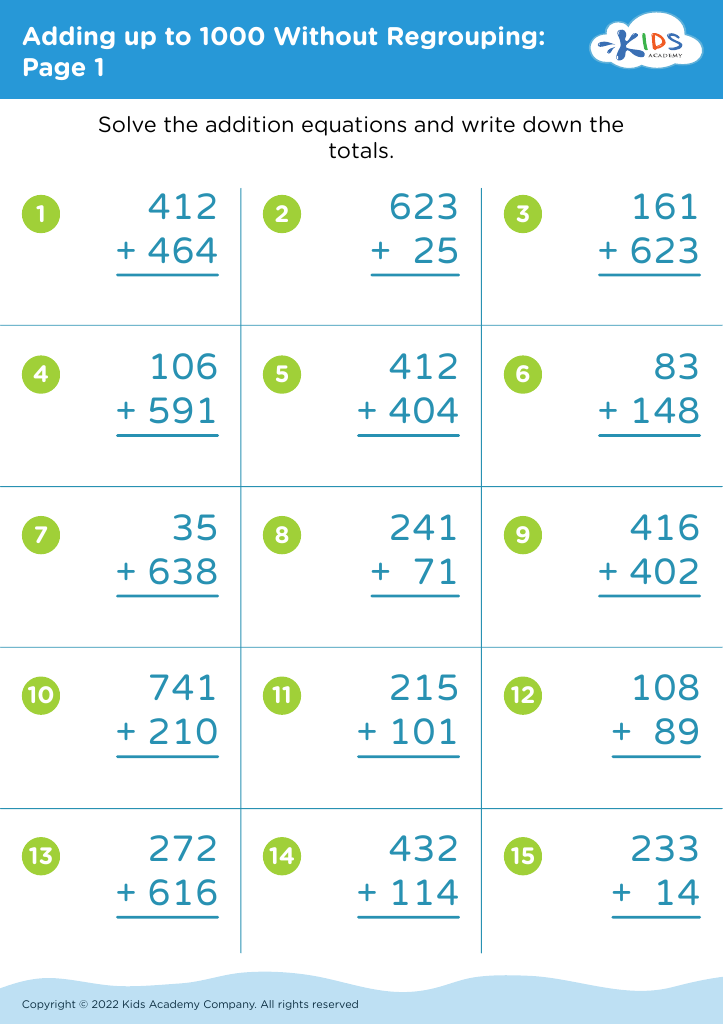
Adding up to 1000 Without Regrouping: Page 1
Worksheet
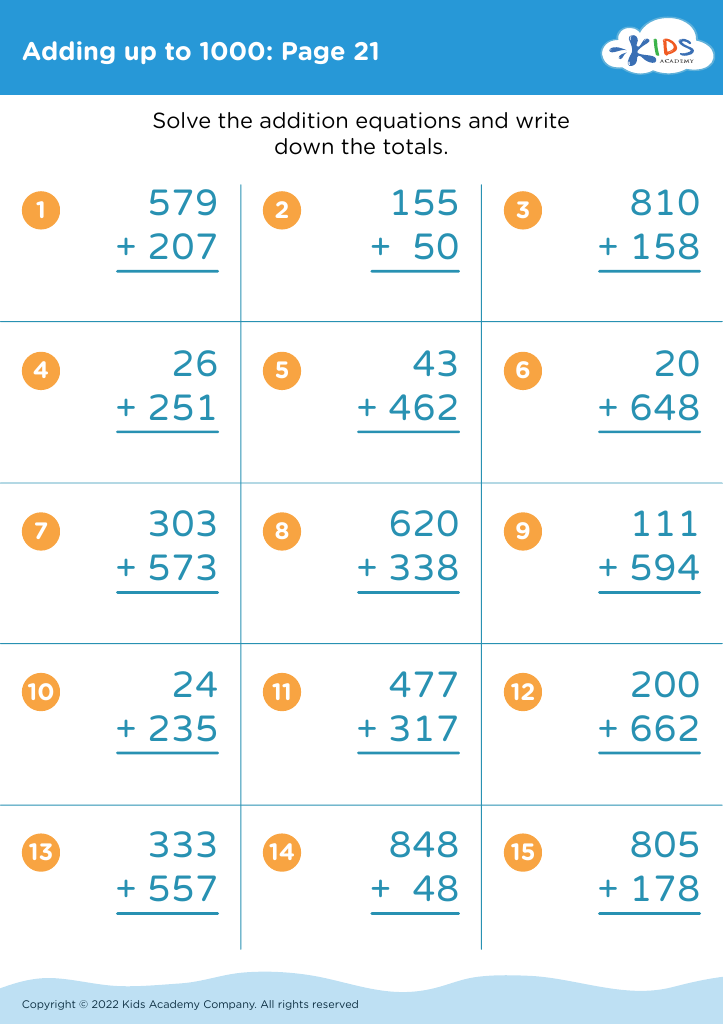
Adding up to 1000: Page 21

Adding up to 1000: Page 21

Adding up to 1000: Page 21
Worksheet
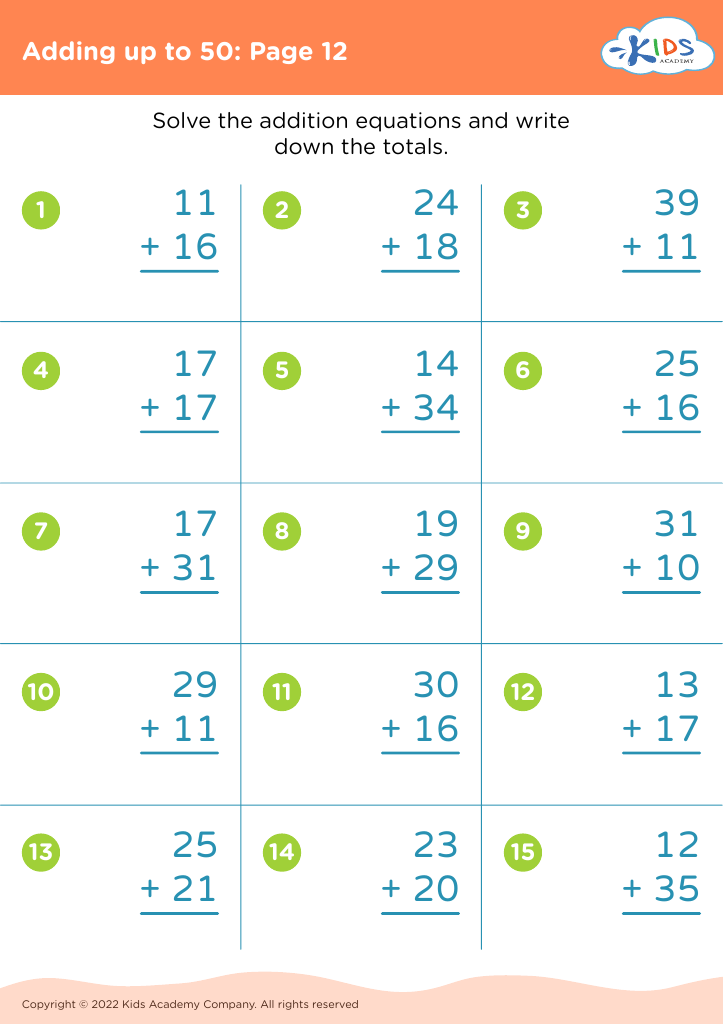
Adding up to 50: Page 12

Adding up to 50: Page 12

Adding up to 50: Page 12
Worksheet
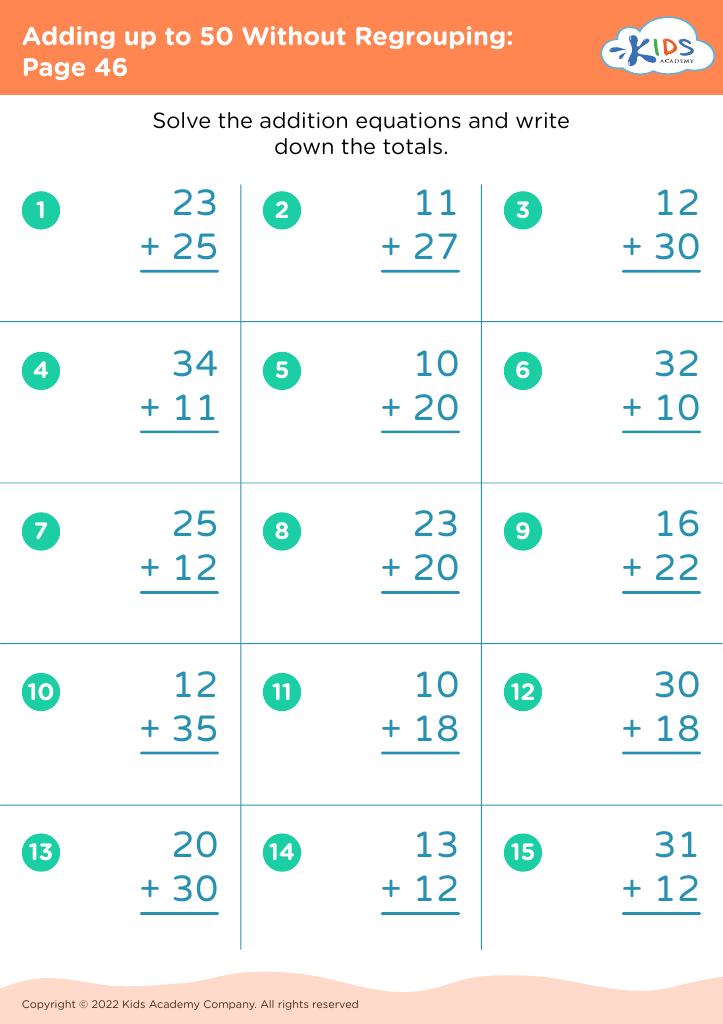
Adding up to 50 Without Regrouping: Page 46
Worksheet
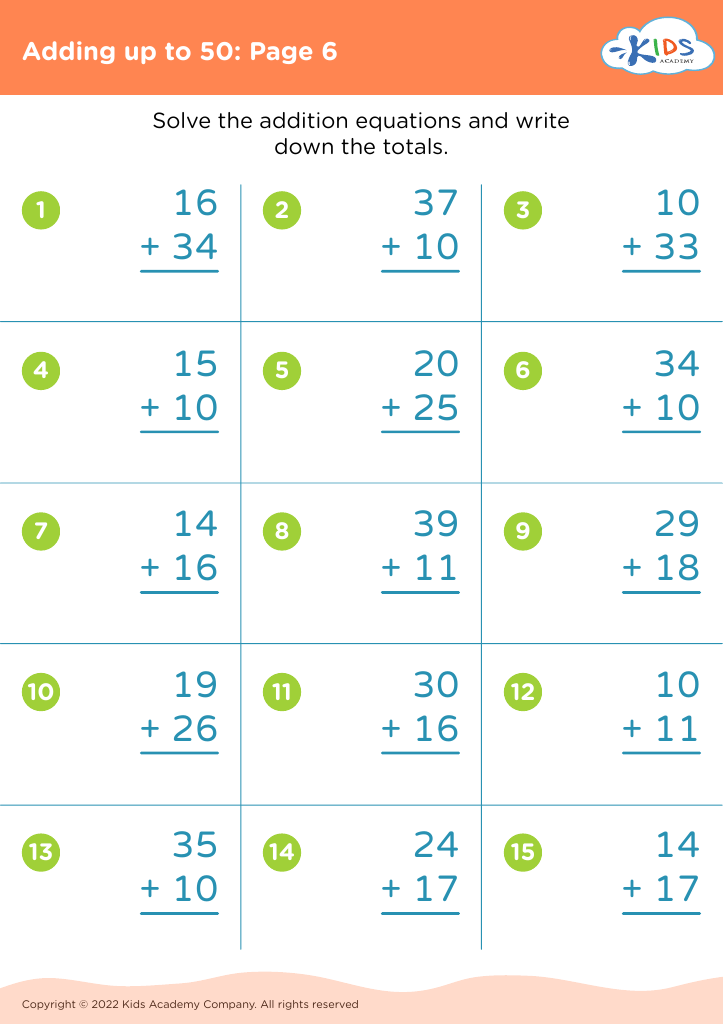
Adding up to 50: Page 6

Adding up to 50: Page 6

Adding up to 50: Page 6
Worksheet
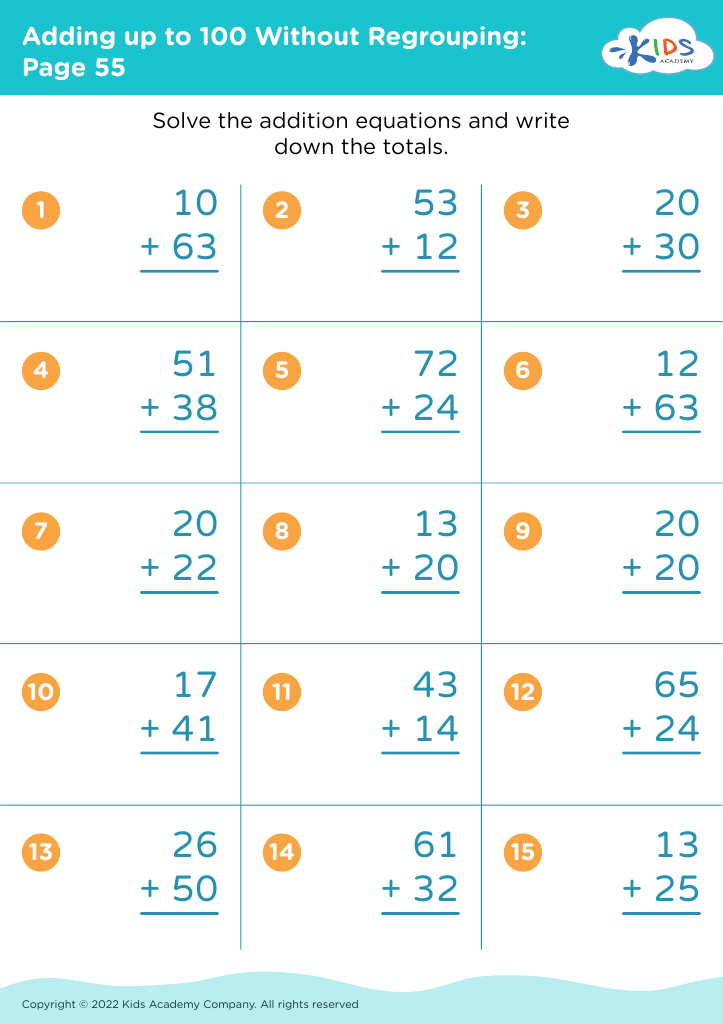
Adding up to 100 Without Regrouping: Page 55
Worksheet
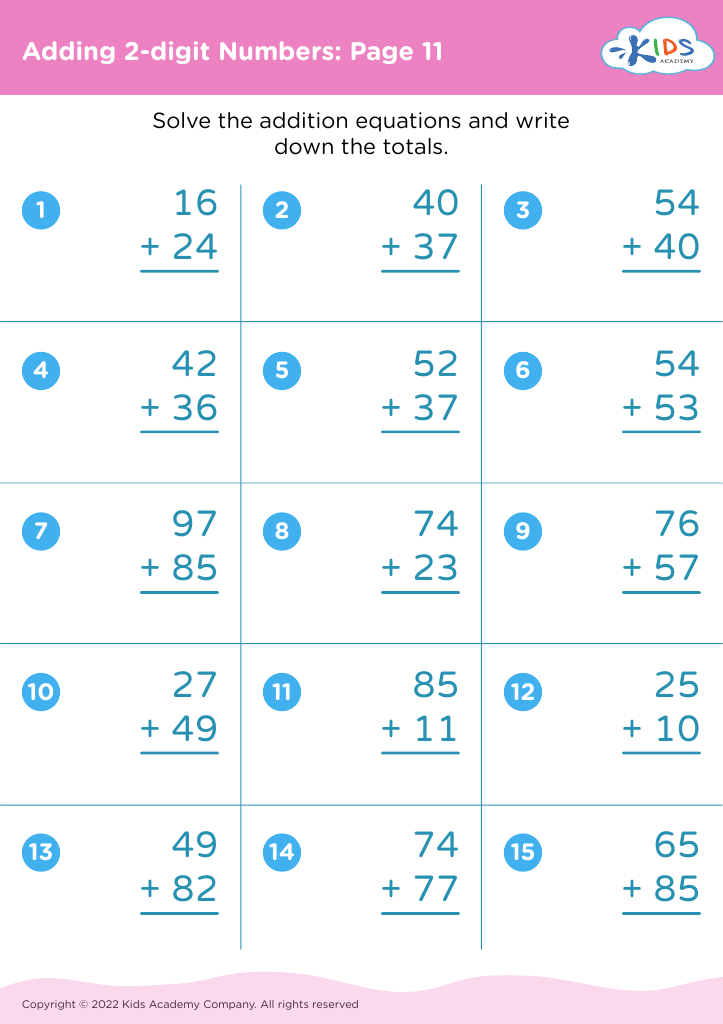
Adding 2-digit Numbers: Page 11

Adding 2-digit Numbers: Page 11

Adding 2-digit Numbers: Page 11
Worksheet
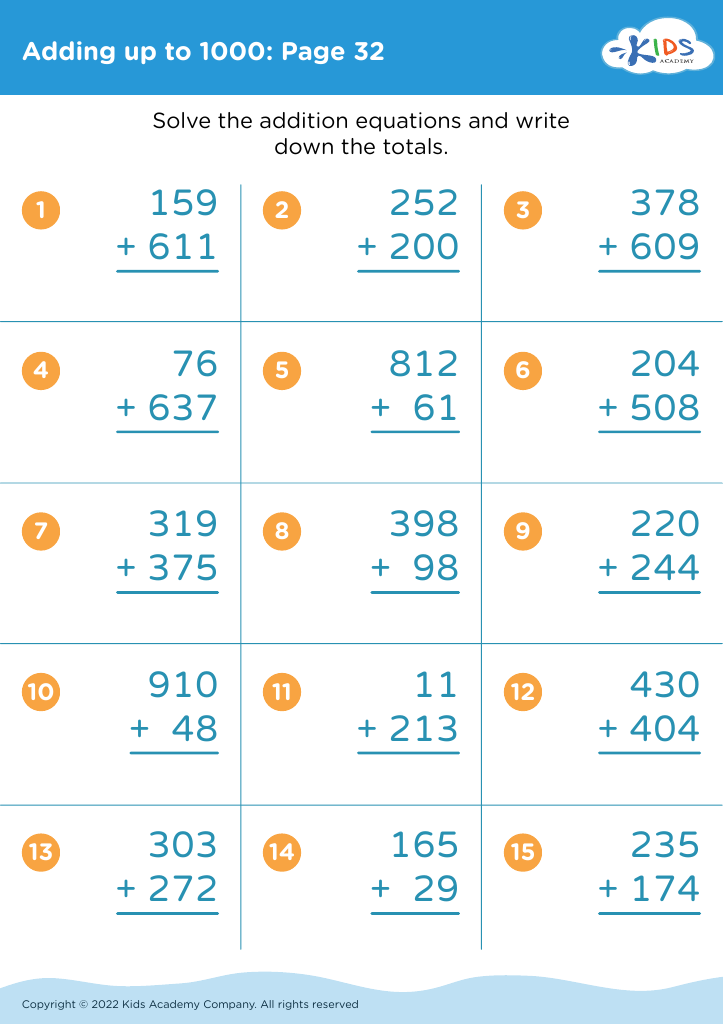
Adding up to 1000: Page 32

Adding up to 1000: Page 32

Adding up to 1000: Page 32
Worksheet
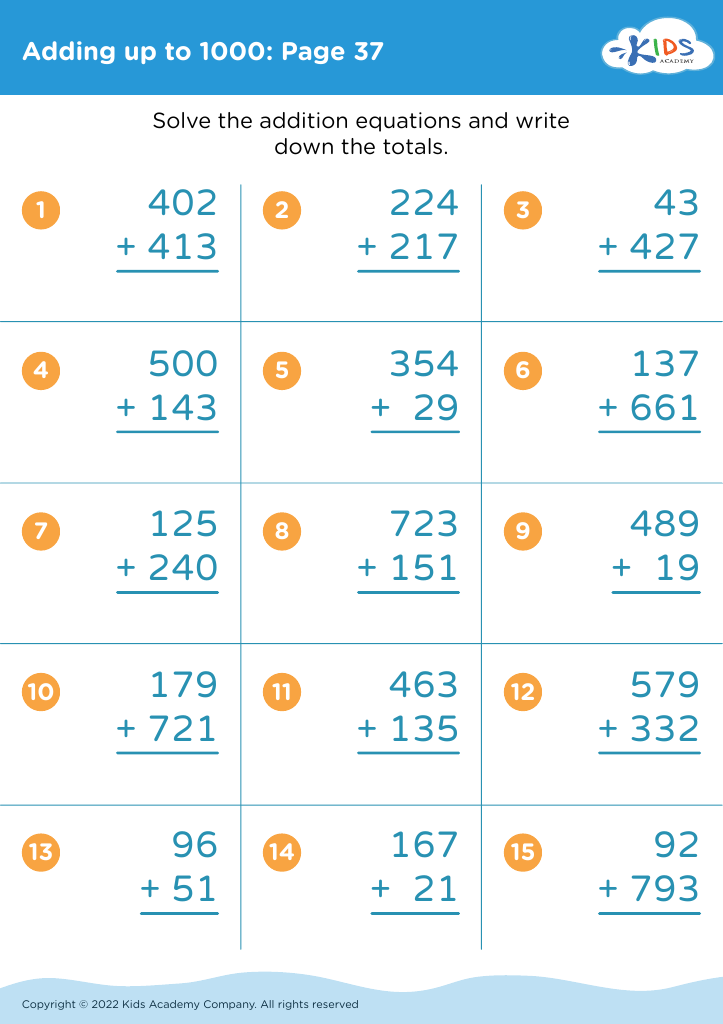
Adding up to 1000: Page 37

Adding up to 1000: Page 37

Adding up to 1000: Page 37
Worksheet
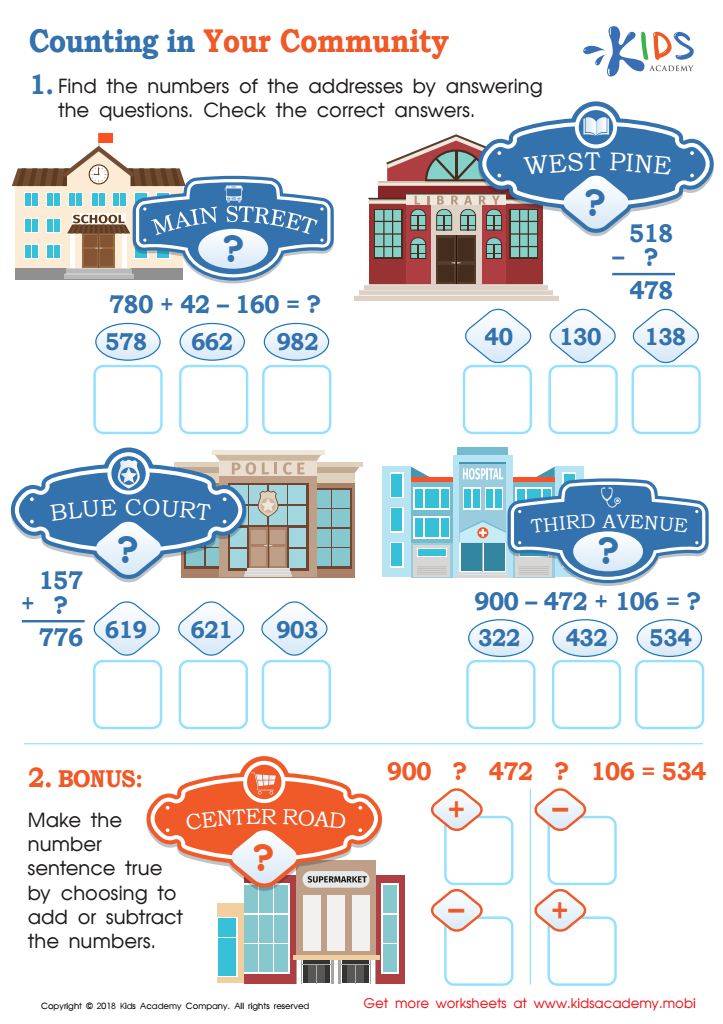
Counting in Your Community Worksheet

Counting in Your Community Worksheet

Introduce your kids to the idea of a community, where different people and buildings co-exist, each playing their part for the community's progress. Ask them to name the buildings they see in their community. Then work through this worksheet to find the numbers of the addresses by answering the questions. Check the answers once they've solved the equations.
Counting in Your Community Worksheet

Worksheet
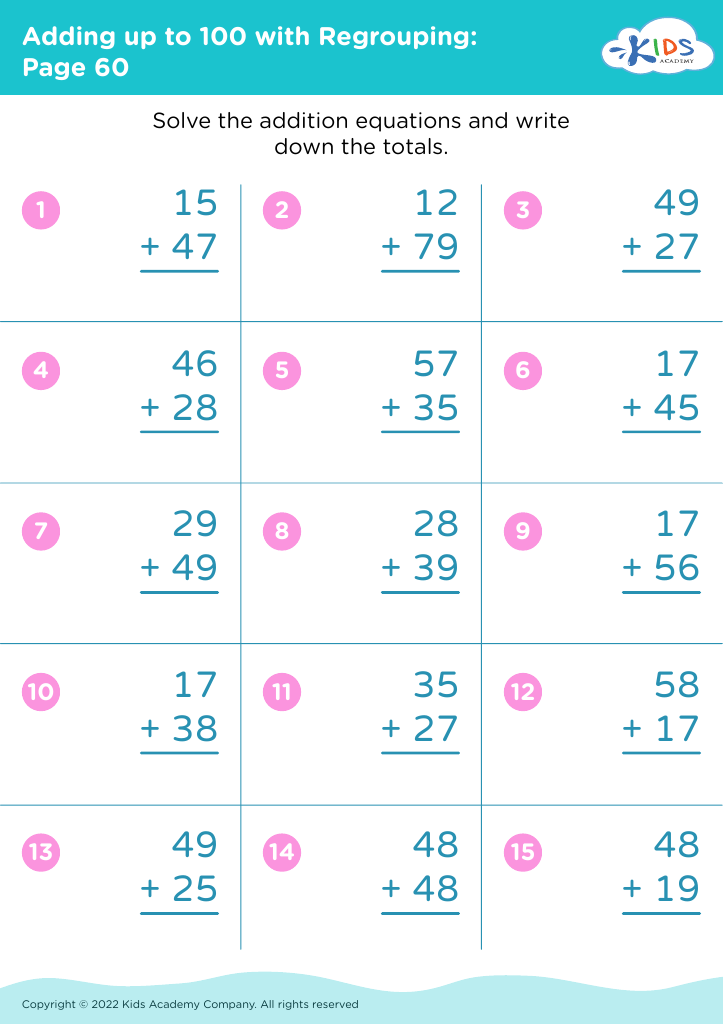
Adding up to 100 with Regrouping: Page 60
Worksheet


Parents and teachers should care about counting practice and addition for children aged 6-8 because these foundational skills are critical for their future success in mathematics and other academic areas. At this stage, children are developing their number sense, which is the ability to understand and work with numbers. Solid proficiency in counting helps kids recognize patterns, enables easy transitions to more complex math problems, and builds confidence.

Addition practice, in particular, is essential. It introduces the primary concept of combining numbers, an operation that forms the basis for more advanced arithmetic skills such as subtraction, multiplication, and division. Beyond arithmetic, an early grasp of addition helps children understand the principle of ‘aggregation’, the idea of putting groups of items together to form a total, which translates into real-life problem solving.

By regularly engaging in counting and addition exercises, children also improve their memory, attention to detail, and logical thinking. These abilities are not only limited to mathematics but also extend to other subjects and everyday life activities. Moreover, establishing strong mathematical foundations makes it easier for children to grasp more challenging concepts as they progress, preventing struggles and frustration in later academic years. Thus, prioritizing these skills sets a child on the path to long-term academic success and self-confidence.