Counting practice Addition Worksheets for Ages 6-8 - Page 2
59 filtered results
-
From - To
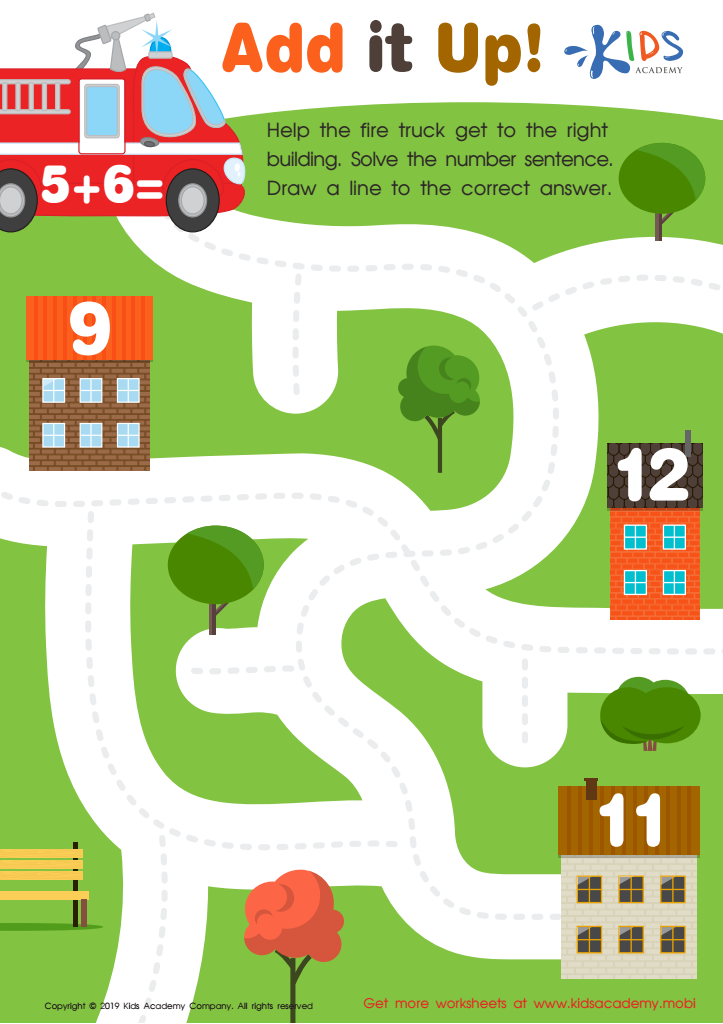
Add it Up Worksheet
 Assign to My Students
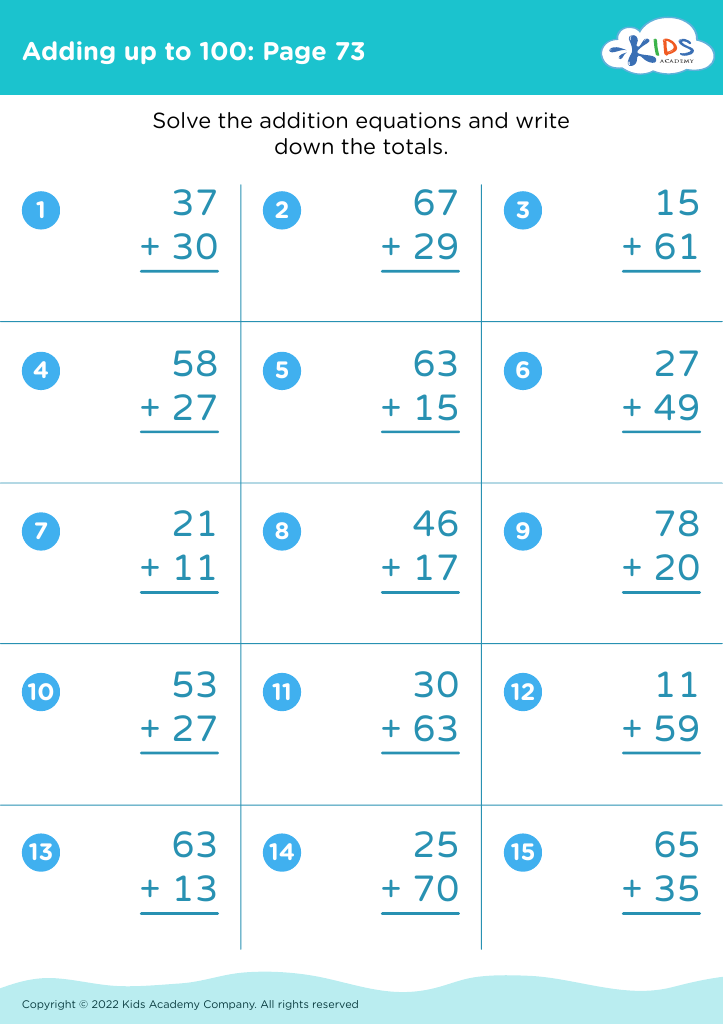
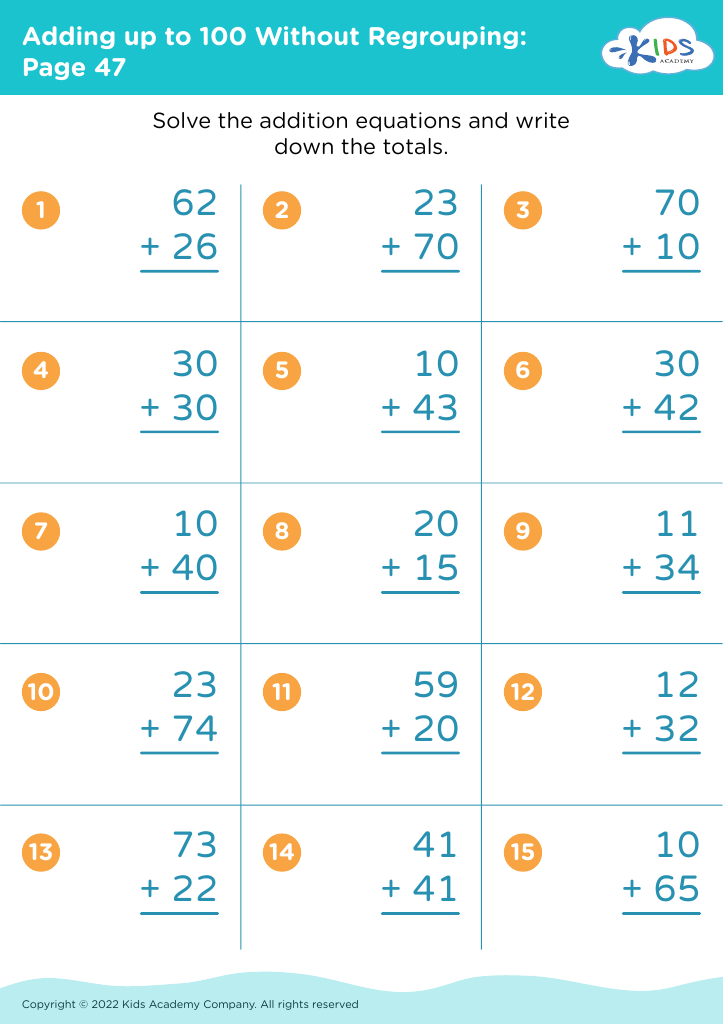
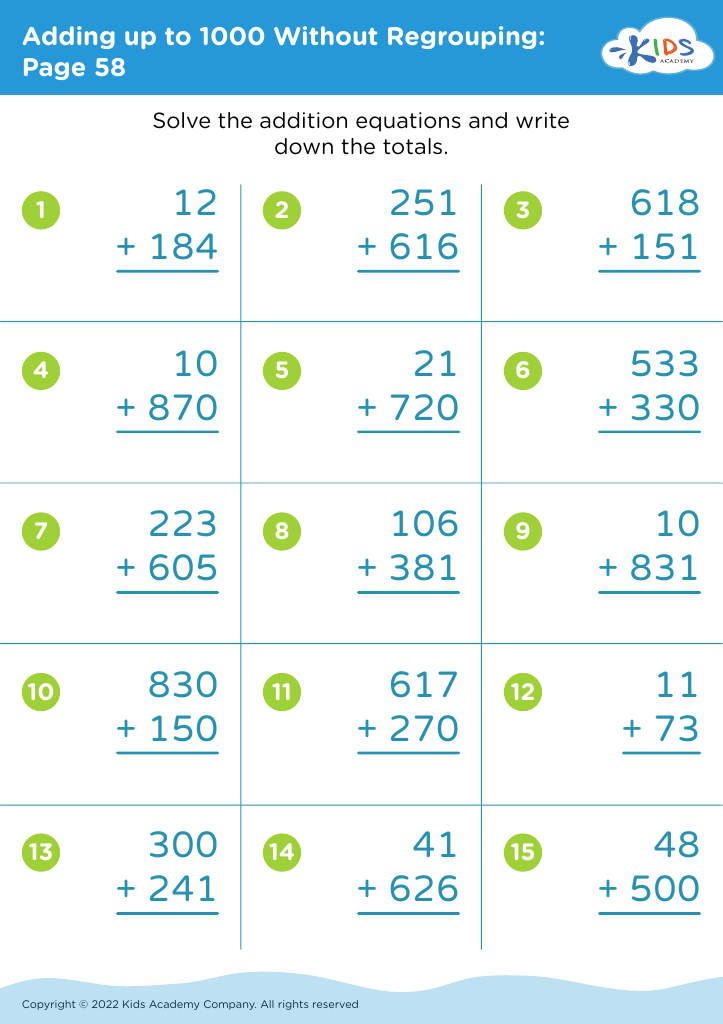
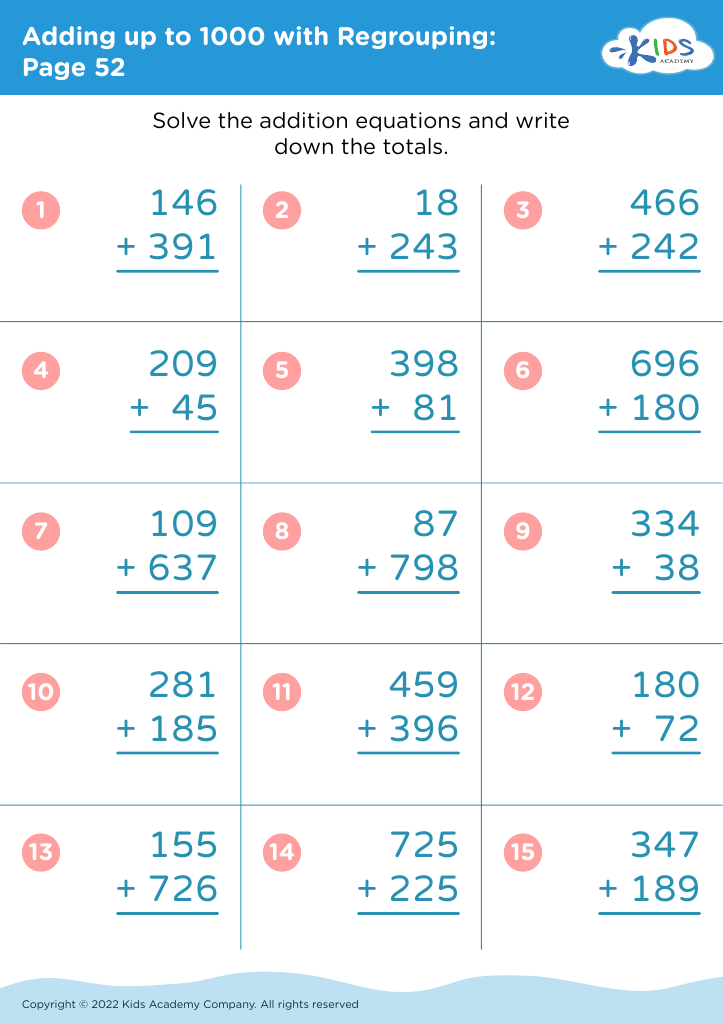
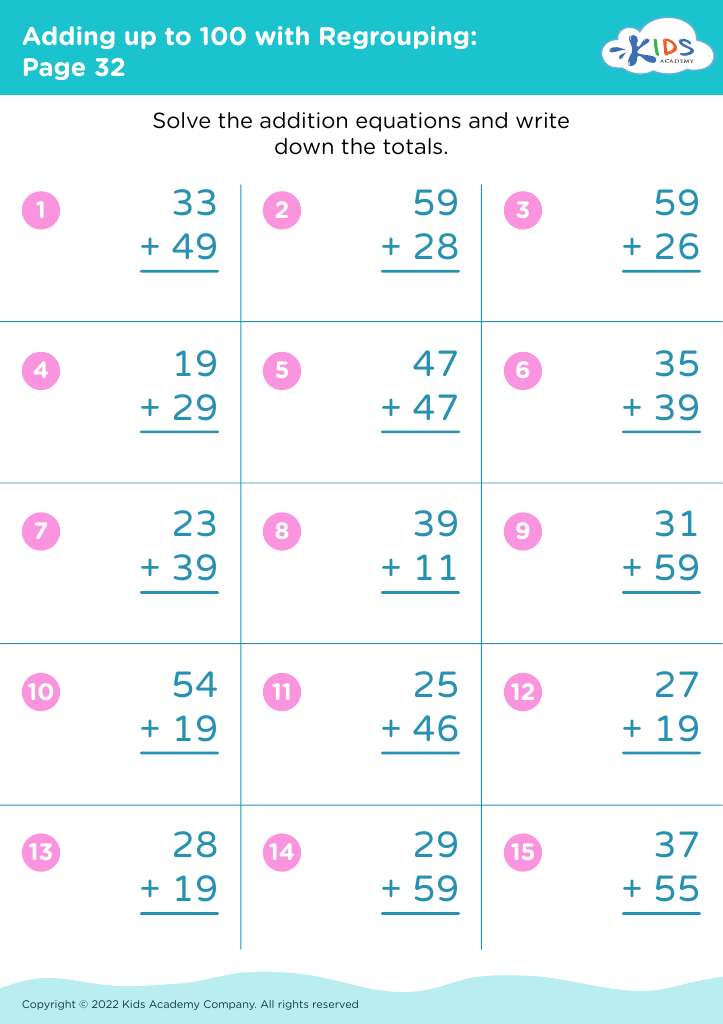
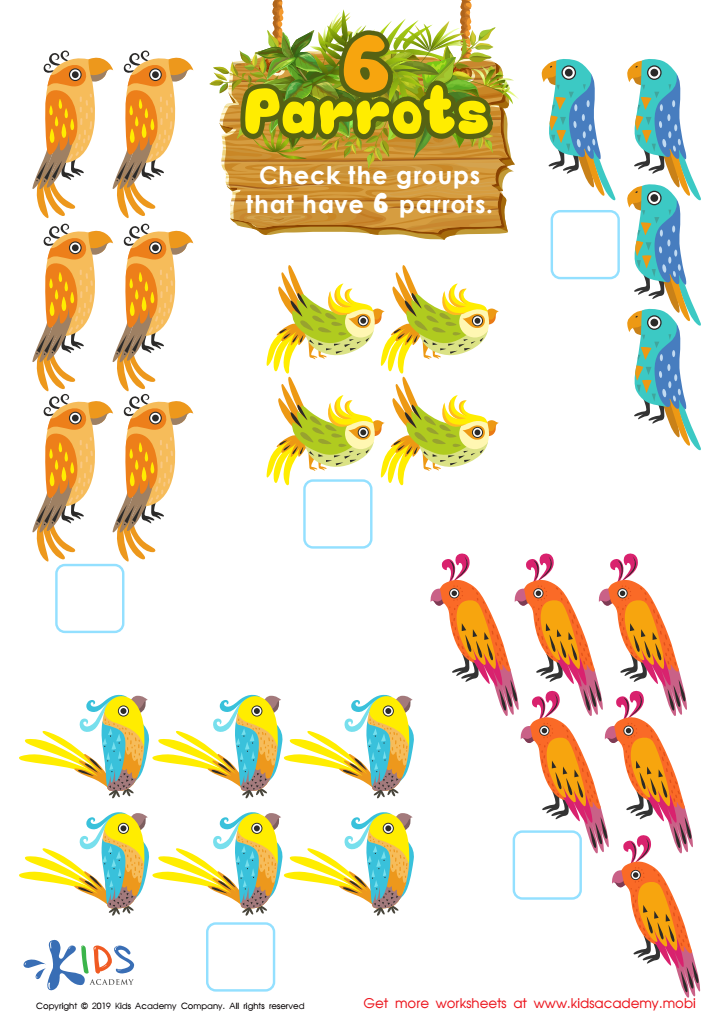
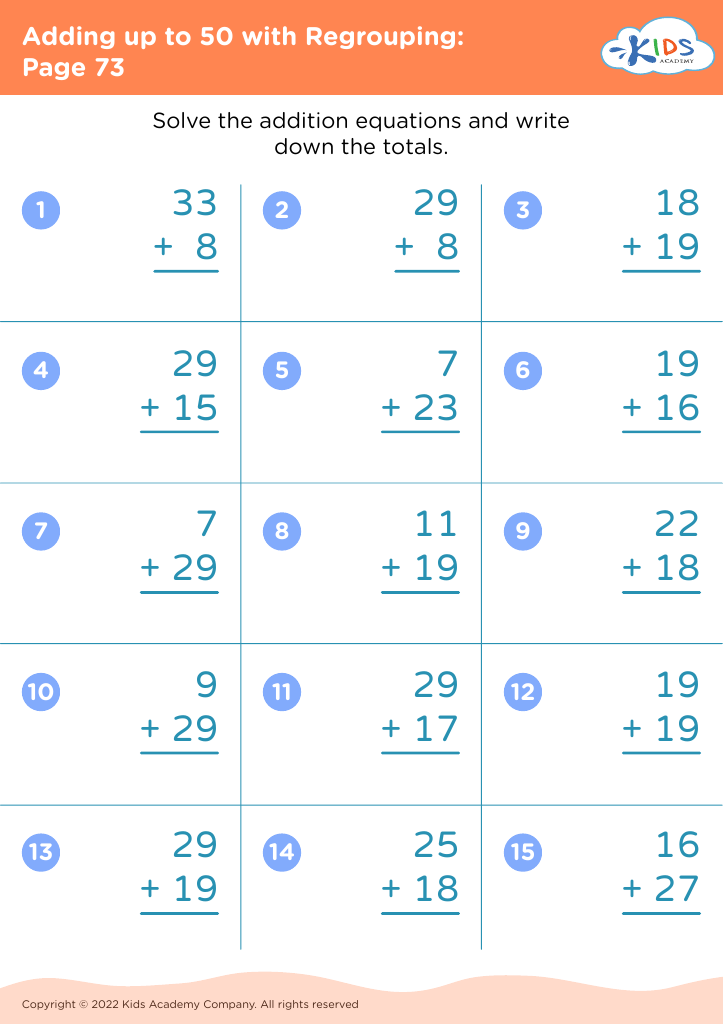
6 Parrots Worksheet
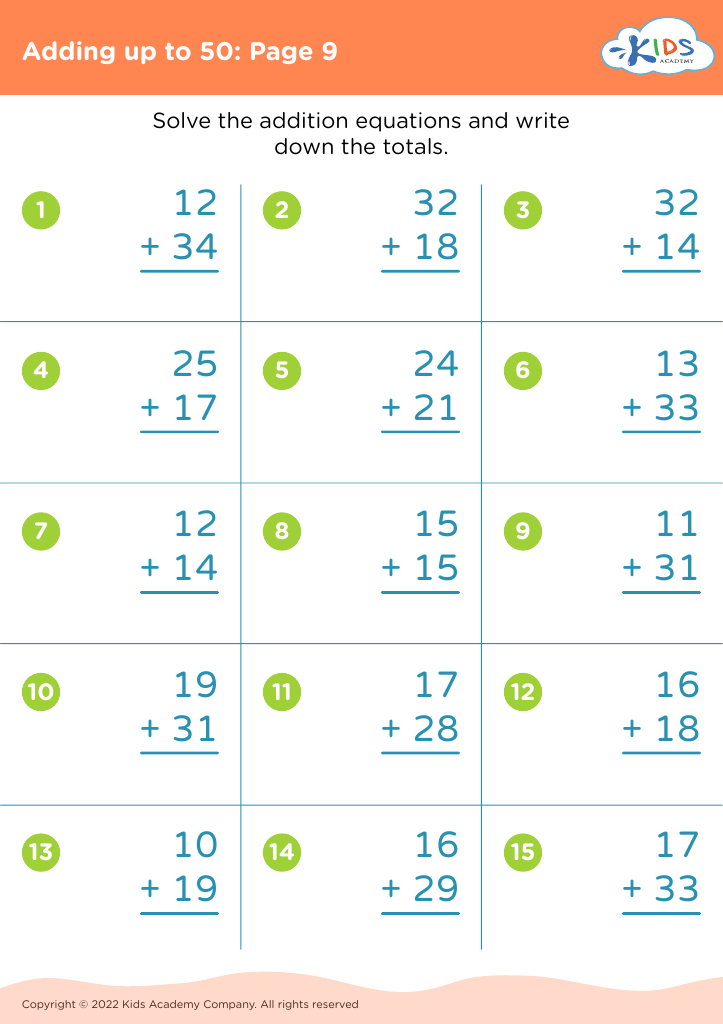
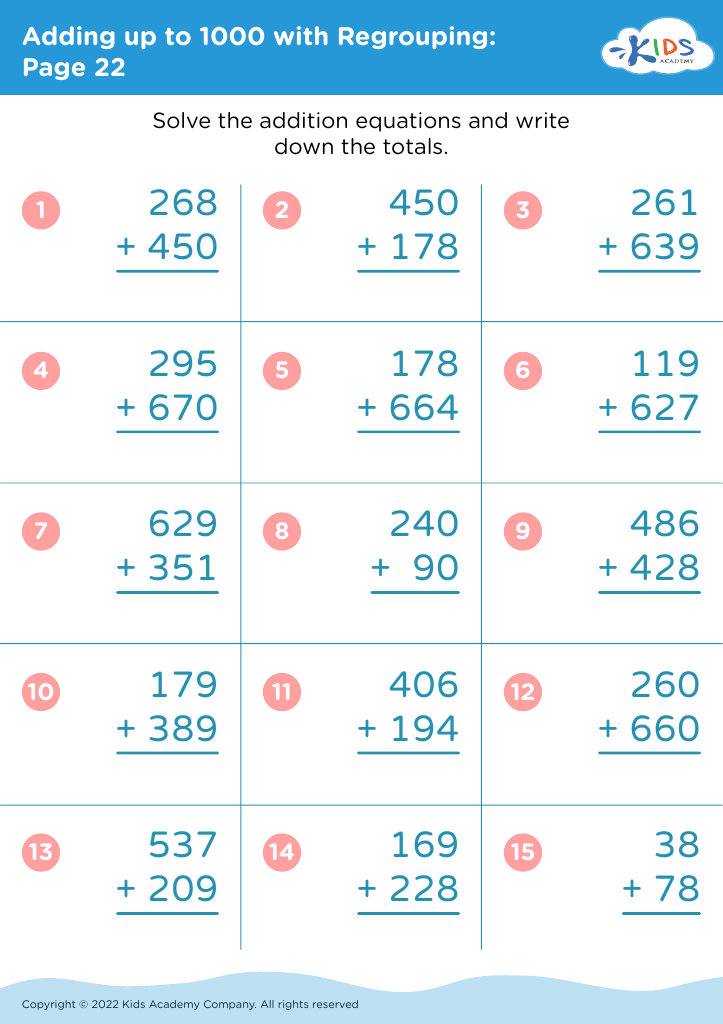
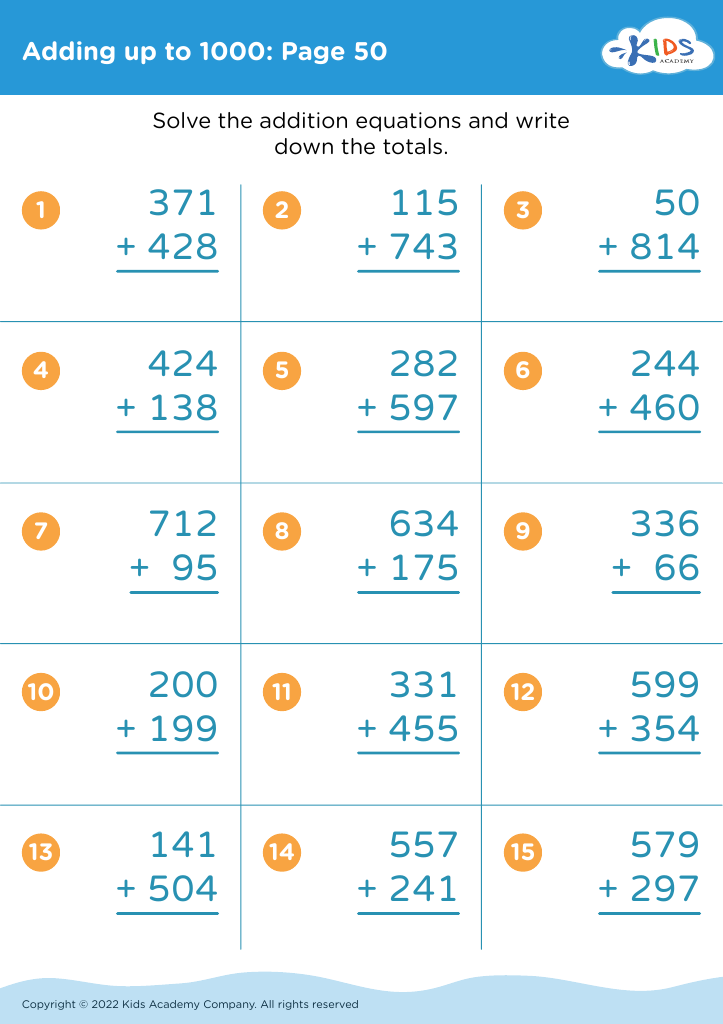
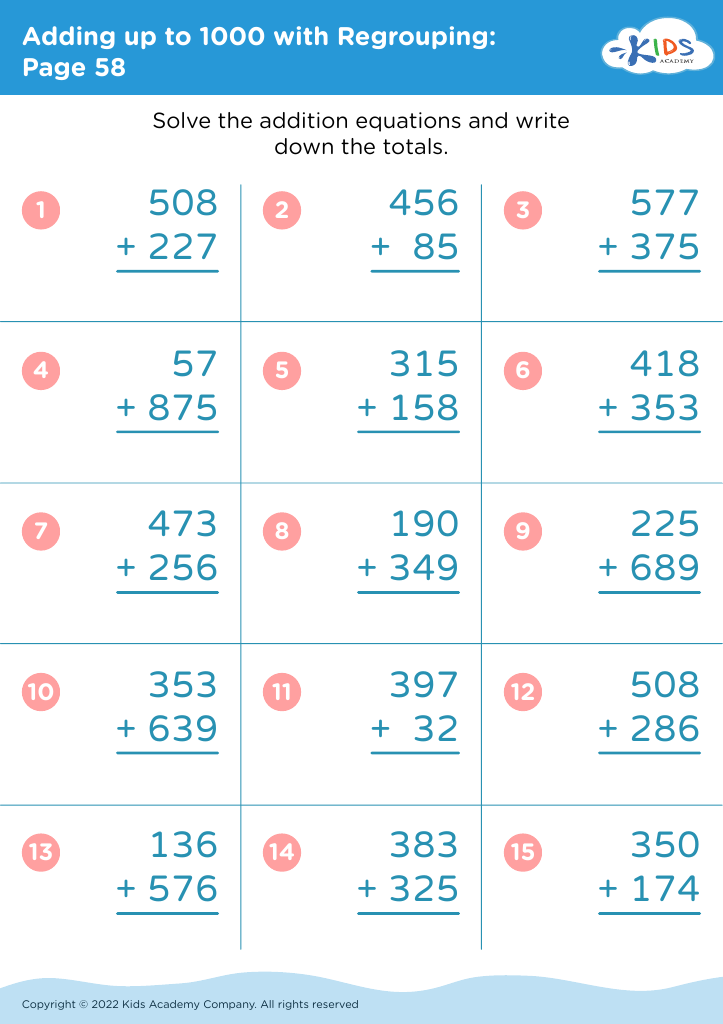
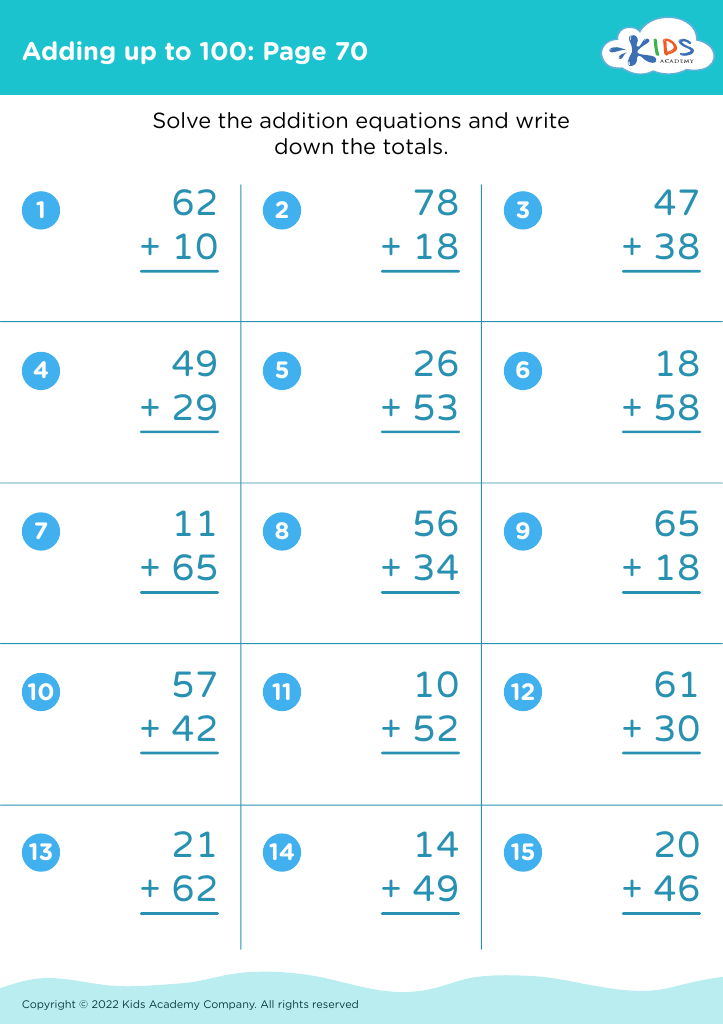
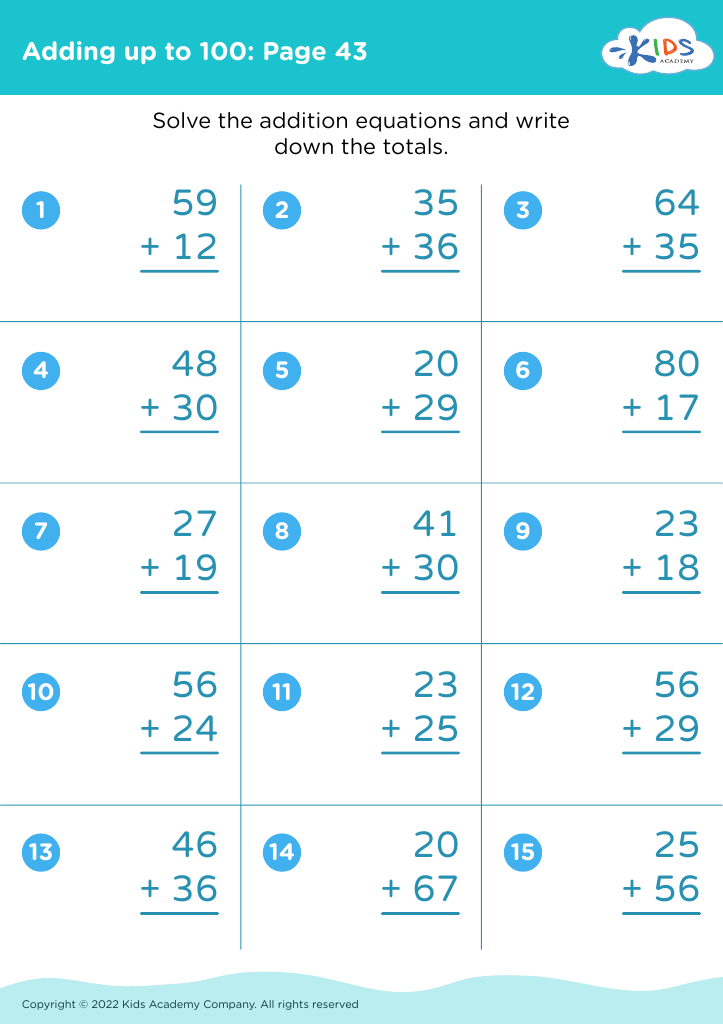
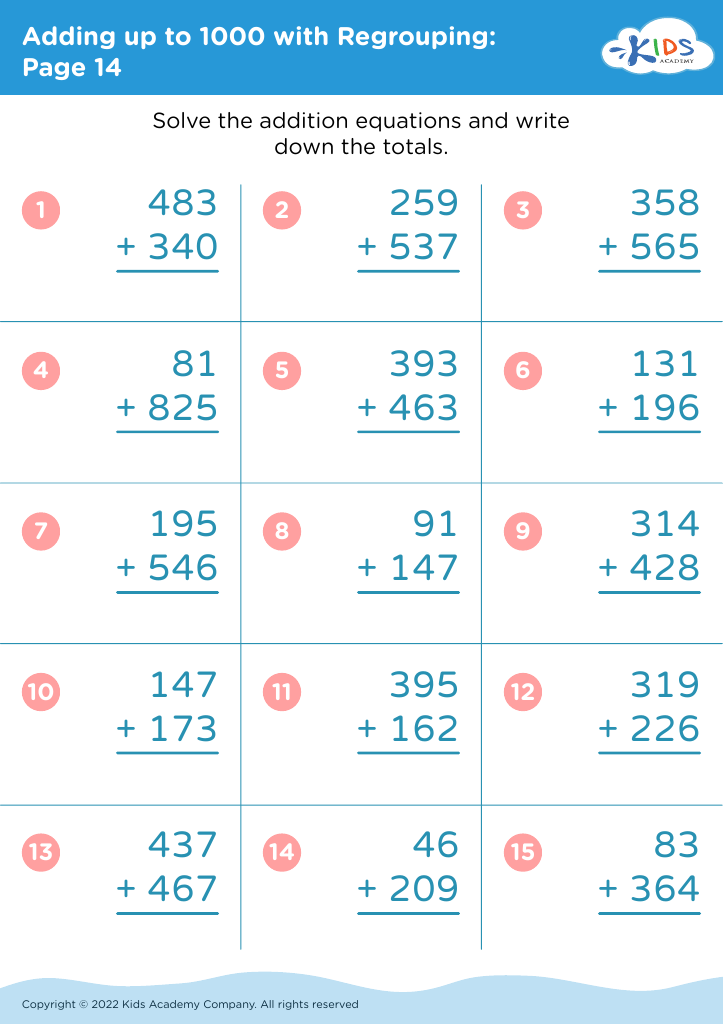
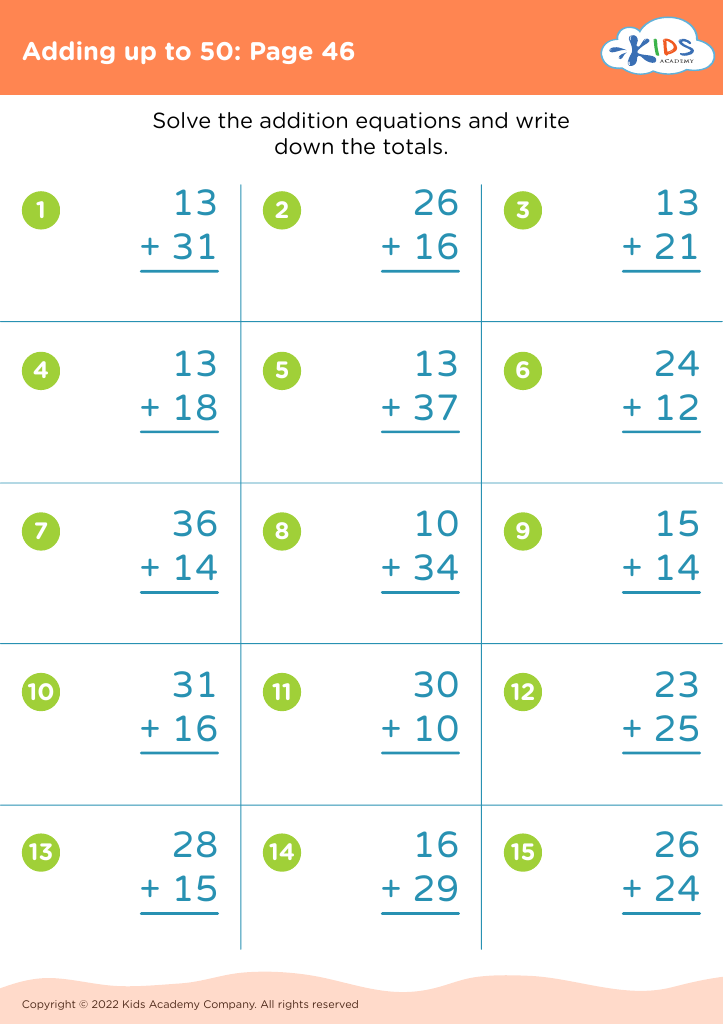
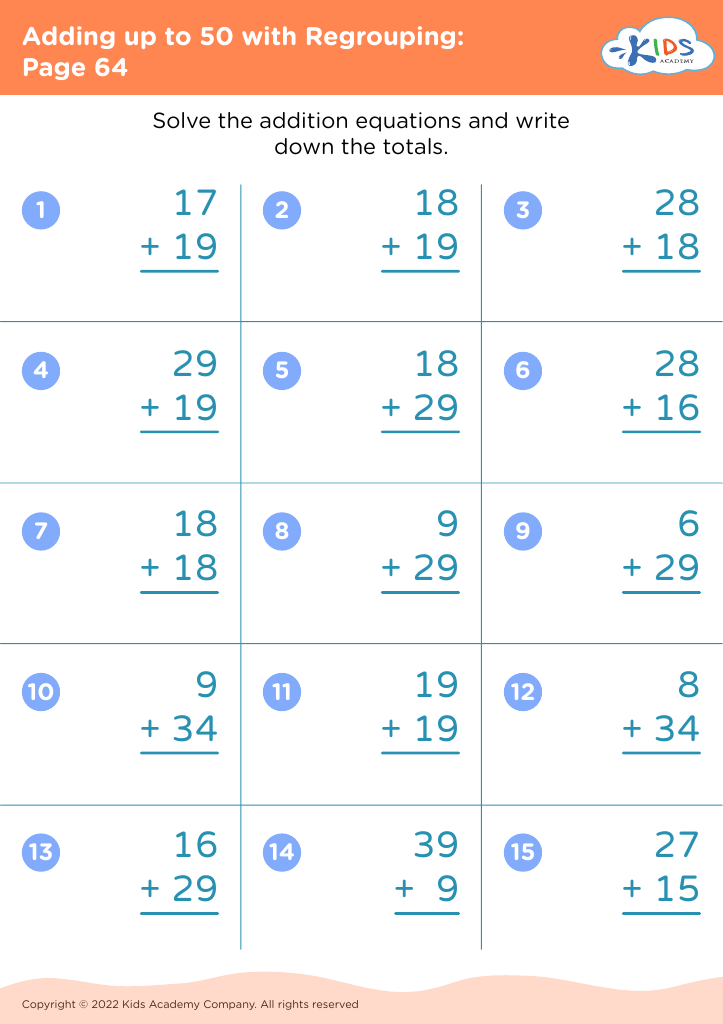
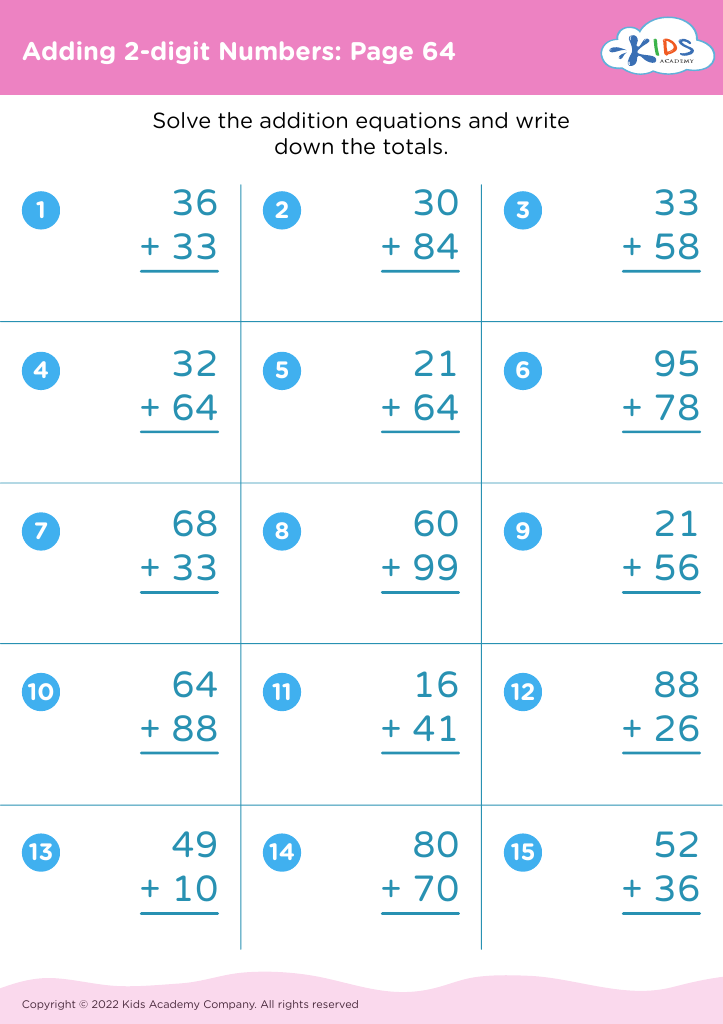
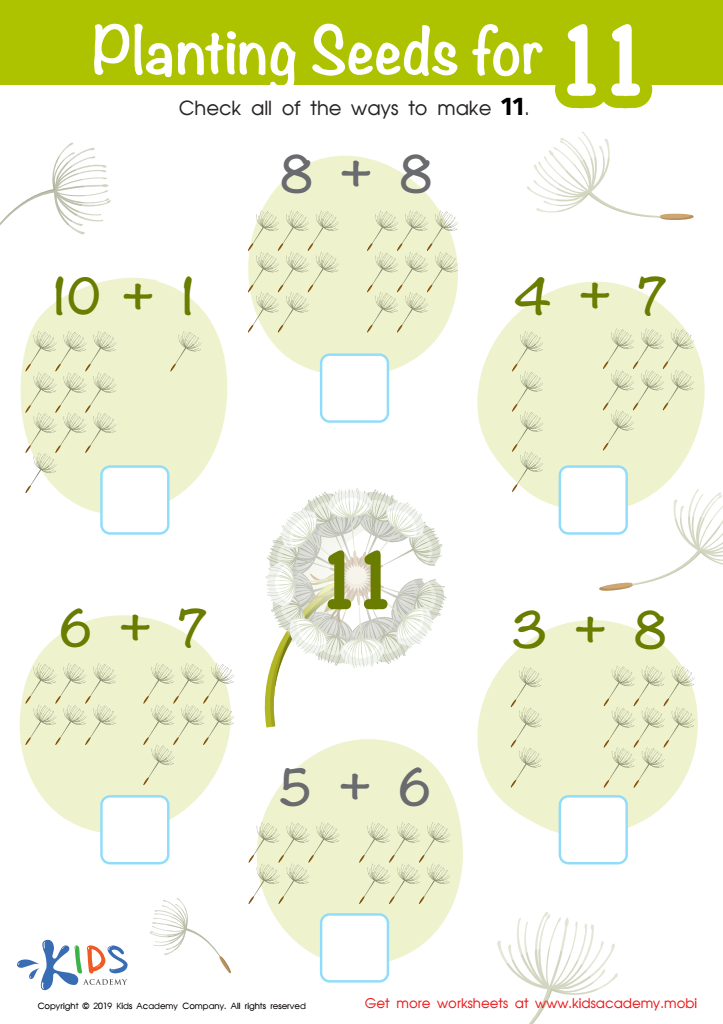
Planting Seeds for 11 Worksheet
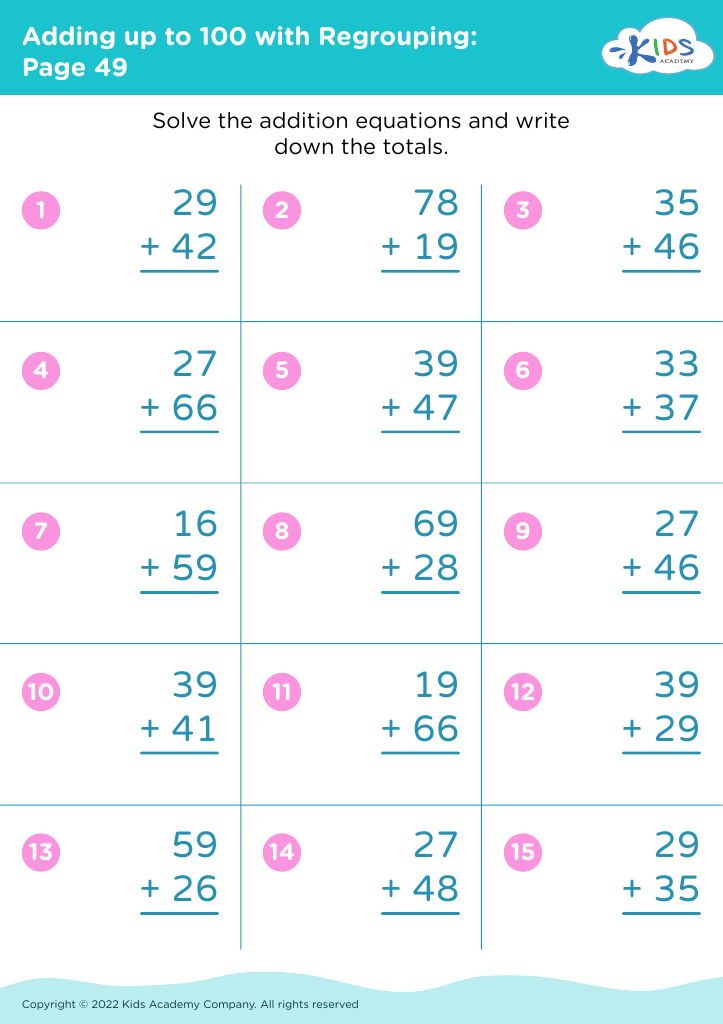


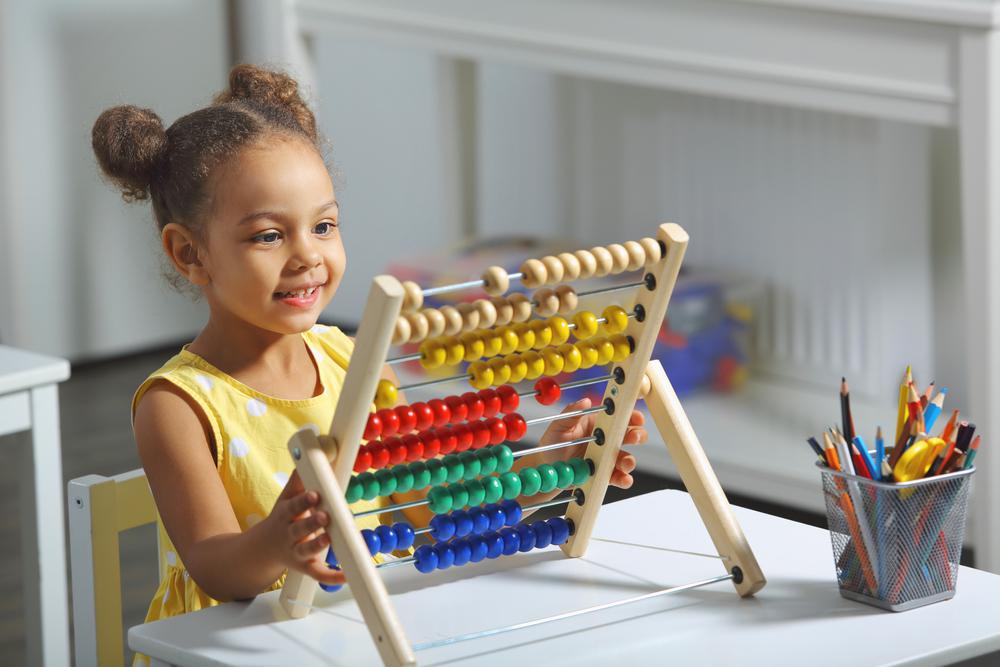





Parents and teachers should care about counting practice and addition for children aged 6-8 because these foundational skills are critical for their future success in mathematics and other academic areas. At this stage, children are developing their number sense, which is the ability to understand and work with numbers. Solid proficiency in counting helps kids recognize patterns, enables easy transitions to more complex math problems, and builds confidence.
Addition practice, in particular, is essential. It introduces the primary concept of combining numbers, an operation that forms the basis for more advanced arithmetic skills such as subtraction, multiplication, and division. Beyond arithmetic, an early grasp of addition helps children understand the principle of ‘aggregation’, the idea of putting groups of items together to form a total, which translates into real-life problem solving.
By regularly engaging in counting and addition exercises, children also improve their memory, attention to detail, and logical thinking. These abilities are not only limited to mathematics but also extend to other subjects and everyday life activities. Moreover, establishing strong mathematical foundations makes it easier for children to grasp more challenging concepts as they progress, preventing struggles and frustration in later academic years. Thus, prioritizing these skills sets a child on the path to long-term academic success and self-confidence.








