
Develop inference skills Addition Worksheets for Ages 6-8
3 filtered results
Difficulty Level
Grade
Age
-
From - To
Subject
Activity
Standards
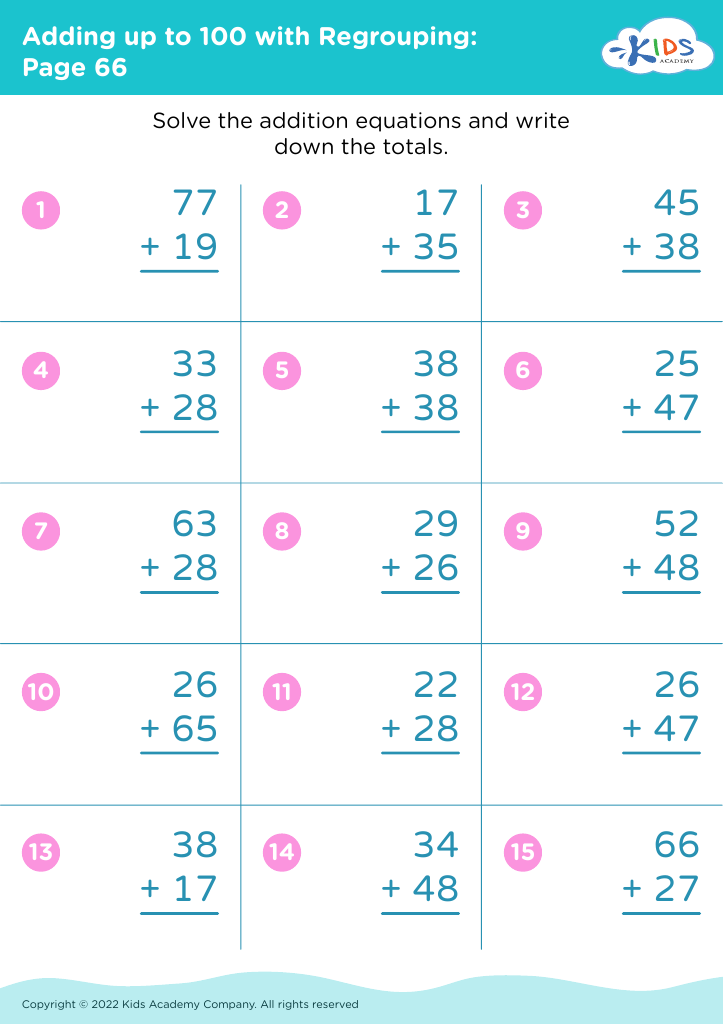
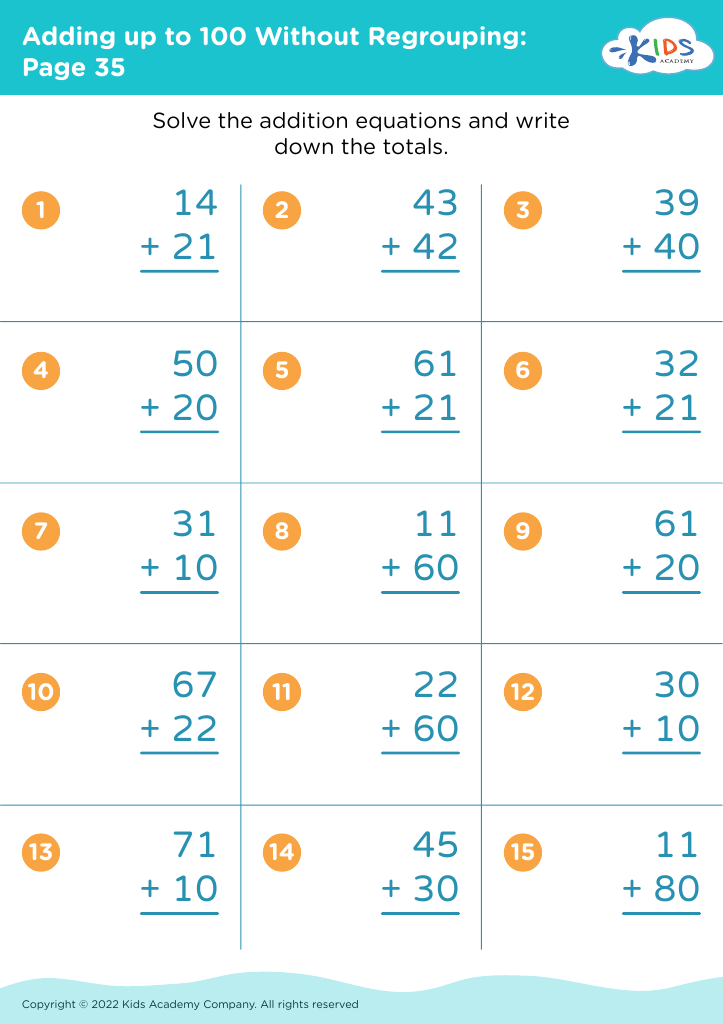
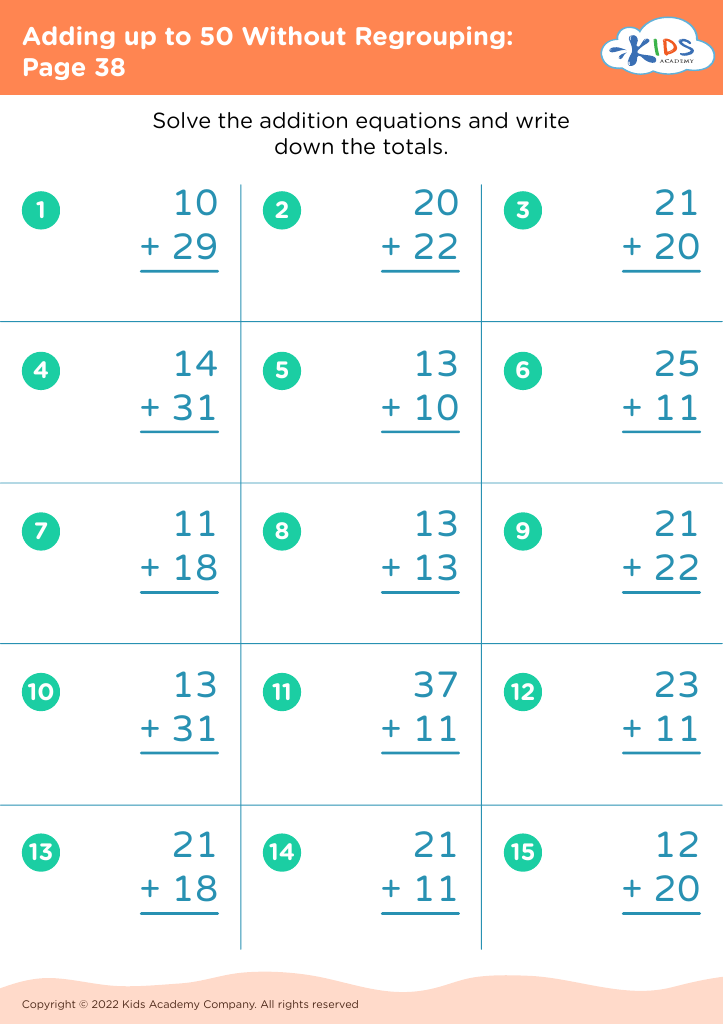
Enhance your child's mathematical reasoning with our "Develop Inference Skills Addition Worksheets" for ages 6-8. These engaging worksheets from Kids Academy are designed to blend fun with learning, helping young learners develop crucial inference skills while mastering addition. By working through various scenarios and solving addition problems, students learn to draw conclusions and make educated guesses, boosting their critical thinking abilities. Ideal for both classroom use and home practice, our printable worksheets offer a range of activities that cater to different learning styles, ensuring every child can build a strong foundation in math and analytical thinking.
Favorites
With answer key
Interactive
Join Kids Academy for Free
Who is primarily going to use this learning content?








Inference skills are essential for children aged 6-8 as they form a foundational part of their cognitive development and understanding of the world. When children develop the ability to infer, they can read between the lines, make educated guesses, and draw conclusions based on partial information. This is crucial for reading comprehension, as it enables them to understand the context and characters in stories, pick up on implicit messages, and anticipate what might happen next.
Moreover, inference skills aid in effective communication. Children learn to understand the intent and emotions behind spoken words, improving their interpersonal skills. Inferencing also enhances critical thinking, allowing kids to solve problems more effectively.
From an educational perspective, mathematics benefits too. For instance, when we talk about "Develop inference skills in addition," children learn to see patterns and develop strategies for solving arithmetic problems. This deeper understanding goes beyond rote memorization, encouraging logical thought processes and mental arithmetic skills that become useful in progressively complex mathematical concepts.
Parents and teachers play a pivotal role in nurturing such skills through guided activities, questioning techniques, and encouraging curiosity. By prioritizing the development of inference skills, they equip children with tools for academic success and practical life, making learning more meaningful and enjoyable.








