Develop number recognition Addition Worksheets for Ages 6-8
5 filtered results
-
From - To
Introducing our engaging and educational Addition Worksheets designed specifically for children ages 6-8 to develop number recognition and foundational math skills. These fun and colorful activities help young learners identify numbers, understand their sequence, and master basic addition concepts through practice and repetition. Created by experienced educators, our worksheets are perfect for both classroom use and home learning. Boost your child's confidence and proficiency in math while making learning enjoyable through our expertly crafted materials. Visit Kids Academy to explore our extensive collection and watch your child build a strong math foundation today!
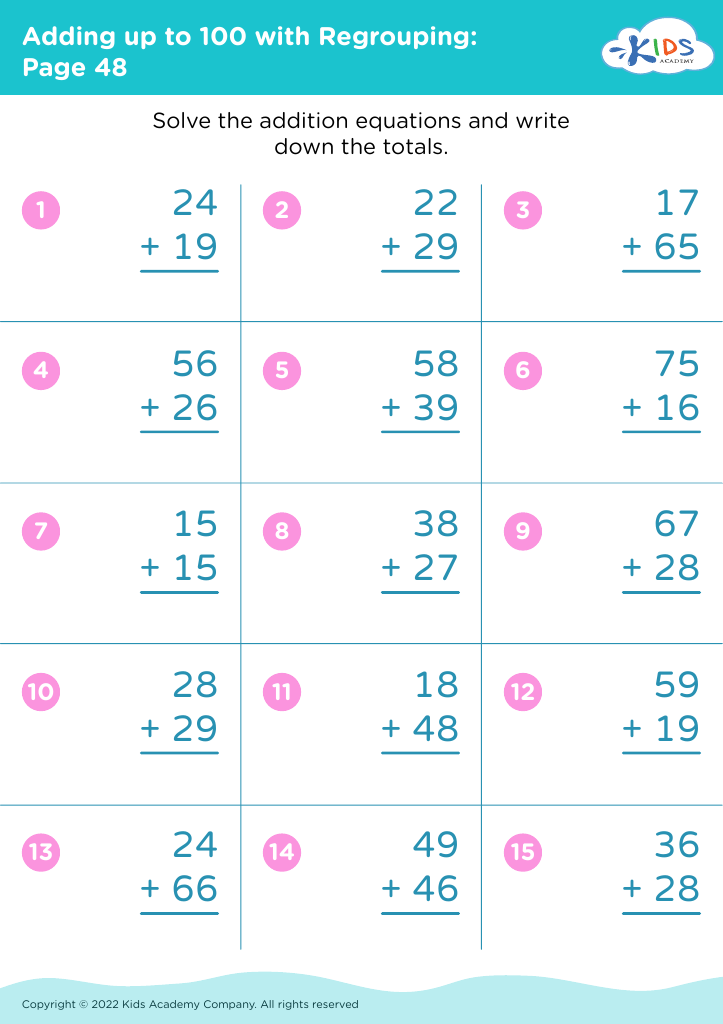
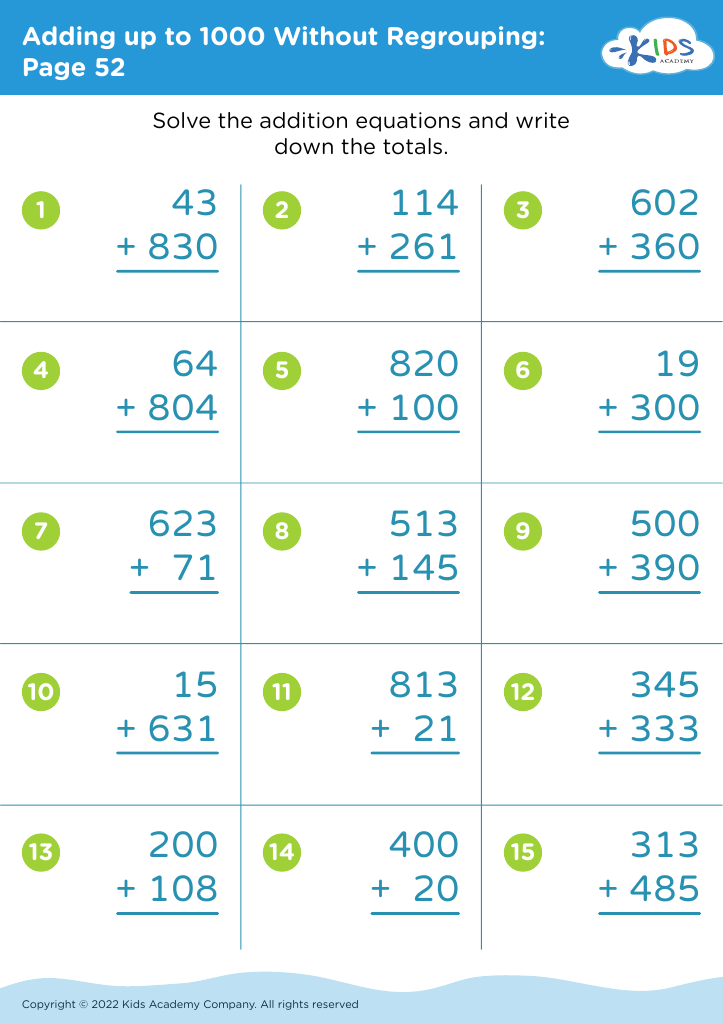
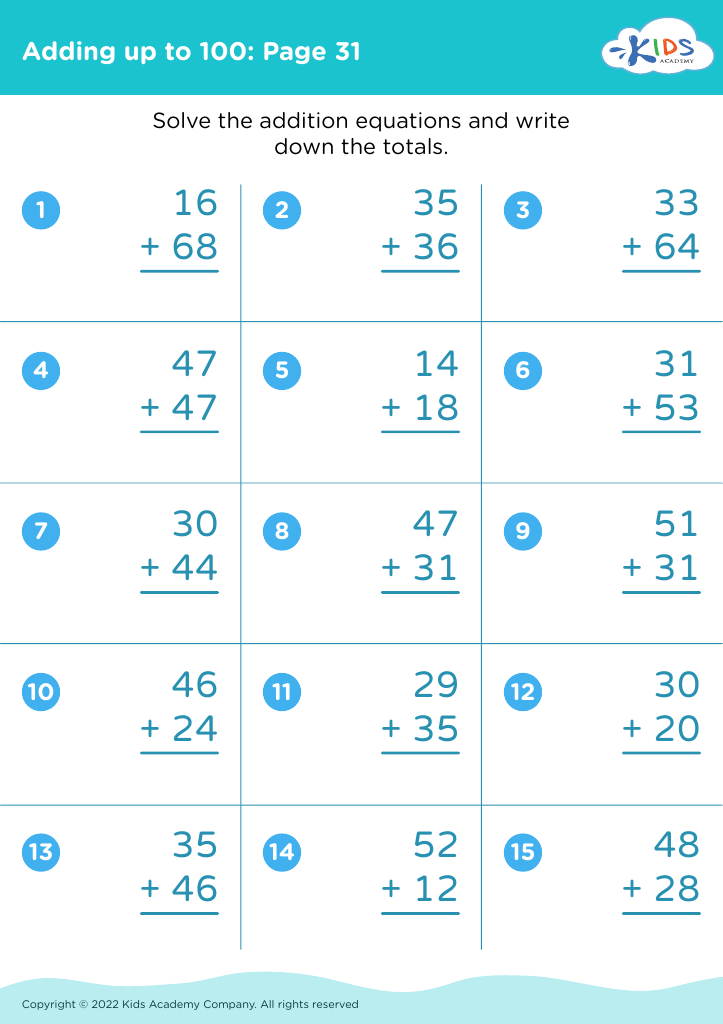
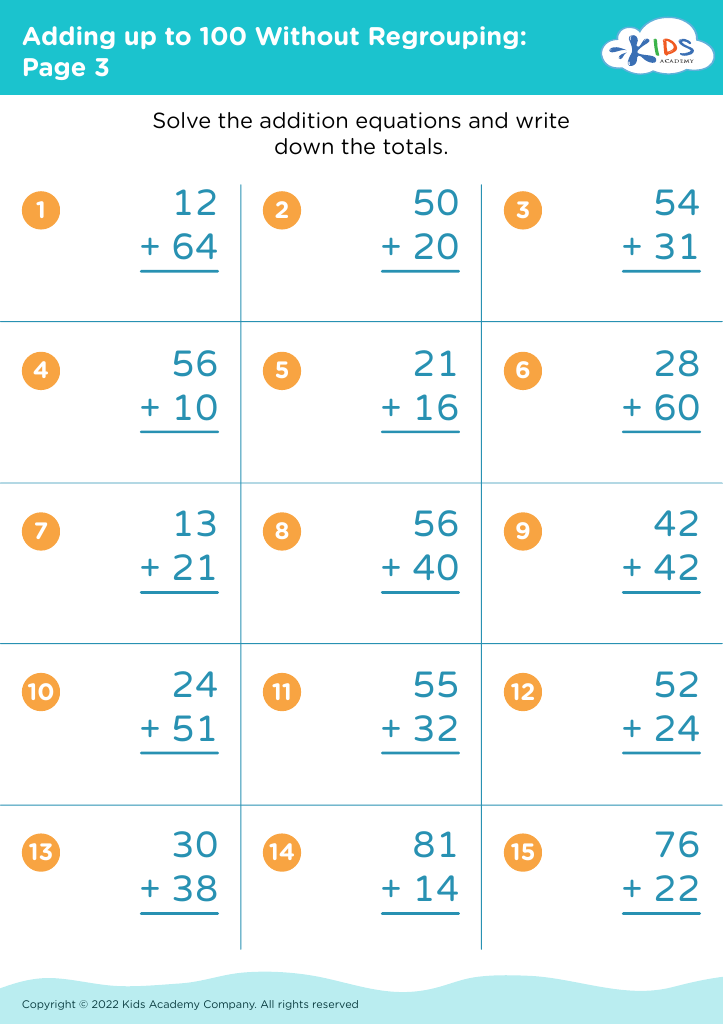
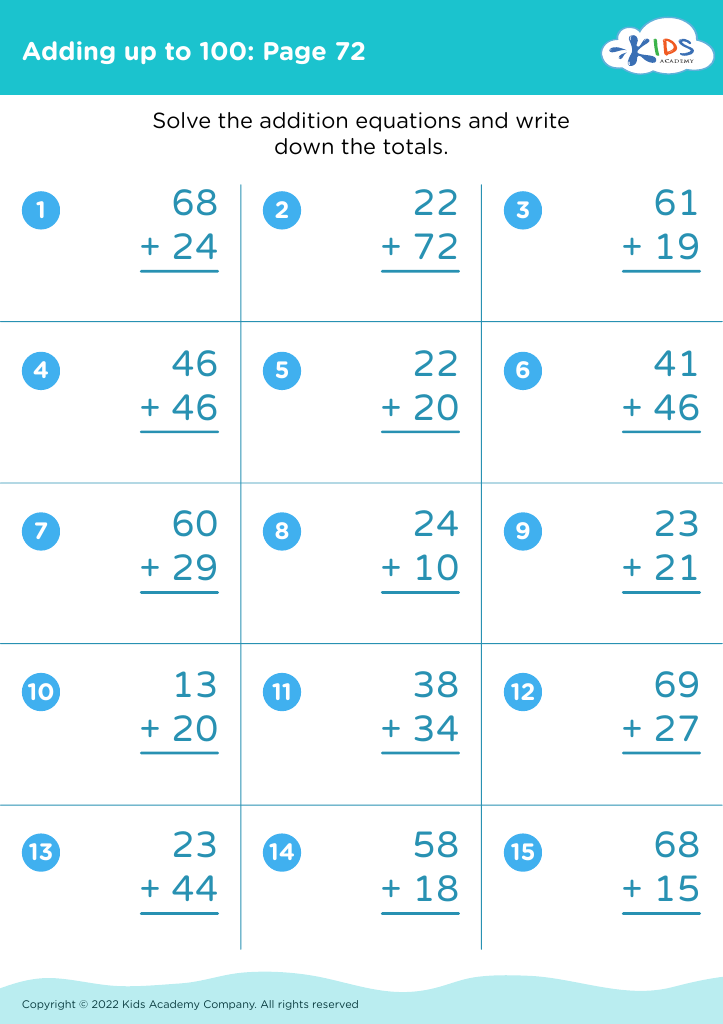








Parents and teachers should be deeply invested in developing number recognition and addition skills for children aged 6-8 because these foundational math abilities are critical for future academic success. At this age, children are beginning their formal education and are capable of grasping basic numerical concepts, which serve as building blocks for more complex problem-solving skills. Number recognition enables children to identify and understand numbers, setting the stage for accurate counting, which is fundamental for daily activities and later math concepts.
Addition, a key component of basic arithmetic, is essential for logical reasoning and developing a sense of numbers. Learning addition enhances cognitive skills, such as memory, attention to detail, and logical thinking. Mastery of these skills helps students to approach problems systematically, fostering analytical thinking crucial both inside and outside the classroom.
Furthermore, early success in math builds confidence and a positive attitude towards learning. Struggles with early arithmetic can lead to math anxiety, negatively impacting not only their performance in future math courses but also their overall academic self-esteem. Ensuring that children develop strong number recognition and addition skills is a vital step in prepared and confident learners, promoting enduring and resilient educational paths. Parents and teachers play pivotal roles in providing encouragement, resources, and opportunities for practice to nurture these essential abilities.








