Developing problem-solving abilities Addition Worksheets for Ages 6-8
4 filtered results
-
From - To
Nurture your child's critical thinking with our "Developing Problem-Solving Abilities Addition Worksheets for Ages 6-8"! These carefully crafted worksheets blend fun and learning to engage young minds in solving addition problems. Each activity promotes logical reasoning, mental math, and analytical skills. Ideal for classroom use or at-home practice, our worksheets help students build confidence and agility in math while enjoying the process. Equip your 6-8-year-old with the tools to approach challenges creatively and effectively. Start today and watch your child thrive intellectually while mastering addition concepts in an enjoyable and rewarding way. Give them the edge they need to succeed!
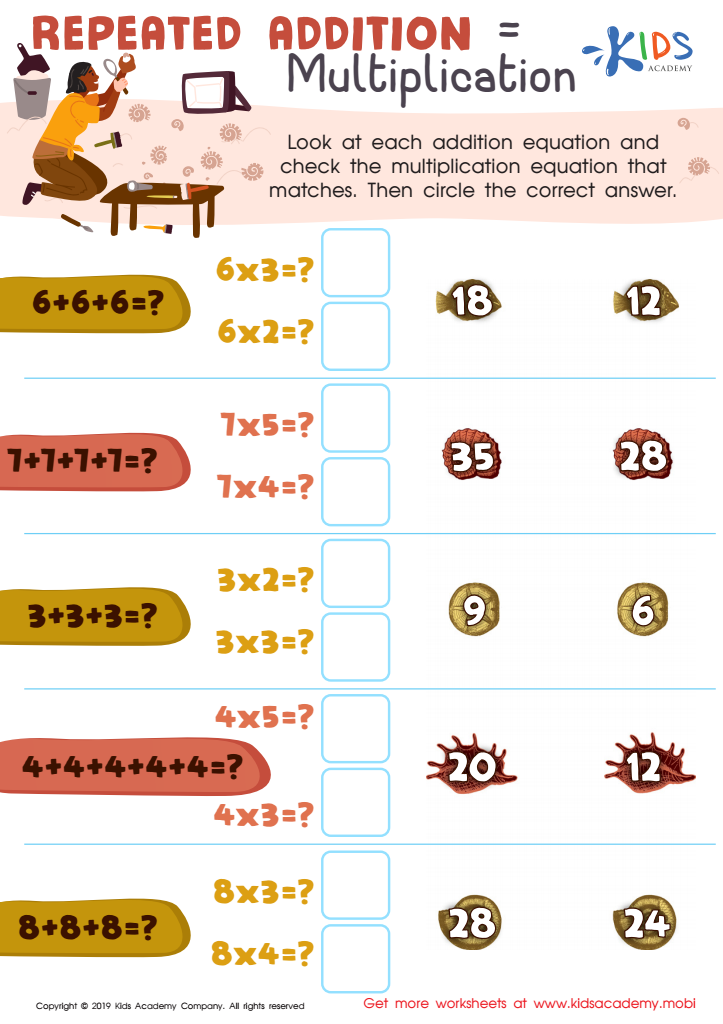
Repeated Addition = Multiplication Worksheet
 Assign to My Students
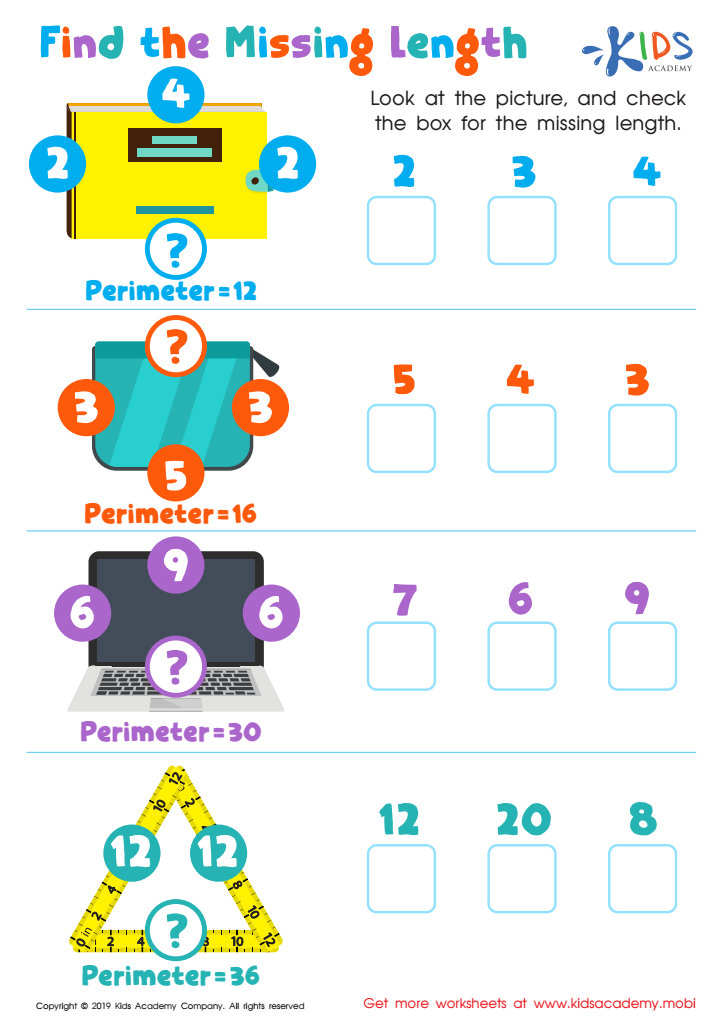
Find the Missing Length Worksheet








Developing problem-solving abilities in addition for children aged 6-8 is crucial for their foundational educational growth and overall cognitive development. At this formative stage, young minds are highly receptive to new information and learn through interactive experiences. This period is pivotal for establishing a solid mathematical foundation, which will support more complex problem-solving and mathematical concepts later in life.
By teaching children how to approach and solve addition problems, parents and teachers help enhance their numerical fluency and comprehension. It enables children to develop critical thinking skills, as they learn to identify, analyze, and devise strategies to solve problems. This process enhances their logical reasoning and boosts confidence in their capability to tackle challenges, instilling a positive attitude towards learning and problem-solving.
Furthermore, strong problem-solving skills in early grades translate to better academic performance across all subjects. These skills are not isolated to math but also foster general analytical abilities which are applicable in real-life situations. By investing time and effort into nurturing these skills, educators and parents are ensuring that children are well-equipped with the essential tools needed for intellectual growth, practical decision-making, and lifelong learning. This holistic approach ultimately helps build resilient, independent thinkers who can navigate complexities both inside and outside the classroom.








